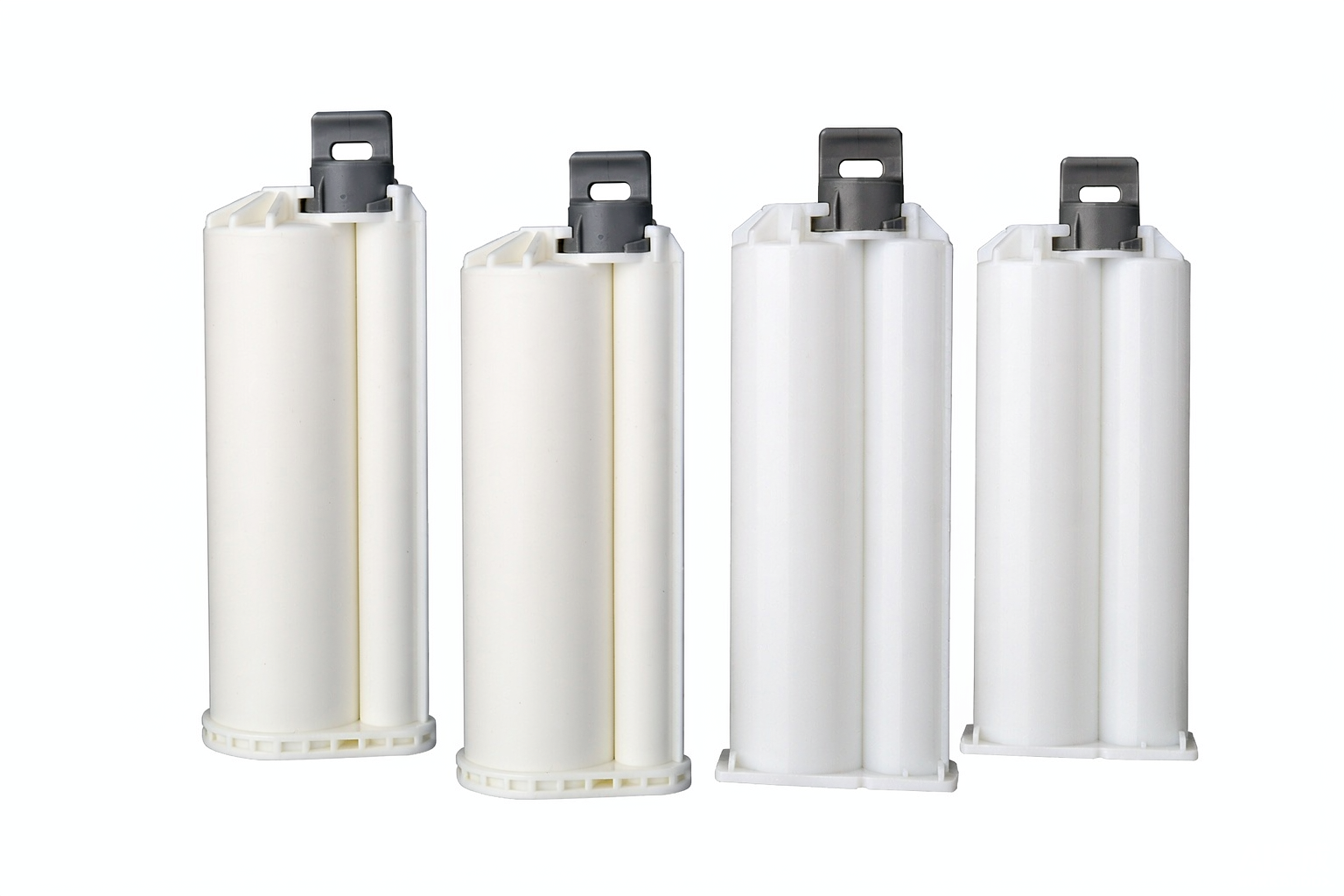
A static mixer part number can look precise while leaving the most important question unanswered: will this mixer seal, keep both components separated, and work with the approved adhesive process? A buyer may receive three codes for parts that look alike, yet each code belongs to a different supplier’s naming system.
Key Takeaways
- Treat the code as a record locator. It identifies a supplier’s specification; it does not prove interchangeability.
- Decode only published fields. Haijing’s example BH-5.4-16-T-GY records series, diameter, element count, outlet type, and color.
- Filter by interface first. Similar tube length or color cannot correct an inlet that will not seat or seal.
- Cross-reference the whole assembly. Record cartridge family, ratio, mixer interface, geometry, outlet, polymer, and application.
- Qualify the proposed replacement. Drawing review, dry fit, balanced purge, leak checks, bead review, and cure acceptance belong in one release record.
The reliable method is simple: identify what the issuing supplier says the code means, separate known fields from assumptions, then verify the proposed substitute against the physical assembly. This guide gives procurement and engineering teams a repeatable way to do that.
Start With The Physical Assembly
Begin with the parts on the bench, not a search box. Photograph the cartridge outlet, mixer inlet, retaining feature, cap, and any adapter from several angles. Record the cartridge brand, capacity, ratio, adhesive name, current mixer code, and dispenser model before asking for an equivalent.
This prevents a common purchasing error. A distributor searches one catalog number, finds a mixer with the same diameter and element count, and assumes the connection matches. The proposed part arrives, but the inlet will not seat fully or the retaining feature loads the wrong surface. The code was real. The cross-reference was incomplete.
A physical sample also exposes revisions that paperwork misses. Molded markings may differ from a carton label, while an old drawing can remain in a shared drive after the supplier changes a suffix. Keep photographs, labels, and the current drawing in the same identification packet.
Separate Encoded And Opaque Numbers
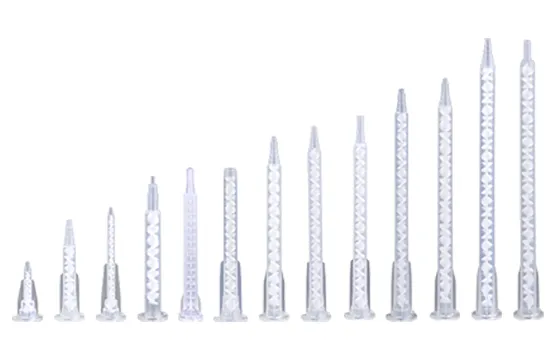
Mixer identifiers fall into two practical groups. A geometry-based code contains readable fields such as product family, nominal inner diameter, element count, tip style, or color. An opaque catalog number is only a unique identifier. Its digits may have no independent technical meaning.
Do not force an opaque number into a grammar. The official 3M product page identifies one green square EPX nozzle as NOZ-GR-2:1/1:1 and 3M ID 7100104991. Those identifiers point to a nozzle specified for 48.5 ml and 50 ml Duo-Pak cartridges in 1:1 and 2:1 ratios. Another supplier’s seven-digit number can follow a completely different structure.
| Identifier Type | What You May Read | Required Evidence | Main Risk |
|---|---|---|---|
| Geometry based | Only documented code fields | Supplier code legend and drawing | Assuming every suffix is universal |
| Catalog only | Record identity | Current datasheet or catalog row | Inventing meaning from the digits |
| Customer internal | Approved stock identity | Controlled cross-reference record | Losing the supplier revision |
| Legacy or obsolete | Historical reference | Last drawing and physical sample | Buying a visual near-match |
Record who owns the identifier. That one field stops a supplier code, a distributor SKU, and a customer’s internal stock number from being treated as three technical specifications. They may all point to one part, but the links need evidence.
Decode A Geometry Based Code
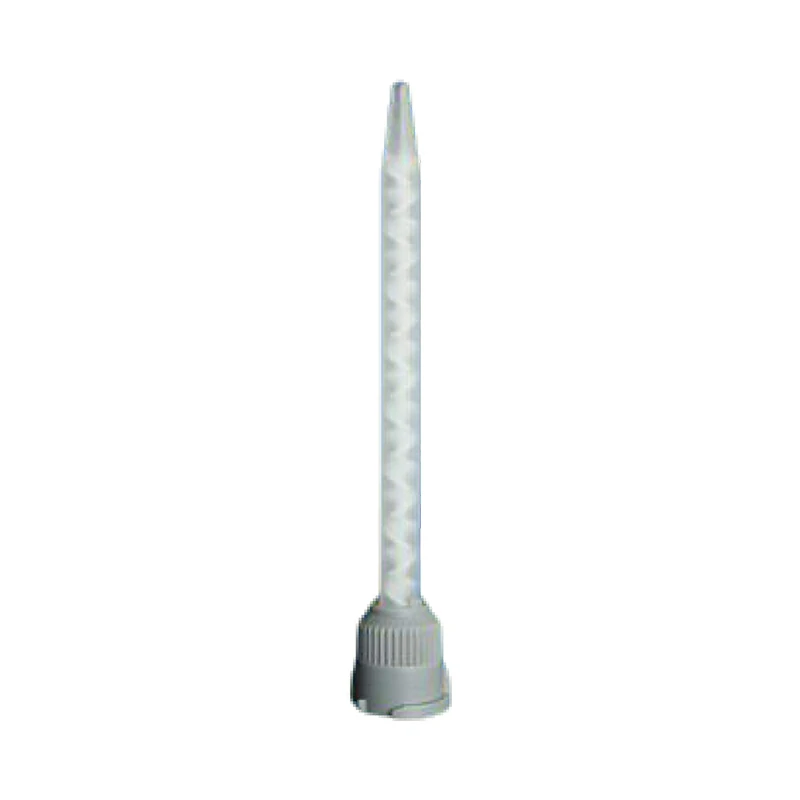
Haijing documents BH-5.4-16-T-GY as a model-code example. In that naming structure, the record carries the series, a 5.4 diameter field, 16 mixing elements, an outlet-type suffix, and a color suffix. Read those fields through the current Haijing legend and drawing, not through another brand’s catalog.
| Code Segment | Documented Role | Buyer Check |
|---|---|---|
| BH | Series and geometry family | Confirm inlet and element form |
| 5.4 | Diameter field | Confirm the drawing datum and unit |
| 16 | Element count | Count only against the released drawing |
| T | Outlet type | Confirm the exact tip geometry |
| GY | Color | Match the approved visual code |
The decimal field is a good example of why the legend matters. It may represent a nominal inner diameter in a documented series, but a buyer should not assign a unit or tolerance from the text string alone. The drawing owns the datum, unit, and acceptance limit.
The same discipline applies to letters. A suffix that identifies a stepped outlet in one supplier’s system can mean something else elsewhere. Copy the supplier’s exact description into the cross-reference record and preserve the source revision.
Treat Interface As A Hard Filter
The inlet interface decides whether the mixer can join the cartridge. It comes before diameter, element count, outlet, or color. Haijing’s documented families illustrate the range: A-System uses a bayonet twist-and-lock inlet for 50 ml cartridges, while B-System covers 50 ml, 75 ml, and 100 ml formats with separate outlet paths.
For larger packages, Haijing records C-System bell/thread connections for 200 ml, 400 ml, and 600 ml cartridges. The F-System uses a quick lock with a positive stop for 200 ml and 400 ml packages. Each family has its own mating geometry. An article dedicated to A, B, C, and F interface selection explains those connection families in detail.
Capacity and ratio help narrow the search, but neither proves the interface. Haijing lists 1:1, 2:1, 4:1, and 10:1 configurations across several families, with specific limits by series. Two cartridges can share a nominal ratio while using different outlet spacing, locking features, or inlet paths.
Look for the sealing surfaces and component separation. A mixer can appear to lock while leaving an inlet partially open. A replacement that bridges separated paths too early can create local reaction at the inlet. That failure may show up as leakage, blockage, or unstable restart rather than an obvious fit problem.

Verify A Mixer Before Bulk Release
Send the existing code, cartridge details, interface photographs, and application requirements. Haijing can prepare samples and supporting technical files for a controlled comparison.
Documented code review | Engineering samples | Specification freeze
Read Diameter And Element Count
Diameter and element count describe internal geometry only when the supplier says they do. They influence the flow path, but they do not act alone. Element shape, housing length, transition geometry, adhesive viscosity, component ratio, and dispense rate all affect the loaded process.
A narrower flow path generally adds restriction, while more elements add mixing work and retained volume. Those directions are useful for screening. They are not universal performance values. The mixing element count guide explains why the approved count must come from material-specific evidence.
The medmix product finder shows why buyers should capture more than a short code. Its current table exposes fields such as system, ID, article, elements, inner diameter, waste volume, outlet tip, ratio, and technology. A proper cross-reference preserves that same level of detail even when the supplier formats it differently.
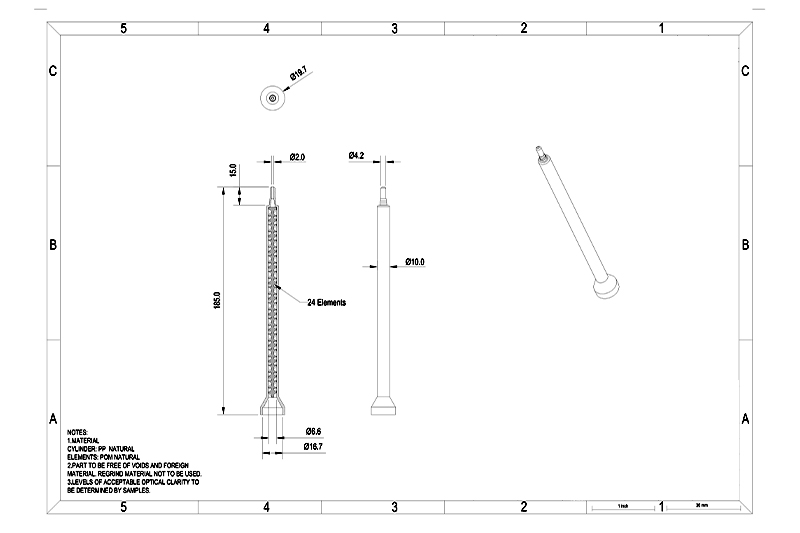
Never qualify a substitute from diameter and count alone. If the original has 24 elements and the candidate has 24, the element cross-section can still differ. A small change can alter pressure response, retained adhesive, or visual mix quality. The production adhesive must decide.
Check Tip And Color Suffixes
The outlet controls how the mixed adhesive leaves the housing and connects to downstream accessories. A stepped tip can be trimmed to create a larger opening. A Luer-style outlet can accept a compatible precision tip. A tapered outlet may suit direct bead placement. Confirm the actual drawing rather than translating a single letter by habit.
Color may be functional, operational, or both. It can identify an element geometry, a ratio-specific station, or a customer’s approved configuration. If the color appears in the part number, define whether it controls the housing, internal elements, tip, or complete assembly.
Do not let color carry technical claims that belong to the drawing. A green mixer from one supplier is not automatically equivalent to a green mixer from another. The 3M EPX page, for example, pairs color with a named nozzle, specified cartridge sizes, and ratios. The complete record matters.
Build A Cross Reference Record
A useful static mixer cross reference is a controlled engineering record, not a two-column list of old and new codes. The Sika mixer-alternatives document demonstrates the right principle: it lists an adhesive beside the cartridge type, verified mixer, and verified dispenser. Compatibility belongs to a system and application.
| Record Block | Minimum Fields | Release Evidence |
|---|---|---|
| Existing assembly | Adhesive, cartridge, ratio, dispenser | Labels, photos, current BOM |
| Original mixer | Owner, code, revision, geometry | Drawing and approved sample |
| Proposed mixer | Code, interface, elements, tip, polymer | Supplier drawing and sample lot |
| Trial conditions | Material state, method, acceptance rules | Signed test record |
| Change control | Approved revision and notification terms | Purchase specification |
Add a disposition field: approved, rejected, or conditional. A conditional equivalent might fit the cartridge but require a new bead or cure trial because its internal geometry changed. That is not a paperwork defect. It is a deliberate technical boundary.
Keep the evidence with the decision. Haijing can provide test reports, first article inspection reports, STEP or IGES models, and chemical-compatibility tables. These files help a buyer compare geometry and materials before consuming production adhesive.
Qualify The Proposed Replacement
Start with a dry fit on the exact cartridge. Confirm the inlet seats fully, the lock or retaining feature engages as intended, and no adapter carries load on an unintended surface. Check that separate component paths remain separated until the designed mixing zone.
Next, balance the cartridge outlets according to the adhesive supplier’s instructions. Attach the candidate mixer and dispense into approved waste containment. Watch the inlet for leakage, the housing for movement, and the initial bead for persistent streaking or an off-ratio appearance.
- Identify the released stack. Record adhesive, cartridge, ratio, dispenser, original mixer, and proposed code.
- Review both drawings. Compare inlet, seal, lock, diameter, elements, outlet, length, polymer, and critical tolerances.
- Inspect the sample lot. Confirm molded marks, color, element presence, cleanliness, packaging, and traceability.
- Run the physical fit check. Seat, lock, retain, and remove the mixer without adhesive.
- Run a material trial. Use the production adhesive and documented operating conditions.
- Apply acceptance criteria. Evaluate leakage, pressure response, bead consistency, mixing, and cure using approved methods.
- Freeze the result. Link the approved code, drawing revision, sample lot, test record, approver, and date.
Do not approve by appearance alone. Sika’s July 2026 Version 09 technical information tells users to test products for their intended application and consult the latest local product data sheet. The same boundary protects any replacement program: supplier tables narrow the candidates; the application trial releases one.
Haijing’s documented sample lead time is 3–7 days, samples are not subject to MOQ, and sample plus freight fees apply. That route lets a buyer validate the proposed code before the standard 3,000-piece static-mixer MOQ becomes a production commitment.
Write A Purchase Specification
Once the sample passes, convert the evidence into a purchase specification. List the approved static mixer part number, supplier, drawing revision, inlet family, critical dimensions, element geometry and count, outlet, polymer, color, packaging, label, and traceability requirements. Name the relevant static mixer product family in the sourcing record so procurement can return to the controlled commercial specification rather than a generic search result.
Attach the approved cross-reference and define substitutions. “Equivalent accepted” is too broad. A controlled clause should require written review before any change to the model, mold, polymer, color, geometry, sub-supplier, or packaging that can affect fit or performance.
Give receiving inspection a practical check. Operators need the molded identifier, packaging label, approved color, and a short list of measurable or visual characteristics. Engineering keeps the full drawing and qualification record. Procurement keeps the approved supplier and revision.
For new sourcing programs, combine this record with the epoxy mixing nozzle buying guide. The first document identifies the part. The second helps control samples, waste, supporting files, and bulk release.
References
The mixer record sits inside a wider package release. The empty silicone and adhesive cartridge guide shows how to connect the body, material, piston, cap, filling method, storage trial, and change control.
A mixer code is only one field in a complaint record. The 2K cartridge failure analysis guide connects that identity to the cartridge, material, process history, retained sample, and passing control.
Once identity and drawing fields are frozen, the mixing nozzle qualification workflow shows how to turn that identified part into a reproducible production-release decision.
Frequently Asked Questions
Can similar mixer codes be interchangeable?
No. Similar codes can belong to different naming systems. Compare the current drawings, mating cartridge, interface, geometry, outlet, polymer, and application trial before approving an equivalent.
What does the diameter number mean?
It means only what the issuing supplier’s code legend and drawing define. Confirm the datum, unit, and tolerance instead of assuming every numeric field is an inner diameter.
Does element count prove mix quality?
No. Element count is one geometry input. Element shape, diameter, adhesive properties, ratio, flow, temperature, and process conditions still affect the result.
What belongs in a mixer cross reference?
Record both codes, owners, drawing revisions, cartridge, ratio, interface, elements, outlet, polymer, dispenser, adhesive, trial conditions, sample lot, result, approver, and date.
Must a replacement use the actual adhesive?
Yes. A dry fit screens mechanical compatibility, but the production adhesive is needed to evaluate leakage, pressure response, bead quality, mixing, and cure against approved criteria.
A code should be the output of controlled inputs. The resin static mixer input sheet shows what formulation and package data must precede cross-reference approval.
Conclusion
A reliable static mixer part number process separates identification from approval. Decode only supplier-documented fields, filter candidates by the full cartridge interface, and connect every proposed equivalent to a drawing and physical sample. That discipline turns a catalog search into a controlled engineering decision.
- Use the code to locate the current supplier record.
- Keep interface, geometry, outlet, polymer, and application in one cross-reference.
- Release the replacement only after the production adhesive passes defined acceptance checks.
- Freeze the approved drawing, sample lot, test record, revision, and change-control requirement.
If the existing code is unclear, start with photographs, the cartridge and a sample rather than a guessed equivalent. Haijing can provide engineering samples and supporting files so your team can approve one configuration before bulk ordering.