An empty silicone cartridge may pass incoming inspection and still fail after filling. The body looks correct, the piston seats, and the cap closes—but a shelf trial later reveals air pockets, leakage, paneling, or a closure that no longer releases cleanly.
The mistake is approving a loose collection of plastic parts instead of a filled-package system. A reliable specification ties the cartridge architecture, resin, piston, cap, outlet, filling method, formulation, and storage trial to one release record.
Key Takeaways
- Choose the architecture first. A single-component tube and a dual-component cartridge solve different packaging problems.
- Use material names as a starting point. HDPE, PP, PA, or PBT availability does not prove compatibility with a specific formulation.
- Specify the closure as a system. The piston, body, outlet, and cap must be evaluated together.
- Control air before the piston enters. Bulk-material condition, fill direction, nozzle motion, and closure technique all affect trapped air.
- Let the filled package own storage limits. Use the formulation supplier’s guidance, then verify it through the intended package and distribution cycle.
- Release bulk orders from evidence. Freeze drawings, samples, process settings, trial results, lot identity, and change-control terms.
This guide is for adhesive and sealant brands, packaging buyers, and filling engineers. It explains how to turn an empty-cartridge inquiry into a controlled qualification program without inventing a universal plastic, filling speed, or storage temperature.
Choose The Correct Cartridge Architecture
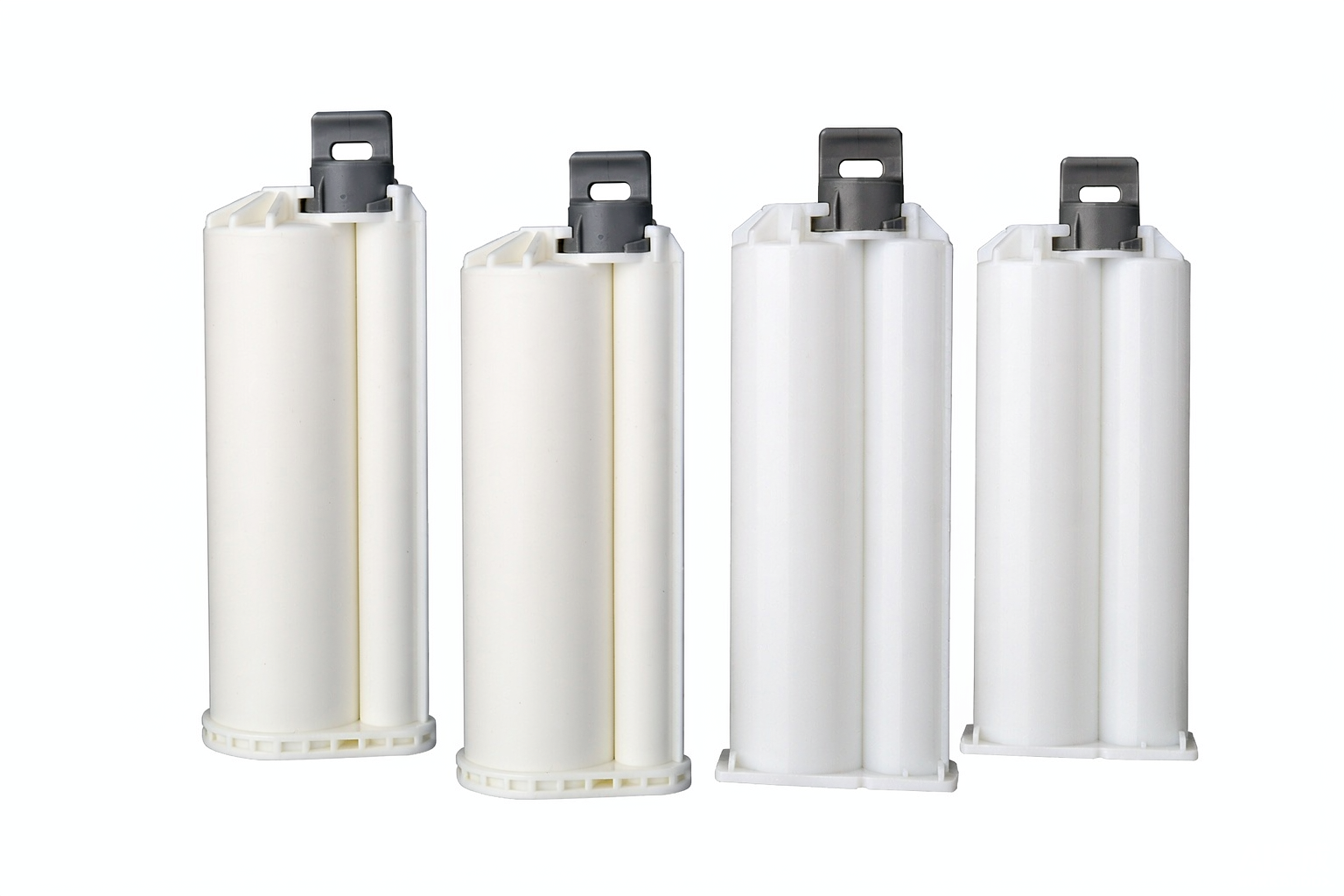
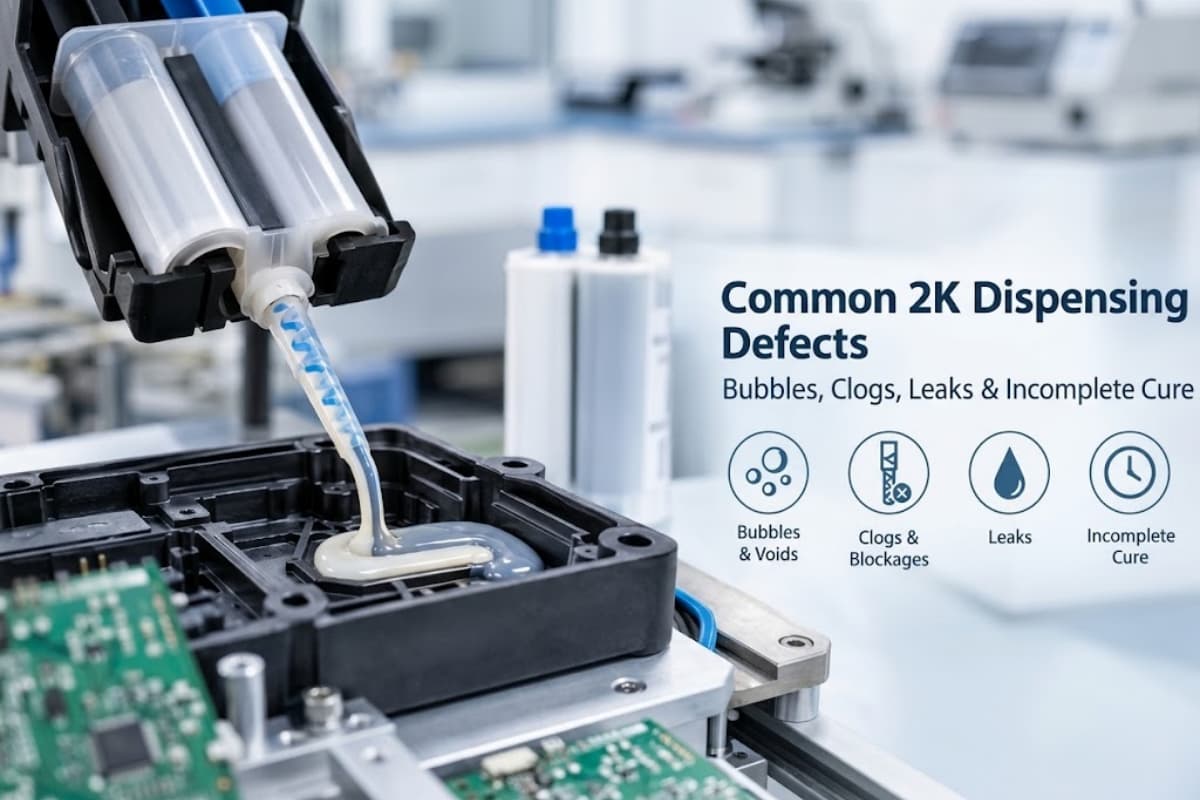
Start with the formulation system. A single-component cartridge stores one ready-to-use silicone, sealant, grease, or adhesive behind a moving piston. The dispenser advances that piston and pushes material through one outlet. A dual-component cartridge keeps resin and hardener in separate chambers until the dispenser drives both sides into a compatible static mixer.
Those packages are not interchangeable. A search for an empty caulk tube may lead to a familiar cylindrical body, but a two-part epoxy program also needs the correct chamber ratio, paired pistons, separated outlets, mixer interface, and matching dispenser. Calling both products “empty cartridges” hides the controls that matter.

| Decision | Single-Component Cartridge | Dual-Component Cartridge |
|---|---|---|
| Material stored | One ready-to-dispense formulation | Two reactive components kept separate |
| Primary geometry | One barrel, one piston, one outlet | Two chambers, paired pistons, divided outlet |
| Selection record | Capacity, barrel, piston, cap, outlet, nozzle | Capacity, ratio, chamber geometry, pistons, outlet, mixer |
| Process risk | Air, leakage, moisture exposure, closure fit | All single-pack risks plus ratio and component separation |
| Downstream hardware | Compatible single-cartridge dispenser and nozzle | Ratio-matched dispenser and static mixer |
Write the package type at the top of the RFQ. For a one-part product, review Haijing’s single-component cartridge range. For a two-part product, use the dual-component cartridge range and freeze the ratio before choosing the mixer.
Match Capacity To The Filling Program
Capacity is not just a label-volume decision. It affects filling fixtures, piston insertion, dispenser fit, shipping configuration, and the amount of material exposed when a unit is opened. Record the target net fill separately from the cartridge’s nominal capacity so the filler can define headspace and closure position.
Haijing lists single-component formats at 100, 200, 300, 310, 400, 500, 1,000, and 2,600 ml. Its dual-component portfolio covers 50, 75, 100, 200, 400, 600, and 1,500 ml, with available 1:1, 2:1, 4:1, and 10:1 ratios. Availability still needs to be confirmed for the exact capacity, ratio, outlet, piston, and material combination.

Bring the complete equipment stack into the review. Name the bulk container, pump or filler, fill nozzle, piston-insertion method, cap tool, label station, production dispenser, and downstream nozzle or mixer. The dual-cartridge dispenser selection guide shows why capacity and ratio have to match the field tool. A 310 ml body that fits a manual filling fixture can still cause trouble if the selected piston tool cannot vent the chosen material or the field dispenser has the wrong thrust plate.
- Commercial fields: expected annual volume, pack-out, label area, color, printing, and target market.
- Package fields: nominal capacity, target fill, body dimensions, piston, outlet thread or interface, cap, and nozzle.
- Process fields: bulk presentation, fill direction, fill nozzle, line rate target, piston-setting method, and inspection plan.
- Use fields: dispenser, application nozzle or static mixer, bead requirement, and expected working environment.
A sample trial should use the intended stack. A hand-filled development sample can prove basic fit and material behavior, but it does not automatically release a high-speed filling line. When the program is choosing a common two-part size, the 200 ml versus 400 ml dual-cartridge comparison provides an additional capacity check.
Treat Material As A Validation Question
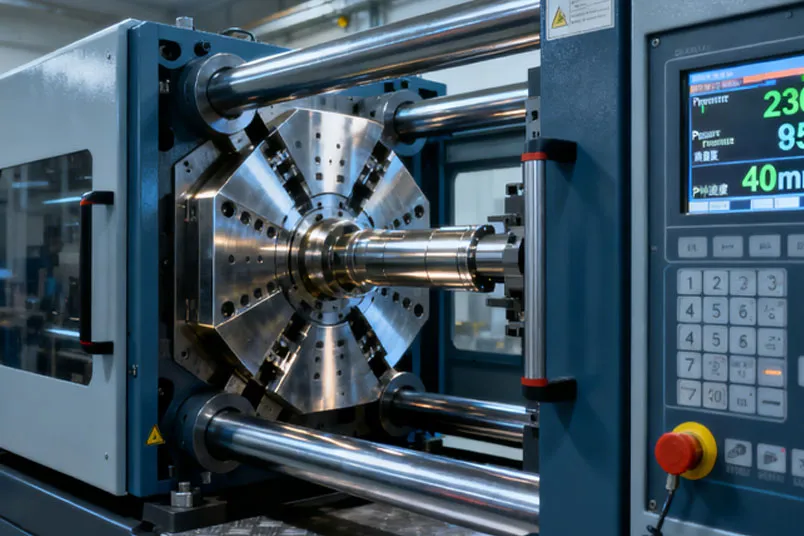
Plastic abbreviations are useful screening data, not shelf-life guarantees. Haijing documents HDPE, PP, and PBT options for single-component cartridges, and PP, PA, and PBT options for dual-component cartridges. The portfolio uses 100% virgin polymer. The final choice still belongs to formulation-specific compatibility and filled-package aging evidence.
Adhesives & Sealants Industry makes the same point in its packaging guidance: cartridge body, piston, and closure materials need evaluation against the actual formulation and intended shelf life. One resin family may behave differently across grades, pigments, additives, wall sections, molding conditions, and storage environments.
| Evidence Layer | What It Can Establish | What It Cannot Establish Alone |
|---|---|---|
| Supplier material declaration | Resin family and agreed grade or composition record | Compatibility with the buyer’s finished formulation |
| Drawing and dimensional report | Geometry, tolerances, and component fit at inspection | Long-term sealing after filling |
| Empty-package sample | Molding quality, assembly, equipment fit, and handling | Filled shelf life or transport performance |
| Formulation compatibility review | Known chemical risks and a test plan | Performance through the full package lifecycle |
| Filled-package aging trial | Observed package behavior under defined conditions | Conditions, formulations, or periods outside the protocol |
Define acceptance before the aging trial starts. Depending on the formulation and application, the record may include mass change, leakage, paneling, cracking, piston movement, extrusion behavior, cure response, appearance, and closure removal. Test intervals and conditions should come from the formulation owner and the intended market—not from a generic cartridge article.
Customization also belongs inside validation. Pantone color, printing, UV-barrier requirements, and nozzle selection can change the package record. Freeze the exact approved construction rather than approving “PP cartridge” as a broad category.
Qualify The Cartridge Before Bulk Filling
Send the formulation class, fill method, required capacity, piston, cap, outlet, storage plan, and expected annual volume. Haijing can prepare samples and technical files for your package review.
Single and dual formats | Custom color and printing | Sample-based approval
Specify Piston Cap And Outlet Together
The piston is a moving package wall. It transfers dispenser force, follows the product, and helps seal the rear of the filled unit. The outlet cap closes the opposite end. If either interface is wrong, a good barrel cannot rescue the package.
Specify the piston model, sealing geometry, insertion orientation, target seat position, and compatible insertion tool. Haijing’s single-component portfolio includes a Multi-Seal piston and an M15 × 2.5 outlet thread. Treat those as documented configuration fields, not a promise that every piston or cap fits every cartridge size.
For dual-component packages, record both pistons and the divided outlet as one assembly. Confirm chamber ratio, outlet separation, cap geometry, mixer interface, and the dispenser thrust pattern. A cap that seals only one path or a piston set that advances unevenly can compromise the package before the adhesive reaches the mixer.
- Body: supplier model, resin, capacity, drawing revision, color, print, and lot marking.
- Piston: model, resin, seal geometry, orientation, seat position, and insertion method.
- Outlet: thread or interface, orifice geometry, sealing surface, and cleanliness protection.
- Cap: model, seal feature, installation method, removal requirement, and tamper evidence if needed.
- Use accessory: application nozzle or static mixer, retaining feature, and approved dispenser.
Keep approved samples of the complete kit. Loose parts sourced by appearance can carry small dimensional differences that are hard to detect until filling or storage.
Prepare Empty Cartridges Before Filling
Release the empty components before the formulation reaches the line. Confirm the body, piston, cap, outlet accessory, labels, and packaging against the bill of materials. Record the supplier lot and internal batch so a later defect can be traced without quarantining unrelated inventory.
Inspect for shipping damage, deformation, flash, contamination, blocked outlets, damaged sealing surfaces, and mixed components. Define the environment and handling rules with the formulation and quality teams. “Looks clean” is not a measurable cleanliness specification.
Run a dry setup on the actual fixture. Confirm the cartridge seats repeatably, the fill nozzle reaches its intended start position, the support prevents distortion, and the piston tool aligns without scraping the barrel. Check that the cap tool loads the intended feature rather than the outlet tip.
If the formulation is moisture sensitive, reactive, abrasive, or highly filled, add controls supplied by the formulation owner and filling-equipment specialist. Do not copy a purge, vacuum, or environmental limit from an unrelated adhesive.
Control Air During Cartridge Filling
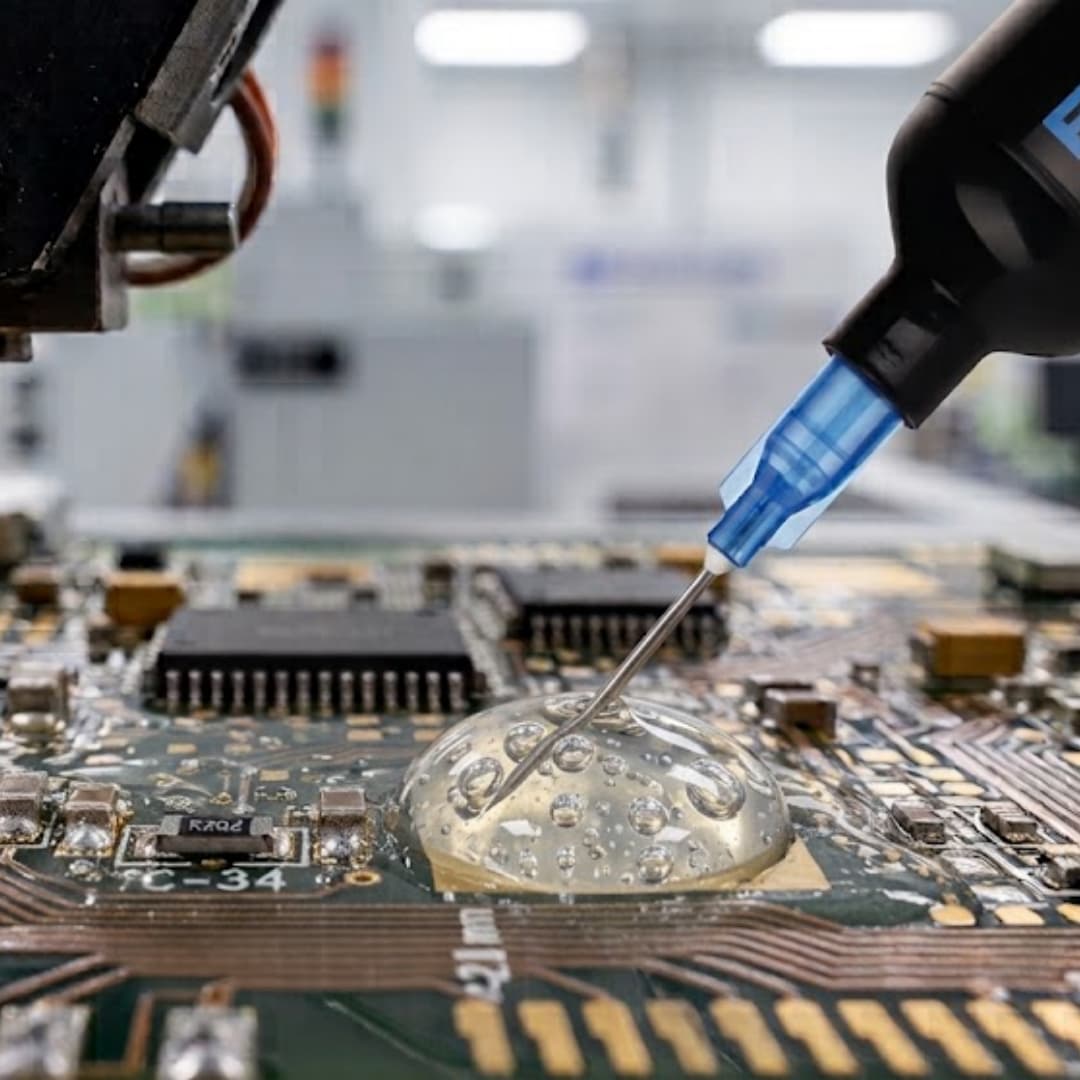
Air control starts with the bulk adhesive. Material that arrives aerated cannot be fixed reliably by pressing the piston harder. Define bulk conditioning, transfer, and hold-time rules with the formulation supplier, then keep the fill path short, stable, and free of avoidable turbulence.
For suitable processes, bottom-up filling keeps the nozzle near the rising product surface and withdraws it as the level increases. Nannini describes this vertical filling approach as a way to control filling and avoid bubbles. medmix documents back-filling, front-filling, vacuum options, piston setting, and outlet-channel controls; the correct method depends on the material and package.
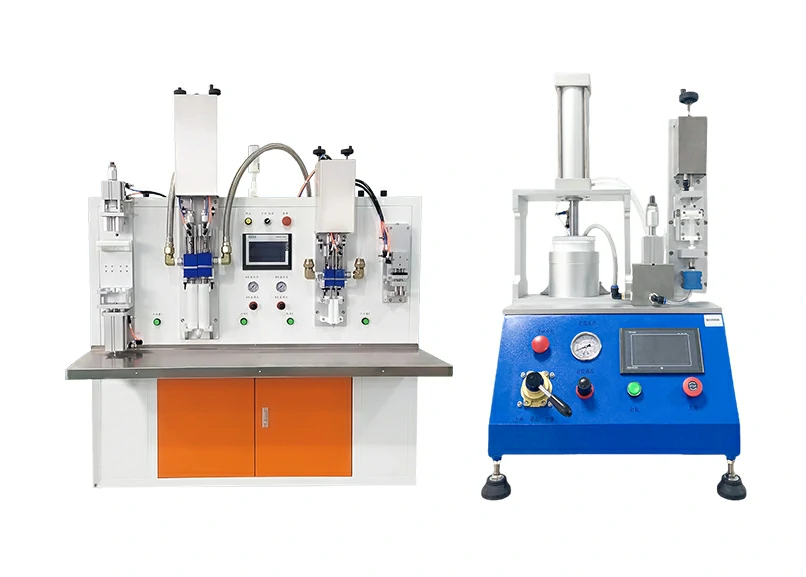
Piston insertion must also match product behavior. Nordson EFD advises a different approach for thick pastes and RTV silicones than for thin fluids. Its guidance warns that trapped air can make the piston bounce and produce inconsistent deposits. Use the cartridge and equipment supplier’s approved tool and method for the tested formulation.
- Release the package kit. Verify body, piston, cap, outlet, drawings, and lot identity.
- Prepare the formulation. Apply the formulation owner’s conditioning, transfer, and exposure controls.
- Set the filler. Record fill nozzle, start position, motion profile, target fill, and verified scale or metering setup.
- Fill with controlled nozzle motion. Keep the outlet path and rising product interface under observation; stop if voids or splashing appear.
- Insert the piston by the qualified method. Use the approved orientation, tool, venting technique, and seat position for that product.
- Close the outlet. Install the released cap without contaminating or damaging its sealing features.
- Inspect and quarantine pending release. Check fill, closure, appearance, lot marking, and defined functional samples before packing.
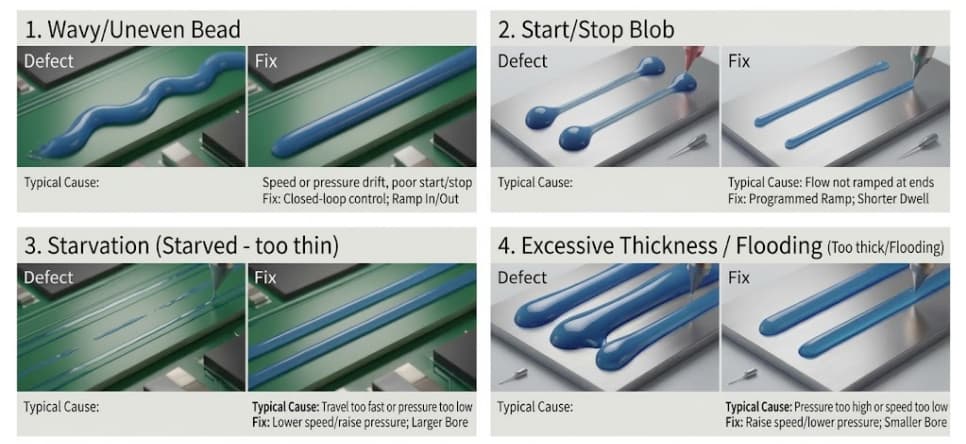
Record settings as ranges only after a designed trial shows the range is stable. A single successful cartridge at one slow setting does not establish a production window.
Close Label And Inspect Filled Units
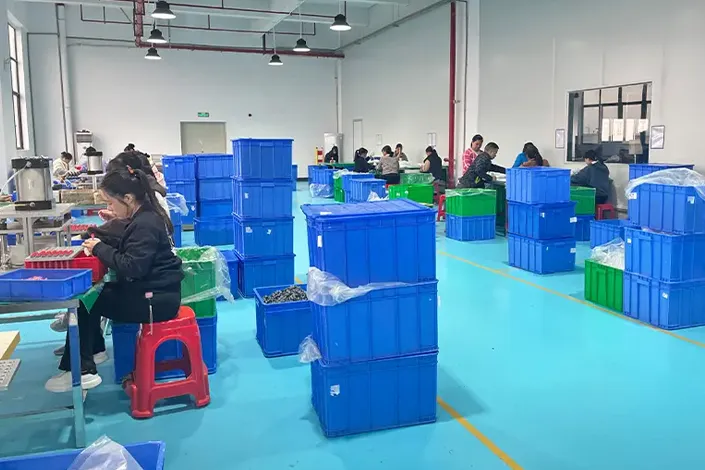
Closure is a process step, not a packing afterthought. Inspect piston seating and outlet-cap engagement using defined visual or dimensional criteria. If excess material is present on a sealing surface, identify whether the cause is overfill, fill-nozzle withdrawal, piston insertion, or cap installation.
Verify net fill with a controlled weighing or metering method. The production record should identify the cartridge lot, formulation batch, fill date, line or machine, shift, operator, and released label revision. Nannini’s line overview includes marking batch and expiration information after filling; those identifiers make later investigation possible.
- Package identity: confirm the body, piston, cap, label, and supplier lots match the approved kit.
- Fill quantity: compare the verified scale or meter result with the approved limit and sample plan.
- Piston and cap: check seat position, engagement, visual condition, and sealing features.
- Appearance: apply the written void, contamination, deformation, and leakage criteria.
- Traceability: link the formulation batch, package lot, line, date, and label to the process record.
- Functional sample: run the defined dispense, bead, or cure check at its approved frequency.
Quarantine the lot until required checks are complete. Keep retains from the defined beginning, middle, and end of a run when the quality plan calls for them. A retain has value only when its storage condition and identity remain controlled.
Validate Storage And Transportation
There is no responsible universal storage temperature for every filled silicone or adhesive cartridge. The formulation supplier sets the product’s storage guidance. Packaging engineering then verifies that the selected body, piston, cap, outlet, label, and pack-out preserve performance through the claimed period and distribution environment.
medmix highlights temperature, pressure, and vibration as mechanisms that can influence stored cartridges, and recommends avoiding temperature fluctuations. Use those mechanisms to design a risk assessment, not to invent limits. Consider warehouse cycles, truck vibration, altitude or air-freight pressure changes, pallet compression, orientation, and repeated handling where they apply.
Build a filled-package protocol with time-zero controls and planned intervals. Inspect seal integrity, mass, body shape, piston position, outlet condition, label adhesion, and dispensing behavior. The formulation owner may add cure, viscosity, adhesion, color, or other product-specific tests.
- Real-time storage: evaluates the filled package under the claimed condition for the intended period.
- Accelerated or stressed storage: may screen risks when designed and interpreted by qualified technical owners.
- Transport simulation or trial shipment: checks pack-out, vibration, pressure, impact, orientation, and temperature exposure as relevant.
- Retain comparison: links physical package observations to formulation performance at each interval.
Do not extend a shelf-life claim solely because the empty parts share a material name with a previous package. The released claim belongs to the tested formulation, package construction, process, storage condition, and evidence set.
Build A Bulk Purchase Specification
The bulk specification should let a new buyer order the same approved package without relying on memory. Name the cartridge model, capacity, resin and grade record, color, drawing revision, piston, cap, outlet, nozzle or mixer, printing, pack-out, inspection documents, traceability, and change-notification terms.
Haijing documents annual cartridge capacity above 35 million pieces. The standard cartridge MOQ is 1,000 pieces. Samples have no MOQ, sample and freight fees apply, and the stated sample lead time is 3–7 days. Use samples to close technical questions before converting the program into a bulk commitment.
| Specification Block | Minimum Fields | Release Evidence |
|---|---|---|
| Application | Formulation class, one- or two-part, use market, target shelf life | Approved packaging requirement |
| Cartridge | Model, capacity, dimensions, resin record, color, print, drawing revision | Signed drawing and approved sample |
| Closure system | Piston, cap, outlet, nozzle or mixer, orientation and seat requirements | Component BOM and assembly check |
| Filling process | Filler, nozzle, fill direction, target fill, piston method, line limits | Trial report and approved work instruction |
| Storage and shipping | Condition, period, orientation, pack-out, transport profile | Filled-package validation report |
| Supply control | MOQ, pack quantity, labels, lot traceability, documents, change notice | Purchase specification and quality agreement |
State that substitutions require written approval. Changes to resin grade, mold, dimensions, piston, cap, pigment, print, packaging, or sub-supplier may affect the released system even when the commercial model name stays the same.
For related component control, use the static mixer part-number guide to build a defensible cross-reference record. Keep the empty-package approval, fill-process qualification, and finished-package validation linked under one program number.
References
If a released package later produces a lot-level complaint, use the 2K cartridge failure analysis checklist to preserve the as-found state, isolate one boundary at a time, and build a reproducible supplier claim.
Frequently Asked Questions
Is an empty silicone cartridge the same as a dual-component cartridge?
No. A conventional empty silicone cartridge usually has one barrel for a ready-to-use formulation. A dual-component cartridge has two separated chambers and also requires a defined ratio, paired pistons, divided outlet, compatible dispenser, and static mixer.
Which plastic is best for an empty adhesive cartridge?
No single plastic is best for every adhesive. HDPE, PP, PA, and PBT can be available in different cartridge constructions, but the actual formulation, component grades, closures, fill process, storage claim, and filled-package test must decide.
How can air be reduced during cartridge filling?
Start with properly conditioned bulk material, a controlled transfer path, suitable fill direction and nozzle motion, and a qualified piston-insertion method. Bottom-up or vacuum-assisted methods can suit some processes, but the formulation and equipment owners must set the method.
Can empty cartridges be sampled before the MOQ?
Yes. Haijing states that samples have no MOQ and normally require 3–7 days; sample and freight fees apply. The standard cartridge MOQ is 1,000 pieces, so sample-based testing should come before bulk release.
What storage temperature should a filled cartridge use?
Use the formulation supplier’s storage guidance, then validate the exact filled package and distribution profile. Do not copy a universal temperature from another adhesive or cartridge because compatibility and shelf life belong to the tested system.
A cartridge package should be released with the equipment boundary that fills and closes it. The cartridge filling machine selection and FAT guide shows how to specify that boundary before line approval.
Conclusion
An empty cartridge becomes production packaging only after the filled system is qualified. Freeze the architecture first, then connect capacity, material record, piston, cap, outlet, filling setup, storage protocol, and supply controls. That sequence prevents procurement from approving a familiar-looking tube while engineering is still discovering how it behaves with the real formulation.
- Define single-component or dual-component architecture before requesting samples.
- Use the actual formulation and complete closure kit in compatibility and aging work.
- Control air through bulk preparation, filling, piston insertion, and outlet closure.
- Release bulk purchases from a signed drawing, approved sample, process record, and filled-package evidence.
The final handoff should be a release packet, not a verbal approval: cartridge and closure BOM, current drawings, supplier lots, approved samples, filling parameters, inspection criteria, storage and transport results, and change-control terms. If you are preparing a new silicone, sealant, or adhesive line, send Haijing the formulation class, target fill, equipment stack, closure needs, and forecast. The team can help narrow the cartridge configuration and prepare samples for your own validation program.