A PCR cartridge is a dispensing cartridge whose plastic parts are made with post-consumer recycled resin. The term is easy to misread — in a search box, PCR usually means polymerase chain reaction, and in a packaging quote it means post-consumer recycled. This guide is about the latter: what PCR content in a 2K cartridge actually means, what percentage to specify, and how to prove the barrel still holds ratio and pressure before you switch your line over.
1. What Is a PCR Cartridge?
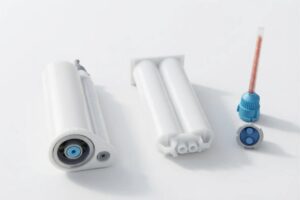
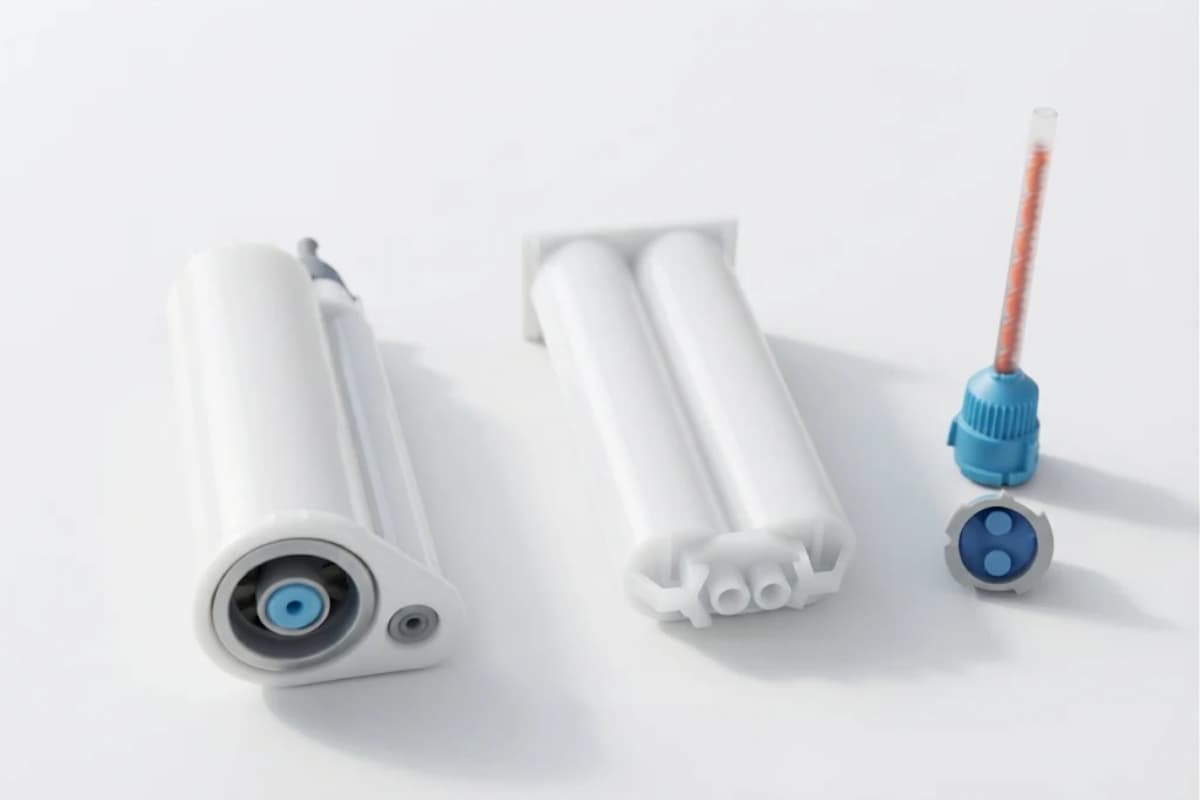
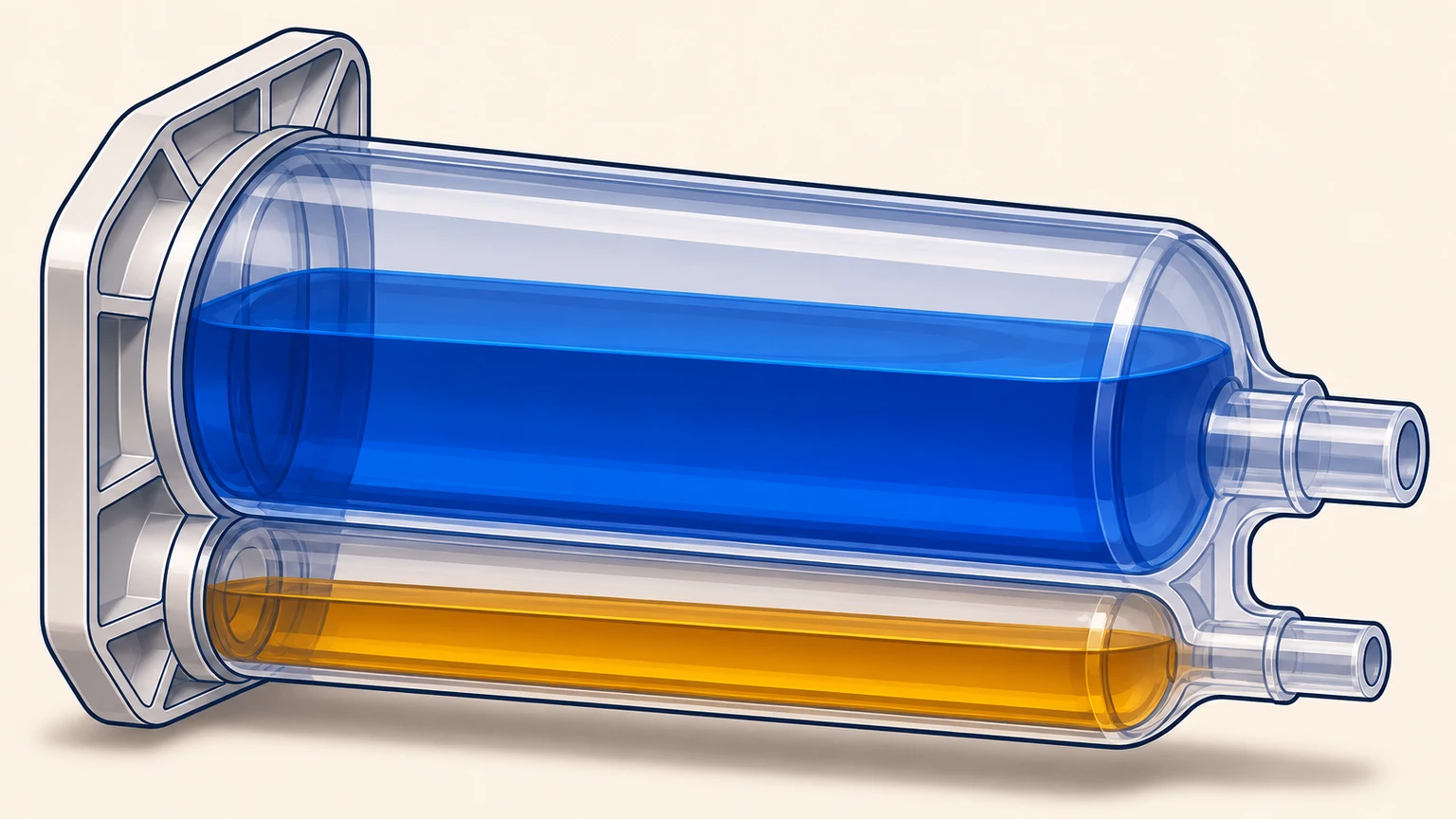
PCR stands for post-consumer recycled. It is plastic that was used by consumers, recovered, sorted, washed and reprocessed into resin — commonly rPP (recycled polypropylene) and rHDPE — then formed into a new part. In a two-component cartridge the barrel is the part most often offered in PCR; the piston, end cap and mixer may still be virgin. Knowing the difference between PCR, mono-material and recyclable matters, because buyers frequently use the three words as if they meant the same thing. The components of a dispensing cartridge system breakdown shows which pieces of the assembly can realistically carry recycled content.
| Term | What it means on a cartridge | What it does not promise |
|---|---|---|
| PCR cartridge | One or more plastic parts made with post-consumer recycled resin | That the whole assembly is recycled |
| Recyclable | A local stream will accept the clean part | That it contains any recycled content |
| Mono-material | Barrel and closures share one polymer family | That the resin is recycled |
| rPP / rHDPE | The specific recycled polymer used | A stated PCR percentage |
2. How Much PCR Content Should You Specify?
Ask for a percentage by component and by SKU, not a single number for the pack. A 30% PCR barrel with a virgin piston and a virgin mixer is very different from 30% across the assembly — and both can be described as a PCR cartridge. Suppliers in the adhesive market have published figures such as 30% recycled plastic in grey cartridges, and PCR PP cartridges are offered in 50 ml 1:1 and B/F-system formats. For a spec sheet, cartridge sizing and ratio compatibility is where capacity and ratio are fixed first, so the PCR discussion cannot quietly change the delivered shot.
| Part | Typical PCR availability | What to confirm |
|---|---|---|
| Barrel | Most common — rPP or rHDPE | Exact % and per-SKU certificate |
| Piston / plunger | Less common | Same % as barrel or stated separately |
| End cap / bayonet | Often virgin | Dimensional tolerance after molding |
| Mixer element + housing | Usually virgin | Qualification with thePCR barrel, not a generic one |
3. PCR vs Virgin Polypropylene: Performance Checks That Matter
PCR resin is not a drop-in material by definition. Recycled feedstock varies more than virgin, so colour and melt behaviour can shift between lots. What matters on a dispensing line is whether the finished barrel holds burst pressure, keeps bore tolerance and does not warp under clamp load — because bore fit is part of how ratio accuracy is held. Our note on why some brands specify virgin polymers explains why some formulators still write virgin polymer into their specification, and it is a fair question to put to a PCR supplier rather than assume equivalence.
| Property | Why it matters for 2K dispensing | Acceptance test to request |
|---|---|---|
| Burst pressure | Pneumatic guns clamp and pressurise the barrel | Same burst spec as the virgin SKU |
| Bore tolerance | Piston seal and ratio depend on it | Measured across three production lots |
| Dimensional stability | Warped barrels leak or jam the retainer | Clamp-and-hold trial at line temperature |
| Chemical compatibility | Resin must not interact with the adhesive | Soak test with your actual resin |
4. Will a PCR Cartridge Fit Your Gun and Mixer?
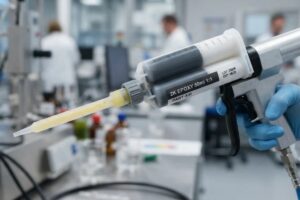
Compatibility is the most common reason a PCR trial fails. The barrel may be the right volume but the bayonet, flange or thread tolerance can change enough to affect sealing with an existing retainer. Check the interface against the OEM dual-component cartridge guide before ordering, then qualify the mixer on the PCR barrel itself — a nozzle that passes on a virgin barrel can show different back-pressure when the bore finish changes. Start from the static mixer nozzle selection guide and re-run the short trial rather than relying on the old result.
| Interface | What can change with PCR | How to verify |
|---|---|---|
| Bayonet / flange | Slight molding shrink | Dry-fit on the actual gun retainer |
| Barrel bore | Surface finish and tolerance | Measure, then dispense a ratio check |
| Mixer seat | Sealing land geometry | Leak check at working pressure |
| Filling line | Barrel stiffness on the conveyor | Run a trial batch on your cartridge filling machines |
5. PCR vs Collapsible vs Mono-Material: Where Each Wins
A PCR cartridge reduces virgin plastic at the material stage; it does not reduce the volume of empty packaging. Collapsible film formats fold as they empty and can cut discarded volume by roughly 75–85%, but their multilayer film normally needs a separate collection stream. Mono-material designs are easier to recycle at end of life. These options solve different problems and are often combined — for example a PCR barrel with a shorter mixer to cut retained adhesive. If your search started from sustainable or greenline-style alternatives, use this table to decide which claim you actually need.
| Option | Best when | Main limitation |
|---|---|---|
| PCR cartridge | You must report recycled content | Percentages differ by component |
| Collapsible / film | Empty volume and storage cost dominate | Film not curbside recyclable |
| Mono-material | Your region has a single-stream program | May still be virgin resin |
| Right-sized PCR | Changeover scrap is the real waste | Needs a cycle-volume study |
6. Sourcing a PCR Cartridge: Supplier, Samples and Drop-In Fit
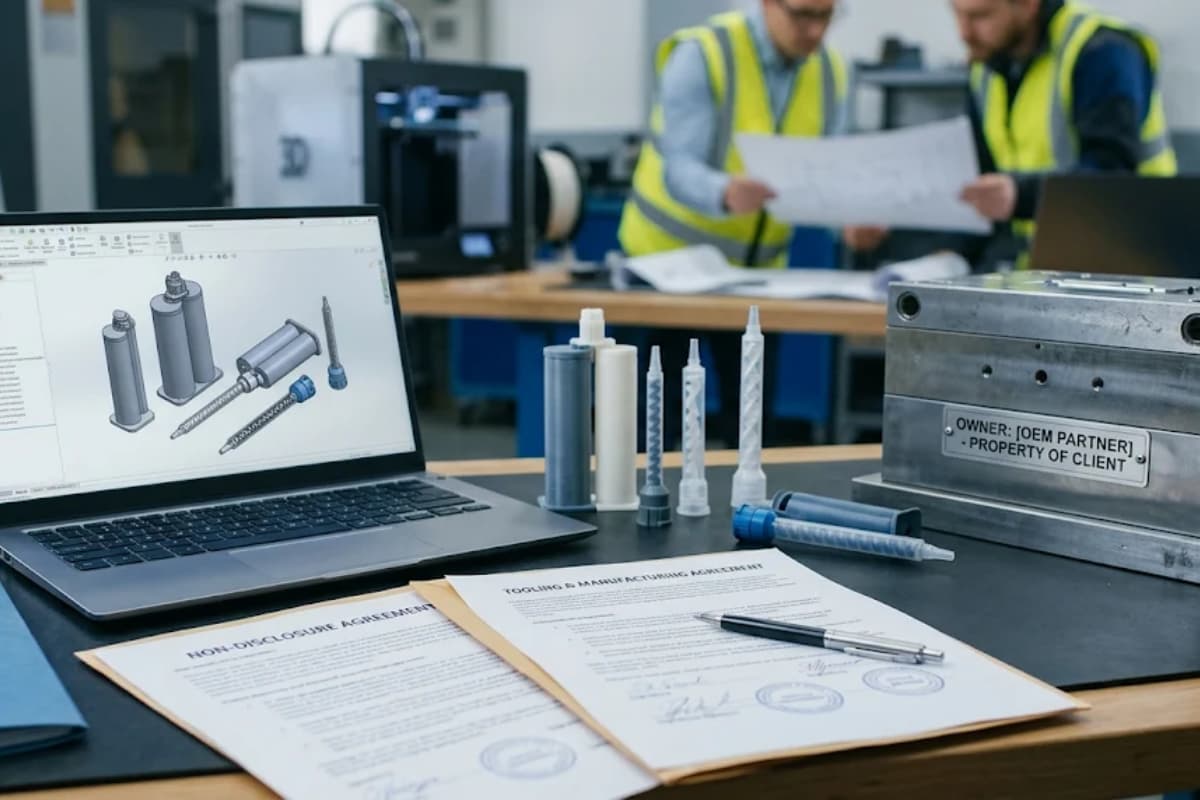
Once the specification is clear, most buyers search for a supplier who can supply a recycled two-component cartridge as a drop-in replacement — the same barrel format, mixer interface and gun fit, with no process change. That is why terms like PCR cartridge supplier, recycled 2K cartridge manufacturer, greenLine alternative and “direct replacement recycled cartridge” carry commercial intent: the searcher is close to a purchase or a sample request. Leading suppliers publish free-sample requests and ISCC PLUS chain-of-custody for PCR resin; use the same standard when you evaluate a source. Ask a prospective OEM dual-component cartridge guide partner for the exact per-SKU material declaration and a sample set, then qualify it on your line before committing volume.
| Sourcing step | What to request | Why it protects the buy |
|---|---|---|
| Sample set | Barrel + piston + cap + mixer in your ratio | Confirms fit before a tooling or volume commitment |
| Material certificate | PCR % by component; chain of custody | Makes ESG claims auditable |
| Drop-in confirmation | Interface drawing vs your current gun | Avoids buying new retainers or guns |
| Volume & tooling terms | MOQ, lead time, custom options | Matches a PCR cartridge supplier to your real demand |
7. How to Verify a PCR Cartridge Claim Before You Switch
Treat recycled content like any other specification: request evidence, keep a retained sample and run a dispense trial before a bulk release. A supplier who can state the PCR percentage per component, provide a current certificate and accept a side-by-side trial is usually a safer partner than one who only says “eco”. For end-of-life handling — which is a separate question from recycled content — see how to recycle empty cartridges. If the format is non-standard, custom mixer assemblies can build a matched assembly instead of forcing a near-fit.
| Claim | Evidence to request | Gate before release |
|---|---|---|
| “X% PCR” | Certificate by component and SKU | Percentage matches the RFQ line |
| Same performance | Burst and bore data vs virgin SKU | Side-by-side dispense trial |
| Drop-in fit | Interface drawing and tolerance | Dry-fit on your gun and filler |
| Lower carbon | Calculation basis and date | Basis is stated, not just a badge |
Need a PCR cartridge that still dispenses on-ratio?
Tell us your adhesive chemistry, mix ratio and monthly volume. We will confirm PCR content by component, burst rating and drop-in fit with your current guns and mixers.
Frequently Asked Questions
What does PCR stand for in a cartridge?
Post-consumer recycled. It means plastic collected after consumer use and reprocessed into resin, usually rPP or rHDPE. In a cartridge it most often refers to the barrel; the piston, cap and mixer may still be virgin.
What percentage of PCR content should a cartridge have?
There is no universal figure. Ask for the percentage by component and by SKU — a 30% PCR barrel is not the same as 30% across the whole assembly. Put the exact number on the RFQ and require a certificate per part.
Is PCR plastic as strong as virgin polypropylene?
Properly processed PCR PP and HDPE can match virgin on strength and barrier, but lot-to-lot variation is higher. Confirm burst pressure, bore tolerance and dimensional stability on three production lots rather than accepting a general claim.
Will a PCR cartridge fit my existing dispensing gun?
Usually, but verify it. Molding shrink can shift a bayonet or flange enough to affect sealing. Dry-fit the barrel on your actual retainer and re-qualify the mixer on the PCR barrel instead of carrying over a result from a virgin one.
Do PCR cartridges cost more than standard cartridges?
Often slightly, because recycled resin and certification add cost. Compare cost per accepted part, not unit price — a failed changeover or a leaky barrel costs more than the resin premium.
Conclusion
A PCR cartridge is a specification, not a label. Define the percentage by component, verify burst and bore tolerance across lots, and qualify the gun and mixer on the actual PCR barrel. Then decide separately whether collapsible or mono-material formats address your waste problem better. Ask for evidence before you switch, and keep a retained sample of the exact configuration you approved.
Ready to qualify a PCR cartridge? Send us your chemistry, ratio and gun model and we’ll confirm PCR content, burst rating and mixer fit.