Short answer: the plastic barrel usually is, but what’s packed around it often isn’t. Most cartridge bodies are polyolefin (PP/HDPE), which many local programs accept as rigid plastic. The catch is the mixed parts inside — foil liners, plungers, and the mixer nozzle — plus whatever adhesive is left behind. Whether a cartridge actually gets recycled comes down to three things: the barrel material, how clean it is, and whether you separate the parts before they hit the bin.
Bottom line up front: recycle the barrel, separate the rest — and waste less before you recycle at all.
What’s actually inside a cartridge
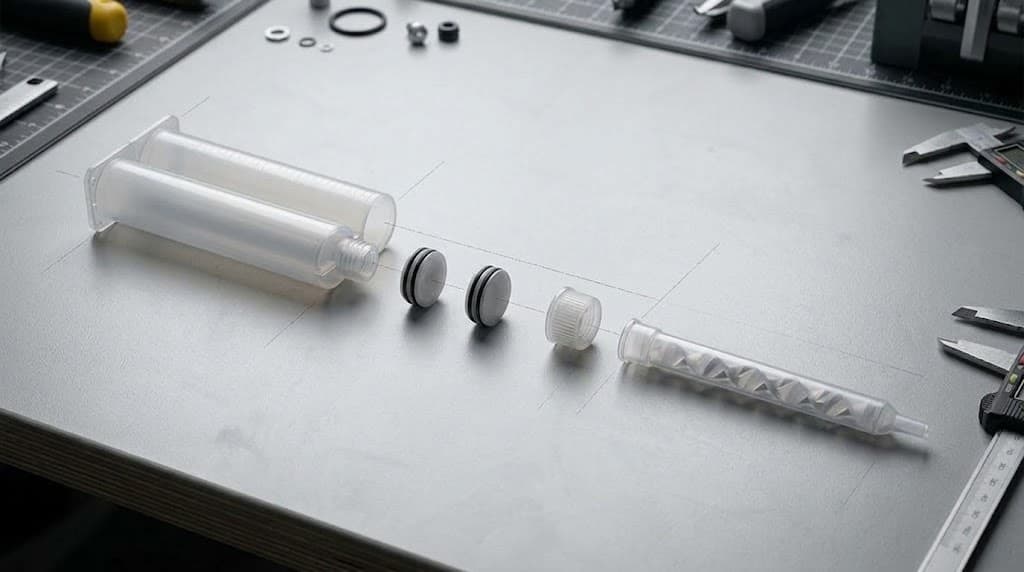
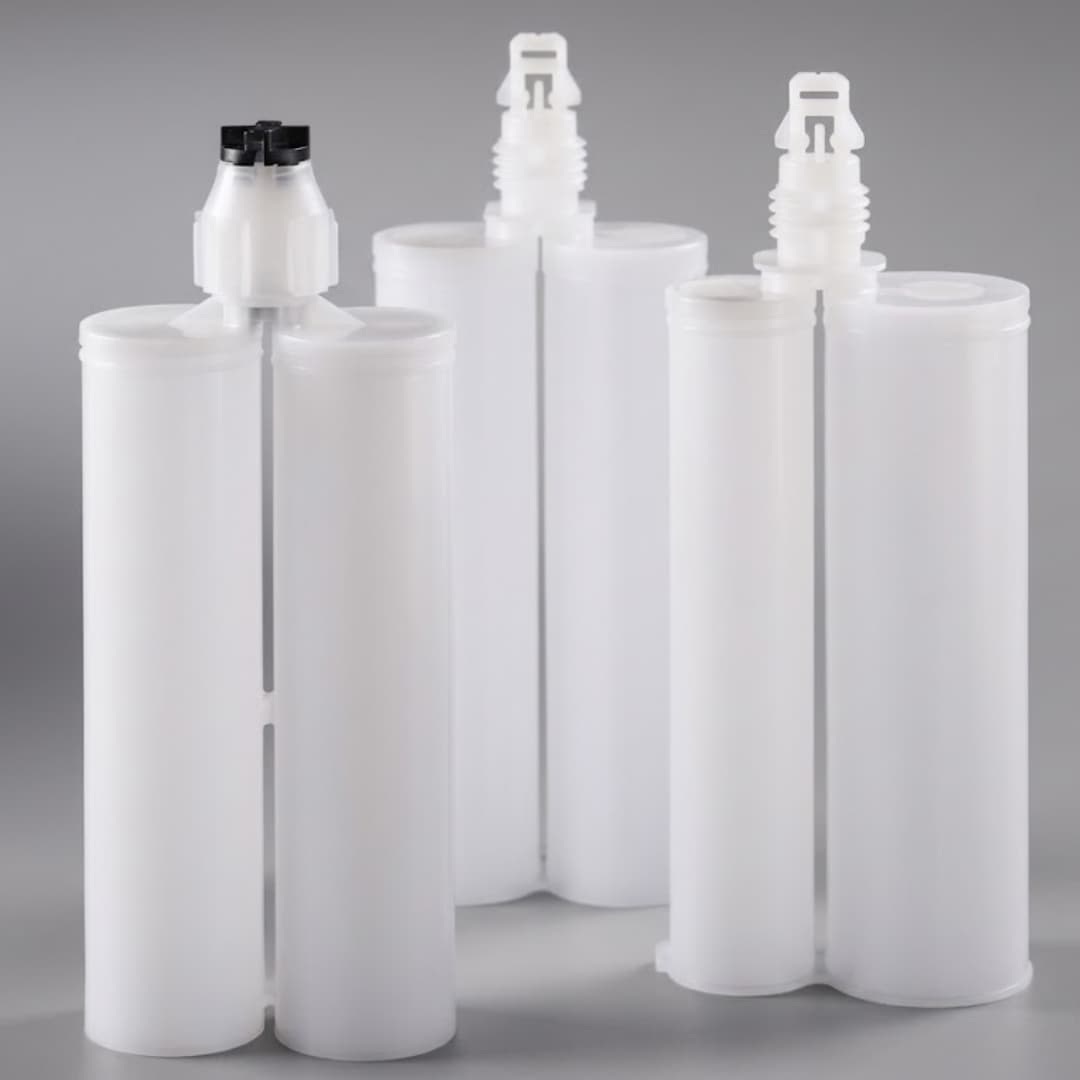
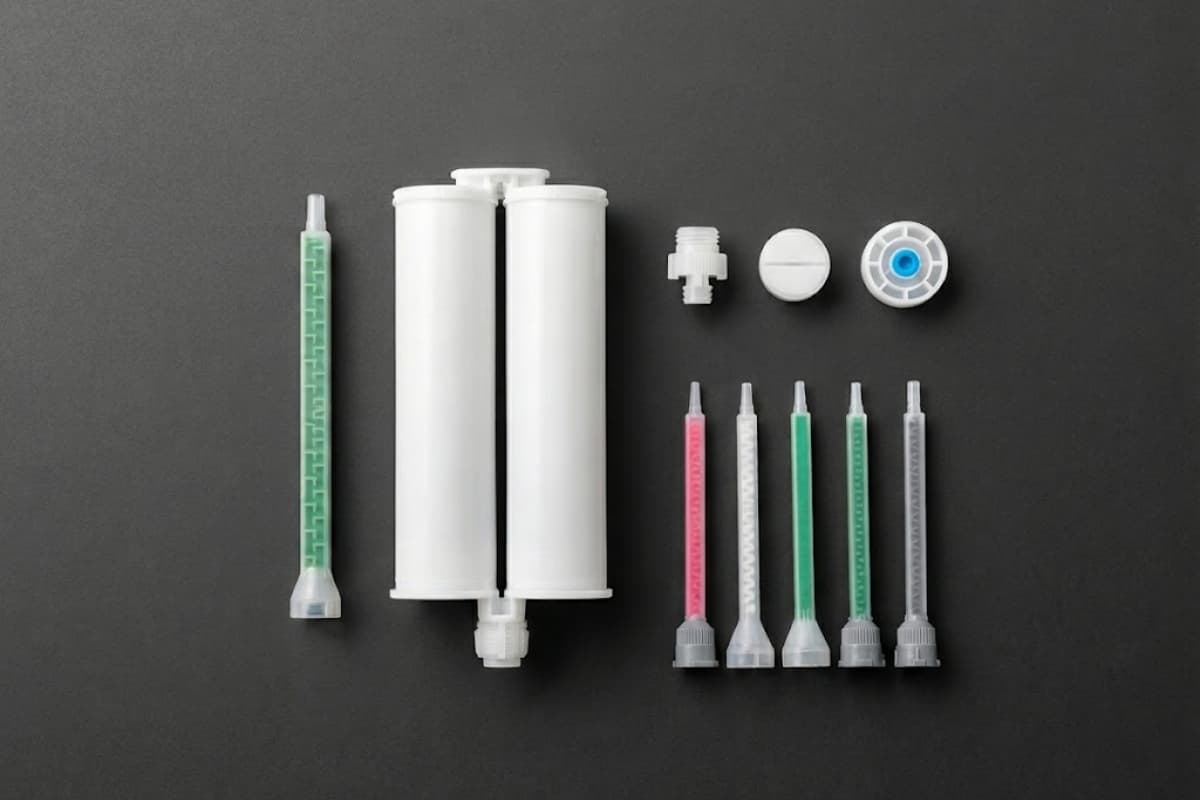
A cartridge isn’t one material — it’s a few stuck together:
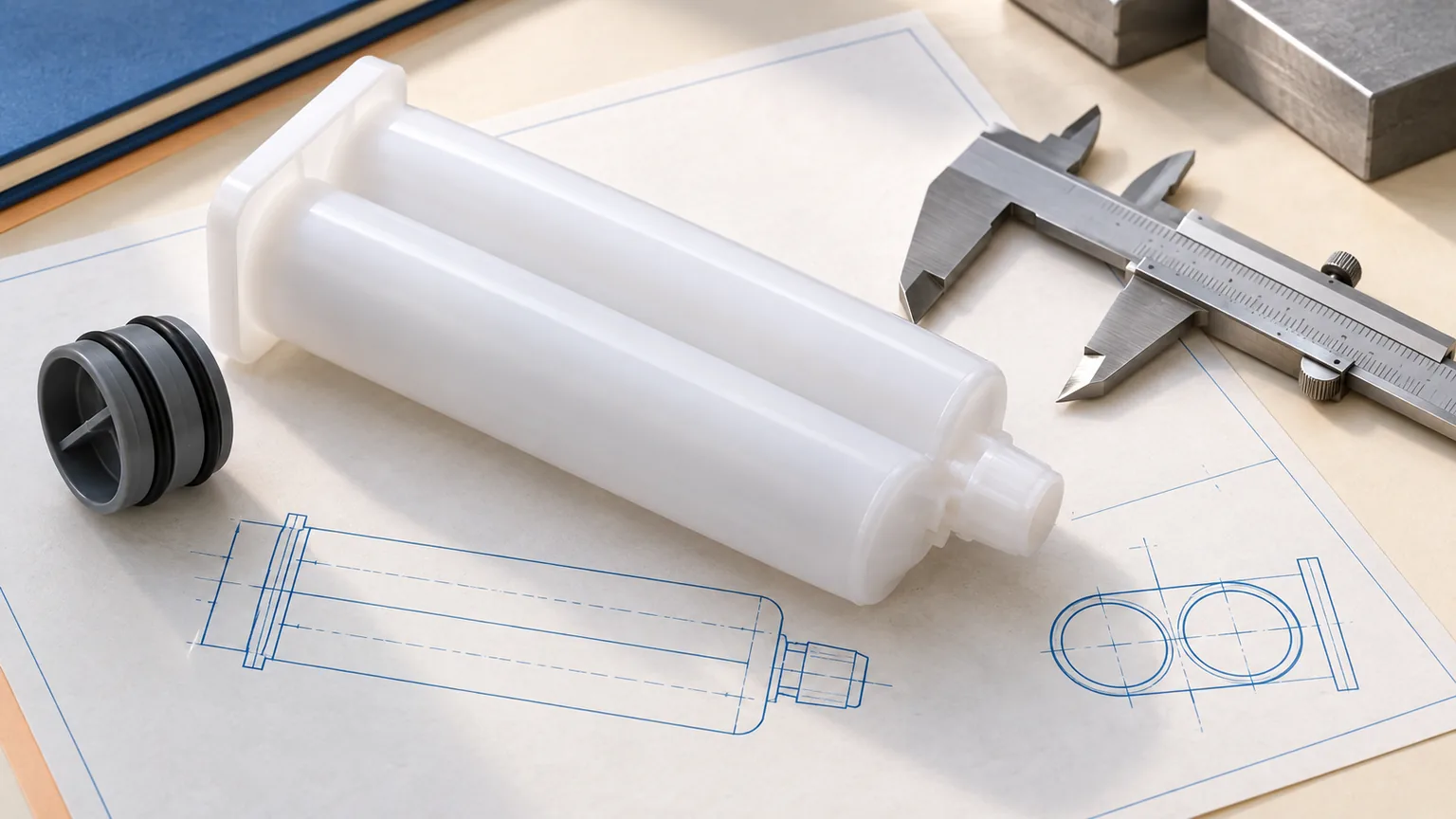
- Barrel — the main plastic tube holding the adhesive
- Foil or liner — blocks moisture in some designs
- Plunger — the back seal that pushes material out
- Cap / flange — the front fitting that locks onto the gun
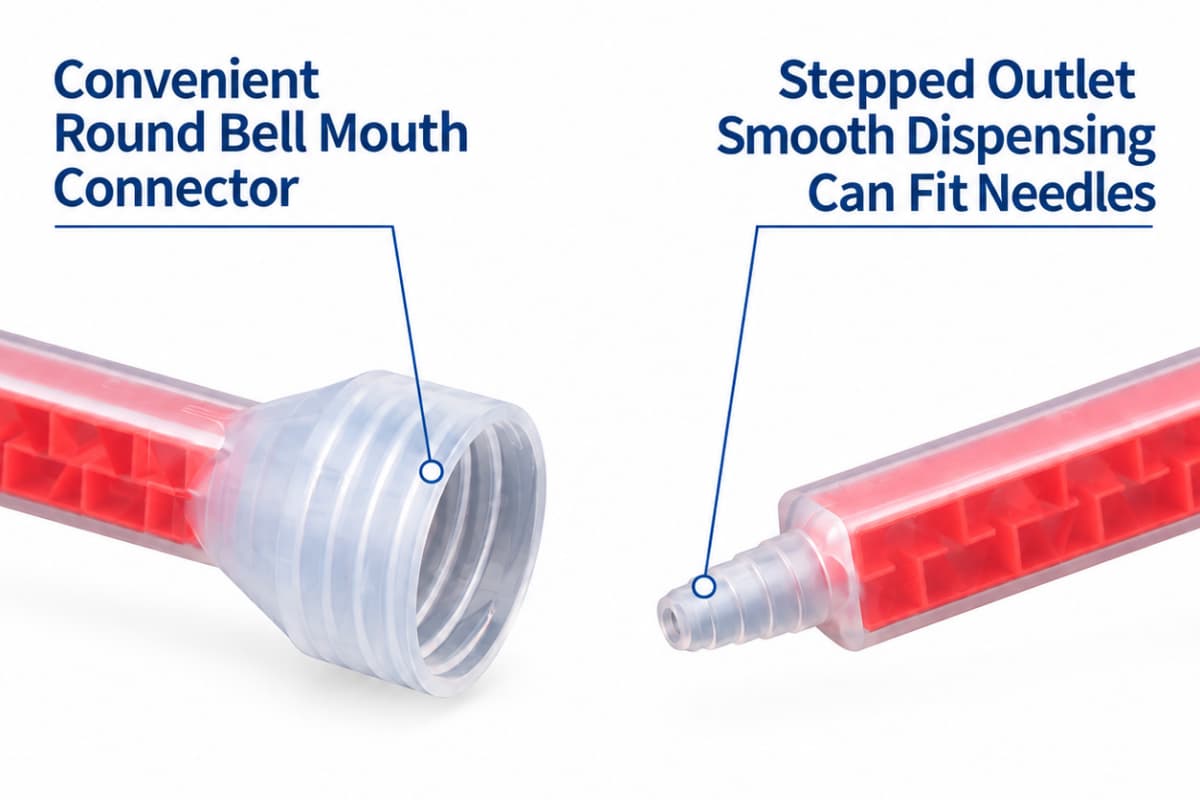
- Static mixer — the nozzle on 2K (two-part) systems
The barrel is the part worth recovering. A plain mono-material barrel recycles cleanly; one bonded to a foil liner and a rubber plunger usually doesn’t.
| Part | Typical material | Recyclable? |
|---|---|---|
| Barrel | PP / HDPE plastic | Usually, if clean |
| Foil liner | Plastic–aluminum laminate | Rarely |
| Plunger | Plastic or rubber | Sometimes / rarely |
| Mixer nozzle | PP body with bonded insert | Body yes, insert no |
How to recycle them
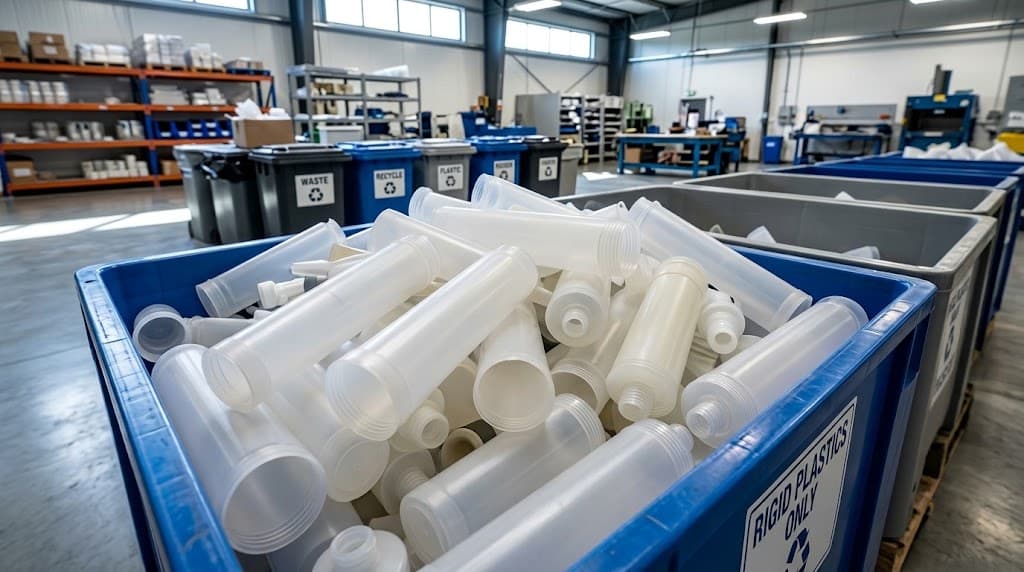
The adhesive matters less than how clean and separated the parts are when they reach collection.
- Dispense as much as you can so little stays in the barrel.
- Wipe or flush out the residue.
- Pull the plunger, remove the cap, take off the mixer.
- Keep plastic barrels with your rigid-plastic stream.
- Check local rules — some take clean rigid plastic, others reject anything that touched adhesive.
The usual failures: cured glue stuck in the barrel, parts still mixed together, and assuming curbside will take it. Verify with your local facility before you rely on it. For two-part work, a dual-component cartridge follows the same steps — just with a second barrel and a connecting flange to separate.
Cut waste before you recycle
Recycling is the last resort. The real savings come earlier:
- Right-size the barrel. A 400 ml cartridge doing a 60 ml job wastes most of its contents. Match the size to the job — single-component cartridges and 2K types both come in sizes from 50 to 500 ml. Use the smallest SKU that covers your cycle volume; oversizing only feeds the bin. It pays off most on short-cycle or variable-volume runs, and matters less on steady high-volume lines where one size already fits.
- Mono-material or silicone-free. Cleaner recycling and less contamination risk in sensitive lines.
- Shortest mixer that still mixes. Less mixed scrap thrown away at every changeover.
- Less secondary packaging. Skip unnecessary wrap where transit allows.
Silicone-free grades matter where silicone oil would foul bonding or downstream cleaning — common in electronics and optical assembly. Use silicone-free when your process is silicone-sensitive and stray oil would contaminate bonding or cleaning steps; skip it where silicone isn’t a concern and adhesion to standard substrates is already proven. It’s a contamination-control choice, not a recycling claim, and it won’t make a foil-lined cartridge recyclable.
Questions to ask your supplier
- What’s the actual material per SKU — barrel, liner, plunger, cap?
- Which are mono-material or silicone-free?
- What sizes do you stock so I can right-size?
- Any take-back or disposal guidance in my region?
FAQ
Are adhesive cartridges recyclable? The plastic barrel usually is, where rigid polyolefin is accepted. Liners, plungers, and nozzles often aren’t — separate them first.
Can I recycle the mixer nozzle? The body might be; the bonded mixing element and any cured residue usually aren’t.
What’s the most eco-friendly cartridge? A mono-material barrel with no foil liner, plus silicone-free if your process is silicone-sensitive.
How do I cut 2K waste in production? Right-size the cartridge, use the shortest mixer that still mixes, batch same-material runs, and purge properly.
Bottom line
A cartridge only recycles if the barrel is clean polyolefin and your local stream takes it. The smarter move is to waste less up front — size it right, choose simpler materials, tighten dispensing. Before you specify, get a per-SKU material declaration from the manufacturer.