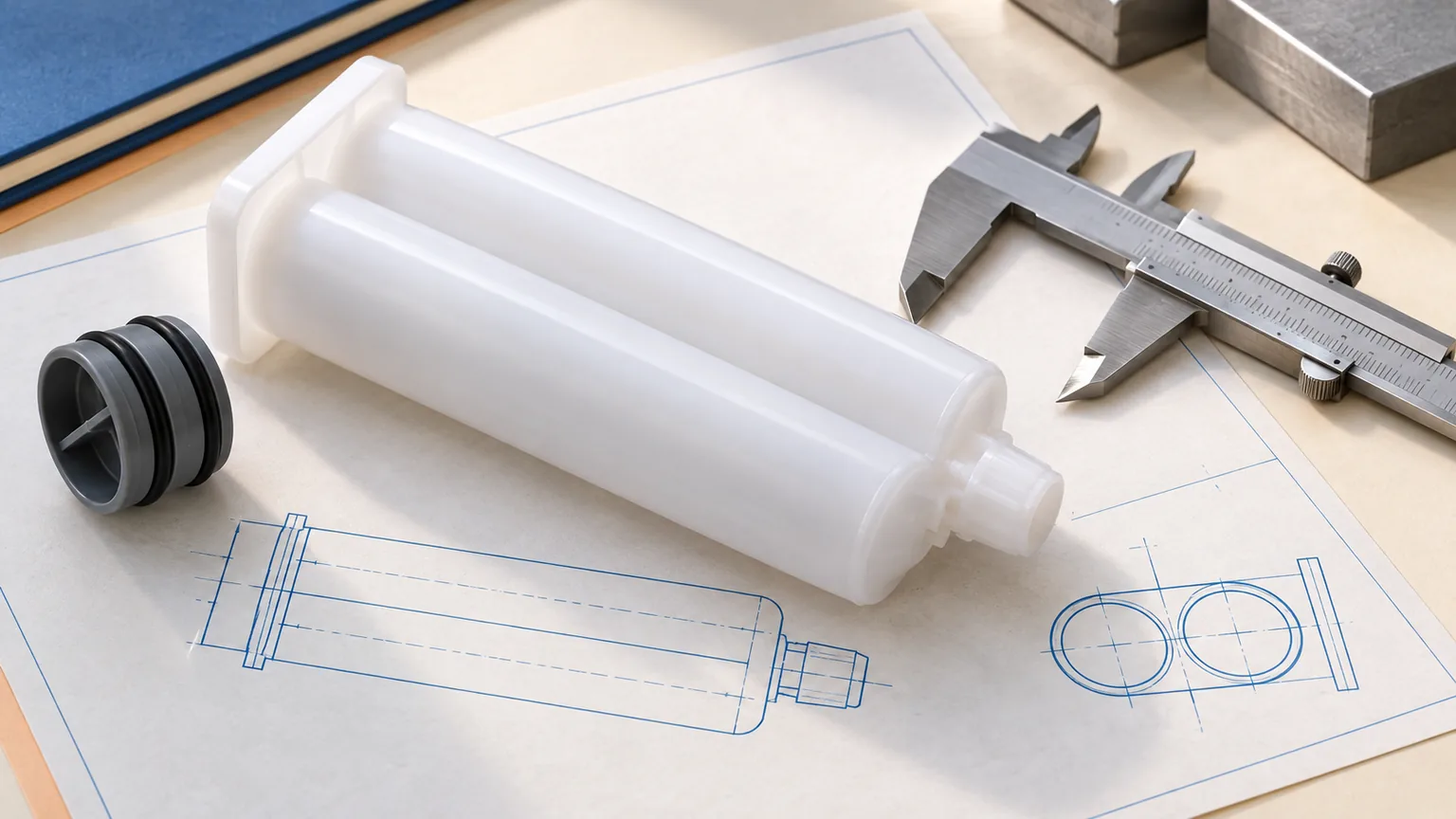
When you specify silicone free cartridges for electronics, you are not buying a different plastic—you are removing a class of contaminants that silently degrades reliability. The risk is silicone and its low-molecular-weight siloxanes migrating from the cartridge body, its mold-release agents, or its seals onto bond lines, electrical contacts, and optical surfaces, where they raise contact resistance, weaken adhesion, and cause haze. This article explains what “silicone-free” actually controls in cartridge manufacturing, the failure mechanisms it prevents, which electronics applications require it, and how to specify and verify it before you place an order.
What “Silicone-Free” Actually Means in Cartridge Manufacturing
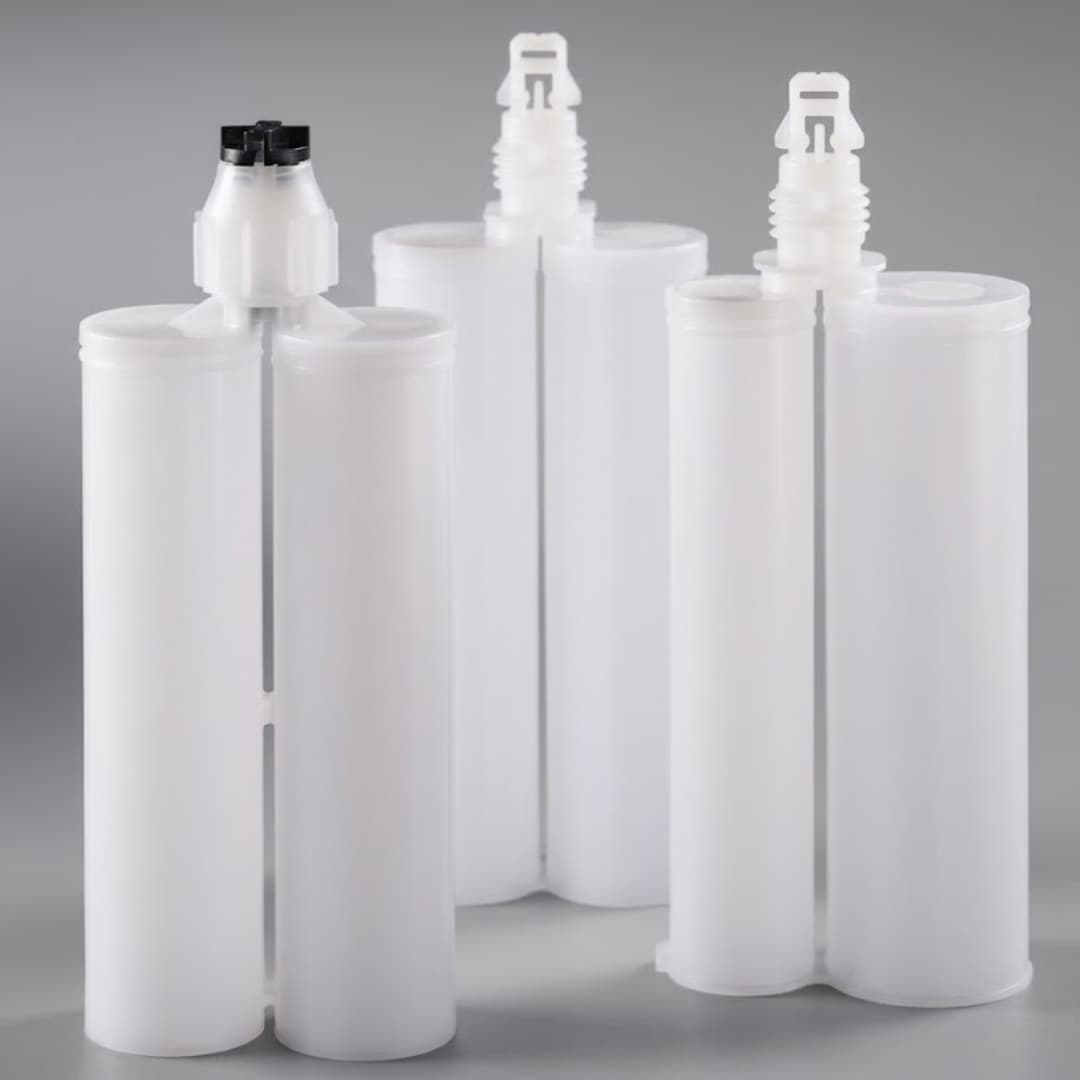
A silicone-free cartridge is one made without silicone-containing materials at any point that can contact the adhesive or the downstream part. The cartridge body itself is typically molded from polypropylene (PP) or a similar polyolefin—those base resins are not silicone. The contamination risk comes from elsewhere: silicone-based mold-release agents sprayed into the tool, silicone greases on moving mold surfaces, and silicone rubber gaskets or liner coatings used in the cartridge or its cap. “Silicone-free” therefore means the resin, the release system, and every component in the fluid path are selected and controlled to exclude silicone chemistry.
The contamination pathways are predictable:
- Mold release is the most common hidden source. A silicone spray leaves a tenacious, low-surface-energy film that survives ordinary cleaning.
- Seals and gaskets made from silicone rubber can shed siloxanes into the fluid path during molding or filling.
- Handling and secondary operations—lubricants, label adhesives, or assembly aids that touch the inner surface—can reintroduce silicone after molding.
So the specification has to cover the whole manufacturing chain, not just the resin certificate. The same logic applies whether you package a two-part adhesive in dual cartridges or fill from bulk: the fluid path, not the label, sets the contamination boundary.
How Silicone Fails Electronics: The Failure Mechanisms
Silicone’s danger in electronics is not its bulk properties—it is the low-molecular-weight siloxanes that volatilize and migrate. Once they reach a sensitive surface, they are difficult to remove and they change how that surface behaves. The failure is usually delayed and intermittent, which makes it expensive: a device passes test, ships, and fails in the field months later.
| Failure mode | Where it shows up | What happens |
|---|---|---|
| Outgassing / volatile siloxanes | Enclosed assemblies, connectors, relays | Siloxane vapor deposits a thin insulating film on contacts, raising contact resistance and causing intermittent failures |
| Surface-energy reduction | Bond lines, conformal coatings, encapsulants | The silicone film prevents wetting, so adhesive or coating adhesion drops and delamination appears later |
| Optical haze | Lens modules, sensors, displays | Siloxane condensation scatters light or clouds sensor windows, shifting readings or yield |
| Process interference | Semiconductor wire bond, die attach, later plasma steps | Residues block bonding or alter surface chemistry in subsequent process steps |
That is why electronics-grade specifications treat silicone as a contamination class to exclude up front, rather than a property to measure after a failure. The mechanism is cause and effect: more siloxane exposure on a contact surface leads to higher, less stable resistance; more siloxane on a bond surface leads to weaker, delayed delamination.
Which Electronics Applications Cannot Tolerate Silicone

Not every adhesive application needs silicone-free packaging. The rule is straightforward: if the bonded or adjacent part is electrically, optically, or biologically sensitive, silicone risk is unacceptable. Where no sensitive surface exists, silicone presents little consequence.
| Application | Silicone risk | Must be silicone-free? | Typical process |
|---|---|---|---|
| Semiconductor & wire bond | Very high—siloxane blocks bonding | Yes | Die attach, encapsulation |
| Connectors & relays | High—contact resistance, intermittent failure | Yes | Potting, gasketing |
| Optical & sensor modules | High—haze, signal drift | Yes | Lens bonding, sealing |
| Medical & diagnostic | High—bonding reliability, biocompatibility | Usually yes | Device assembly, reagent sealing |
| Automotive sensors / ECU | High—long-term field reliability | Yes | Potting, conformal coating |
| Construction & general industrial | Low—no sensitive surfaces | No | Sealant, anchoring |
The same chemistry that is harmless in a building sealant can disable a connector. Specifying silicone-free only where it matters keeps cost down without accepting risk where it counts. Haijing serves these electronics-grade demands through its consumer-electronics dispensing programs, where underfilling, frame bonding, and camera-module sealing all assume a silicone-free fluid path.
How Silicone-Free Cartridges Are Made: Materials, Molds, and Release Agents
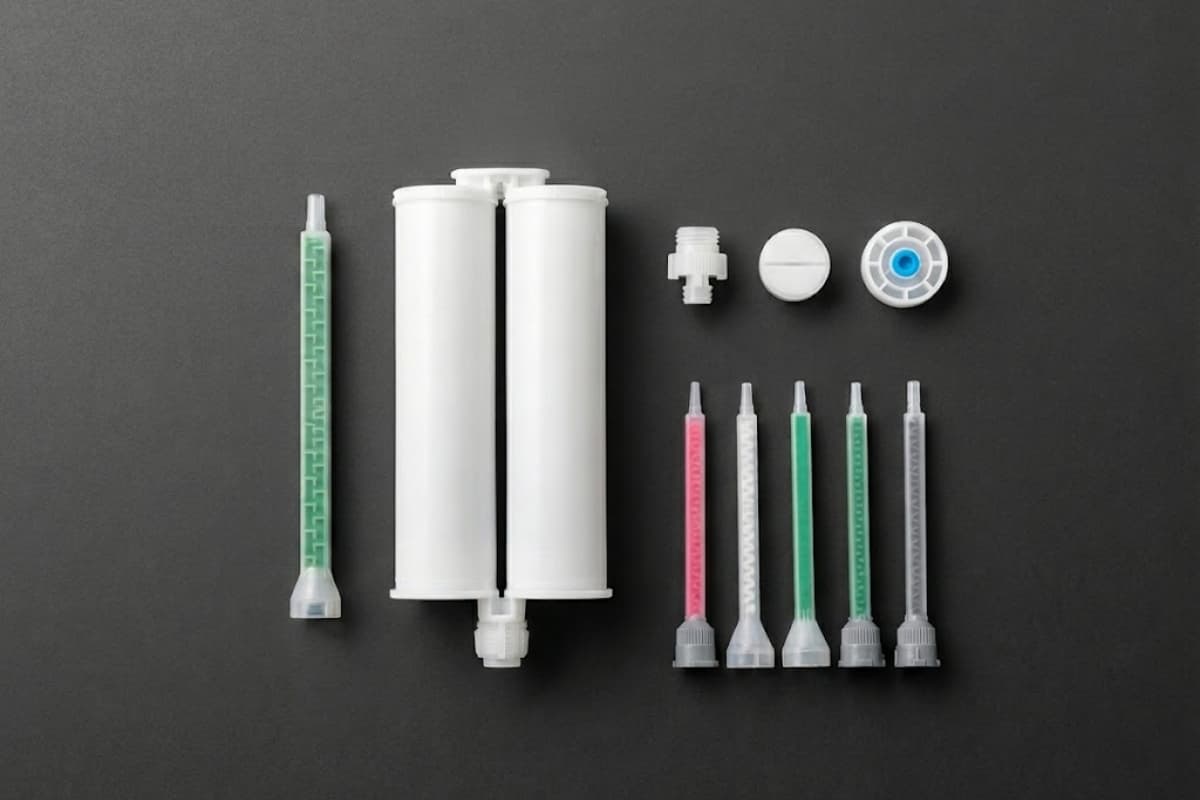
Removing silicone is a process-control problem, not a material swap. The cartridge geometry and the dual-chamber structure are unchanged; what changes is everything that could introduce silicone during molding and assembly.
| Control point | Practice | Effect on purity |
|---|---|---|
| Resin selection | PP or polyolefin validated silicone-free | Removes the base-material source |
| Mold release | Non-silicone (water-based or specialty) release, or release-free tooling | Eliminates the dominant contamination path |
| Seals & liners | Silicone-free elastomers, or none in the fluid path | Stops shed siloxanes |
| Molding environment | Clean molding, controlled handling, no silicone lubricants nearby | Prevents cross-contamination |
| Quality control | Incoming-material checks, batch traceability | Confirms the above held lot to lot |
When you evaluate a cartridge supplier, ask directly: which release agent is used on this tool? Are seals in the fluid path silicone-free? Can you provide a silicone-free certificate of compliance, and, if needed, extraction test data on a sample lot? The mechanics of how mix ratios and cartridge geometry are built into the chamber design are covered separately, but the purity question sits entirely on the manufacturing controls above. A manufacturer running an ISO 9001 quality system with documented incoming and final inspection is in a better position to answer than one without traceable process control.
How to Specify and Verify a Silicone-Free Cartridge
Turn the requirement into procurement language so it cannot be interpreted loosely.
- State “silicone-free, including mold release and all fluid-path components” in the RFQ—not just “silicone-free resin.”
- Request a certificate of compliance or material declaration that explicitly covers silicone and siloxane.
- For high-reliability programs, request extractable-silicone analysis: solvent extraction of a sample followed by FTIR or GC-MS to detect siloxane species.
- Specify cleanroom or controlled-environment molding if the application is optical or medical.
- Confirm batch-level traceability and change-control, so a future tooling or release-agent change cannot silently reintroduce silicone.
- Verify chemical compatibility of the cartridge material with your adhesive, since some aggressive solvents interact with polypropylene.
The deciding question is not “is the resin silicone-free” but “can the supplier prove the entire fluid path and process are silicone-free, lot to lot.” If they cannot, the specification is unverified regardless of the resin certificate. Before requesting a quote, send the supplier your application, the sensitive surfaces involved, and your required purity evidence—Haijing’s customization team qualifies a silicone-free cartridge configuration against exactly that data set rather than from a generic claim.
Frequently Asked Questions
What exactly does “silicone-free cartridge” mean?
It means the cartridge is manufactured without silicone-containing materials anywhere that can contact the adhesive or the finished part—covering the base resin, the mold-release agent, and any seals or liners in the fluid path. A resin that is silicone-free is not enough if a silicone release agent or silicone gasket remains in the process.
How does silicone cause connector or relay failure?
Low-molecular-weight siloxanes volatilize and deposit a thin, insulating film on metal contacts. That film raises contact resistance and produces intermittent, hard-to-diagnose failures, especially in enclosed or warm assemblies where outgassing concentrates. The effect is gradual, so devices can pass initial test and fail later in the field.
When do I not need a silicone-free cartridge?
When no electrically, optically, or biologically sensitive surface is near the adhesive. Construction sealants, general industrial anchoring, and similar applications gain little from silicone-free packaging, and specifying it there only adds cost. Reserve the requirement for electronics, optics, medical, and high-reliability automotive parts.
How do I verify a cartridge is truly silicone-free?
Start with a written certificate of compliance or material declaration that names silicone and siloxane. For high-reliability programs, require extractable-silicone testing—solvent extraction of a sample lot analyzed by FTIR or GC-MS. Also confirm the supplier’s release-agent policy and batch traceability, because those control the real contamination path.
Is “silicone-free” the same as “low-outgassing”?
No. Low-outgassing describes total volatile emission, which can include many non-silicone organics, while silicone-free specifically targets siloxanes. A cartridge can be low-outgassing yet still contain silicone, and it can be silicone-free yet emit other volatiles. Choose the specification that matches the failure mode you are protecting against.
Conclusion
Silicone-free cartridges are a contamination-control requirement, not a material upgrade. The risk runs from the resin through the mold-release agent and into every seal in the fluid path, so the specification must cover the whole chain. Siloxane outgassing drives contact resistance and intermittent electronics failures; surface-energy loss drives adhesion and coating defects; migration onto optics drives haze. The applications that cannot tolerate this are semiconductor, connectors, optics, medical, and automotive electronics—while construction and general industrial use rarely need it. Specify the entire fluid path as silicone-free, verify it with a declaration plus extraction testing where reliability demands it, and the cartridge stops being a hidden source of field failures.
If you have a sensitive application and a target purity level, the fastest next step is to let an applications engineer turn that into a qualified configuration.
Contact Us: Send us your application and purity requirements—our engineering team will qualify a silicone-free cartridge configuration for your electronics process. → customization