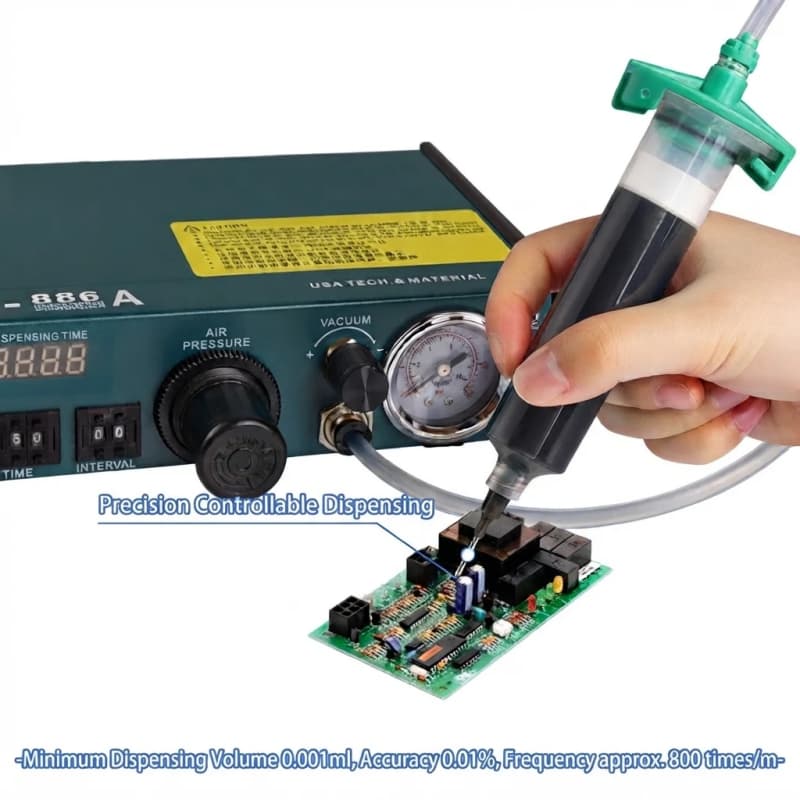
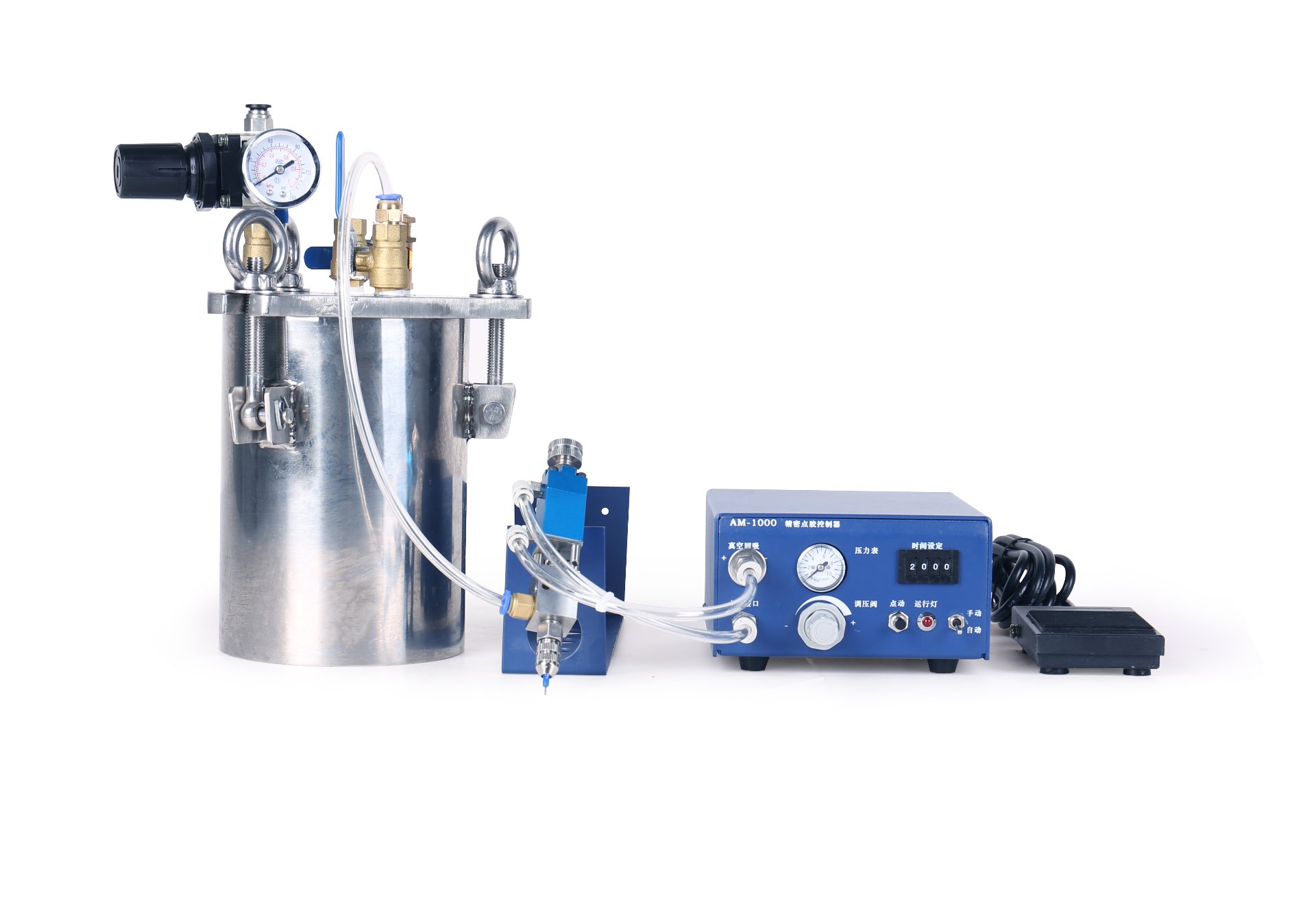
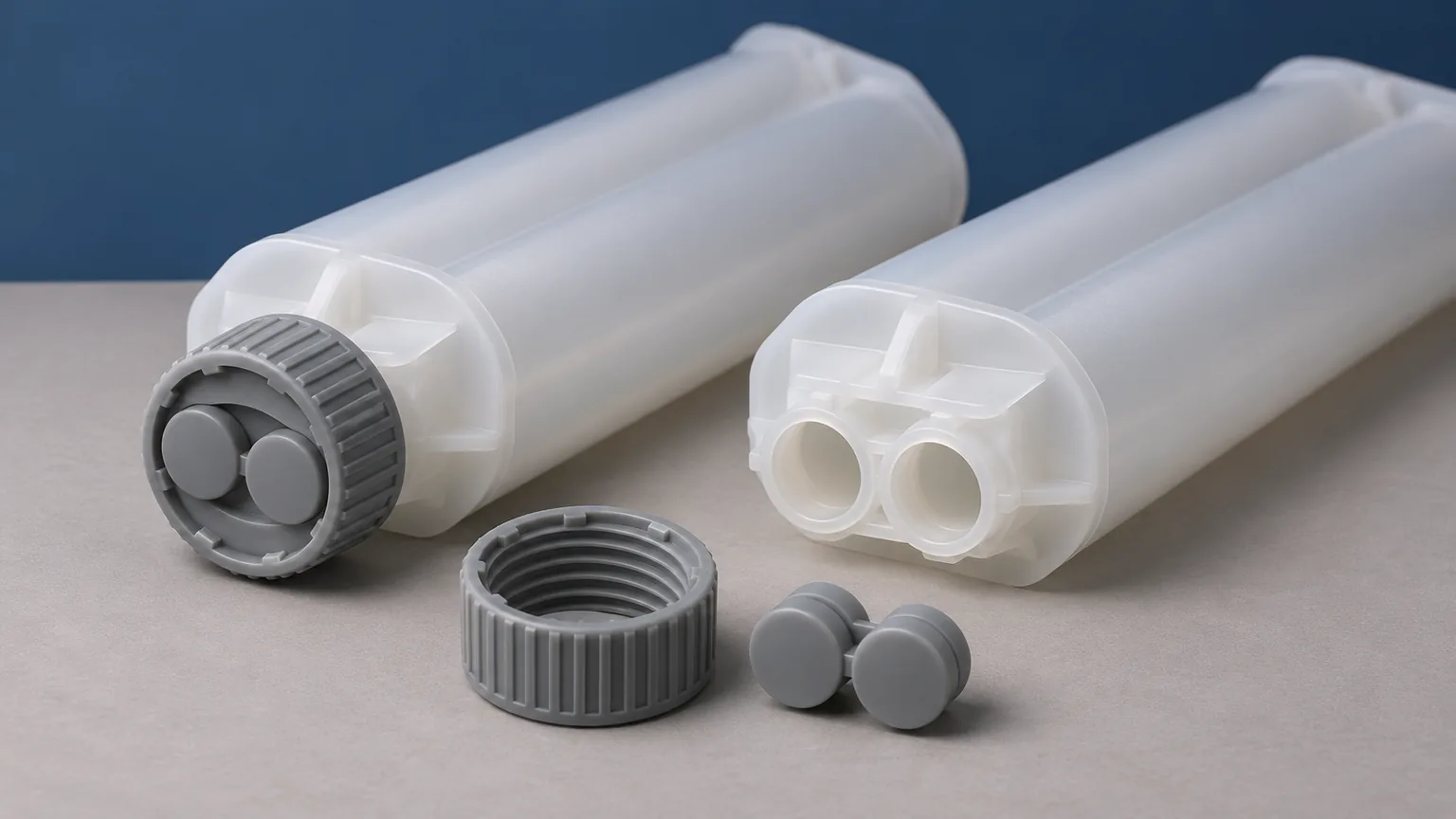
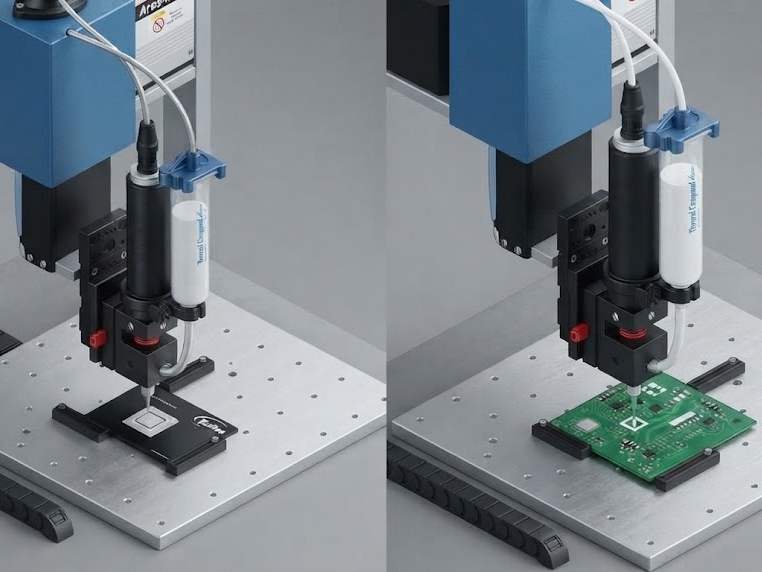
The decision between building your own filling and dispensing capacity and outsourcing it to a contract filler comes down to one comparison: your annual throughput against the break-even volume. Below that break-even, outsourcing wins on cash flow, flexibility, and speed to market; above it, in-house production wins on unit cost, process control, and intellectual-property security. This guide gives you the decision framework, a simple build-versus-outsource cost model, the capacity-sizing math, and a practical checklist so you can decide with numbers rather than instinct. We also show where your dispensing-system choices — valve type, deposit control, cycle time — shift the balance, and point to the component guides you need on either path.
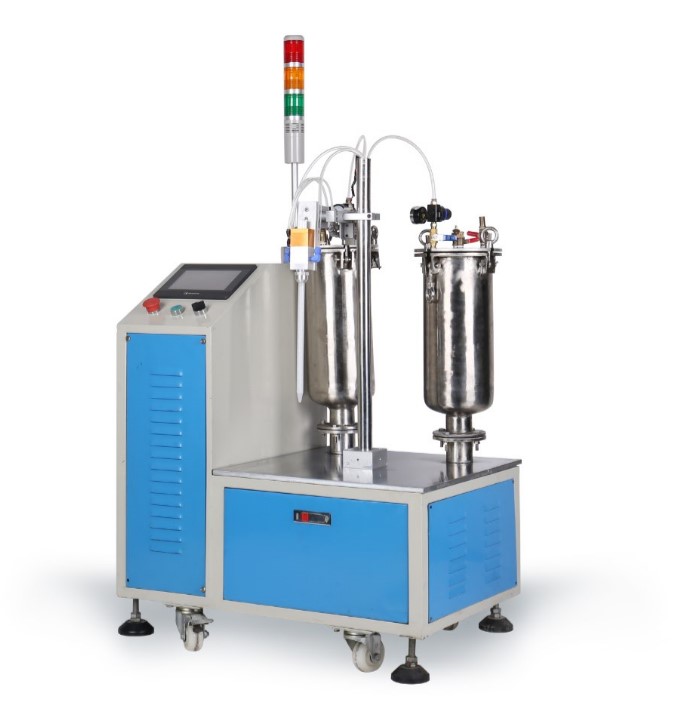
The Decision in 3 Steps
If you only act on three moves, run them in this order:
- Compute the break-even volume. Divide annualized capex plus the in-house fixed-overhead gap by the outsourcer’s per-unit premium. Above it, in-house wins; below it, outsourcing wins.
- Pressure-test total cost, not the quote. Add freight, incoming inspection, supplier management, and idle-asset risk to the buy side; add maintenance, QC labor, and cleanroom overhead to the make side. A low unit price is rarely the lowest total cost.
- Weigh the non-financial drivers. Keep it in-house when the process differentiates your product or IP must stay internal; outsource when volume is low or volatile, or you need a specialty line you would not amortize.
The rest of this guide expands each step with formulas, a worksheet, and a decision checklist.
The Trade-Off in One Sentence
In-house filling trades capital and overhead for lower per-unit cost and full control; outsourcing trades a per-unit premium for near-zero capital and elastic capacity. The classic contract filler vs in-house question is really about where that trade-off lands on your volume curve — and how central the process is to your product’s differentiation.
When In-House Filling Makes Sense
Build capacity when three conditions hold:
- Volume is high and stable. Recurring annual volume that clears the break-even (modeled below) lets the per-unit saving compound instead of being eroded by idle equipment.
- The process is differentiating. If precise deposit control, accurate mix ratio, or cleanroom handling is part of your product’s value, keeping it internal protects that edge and your quality bar.
- IP sensitivity is high. Proprietary formulations or assemblies you do not want exposed to a third party argue for production staying in-house — discuss custom OEM/ODM options and tooling transfer with your engineering partner before committing either way.
When Outsourcing to a Contract Filler Wins
The when to outsource production call is clearest when one of these holds:
- Volume is low or volatile. If annual demand sits below break-even or swings quarter to quarter, the per-unit premium beats carrying capital equipment that sits idle between runs.
- You need a specialty you lack. Contract fillers offer aseptic, hazardous-material, or high-speed lines you would never amortize on your own.
- You want to stay asset-light. No capex, no maintenance staff, no cleanroom overhead — capital stays directed at product development and go-to-market.
The Break-Even Model
Compare total annual cost on each path. In-house carries depreciating capex plus fixed overhead; outsourcing replaces those with a per-unit premium on every part. Government cost-estimating guidance frames the same build-versus-buy choice around a full set of cost elements — direct labor, incremental overhead, capital, and quality-system costs — rather than the quoted unit price alone; see the NASA Cost Estimating Handbook’s make-versus-buy analysis for the complete factor list.
Break-even volume (units/yr) = (Capex ÷ PaybackYears + FixedOverhead_inhouse − FixedOverhead_outsource) ÷ UnitPremium_outsource
Where UnitPremium is what the contract filler charges above your in-house variable cost per unit. Above this volume, in-house is cheaper; below it, outsourcing is. Your filling line capex and the outsourced filling cost premium are the two numbers that move this break-even most, so source both quotes before you model.
| Input | Your value | Unit |
|---|---|---|
| Filling line capex (filling + dispensing equipment) | USD | |
| Desired payback period | years | |
| Annual fixed overhead — in-house | USD/yr | |
| Annual fixed overhead — outsourced (none/minimal) | USD/yr | |
| Outsource unit premium | USD/unit | |
| Break-even volume | units/yr | |
| Your forecast annual volume | units/yr |
Insert your own equipment quotes and TDS-driven variable costs; the formula does the rest. Re-run it at your low and high forecast before committing capital.
How to Size the Capacity You Need
Whether you build or outsource, dispensing capacity planning starts with throughput, not peak panic.
Required throughput (units/hr) = Annual volume ÷ (Operating days × Shifts × Hours/shift × Utilization)
Then tie it to the part itself. If each part consumes a known deposit volume — calculate it first with the dispense volume calculator — and your valve has a known cycle time, you can sanity-check whether one line or several are needed. Our cartridge sizing and automated throughput guide shows how supply-side capacity scales with deposit volume and run rate.
Hidden Costs on Both Sides
| Factor | In-house | Outsourced |
|---|---|---|
| Capital | High capex, depreciates | Near zero |
| Flexibility | Low — you own the line | High — scale up/down |
| Unit cost at scale | Low | Higher (per-unit premium) |
| Lead time | You control it | Dependent on filler’s queue |
| IP exposure | Low | Higher — specs are shared |
| Quality control | Direct, on your floor | Audited, less direct |
| Idle risk | Real if volume drops | None |
For a broader, supplier-neutral view of the same trade-offs — capital required, fixed cost, unit cost at different volumes, control, and IP exposure — a side-by-side comparison of contract manufacturing versus in-house production shows where each model wins.
Decision Checklist
Build in-house if you clear break-even with margin, the process differentiates your product, and IP must stay internal.
Outsource if volume is sub-break-even or volatile, you need a specialty line you would not amortize, or you want to stay asset-light.
Hybrid if you want both: keep the steady base load in-house for control and IP, and use contract capacity for demand spikes and new SKUs so capital is never idle.
Where Your Dispensing System Choice Fits
The system you specify changes both sides of the model. Valve selection drives cycle time and deposit repeatability — compare dispensing valve types and jet vs contact dispensing before sizing any line. The adhesive dispensing system architecture sets how easily you can scale from one cell to many. For contract runs, align on custom OEM/ODM tip and cartridge options so tooling transfers cleanly between your floor and the filler’s.
FAQ
How do I know if my volume clears the break-even?
Use the model above: divide annualized capex plus in-house overhead by the outsourcer’s per-unit premium. If your forecast volume exceeds that number with margin, build; if not — or if volume swings — outsource.
What fixed overhead do teams forget when modeling in-house?
Maintenance contracts, spare-parts inventory, QC labor, cleanroom utilities, and operator training are routinely underestimated. Model them as explicit line items, not as an afterthought percentage, because they materially move the break-even.
Is outsourcing safer for intellectual property?
Generally it exposes more, because you share formulations and specs with a third party. Mitigate with NDAs, split-process arrangements, and vetted partners; for high-sensitivity work, in-house production or a dedicated tolling agreement is the safer route.
Can I run both — in-house for core, outsource for peaks?
Yes. A hybrid model keeps differentiation and IP in-house while using contract capacity for spikes and new SKUs, avoiding idle capital. Size the in-house line to steady base load, not to peak.
How does deposit volume affect the build-versus-outsource call?
Larger or tighter-tolerance deposits raise per-part material and cycle-time cost, which widens the saving that in-house scale can capture — or, at low volume, makes the outsourcer’s premium cheaper than buying a precision line. Calculate per-part volume before deciding.
What should I ask a contract filler before committing?
Capacity headroom, lead times, minimum run sizes, quality certifications, IP and NDA terms, and whether they can handle your adhesive chemistry and deposit tolerances.
Conclusion
Filling capacity is a break-even decision, not a philosophy. Model your volume against capex and the outsourcer’s premium; build when you clear it with margin and the process is differentiating or IP-sensitive, outsource when volume is low, volatile, or needs a specialty you lack, and consider hybrid when both pressures apply. Whichever path you take, the dispensing-system fundamentals — valve type, deposit control, throughput — are what turn the model into real numbers.
Please contact HaiJing for technical support
Planning capacity and unsure which way to jump? Use the dispense volume calculator to pin down per-part volume, then review dispensing valve types and jet vs contact dispensing to scope a line — or contact our engineering team for a build-versus-outsource sanity check on your specific volume and chemistry.