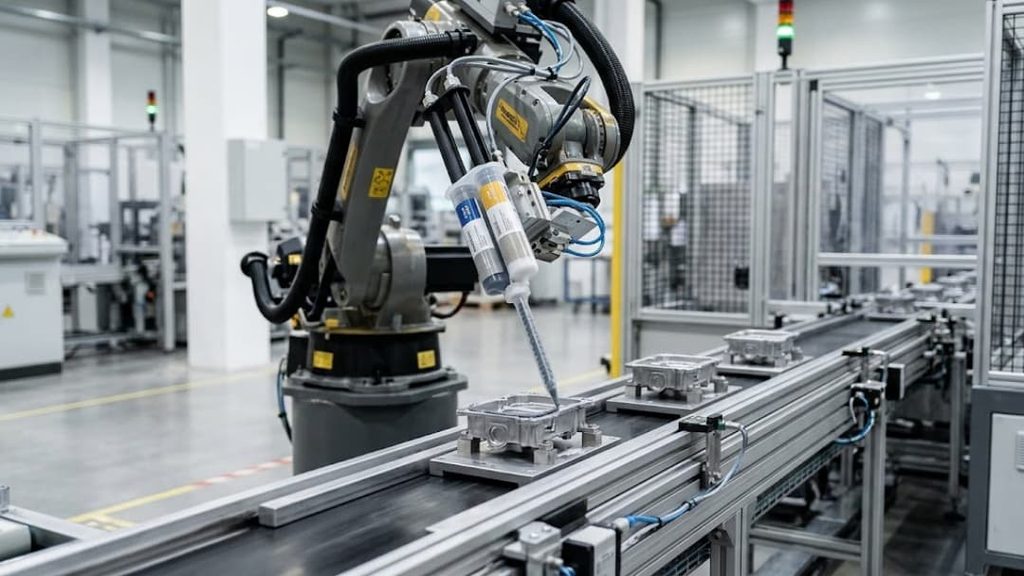
Short answer: pick the cartridge size from your line’s cycle time and batch size, not from the mix ratio. Ratio decides how much of A and B to combine; capacity decides how much you load per run to keep the line fed without overstocking. Most buyers size a cartridge by ratio and stop there — but on an automated line, the bottleneck is how often you change over and how much material a reject strands, not the chemistry.
Bottom line up front: size the cartridge to the cycle, not the chemistry — then confirm it against your filler and dispenser.
Why Ratio Isn’t the Whole Sizing Story
A 1:1 or 10:1 ratio tells you the A-to-B proportion. It says nothing about whether a 50 ml or a 500 ml body is right for your throughput. On a manual bench, that gap barely matters. On a robot or filling line running hundreds of cycles a shift, the wrong capacity means constant changeovers or a bin of stranded material. Once you’ve settled the ratio with a ratio and size compatibility guide, capacity is the next decision — and it follows production, not the formula.
What Actually Drives Cartridge Capacity on a Line
Four variables decide the capacity you should load:
- Cycle time — how long one dispense takes. Shorter cycles burn through volume faster, pushing you toward larger bodies.
- Volume per cycle — the actual adhesive delivered each shot. Multiply by cycle count to see daily draw.
- Batch size — how many parts run before a changeover. Small batches waste a large body’s leftover; large batches favor it.
- Reject rate — every scrapped part strands the material still in the cartridge. Higher rejects argue for smaller loads.
Capacity is the number that keeps the line running between changeovers without leaving a costly remainder. The dispensing system sets the pace; the cartridge has to match it.
Capacity Decision Framework
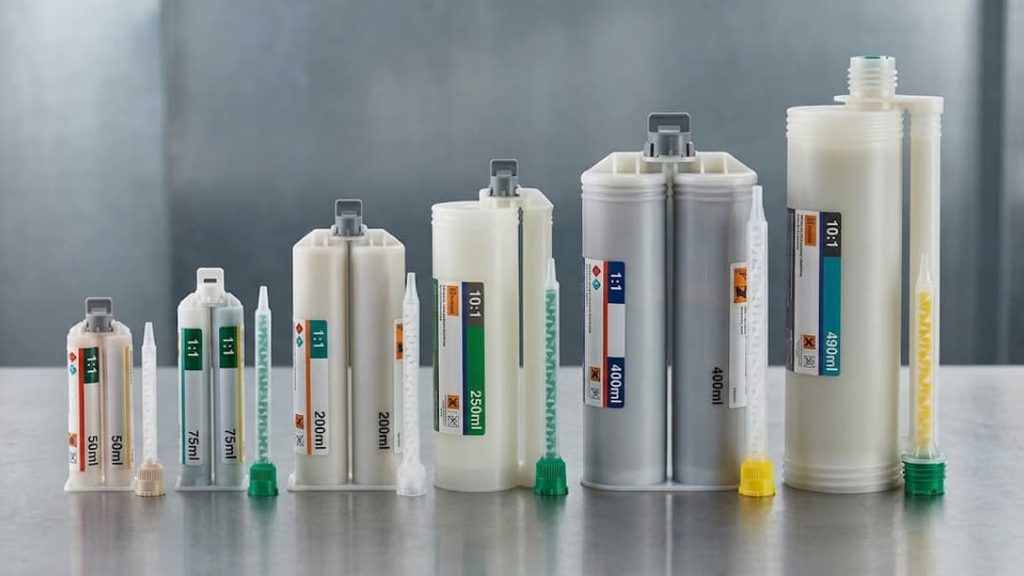
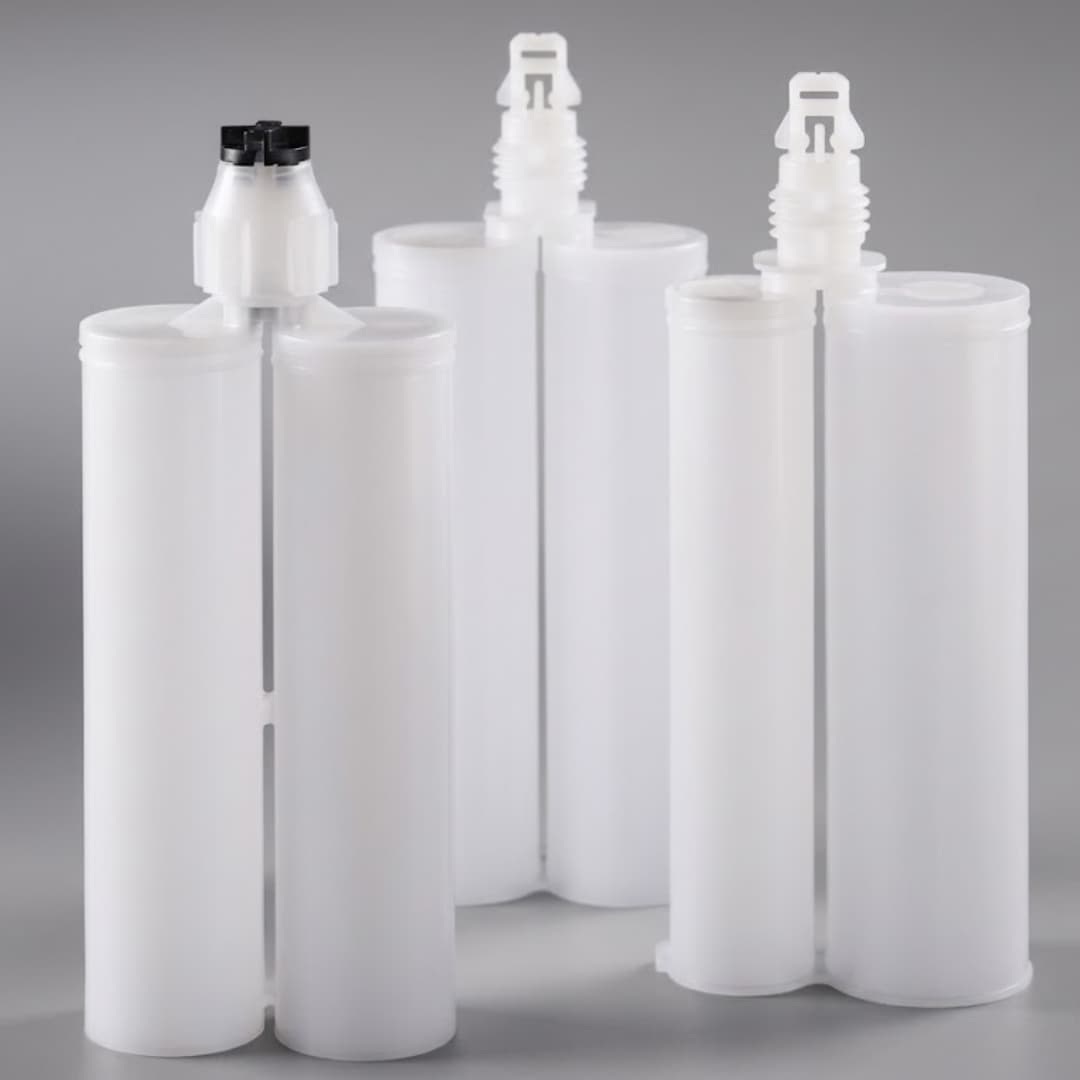
Use your cycle rate and batch profile to pick a capacity band. Common off-the-shelf bodies run roughly 50–500 ml, with the exact top end varying by SKU — confirm the available sizes with the supplier.
| Production profile | Recommended capacity | Why |
|---|---|---|
| High cycle rate, small batches, frequent changeovers | Smaller (e.g., 50–200 ml) | Less material stranded per changeover, lower scrap exposure |
| High cycle rate, steady large batches | Larger (e.g., 200–500 ml) | Fewer changeovers, less downtime |
| Low cycle rate, many product variants | Smaller / modular | Flexibility beats bulk when you switch often |
| Single product, max throughput | Largest your filler and dispenser support | Changeover elimination is the win |
The table answers the sizing question from throughput first. Ratio stays fixed; only the body volume moves.
Small vs Large Cartridge on an Automated Line
Neither size is “better” — the choice is about changeover discipline.
- Use smaller cartridges when batches vary or you run many SKUs. Changeover cost stays low and a reject strands less material.
- Use larger cartridges on a steady, single-product, high-volume line where fewer changeovers directly cut downtime.
- Skip large sizes when you switch products often; the per-changeover waste and product lock-in outweigh the savings.
| Factor | Smaller cartridge | Larger cartridge |
|---|---|---|
| Changeover frequency | Higher | Lower |
| Flexibility across SKUs | High | Low |
| Scrap exposure per changeover | Low | High |
| Storage and handling | Easier | Bulkier |
Sizing 2K Dual Cartridges
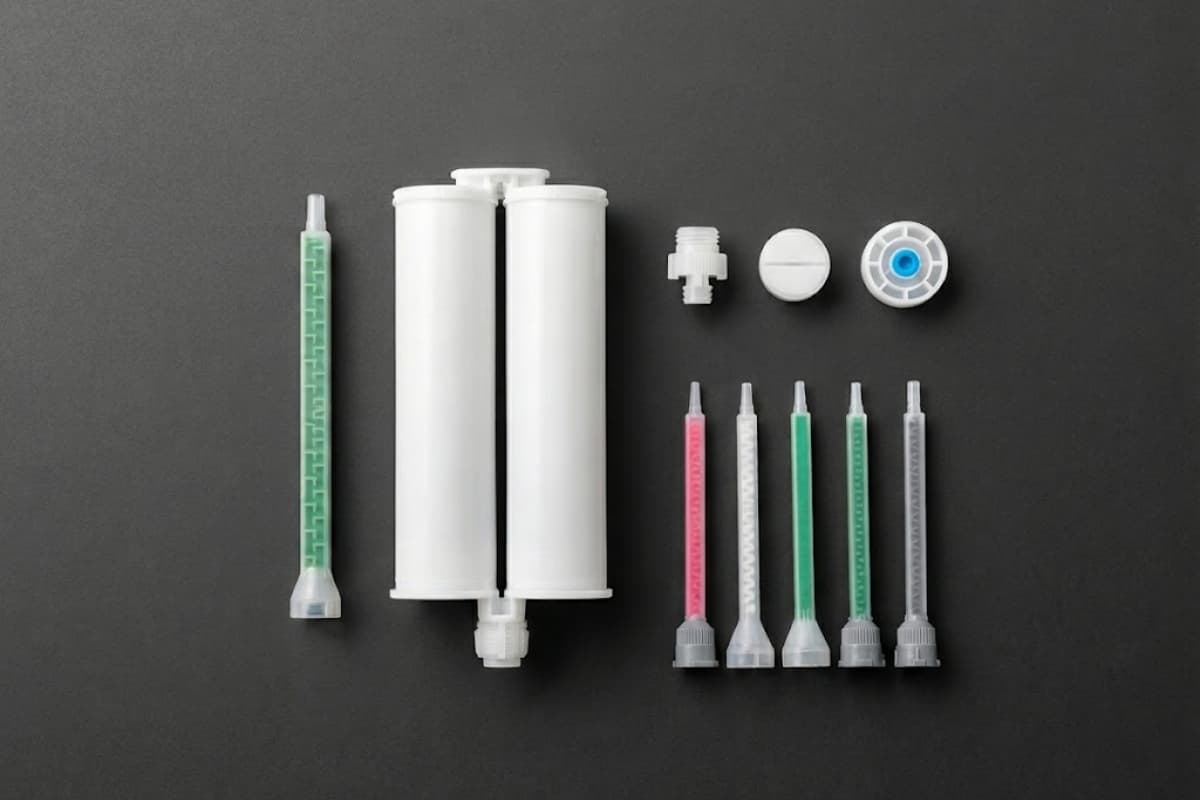
A two-part cartridge fixes the A:B ratio (commonly 1:1, 2:1, 4:1, or 10:1) but lets each chamber’s volume be chosen independently. The trap: if one component is used far more than the other, sizing the body to the smaller draw leaves the high-use chamber empty mid-batch — causing a stoppage or an off-ratio shot. Size to the higher-consumption chamber, then verify the other chamber still covers its share. The ratio and compatibility guide covers which ratios pair with which body geometries; capacity is the layer on top.
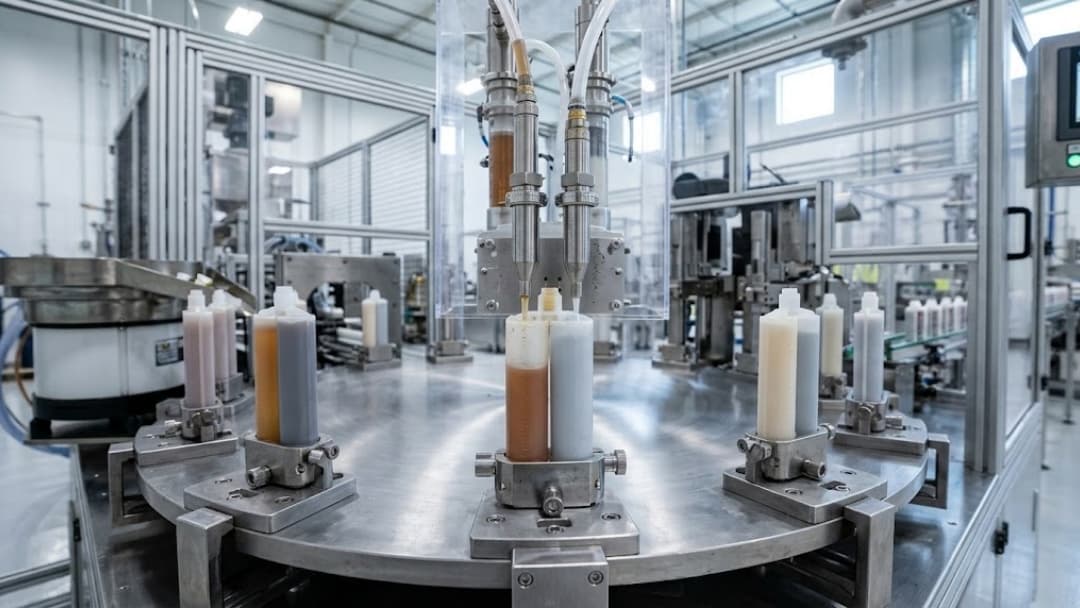
Matching Filling and Dispensing Systems

Capacity doesn’t sit alone — it has to line up with two machines:
- The filler must keep cartridges stocked at least as fast as the line consumes them, or you starve mid-run.
- The dispenser sets the consumption pace; a body sized above its cycle need just sits in inventory.
Two failures show up repeatedly: too-small capacity forces constant changeovers and starves the line; too-large capacity builds inventory that ages or gets scrapped on a product switch. Both tie back to the cartridge filling machine cycle rate and the dispensing system cycle rate — size the cartridge so the three move together.
Questions to Ask Your Supplier
- Which capacity bands do you stock, and what’s the top end per SKU?
- Can ratio and capacity be combined independently, or are some paired?
- Will your filler and dispenser match my cycle time at the capacity I’m considering?
- What are the minimum order and changeover costs if I run multiple sizes?
- Can you suggest a per-SKU capacity for my batch profile?
FAQ
Which cartridge for high volume? On a steady, single-product, high-cycle line, use the largest capacity your filler and dispenser support (often the top of the 50–500 ml range). For varied or small batches, smaller bodies keep changeover and scrap costs down.
How do I size a cartridge for my production line? Multiply cycle time by volume per cycle to get daily draw, then pick a capacity that covers your batch size with minimal leftover at changeover. Use the decision table above as a starting point.
What’s the difference between 2K cartridge volume and throughput? Ratio is fixed; capacity is independent. Capacity changes how often you change over, not the mix. If one chamber runs out first, throughput drops and ratio drifts.
Small or large cartridge on an automated line? Depends on changeover frequency and batch stability. Small wins on flexibility and low scrap; large wins on steady high-volume lines. See the comparison table.
What if one chamber runs out before the other in a dual cartridge? Size the body to the higher-consumption chamber and confirm the second chamber still meets its share. Mismatched chambers cause stoppages or off-ratio dispensing.
Bottom Line
Cartridge capacity is set by your line’s cycle time and batch size, not by the mix ratio. Start with the decision table to pick a capacity band, then have the supplier confirm it against your filler and dispenser so the three move together. (Sizing to cut waste is a separate win — covered from the sustainability angle elsewhere — but throughput is the first filter.)