The global manufacturing industry is rapidly replacing heavy mechanical bolts with highly advanced structural glues and sealants. This massive shift helps automotive and aerospace engineers build much lighter, highly efficient vehicles. However, these complex chemical adhesives only work perfectly if factories dispense them with absolute mathematical precision.
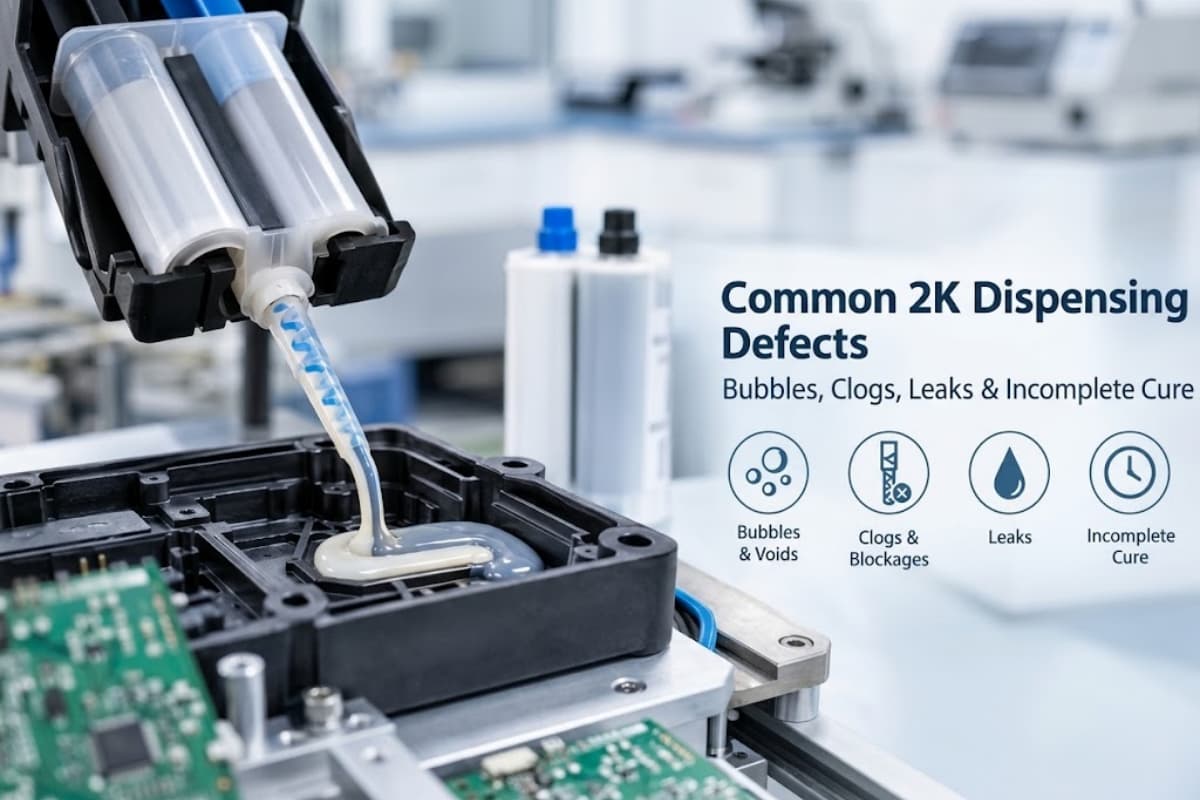
If factories mix these chemicals poorly, trap tiny air bubbles, or use the wrong volumetric ratios, the final product will fail catastrophically. These failures range from dangerous battery fires in modern electric cars to the terrifying delamination of composite airplane wings in mid-flight.
Engineers strictly use mathematically designed static mixers to ensure absolutely void-free blending, preventing disastrous product failures in the field.
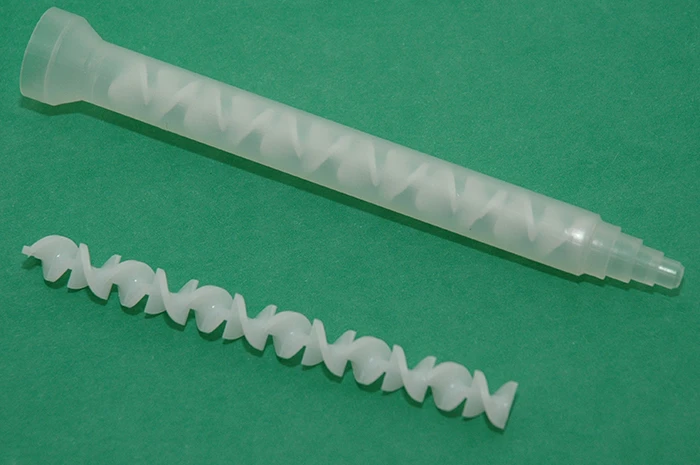
Which Thermoplastics Ensure Safe High-Pressure Dispensing?
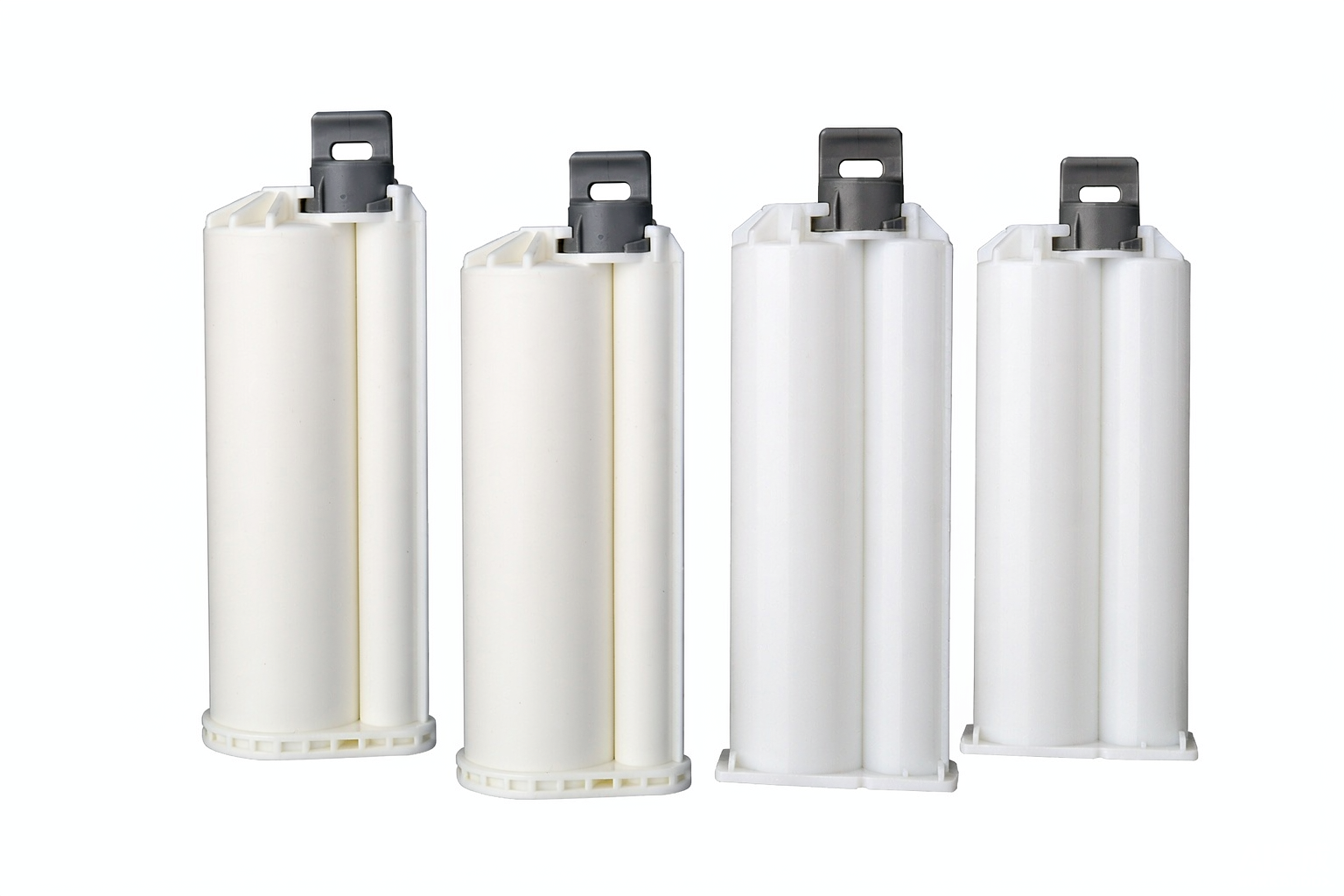
Safe high-pressure dispensing relies completely on 100% virgin, industrial-grade thermoplastics. Engineers specifically choose Polypropylene (PP) for chemical resistance, Polyoxymethylene (POM) for internal stiffness, and Polybutylene Terephthalate (PBT) for extreme structural strength. These specific plastics prevent the tubes from bursting or leaking under heavy mechanical force.
The Hidden Risks of Recycled Plastic Materials
Many low-tier factories use recycled plastics to save money, but this dangerous practice creates severe safety hazards on the assembly line. Recycled polymers degrade quickly under stress, so they fail predictably during high-pressure applications.
- Weak Polymer Chains: Repeated melting shortens the plastic molecules, meaning the cartridge walls easily crack under heavy pneumatic pressure.
- Microscopic Impurities: Recycled materials often hide tiny bits of dirt that block the narrow 1.8mm mixing channels.
- Chemical Contamination: Old plastic residues react unexpectedly with sensitive structural adhesives, completely ruining the final chemical cure.
- Operator Safety: When weak recycled tubes explode under pressure, they spray caustic chemicals onto the human workers nearby.
Engineers strictly avoid recycled materials because pristine virgin plastics guarantee exact performance and protect workers during crucial industrial assembly.
PP and POM for Standard and Structural Uses
Standard dispensing tools rely heavily on Polypropylene (PP) and Polyoxymethylene (POM) because these plastics handle harsh chemical environments brilliantly. These two polymers form the reliable backbone of everyday industrial mixing.
- PP Moisture Barrier: PP forms the outside shell of standard 50ml tubes because it completely blocks ambient humidity from entering and ruining the sensitive glue.
- PP Chemical Resistance: This versatile plastic easily survives prolonged contact with caustic acids, bases, and heavy organic solvents.
- POM Internal Rigidity: Engineers use POM for the tiny internal mixer blades because its stiffness prevents bending when pushing highly viscous fluids.
- POM Low Friction: The incredibly low friction of POM allows the thick epoxies to slide smoothly through the complex internal shear planes.
By combining a tough PP shell with rigid POM internal parts, manufacturers build highly reliable mixing systems for everyday structural bonding.
PBT for Extreme Pneumatic Extrusion
When factories use heavy-duty pneumatic guns to push thick glues at high speeds, they upgrade to Polybutylene Terephthalate (PBT) for maximum safety. This premium plastic handles extreme mechanical stress without warping.
- High Burst Strength: PBT safely contains massive internal pressures, specifically in large 250ml 10:1 AB glue cartridges.
- Wall Integrity: The strong PBT walls refuse to balloon or stretch outward when the heavy mechanical plungers push violently forward.
- Thermal Resistance: PBT easily resists heat damage when highly reactive polyurethanes begin their hot curing process directly inside the nozzle.
- Stoichiometric Accuracy: Because the hard plastic holds its shape perfectly, the tube pushes the exact correct ratio of chemicals directly into the mixer.
Industrial operators trust PBT plastics because they easily handle the extreme physical forces required for massive, continuous glue extrusion.
| Thermoplastic Material | Key Engineering Profile | Primary Mixer Application |
|---|---|---|
| Polypropylene (PP) | Exceptional chemical resistance and moisture barrier | Standard 50ml tubes and outer mixer housings |
| Polyoxymethylene (POM) | High structural stiffness and low friction | Internal mixing blades and manual gun mechanics |
| Polybutylene Terephthalate (PBT) | Extreme mechanical strength and thermal resistance | High-pressure 250ml and large pneumatic cartridges |
How Do Static Mixer Systems Differ in Interface Design?
Static mixer systems differ primarily in their connection mechanics to handle varying pressure levels and assembly speeds. Systems use push-and-twist connections for basic tasks, bayonet locks to prevent blowouts under high pressure, or twist-locks for fast automated changes. Choosing the correct interface prevents dangerous chemical leaks during extrusion.
A-System and B-System Fundamentals
The A-System and B-System provide the foundational connections for standard industrial bonding applications. These interfaces prioritize ease of use for human operators working with medium-volume glues.
- A-System Push-and-Twist: This classic design fits standard 50ml dual cartridges perfectly, allowing workers to swap nozzles rapidly by simply pushing and turning.
- B-System Universal Fit: Engineers designed the B-System with a reinforced connection collar to fit the widest variety of global standard two-component tubes.
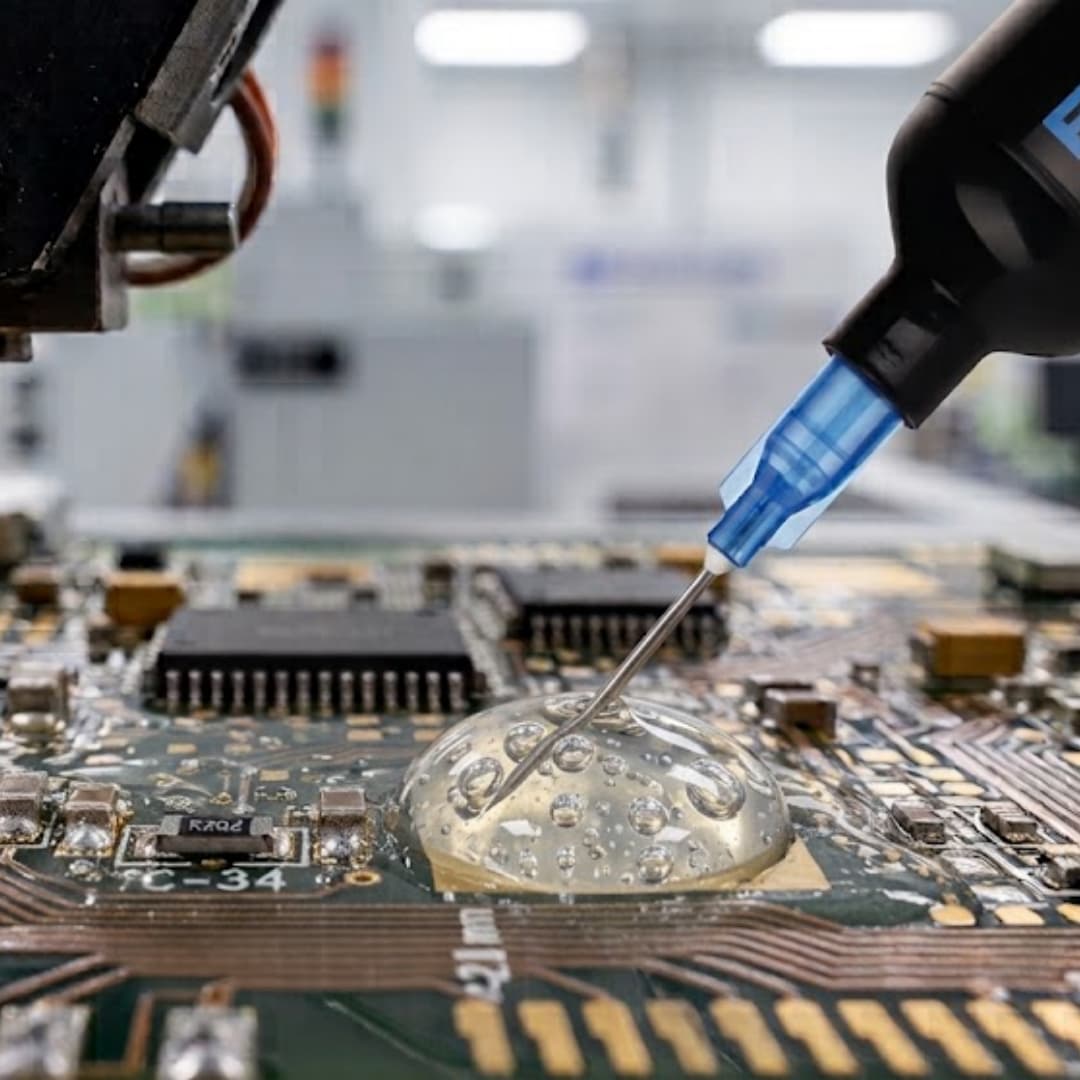
- Low-Pressure Safety: Both systems handle standard manual grip pressure easily, preventing leaks during general electronic component potting.
- Quick Deployment: These simple mechanics allow factory workers to change clogged nozzles in seconds, keeping the assembly line moving continuously.
For standard manual dispensing, these fundamental interfaces provide reliable, everyday performance without unnecessary complexity.
C-System Bayonets for High Backpressure
When factories upgrade to thick, heavily filled structural epoxies, they require the ultra-secure C-System interface. This system completely eliminates the severe risk of nozzles blowing off under extreme pneumatic force.
- Reinforced Bayonet Lock: The C-System features heavy plastic locking lugs that physically lock the mixer onto the cartridge body.
- Pneumatic Safety: This rigid connection easily handles the immense forward pressure generated by heavy-duty 200ml and larger air-powered dispensing guns.
- Viscous Material Handling: Thick thermal pastes push back hard against the nozzle, but the bayonet lock prevents the mixer from detaching.
- Leak Prevention: The tight interference fit guarantees that reactive chemicals cannot leak out the sides during high-speed factory extrusion.
Heavy industrial applications demand the C-System because it physically guarantees worker safety and clean application under extreme pressure.
F-System Twist-Locks for Rapid Automation
Modern robotic assembly lines operate at blistering speeds, so engineers use the advanced F-System for instantaneous hardware changes. This specialized twist-lock system perfectly balances secure attachment with rapid removal.
- Twist-Lock Mechanics: The specialized thread design allows operators to attach or detach the mixer with a quick, single mechanical twist.
- High-Speed Changeovers: Fast-cycling automated robots require this system because it minimizes the expensive downtime needed to swap out cured nozzles.
- Vibration Resistance: The twist-lock holds firmly even when mechatronic arms move rapidly at speeds up to 800mm/s.
- Continuous Flow: Factories using continuous robotic dispensing rely on this secure interface to maintain perfect adhesive beads across thousands of parts.
The F-System directly supports modern automation by allowing high-speed, secure, and reliable nozzle replacements on active robotic lines.
| System Interface Type | Connection Mechanism | Primary Industrial Application |
|---|---|---|
| A-System & B-System | Push-and-Twist / Reinforced Collar | Standard 50ml manual dispensing and potting |
| C-System | Heavy-duty Bayonet Lock | High-pressure pneumatic extrusion of viscous pastes |
| F-System | Quick Twist-Lock Thread | High-speed automated robotic assembly lines |
What Internal Geometries Solve Asymmetrical Viscosity Ratios?
Engineers solve asymmetrical viscosity ratios by using specialized internal mixing geometries, specifically helical and quadro designs. When one chemical is much thicker than the other, standard tubes fail to blend them. Helical spirals handle large continuous flows smoothly. Alternatively, quadro designs use compact square grids to force thick fluids through aggressive shear planes rapidly. These shapes ensure perfect chemical homogenization before dispensing.
Managing 4:1 and 10:1 Rheological Profiles
Formulating advanced adhesives often requires mixing a thick resin with a very thin hardener, creating a difficult fluid dynamics problem.
- Asymmetrical Ratios: Standard 1:1 glues mix easily, but a 10:1 ratio forces a tiny amount of hardener into a massive volume of thick resin.
- Rheological Differences: Sometimes the resin flows like thick honey while the hardener flows like water, making them naturally resist blending together.
- Channeling Risks: If the internal geometry is wrong, the thin fluid simply shoots straight down the middle without ever touching the thick fluid.
- Geometric Shear: Engineers solve this issue by designing precise internal plastic blades that repeatedly fold the different fluids over each other.
By carefully shaping the internal plastic walls, engineers force wildly different chemicals to combine into one perfectly smooth adhesive.
Helical Designs for Large Volume Flow
The traditional helical, or spiral, internal geometry provides a smooth, continuous pathway for high-volume adhesive dispensing on the factory floor.
- Continuous Spiral: The specific 1018t model uses a long, twisting helical blade that gently folds the fluid stream over itself repeatedly.
- Low Pressure-Drop: Because the spiral creates very little internal resistance, workers can push massive 400ml and 490ml cartridges using standard manual tools.
- Thick Fluid Handling: The wide internal channels easily prevent highly viscous construction epoxies from clogging the plastic tube during heavy industrial use.
- Gentle Blending: The smooth sweeping turns prevent delicate filler particles, like thermal ceramics, from getting crushed during the rapid mixing process.
Engineers specify helical mixers when factory workers need to push massive volumes of thick glue smoothly and continuously.
Quadro Designs for Short-Path High Shear
When chemicals stubbornly refuse to mix, engineers deploy the aggressive Quadro (square) geometry to rapidly force them together in a tight space.
- Aggressive Shear Planes: The advanced 08-24t model uses an interlocking square grid that aggressively slices and recombines the fluid stream instantly.
- Compact Length: Because the square grid works so efficiently, the physical nozzle is much shorter than a traditional long spiral tube.
- Reduced Waste: A shorter nozzle traps significantly less expensive adhesive inside, saving factories massive amounts of money over long production runs.
- Wide Volume Range: These highly aggressive mixers easily handle bulk fluid systems ranging from 200ml all the way up to huge 1500ml setups.
Factories rely heavily on Quadro geometries when they need to rapidly mix difficult chemicals while strictly minimizing expensive material waste.
| Mixer Geometry Type | Internal Fluid Mechanics | Primary Industrial Advantage |
|---|---|---|
| Helical (Spiral) | Gentle, continuous folding action with low resistance | Smoothly handles large 400ml volumes with minimal backpressure |
| Quadro (Square) | Aggressive, rapid slicing through interlocking grids | Drastically reduces expensive glue waste due to its short length |
How Does Injection Molding Precision Prevent Cross-Talk?
Injection molding precision prevents cross-talk by creating a perfectly tight seal between the cartridge and the mixer. If the plastic parts do not fit exactly, the chemical resin and hardener will leak across the center dividing wall. This premature mixing ruins the entire tube before the glue even reaches the nozzle. High-precision manufacturing guarantees an exact fit to keep the chemicals strictly separated.
Securing the Interference Fit
Engineers rely on extreme manufacturing accuracy to lock the dispensing components together tightly.
- Interference Fit: The mixer nozzle must push tightly into the cartridge opening, creating a friction seal without needing any rubber gaskets.
- Microscopic Accuracy: High-quality molds shape the plastic parts with microscopic precision, leaving absolutely zero gaps for liquid to escape.
- Pressure Resistance: A perfect physical fit prevents heavy pneumatic pressure from forcing the liquid out the sides of the connection collar.
- Structural Integrity: When the plastic lugs lock perfectly, the entire assembly remains rigid and safe during the factory extrusion process.
By molding perfectly matched plastic shapes, factories guarantee a secure and leak-proof seal during every single use.
Eliminating Premature Inter-Chamber Curing
Tiny dimensional errors in cheap plastic molds cause a fatal chemical problem known in the industry as cross-talk.
- Cross-Talk Definition: Cross-talk happens when Part A and Part B leak across the central plastic divider directly at the connection interface.
- Premature Curing: When the chemicals touch too early, they instantly harden into a solid plastic rock right at the cartridge exit.
- Blockage Failures: This hardened rock permanently blocks the fluid channels, completely ruining expensive tubes of high-performance engineering glue.
- Zero Tolerance: Premium injection molding uses absolute zero-tolerance standards to ensure the central dividing wall perfectly meets the mixer inlet.
Exact molding tolerances keep the reactive chemicals completely isolated until the exact millisecond they enter the mixing blades.
Using CFD Modeling for Custom Geometries
Before injecting hot plastic into steel molds, engineers use advanced computer software to simulate the exact fluid flow.
- CFD Simulation: Computational Fluid Dynamics (CFD) software digitally models how thick adhesives will behave when squeezed through the plastic channels.
- Custom Flow Paths: If a new glue possesses an unusual viscosity, engineers easily adjust the digital nozzle shape to fix the flow.
- Predicting Pressure: The digital models show engineers exactly where dangerous high-pressure zones will build up inside the plastic tube.
- Rapid Prototyping: Once the computer simulation runs perfectly, factories quickly cut the steel molds to manufacture the exact custom shape.
Using advanced computer modeling ensures the final injection-molded plastic handles the precise fluid dynamics of complex new adhesives.
Are Automated Mechatronic Applicators Replacing Manual Dispensing?
Automated mechatronic applicators are rapidly replacing manual dispensing because human workers cannot maintain the extreme precision required by modern microelectronics. Robots deliver absolute consistency without fatigue, ensuring flawless chemical application on fast assembly lines. This transition from manual labor to intelligent machines permanently eliminates human error during complex fluid dispensing.
Overcoming Manual Biomechanical Limits
Human operators naturally suffer from hand fatigue and microscopic muscle tremors during long factory shifts.
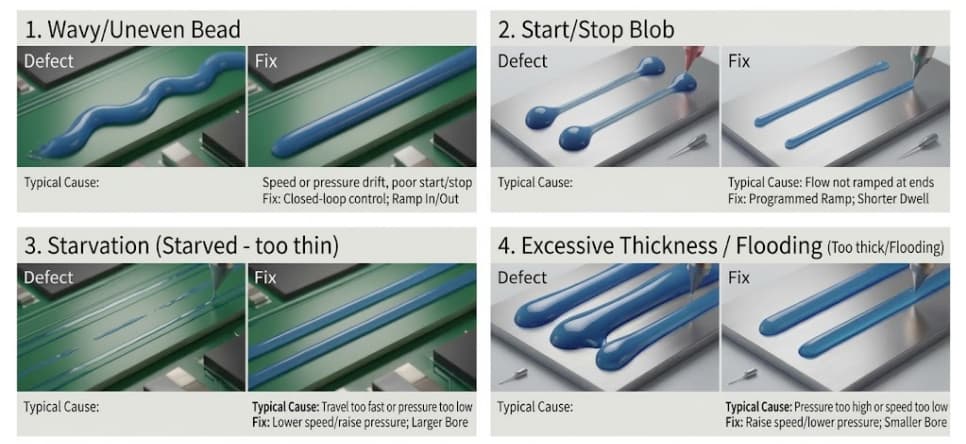
- Inconsistent Beads: Tired workers accidentally apply uneven amounts of glue, causing messy leaks or weak joints.
- Biomechanical Tremors: Natural hand shaking makes it physically impossible for humans to apply microscopic adhesive dots accurately.
- Speed Limitations: A human worker simply cannot dispense thick adhesives fast enough to keep up with modern mass production.
- Ergonomic Injuries: Squeezing heavy pneumatic guns all day causes severe wrist strain and long-term joint damage for operators.
By replacing tired hands with rigid mechanical arms, factories immediately solve the physical limitations of human labor.
Servo Control and Laser Height Integration
Advanced robotic platforms use high-end digital sensors and precise motors to navigate complex physical environments perfectly.
- Positional Repeatability: High-end Panasonic servo motors guide the robotic arm with an incredible positional repeatability of +/-1%.
- Laser Adjustments: Built-in laser sensors constantly measure the surface height to keep the dispensing nozzle perfectly level over bumpy areas.
- Vision Systems: High-resolution CCD cameras visually inspect the parts and instantly correct the robot’s path if a component is slightly misaligned.
- CAD Programming: Engineers easily upload digital CAD files directly into the robot, allowing it to trace complex 3D shapes automatically.
These intelligent digital sensors guarantee the robot applies the exact right amount of glue exactly where it belongs.
Matching Dispense Speed to Assembly Lines
To remain competitive, modern factories must apply complex engineering adhesives at blistering, continuous speeds.
- Extreme Velocity: Advanced mechatronic robots effortlessly move and dispense adhesives at extreme speeds up to 800mm/s.
- Continuous Coating: High speeds allow robots to rapidly spray ultra-thin conformal coatings over delicate automotive electronic control units.
- Rapid Changeovers: Factories quickly switch the robot from dispensing thick structural epoxy to micro-spraying thin water-based sealants.
- Uninterrupted Work: Unlike human workers, these heavy-duty mechatronic systems operate continuously through entire factory shifts without ever stopping.
Deploying high-speed robotics guarantees that adhesive application never slows down the fast-paced global manufacturing process.
What Are the Primary Applications for These Mixing Technologies?
The primary applications for these mixing technologies span across high-tech manufacturing sectors that demand absolute chemical precision. Engineers rely on these systems to build electric vehicles, assemble tiny consumer electronics, and construct lightweight airplanes. These critical industries simply cannot function without mathematically perfect fluid dispensing.
Thermal Interface Materials in Electric Vehicles
Electric vehicle batteries generate massive amounts of dangerous heat, so engineers must install advanced thermal management systems to prevent fires.
- Heat Transfer: Special thermal interface pastes pull heat away from the sensitive lithium-ion cells directly into the cooling plates.
- Abrasive Fillers: These pastes contain heavy metallic or ceramic powders, which easily destroy cheap plastic nozzles during rapid extrusion.
- Continuous Flow: High-capacity mixers allow robots to apply long, continuous beads of cooling paste without trapping dangerous air bubbles.
- Vibration Resistance: A perfectly mixed thermal paste cures into a flexible pad that absorbs heavy road vibrations during driving.
By using reinforced plastic mixers, automotive factories safely dispense heavy thermal pastes to keep modern electric cars running cool.
Micro-Dispensing in Consumer Electronics
Modern smartphones pack incredibly powerful computers into tiny spaces, leaving absolutely zero room for messy glue application.
- Microscopic Dots: Automated systems drop microscopic dots of glue to hold tiny computer chips in place before factory soldering.
- Underfill Resins: Ultra-thin glues quickly wick underneath delicate microchips, acting as shock absorbers when users drop their phones.
- Waterproof Sealing: Flawless liquid gaskets trace the glass screens perfectly, giving modern smartphones their impressive IP68 water-resistance rating.
- Zero Error Margin: A single microscopic air bubble in the glue line creates a direct path for destructive water leaks.
Electronics manufacturers absolutely depend on high-precision dispensing tools to build the durable, waterproof gadgets we use every day.
Void-Free Bonding in Aerospace Composites
Aerospace engineers build modern airplanes using lightweight carbon fiber materials glued together with incredibly strong structural epoxies.
- Structural Integrity: The entire safety of an airplane panel depends completely on a solid, perfectly mixed chemical bond.
- Air Void Danger: Tiny air bubbles trapped inside the cured glue act as dangerous weak points under extreme flight pressure.
- Catastrophic Failure: If an airplane panel experiences heavy stress near an air void, the composite layers will violently tear apart.
- Perfect Homogeneity: Advanced static mixers mathematically divide and fold the thick epoxy until it becomes a perfectly smooth, bubble-free solid.
By guaranteeing a perfectly blended glue line, precision mixing technologies keep high-speed passenger airplanes safely in the sky.
Frequently Asked Questions
What is a static mixer and how does it work?
A static mixer is a plastic tube containing stationary geometric blades. It works by continuously dividing and folding two liquid chemicals together until they form a perfectly blended solid.
Why do static mixers use different connection types?
Different connections handle varying levels of mechanical pressure. Standard tasks use simple push-and-twist collars, while high-pressure factory tools require secure bayonet locks to prevent the nozzle from blowing off.
Can I use recycled plastics for adhesive dispensing?
No, you should never use recycled plastics for high-pressure dispensing. Recycled materials contain weakened polymer chains that easily burst under pressure, creating severe safety hazards for factory workers.
How do I choose between a spiral and a square static mixer?
Choose a spiral mixer to push large volumes of thick glue smoothly. Choose a square, or quadro, mixer to rapidly blend difficult chemicals while minimizing expensive material waste.
What causes adhesive cross-talk in dual cartridges?
Cross-talk occurs when poor injection molding creates microscopic gaps in the plastic joint. These gaps allow the resin and hardener to leak across the middle divider and cure prematurely.
Are there specific mixers for highly viscous thermal pastes?
Yes, heavy thermal pastes require reinforced mixing tubes. Engineers use heavy-duty bayonet connections and stiff internal POM blades to handle the abrasive metallic fillers without breaking.
What is the shelf-life impact of poor cartridge materials?
Low-quality plastics allow ambient moisture to penetrate the tube walls over time. This moisture reacts directly with the sensitive chemicals, ruining the glue before you even open it.
Engineering Flawless Chemical Bonds
Flawless fluid blending requires exact engineering, virgin polymers, and precise injection molding. Modern factories cannot risk catastrophic failures caused by trapped air bubbles or weak plastic tubes. By choosing the correct internal geometry and secure interface, manufacturers guarantee strong, reliable chemical bonds. For global brands seeking these exact strict standards, Haijing Company provides the ultimate manufacturing solution. Haijing Company engineers and builds the highly precise custom cartridges, static mixers, and automated robotic systems that modern industry demands.