The global manufacturing industry is quickly replacing traditional metal screws with advanced structural adhesives and high-performance electronic glues. Because modern consumer electronics constantly shrink in physical size, engineers must use extremely precise chemical bonds to securely hold everything together. However, these highly reactive structural glues will instantly fail if the factory uses a poor-quality fluid delivery system.
Using a cheap mixing nozzle will easily cause trapped air bubbles, weak structural bonds, and totally ruined electronic devices. Because modern smartphones and vehicle displays demand zero mechanical mistakes, mastering the complex fluid dynamics behind these plastic delivery systems is absolutely critical for automated assembly lines.
Therefore, understanding exactly how heavy chemicals flow through tiny spaces helps factories eliminate messy leaks and wasted chemical materials. This comprehensive engineering guide details eight essential rules for deploying micro-dispensing static mixers to ensure flawless, highly profitable manufacturing operations worldwide.
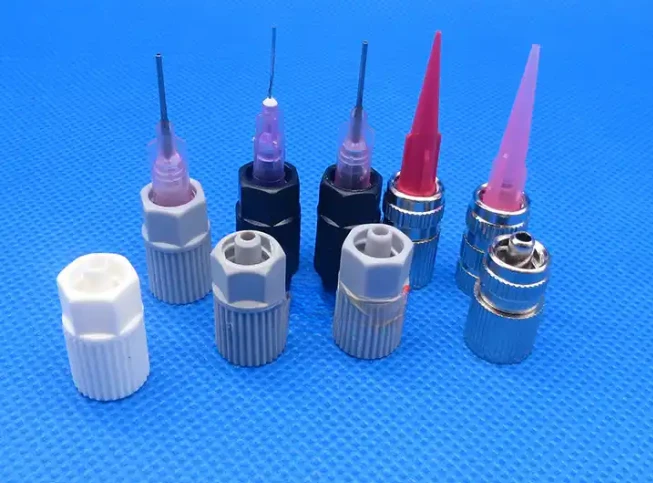
What Are Micro-Dispensing Static Mixers Used For in Electronics?
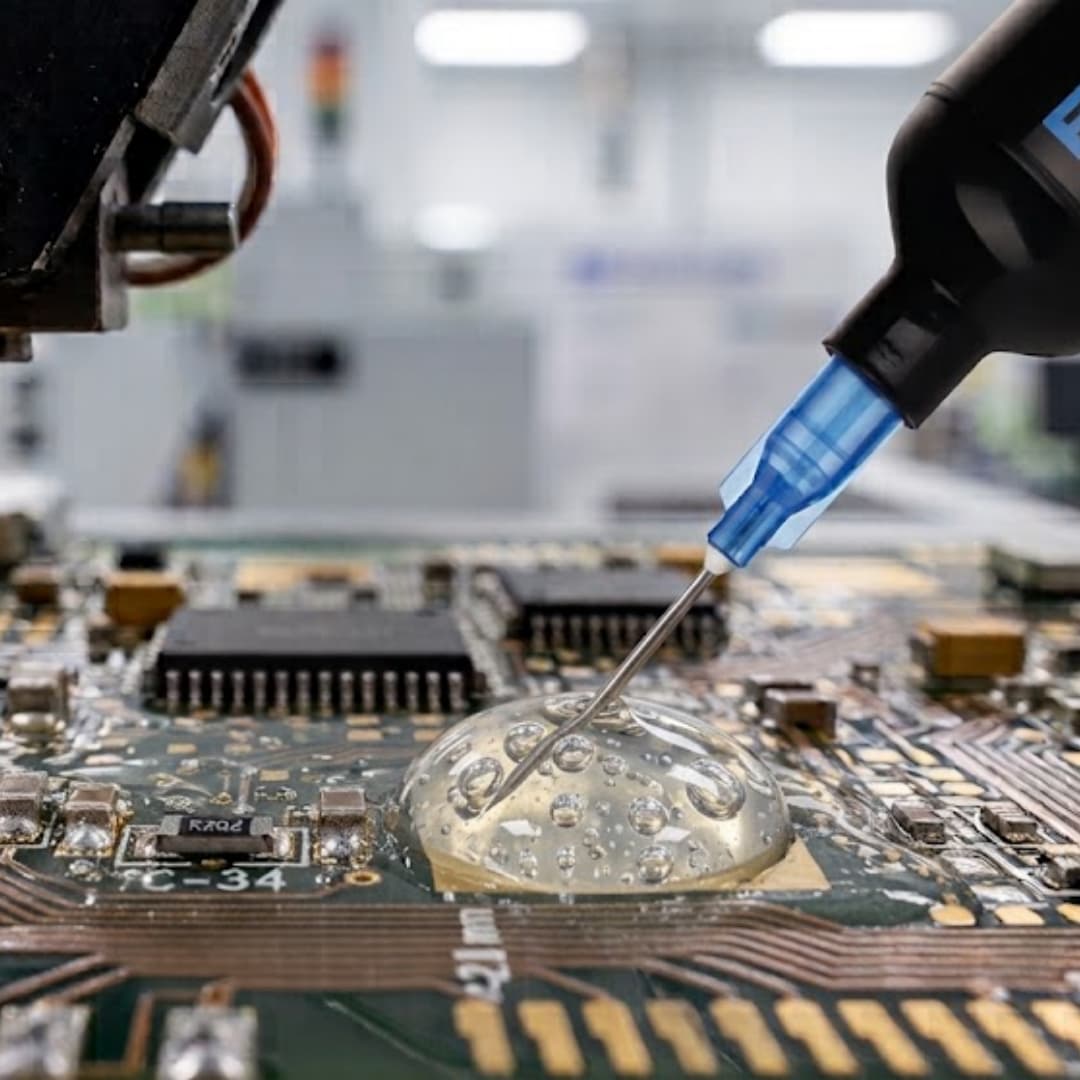
Factory engineers mainly use micro-dispensing static mixers to precisely apply structural adhesives onto microscopic electronic components. Because modern circuit boards are incredibly dense, standard glue guns fail to deliver the required accuracy. So, engineers use these tiny nozzles to deploy exactly measured drops of red glue, thermal pastes, and waterproof silicones. This ensures that fragile microchips stay perfectly secure and operational under heavy stress.
SMT Red Glue Application
Surface Mount Technology (SMT) relies heavily on extreme mechanical precision to correctly attach incredibly tiny parts to modern circuit boards.
- Engineers constantly use robotic coordinate systems to dispense sub-millimeter dots of specialized structural red glue directly onto the bare fiberglass board.
- This crucial manufacturing step securely holds microscopic passive components tightly in place before they enter the high-temperature wave soldering machine.
- If the static mixer fails to blend the hardener and resin perfectly, the resulting uncured glue will flatten out and ruin nearby sensitive electrical contacts.
- Also, high-speed assembly lines operate very quickly, so the narrow nozzle must deliver a perfectly consistent volume of adhesive every single second without any clogs.
Therefore, a perfectly homogenous glue mixture strongly guarantees that every single tiny resistor stays securely anchored during the rapid assembly process.
Micro-Underfilling for Delicate Chips
Modern silicone microchips require extra physical support because they are very fragile and easily destroyed by sudden physical impacts.
- Manufacturers use highly fluid, ultra-low-viscosity capillary resins to quickly wick directly underneath the freshly mounted microchips.
- Engineers call this advanced technique micro-underfilling, and it acts as a permanent shock absorber if you accidentally drop your electronic device on a hard floor.
- The static delivery nozzle must output an extremely consistent, unbroken bead of epoxy along the edge of the delicate chip.
- Because any skipped areas or trapped air gaps leave the expensive chip exposed to dangerous harmonic vibrations, precision is absolutely mandatory.
So, choosing a fluid-dynamics-optimized mixing tip ensures the thin structural resin flows evenly and creates a completely unbreakable protective layer.
Sealing Modern Camera Modules
Today, everyday consumers fully expect their expensive flagship smartphones to easily survive accidental deep water submersions without any permanent damage.
- The highly desired IP68 water-resistance rating depends entirely on the flawless, continuous application of complex liquid silicone gaskets.
- Automated static mixers precisely apply these liquid seals directly around the tight outer perimeter of the fragile glass camera lenses.
- Any microscopic air bubble caused by a cheap, low-quality mixing element will immediately result in a direct, catastrophic water leak path.
- Furthermore, the polymer material inside the mixer tube must stay chemically stable, because leaking plasticizers will quickly cloud the clear optical lens.
Ultimately, absolute structural precision in the mixing phase remains the only reliable way to permanently protect delicate camera electronics from harsh moisture.
How Do Static Mixers Ensure Bubble-Free Blending?
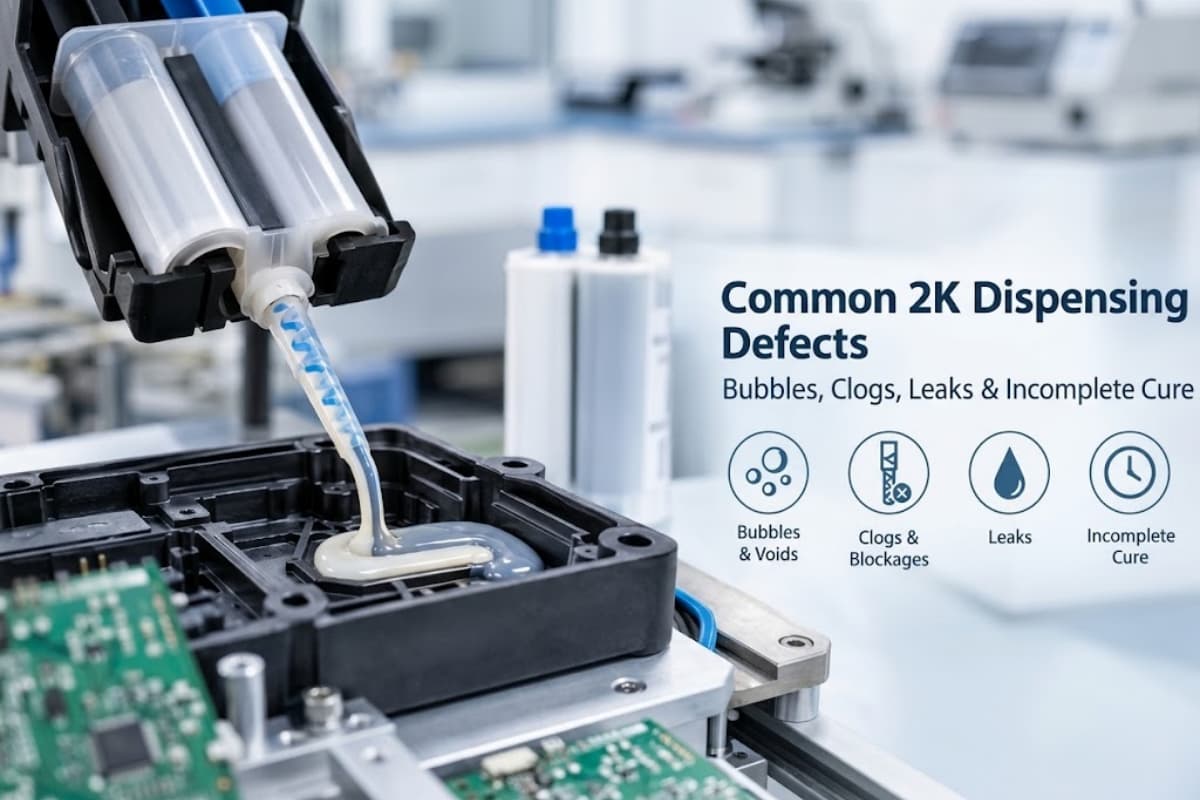
Static mixers guarantee bubble-free blending by using a series of fixed internal blades to repeatedly divide and fold the adhesive streams. As the two thick chemicals push through the tight plastic tube, the stationary elements force them to merge perfectly. This physical process completely pushes out ambient air. So, the final mixture exits the nozzle as a solid, continuous fluid without any weak empty pockets.
Continuous Geometric Division
The core secret behind a flawless chemical bond lies in the mathematical design of the internal mixing blades.
- Engineers design stationary geometric elements that continuously divide the fluid stream into multiple layers as it travels forward.
- Every time the adhesive passes a single mixing element, the physical layers double, quickly creating thousands of microscopic folds.
- This aggressive mechanical shearing action forcefully blends the heavy resin and the active hardener into a single, uniform compound.
- Because the internal channel diameters remain strictly calculated, the pressurized fluid moves uniformly and effectively pushes all ambient air out of the nozzle tip.
This relentless geometric folding process ensures that the two distinct chemicals form a perfectly homogeneous paste right before application.
Eliminating Void-Free Curing Risks
Trapped air bubbles inside a cured structural adhesive bead will quickly lead to catastrophic product failures under heavy stress.
- Microscopic air voids act as dangerous stress concentrators, which quickly cause the cured epoxy to crack when physical loads shift.
- In advanced manufacturing, a 100% void-free matrix is absolutely mandatory to prevent lightweight carbon composite panels from dangerously delaminating.
- A high-quality static mixer strictly prevents atmospheric air from entering the fluid stream during the chaotic blending phase.
- By maintaining a steady, uninterrupted flow rate, the mixing elements stop pneumatic springing, where trapped air suddenly expands and ruins the glue dot.
So, achieving a truly bubble-free cure permanently protects advanced electronic materials from unpredictable structural weakness.
Matching Fluid Dynamics to Mixers
You cannot use a standard generic mixing tip for every type of modern electronic adhesive because fluid properties vary wildly.
- Engineers use advanced computational fluid dynamics to perfectly match the internal nozzle geometry with the specific viscosity of the chemical.
- Thick, heavy materials like thermally conductive pastes require robust shear planes to force the abrasive metallic particles into a smooth suspension.
- Conversely, ultra-thin capillary resins need a longer pathway with more dividing elements to prevent the thin liquids from simply rushing past each other.
- Operators must precisely adjust the total number of cascading elements based on the exact thickness and flow rate of the chosen polymer formulation.
Carefully matching the nozzle design to the specific chemical fluid dynamics guarantees a perfect, bubble-free blend every single time.
Why Is Polymer Selection Critical for Micro-Dispensing?
Choosing the correct plastic polymer guarantees that the static mixer will not burst under high pressure or chemically react with the strong adhesives. Engineers must select industrial-grade materials that strongly resist moisture and maintain their exact shape during the mixing process. Using the wrong plastic quickly leads to dangerous leaks, contaminated glue, and broken electronic assemblies.
The Role of Virgin Polypropylene (PP)
Manufacturers rely heavily on pure polypropylene to build standard mixing nozzles because it blocks moisture perfectly.
- Engineers demand 100% virgin industrial-grade polymers to completely prevent microscopic impurities from ruining the fragile glue dot.
- PP strongly resists chemical attacks from the harsh organic solvents and caustic acids found in modern electronic adhesives.
- The material features a remarkably low moisture vapor transmission rate, which permanently stops ambient humidity from prematurely curing the sensitive glue.
- It delivers a very favorable balance of toughness and cost-efficiency for disposable, single-use manufacturing components.
Therefore, virgin PP remains the safest foundational material for standard industrial bonding and electronic component potting.
When to Use Polyoxymethylene (POM)
For highly rigid internal mixing elements, engineers frequently choose polyoxymethylene to prevent the blades from bending during operation.
- POM acts as an advanced engineering thermoplastic known globally for its exceptional stiffness and dimensional stability.
- It maintains an incredibly low coefficient of friction, which allows thick adhesives to flow smoothly without sticking to the internal walls.
- The material strongly resists mechanical fatigue and creep, even when high-speed automated machines push heavy fluids constantly.
- Engineers also use POM inside the precision drive mechanisms of manual dispensing guns because it handles intense physical stress perfectly.
Using POM ensures that the delicate internal shear planes hold their exact mathematical shape against incredibly strong fluid forces.
Handling High Pressures with Polybutylene Terephthalate (PBT)
Extreme pressure applications require polybutylene terephthalate to completely stop the mixing tubes from violently bursting open.
- PBT serves as a high-performance, semi-crystalline polyester that delivers extraordinary mechanical strength during heavy industrial use.
- It provides profound resistance to thermal degradation, meaning it survives perfectly in hot, demanding electronics factories.
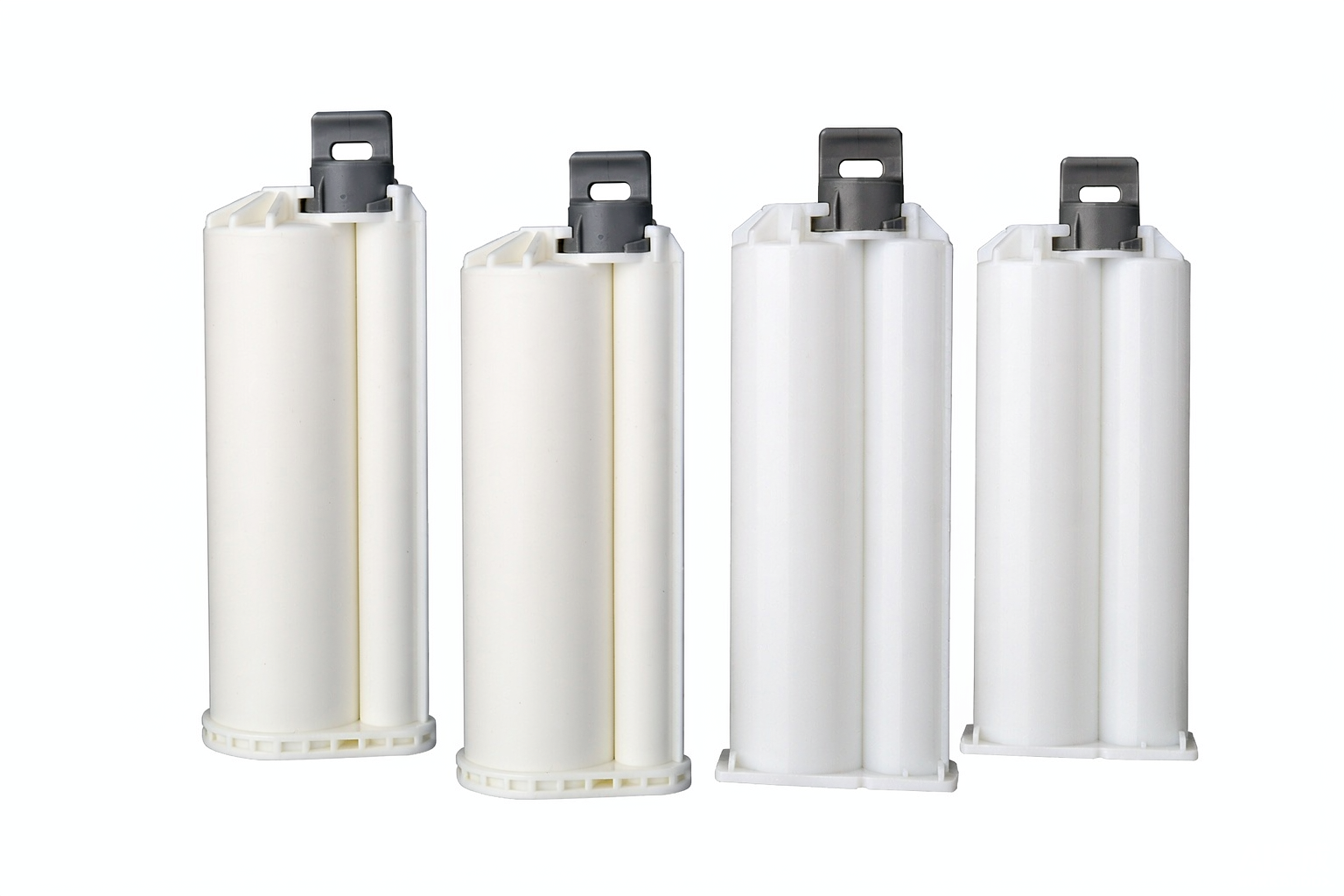
- Engineers reserve this tough material for highly specialized, maximum-pressure syringe barrels, like large 250ml 10:1 AB glue cartridges.
- Unlike weaker recycled plastics, PBT completely prevents the outer cartridge wall from ballooning outward when pneumatic actuators apply massive thrust.
Consequently, relying on PBT guarantees absolute operator safety and consistent fluid delivery during the most demanding extrusion tasks.
| Polymer Material | Key Mechanical Strength | Primary Electronics Use |
|---|---|---|
| Polypropylene (PP) | High chemical resistance & blocks moisture entry | Standard disposable static mixers and dual-cartridges. |
| Polyoxymethylene (POM) | Extreme stiffness & low coefficient of friction | Rigid internal mixing blades and mechanical gun parts. |
| Polybutylene Terephthalate (PBT) | Maximum pressure resistance & zero wall ballooning | High-pressure dual-component syringes. |
Which Internal Mixing Geometries Handle Asymmetrical Ratios Best?
Engineers use specially designed quadro and helical mixing geometries to handle highly unequal adhesive ratios. When mixing thick resins with tiny amounts of hardener, standard tubes fail to blend them correctly. So, selecting the exact internal blade shape forces these asymmetrical fluids to merge evenly. This prevents uncured wet spots and guarantees a rock-solid final bond.
Managing 4:1 and 10:1 Mix Ratios
Asymmetrical mix ratios require aggressive fluid control to prevent the thinner hardener from simply slipping past the thick resin.
- Many advanced structural epoxies utilize extreme mixing ratios, such as 4:1 or even 10:1 configurations.
- If you push these highly disproportionate volumes through a generic mixer, the tiny amount of hardener channels straight down the middle unmixed.
- Engineers use advanced computational models to design custom shear planes that violently force the larger resin volume to fold over the tiny hardener stream.
- This precise mechanical forcing ensures that the highly reactive chemicals achieve perfect stoichiometric balance before they touch the electronic board.
Consequently, specialized geometric blades securely manage difficult chemical formulas that would easily ruin a standard mixing tube.
Helical (Spiral) vs. Quadro (Square) Designs
Manufacturers choose between classic spiral blades and advanced square geometries based on the specific thickness of the glue.
- Standard helical designs feature a continuous twisted spiral blade that provides a smooth, low-pressure pathway for thinner fluid volumes.
- Conversely, quadro mixing tips force the thick fluid through a much more aggressive and compact series of sharp square shear planes.
- The quadro geometry strongly divides the adhesive streams much faster, which perfectly handles highly viscous, heavy structural pastes.
- Because the square design is more efficient, it completely blends the chemicals using a significantly shorter physical nozzle length.
Therefore, choosing the correct blade shape heavily depends on how thick and difficult the chemical adhesive is to mix.
Reducing Material Waste Inside the Nozzle
High-tech electronic adhesives cost a lot of money, so factories must absolutely minimize the leftover glue stuck inside dead nozzles.
- Every time an assembly line worker finishes a shift, they must throw away the disposable plastic nozzle full of expensive cured epoxy.
- Engineers specifically deploy compact quadro mixers because their shorter physical length holds significantly less wasted fluid inside the tube.
- By mathematically optimizing the internal flow channels, the design physically pushes almost all the usable adhesive out onto the workpiece.
- Reducing this residual chemical waste quickly saves massive amounts of money for large-scale consumer electronics manufacturing plants.
So, highly efficient nozzle geometries protect the environment while drastically lowering daily operating costs for global manufacturers.
How Do Custom Molds Prevent Adhesive Cross-Contamination?
Custom molds stop cross-contamination by creating a perfectly tight seal between the cartridge and the mixing tube. If the plastic connection is loose, the two chemicals will leak and mix way too early at the base. So, factories use precision injection molding to build exact, microscopic connection joints. This tight fit stops messy exterior leaks and ensures the glue only blends safely inside the intended mixing channels.
The Importance of the Interference Fit
Achieving a flawless interference fit remains the most critical physical requirement for any industrial fluid dispensing system.
- Engineers use advanced injection molding to create a microscopic, leak-proof seal at the exact point where the nozzle meets the pressurized cartridge.
- Because automated machines push the fluid using massive pneumatic pressure, even a microscopic gap will instantly cause a dangerous blowout.
- A perfectly tight interference fit securely forces 100% of the unmixed resin and hardener directly into the designated internal channels.
- Also, precision molding guarantees that the plastic threads will not strip or break when factory workers attach the disposable nozzle quickly.
Therefore, investing in perfectly machined molds completely eliminates the risk of external fluid leaks during heavy industrial use.
Stopping Premature Curing at the Interface
When the resin and hardener accidentally touch before entering the main tube, they will instantly harden and ruin the tool.
- Engineers call this costly manufacturing failure cross-talk, which happens when the central partition wall fails to isolate the two chemicals at the base.
- If the connection joint flexes under pressure, the highly reactive part A and part B will mix right at the delicate interface.
- This premature curing creates a solid block of hard epoxy that permanently disables the expensive dispensing equipment.
- Custom molds significantly strengthen this critical dividing wall, ensuring the two fluids remain absolutely isolated until they hit the first internal shear plane.
So, robust internal partitions effectively protect factory equipment from being totally destroyed by fast-acting structural epoxies.
Bayonet and Twist-Lock Connections
Manufacturers use different mechanical locking systems to securely anchor the mixing nozzle to the heavy fluid cartridge.
- Standard operations frequently use a secure bayonet connection, which completely eliminates the risk of the nozzle blowing off under extreme backpressure.
- Conversely, fast-paced robotic assembly lines heavily prefer specialized twist-lock mechanics for their rapid deployment capabilities.
- Twist-lock interfaces allow factory operators to perform instantaneous, secure nozzle changeovers without slowing down the continuous manufacturing process.
- Both of these advanced systems prevent the heavy fluid from pushing the nozzle sideways and breaking the fragile internal seal.
Ultimately, choosing the correct mechanical locking interface safely speeds up production while preventing dangerous pneumatic pressure blowouts.
| Mixing Architecture | Connection Mechanism | Primary Industrial Use |
|---|---|---|
| A-System | Standard push-and-twist interface | General industrial bonding and standard 50ml electronic component potting. |
| C-System | Heavily reinforced bayonet lock | High-pressure pneumatic dispensing for highly viscous structural polyurethanes. |
| F-System | Specialized twist-lock interface | High-speed automated robotic assembly lines requiring continuous changeovers. |
Can Micro-Dispensing Be Fully Automated on Assembly Lines?
Yes, modern electronics factories fully automate micro-dispensing using smart mechatronic robots. Because human hands easily shake and cause microscopic errors, engineers replace manual labor with high-speed automated coordinate applicators. These advanced machines use cameras, lasers, and precision motors to apply tiny glue dots flawlessly. So, automation guarantees that assembly lines can run continuously without any expensive mechanical mistakes.
Coordinating High-Speed Robotic Chassis
Heavy-duty robotic platforms securely hold the dispensing nozzles and move them incredibly fast across the complex circuit board.
- Engineers build the main robotic chassis using rigid metal frames to completely stop the machine from shaking during fast movements.
- These systems integrate high-end servo motors that deliver an exceptional positional repeatability of +/-1%.
- Because the motors operate precisely, they effectively eliminate the inherent tremors and geometric errors associated with manual human application.
- The mechatronic systems easily travel and dispense fluid at extreme velocities up to 800mm/s.
- Factory programmers also import standard CAD files directly into the robot’s operating system to quickly generate complex, three-dimensional dispensing pathways.
Therefore, high-speed robotic chassis allow factories to rapidly coat complex electronics without sacrificing any microscopic accuracy.
CCD Vision Systems for Real-Time Alignment
Automated robots use advanced digital cameras to constantly check the exact position of every single microchip before dispensing any fluid.
- High-resolution Charge-Coupled Device (CCD) cameras automatically look at the physical workpiece right before the glue drops.
- Sometimes, circuit boards shift slightly on the fast-moving conveyor belt, which would normally ruin the precise glue application.
- The digital camera instantly recognizes the parts and calculates real-time deviation compensation to fix any tiny alignment errors.
- Then, the robot automatically adjusts the dispensing path so the adhesive perfectly hits the targeted sub-millimeter electronic contacts.
- Because modern cameras operate faster than the human eye, this quality check happens in milliseconds without slowing down production.
By using smart visual feedback, automated machines constantly correct themselves and prevent messy glue misalignments.
Laser Height Measurement for Uneven Surfaces
Sophisticated laser sensors help the robot apply glue perfectly even when the electronic board is bent or noticeably uneven.
- Modern circuit boards frequently feature non-planar, curved, or slightly warped surfaces that confuse standard mechanical dispensers.
- Engineers attach precise laser sensors to continuously measure the exact topology of the fragile surface below the nozzle.
- The laser instantly adjusts the Z-axis height of the dispensing tip so it never crashes into the delicate components.
- Maintaining the exact distance between the mixing tip and the circuit board prevents the thick adhesive from stringing or stretching.
- This constant height adjustment guarantees that the robot extrudes a perfectly uniform fluid bead profile across the undulating terrain.
So, real-time laser measuring protects fragile parts from physical damage while keeping the glue line completely consistent.
What Causes Adhesive Run-On During Dispensing?
Adhesive run-on happens when trapped air inside the glue cartridge acts like a compressed spring. When the machine stops pushing, the trapped air expands and forces extra glue out of the nozzle. So, factories must fill the cartridges perfectly to remove all ambient air. This prevents messy leaks and keeps the workspace totally clean.
The Problem of Trapped Ambient Air
Trapped atmospheric air destroys the natural fluid dynamics inside a sealed structural glue cartridge.
- When workers fill dual-component tubes too quickly, they accidentally trap pockets of ambient air behind the thick fluid.
- During application, the heavy dispensing gun applies massive pressure, which strongly compresses these hidden air pockets.
- When the operator releases the trigger, the compressed air violently expands back to its normal physical size.
- This sudden expansion pushes extra expensive adhesive out of the mixing tip long after the machine stops moving.
Therefore, eliminating this pneumatic spring effect stops uncontrolled oozing and saves valuable chemical materials.
Vacuum-Assisted Cartridge Filling Protocols
Engineers use specialized filling machines to safely package heavy adhesives without trapping any dangerous air.
- High-tech packaging facilities deploy advanced vacuum-assisted equipment to suck all the atmospheric air out of the empty tube first.
- Then, the machine uses a slow, bottom-up filling protocol to inject the thick resin flawlessly.
- By filling from the bottom, the rising fluid smoothly pushes any remaining air out of the top before the final seal goes on.
- This precise volumetric dosing ensures that the 50ml or 400ml cartridge holds pure chemical fluid with zero hidden gaps.
So, utilizing vacuum technology ensures the final user receives a perfectly reliable and solid glue cartridge.
Maintaining Clean and Dripless Operations
Preventing run-on protects delicate electronic components from being completely ruined by accidental glue drips.
- In modern smartphone assembly, a single misplaced drop of liquid silicone will permanently block the sensitive camera lens.
- By using air-free cartridges, the dispensing robot completely stops the fluid flow the exact millisecond the motor halts.
- This creates a perfectly clean, dripless operation that keeps the complex circuit boards safe from cross-contamination.
- Also, keeping the nozzle clean prevents hardened glue from clogging the tiny output orifice during long shifts.
Ultimately, absolute fluid control keeps the factory assembly line running fast and prevents costly mechanical rejections.
| Dispensing Failure | Root Cause | Engineering Solution |
|---|---|---|
| Run-On (Oozing) | Trapped ambient air acts as a pneumatic spring. | Use vacuum-assisted and bottom-up cartridge filling protocols. |
| Cross-Talk (Premature Curing) | Weak central partition wall breaks under pressure. | Deploy robust virgin PP or PBT polymer cartridges. |
| Nozzle Blowout | Weak connection interface breaks from backpressure. | Utilize heavily reinforced bayonet or twist-lock joints. |
Are Sustainable Polymers Viable for High-Pressure Mixers?
Currently, standard biodegradable plastics are too weak to handle the extreme pressure of industrial dispensing. So, engineers still rely on pure, virgin polymers for safety. But, because new environmental laws demand less waste, researchers are developing stronger eco-friendly materials. Soon, high-pressure mixers will use advanced mono-materials that factory workers can easily recycle without losing any physical strength.
The Dangers of Recycled Plastics in Mixers
Using cheap recycled plastics inside high-pressure fluid delivery systems creates massive safety hazards for factory workers.
- When recycling plants melt down old plastics, the intense heat permanently shortens the natural polymer chains.
- This repeated thermal cycling creates microscopic impurities and unpredictable weak spots inside the plastic tube walls.
- If a dispensing gun applies heavy pneumatic pressure, these weakened walls will instantly burst and spray dangerous chemicals everywhere.
- Also, recycled materials often warp slightly, which completely ruins the perfect mathematical shape of the internal mixing blades.
Therefore, manufacturers strictly avoid recycled polymers to permanently prevent catastrophic bursts and maintain perfect fluid dynamics.
The Push for Biodegradable Hot Melts
Because governments constantly write stricter environmental laws, the electronics packaging industry desperately wants greener chemical alternatives.
- European regulators now enforce severe extended producer responsibility mandates that heavily tax unrecyclable industrial waste.
- So, chemical companies are rapidly developing bio-based adhesive glue sticks, like formulas certified to strict ASTM D6400 standards.
- Engineers also design specialized bulk packaging hot melts that break down naturally when exposed to continuous UV light and oxygen.
- But, these new green adhesives require highly specialized delivery nozzles that will not accidentally trigger the degradation process early.
Ultimately, matching eco-friendly adhesives with safe dispensing hardware remains a massive engineering challenge for the next decade.
Future R&D in Mono-Material Architectures
To solve the growing plastic waste problem, engineers are redesigning entire mixing systems using a single type of plastic.
- Normally, a heavy-duty glue cartridge uses three or four different polymer types, making it completely impossible to recycle easily.
- Researchers now focus heavily on developing advanced mono-material architectures that perform exactly like traditional multi-plastic systems.
- By building the main tube, the mixing blades, and the outer lock entirely out of tough virgin PP, recycling becomes very simple.
- After the factory finishes using the tool, local recycling plants can melt down the entire piece without separating any mixed materials.
So, creating high-strength mono-materials directly protects the environment while perfectly maintaining the strict burst strength required by heavy industry.
Frequently Asked Questions
What is a static mixer nozzle?
A static mixer nozzle is a disposable plastic tube containing fixed internal blades. It blends two-part chemical adhesives perfectly as they flow forward.
How do you choose the right static mixer for electronics?
You must carefully match the mixer to the glue’s specific thickness. Thick pastes require square quadro blades, while thin liquids use spiral helical designs.
Why does my two-part epoxy not cure properly?
Epoxy fails to cure safely if the resin and hardener do not mix evenly. This happens when factories use the wrong nozzle geometry.
Can you reuse a static mixing nozzle?
No, you cannot reuse these tools. The mixed adhesive chemically cures solid inside the plastic tube, so you must throw it away completely.
What is the difference between dynamic and static mixers?
Static mixers use fixed geometric blades to fold fluids. Dynamic mixers contain a spinning motorized element to violently blend very difficult, heavy chemicals.
How does a dual cartridge work with a mixer?
A dual cartridge keeps the two raw chemicals completely separated. When the gun pushes, both fluids enter the mixing nozzle simultaneously to blend.
Conclusion
Perfect electronics assembly requires absolute physical precision. To prevent fragile components from failing, factories must control fluid dynamics using high-quality virgin polymers and properly engineered shear planes. By mastering these strict engineering rules, manufacturers can permanently stop dangerous leaks and inconsistent glue dots. For global brands seeking these exact technical standards, Haijing Company provides a complete custom manufacturing solution. They engineer flawless precision molds, high-pressure fluid cartridges, and smart mechatronic applicators that guarantee perfect structural bonding every single time.