The global industrial manufacturing landscape is undergoing a structural transformation, replacing traditional mechanical fasteners with advanced structural adhesives and elastomeric sealants. This shift, driven by the imperative for lightweighting in aerospace and miniaturization in electronics, places polymer bonding at the center of modern engineering.
However, the efficacy of these advanced chemical formulations depends entirely on the precision and integrity of their delivery systems. Inconsistent mixing, volumetric inaccuracies, or micro-contaminations during dispensing can precipitate catastrophic product failures, from compromised thermal management in high-density battery arrays to the structural delamination of composite materials. As global manufacturers demand higher reliability, understanding the material science behind the packaging becomes essential for ensuring final product quality.
This technical analysis explores why top chemical brands specify 100% virgin engineered polymers for adhesive cartridges and fluid dispensing hardware to achieve the rigorous repeatability required by Industry 4.0 standards.
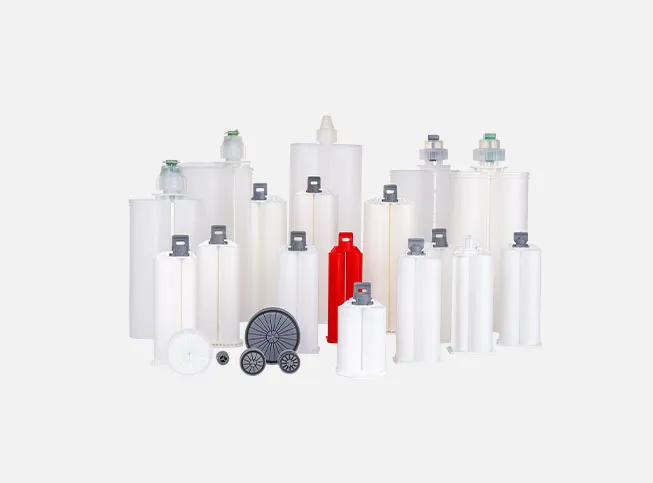
Why Do Chemical Leaders Reject Recycled Plastics for Industrial Cartridges?
Macromolecular Degradation From Repeated Thermal Processing
Recycled polymers inevitably suffer from shortened molecular chains due to repeated thermal cycles and processing history.
- The mechanical breakdown of long polymer chains directly reduces the tensile strength of the resulting cartridge housing.
- Recycled materials often harbor microscopic impurities that act as stress concentrators during high-pressure dispensing events.
- Engineering standards mandate virgin polymers because they provide the reliable, long-chain consistency required for consistent performance.
Virgin material integrity prevents the unpredictable performance degradation observed in lower-grade plastic blends.
Structural Inconsistencies and Localized Wall Weaknesses
Inconsistency in recycled blends leads to variations in the density and wall thickness of molded components.
- Localized wall thinning creates structural weak points that cannot withstand the high internal pressures of industrial adhesives.
- Inconsistent cooling rates during molding further weaken the material structure at critical joints and bayonet interfaces.
- These structural flaws increase the probability of sudden cartridge failure during critical high-volume production assembly runs.
Standardizing on virgin polymers eliminates these structural risks by ensuring uniform wall density across every single produced cartridge.
Catastrophic Fluid Burst Risks Under High Pneumatic Thrust
Cartridge bursts under pneumatic pressure remain one of the most severe risks in high-volume fluid dispensing.
- Burst failure is frequently caused by excessive internal pressure exceeding the tensile strength of a compromised plastic housing.
- Recycled plastics possess a lower ultimate tensile strength, making them unsuitable for high-thrust pneumatic extrusion systems.
- Engineered virgin polymers maintain their structural shape even when subjected to high pneumatic extrusion pressures.
Specifying high-strength virgin materials is the only way to permanently mitigate the safety and production risks of cartridge rupture.
What Are the Core Thermoplastics Specified for High-Precision Dispensing?
Polypropylene Properties for Universal Chemical Resistance
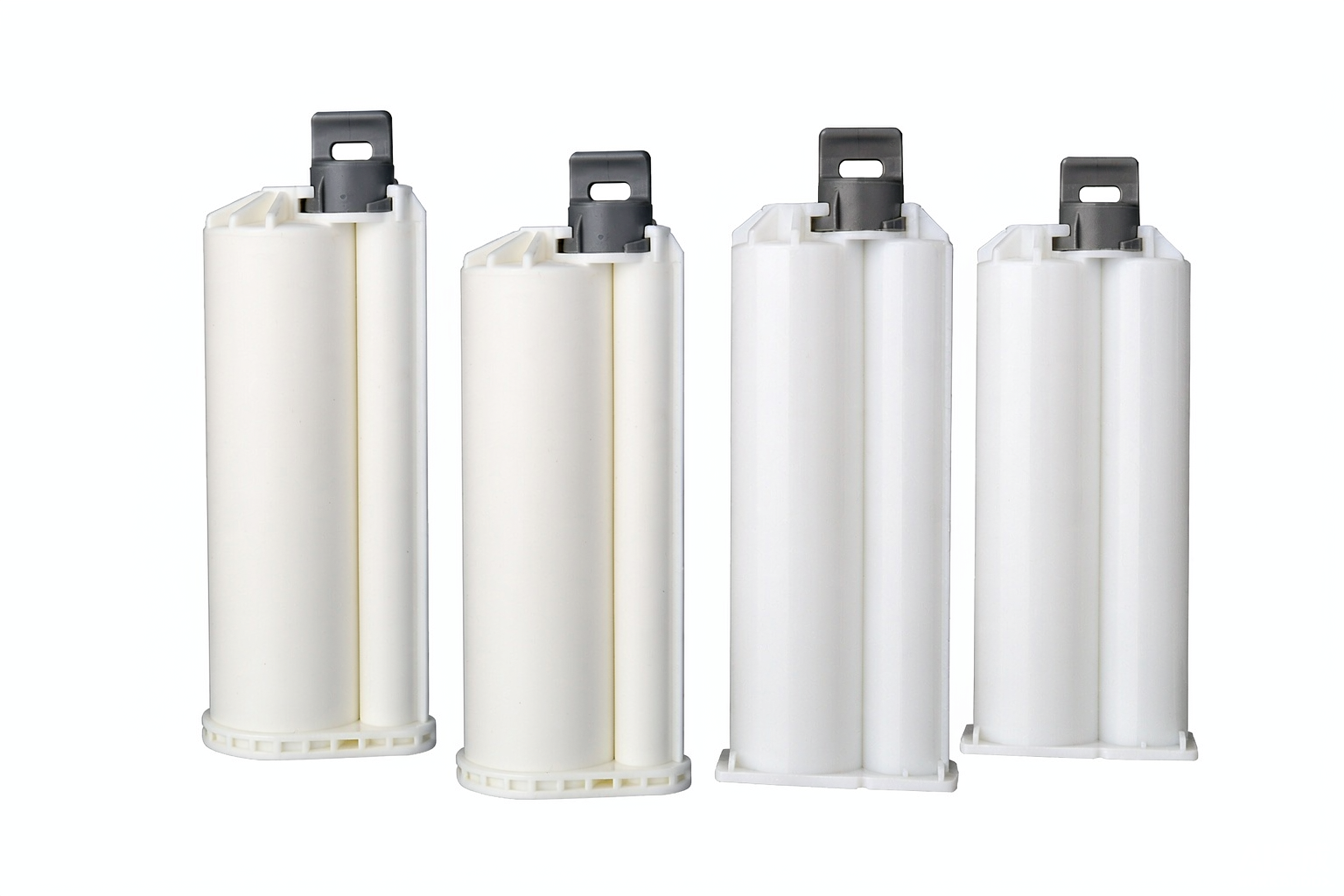
Polypropylene (PP) provides a versatile, cost-efficient solution for most standard industrial cartridge and mixer housing requirements.
- It offers excellent chemical resistance to a wide range of organic solvents, acids, and bases common in structural adhesives.
- PP displays a very low moisture vapor transmission rate, which is critical for preserving reactive chemical formulations.
- Its balanced physical toughness makes it the foundational material for single and dual-component cartridges.
Virgin PP ensures the required durability and shelf-life stability for general-purpose structural bonding applications.
Polyoxymethylene Engineering for Low-Friction Mechanisms
Polyoxymethylene (POM) is specified for its superior mechanical stiffness and low coefficient of friction.
- POM resists physical creep and fatigue, making it the ideal material for internal drive mechanisms in dispensing guns.
- Its slick surface profile minimizes friction between the plunger and the cartridge wall, ensuring smoother fluid extrusion.
- Structural rigidity prevents internal components from deflecting or distorting during prolonged high-shear application cycles.
Precision POM components facilitate the smooth, reliable operation of manual and pneumatic dispensing systems.
Polybutylene Terephthalate for Maximum Tensile Rigidity
Polybutylene Terephthalate (PBT) provides the extreme structural reinforcement needed when dispensing highly viscous structural acrylics.
- PBT resists the ballooning effect where cylinder walls bulge outward under the force of internal fluid pressure.
- It provides superior dimensional stability in challenging 10:1 mix ratio dual-component cartridge architectures.
- This material maintains its physical properties even under extreme thermal stress and high-pressure extrusion conditions.
PBT is reserved for the most demanding high-pressure applications where standard polymers would experience mechanical failure.
| Polymer Material | Chemical and Mechanical Profile | Primary Dispensing System Applications |
|---|---|---|
| PP (Polypropylene) | High chemical resistance, good toughness, very low moisture transmission. | Standard single and dual cartridges (50ml to 400ml); static mixer housings. |
| POM (Polyoxymethylene) | Exceptional stiffness, low friction coefficient, high resistance to creep. | Precision manual gun drive mechanisms; rigid internal static mixing elements. |
| PBT (Polybutylene Terephthalate) | Extraordinary tensile strength, thermal stability, prevents pressure ballooning. | Maximum-pressure dual syringes; heavy-duty industrial barrels (e.g., 250ml 10:1). |
How Does Virgin Polypropylene Mitigate Long-Term Moisture Ingress?
Moisture Vapor Transmission Rate Mechanics in Polymer Walls
The Moisture Vapor Transmission Rate (MVTR) determines how quickly water molecules penetrate a solid plastic container.
- Virgin PP possesses a naturally dense, semi-crystalline molecular structure that severely restricts water vapor movement.
- Unlike recycled materials, 100% virgin engineered polymers like PP maintain a consistent wall thickness free from microscopic porosity.
- This uninterrupted polymer chain structure produces an exceptionally low MVTR compared to standard polyamides or recycled blends.
Minimizing this transmission rate is the primary mechanical defense against environmental contamination during long global shipping routes.
Preserving Shelf-Life Stability for Reactive Polyurethanes
Industrial polyurethanes are highly hygroscopic and chemically react the moment they encounter ambient moisture.
- Even microscopic amounts of water vapor will initiate an irreversible chemical cross-linking process within the liquid resin.
- Virgin PP cartridges block this moisture ingress to successfully maintain the required 12-month to 18-month product shelf life.
- This strict environmental isolation ensures the viscosity and flow rate remain exactly as engineered until the moment of application.
Without this absolute moisture barrier, highly reactive polyurethanes would spoil inside the packaging months before reaching the end user.
Preventing Premature Localized Curing in Chemical Storage
When moisture breaches a defective cartridge wall, it typically causes localized hardening near the plastic boundary.
- This localized curing creates a solid crystalline skin or hard crust along the inner diameter of the fluid tube.
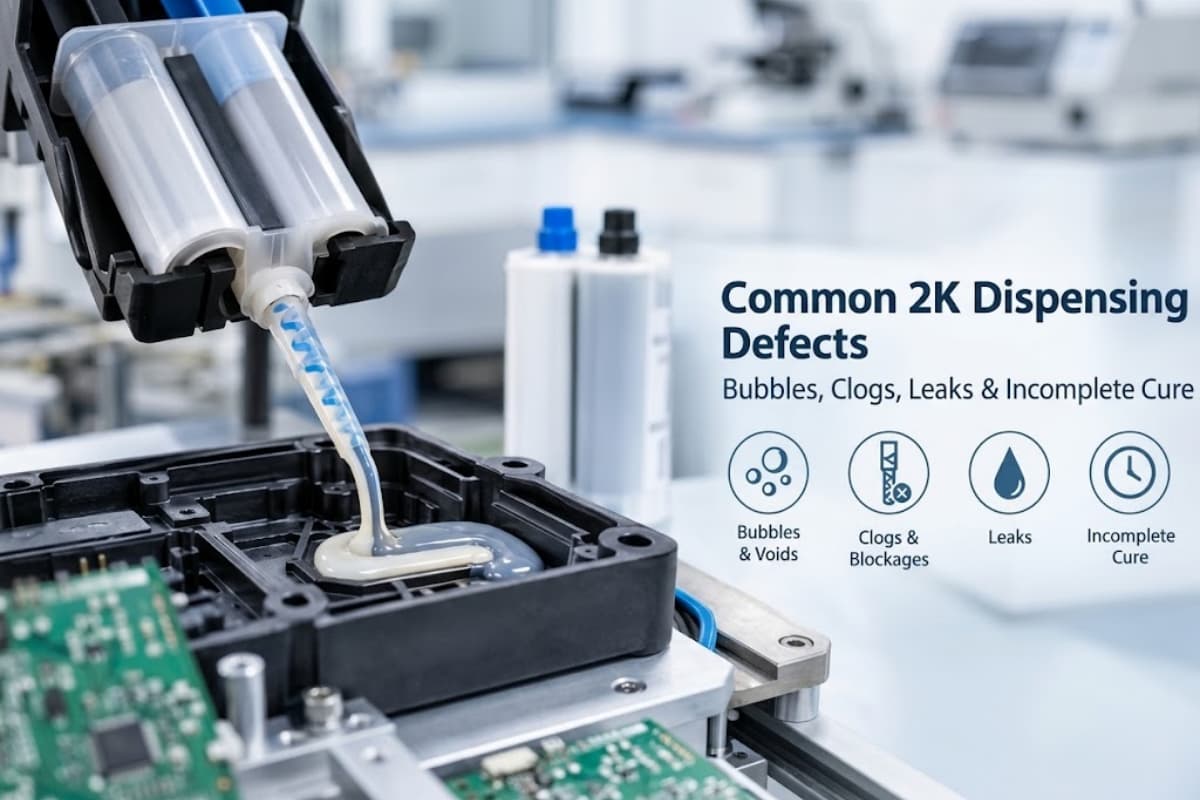
- During automated pneumatic dispensing, these hard chunks break off and immediately clog the complex geometry of the static mixer.
- A single mixer clog will instantly halt a high-speed robotic production line and cause severe fluid back-pressure.
Specifying virgin PP directly eliminates these catastrophic manufacturing disruptions by preventing edge-curing inside the stored chemical reservoirs.
Can Polyoxymethylene Eliminate Structural Creep in Mixing Elements?
Maintaining Geometric Rigidity Against Heavy Viscous Forces
Highly viscous fluids exert tremendous physical drag against the delicate internal blades of a static mixer.
- As heavy fluids are forced through the nozzle, the sheer pressure continuously tries to flatten or bend the mixing elements.
- If the mixing blades bend, the designed fluid pathways widen, severely reducing the thoroughness of the chemical folding process.
- POM strongly resists this physical deformation, guaranteeing that the mixer geometry stays perfectly intact regardless of fluid viscosity.
This structural rigidity ensures that heavy industrial epoxies receive the necessary turbulent agitation required for a complete chemical reaction.
Low Friction Coefficients in High-Shear Helical Elements
The speed and efficiency of fluid dispensing heavily depend on reducing the internal friction inside the nozzle.
- POM possesses a naturally slick, self-lubricating surface profile that significantly lowers the coefficient of dynamic friction.
- This low friction surface allows thick, tacky adhesives to slide smoothly over the complex helical mixing elements without severe resistance.
- Reducing internal drag directly lowers the necessary pneumatic extrusion pressure required by the robotic dispensing system.
This reduction in mechanical resistance prevents excessive heat buildup and ensures a smooth, continuous fluid flow through tight geometric pathways.
Eliminating Internal Deflection to Ensure Homogeneous Blending
A homogeneous blend requires that the two chemical components are divided and recombined in exact volumetric proportions.
- Any physical deflection of the mixer blades creates uneven fluid channels, leading to unmixed streaks in the final adhesive bead.
- Unmixed streaks cause soft spots, incomplete curing, and ultimately catastrophic failure of the final structural bond.
- POM eliminates blade deflection, forcing the chemicals to traverse the exact geometric pathways engineered for absolute homogenization.
By guaranteeing structural stability, POM components ensure that the dispensed chemical achieves maximum designed tensile and shear strength.
Why Is Polybutylene Terephthalate Required for High-Pressure Dual Systems?
Managing Extreme Extrusion Pressures Without Wall Ballooning
Pneumatic drive systems can push highly viscous materials with hundreds of pounds of localized force.
- Standard plastics like polyethylene will stretch and bulge outward under this intense internal fluid pressure.
- This outward deformation is known throughout fluid dynamics engineering as the ballooning effect.
- PBT possesses an extraordinarily high tensile modulus that successfully resists this outward mechanical expansion.
Eliminating wall ballooning ensures the dispensing pistons travel smoothly without seizing inside the plastic cylinder.
Securing Dimensional Stability in Asymmetric 10:1 Configurations
Asymmetric mixing ratios demand perfect mechanical synchronization between two vastly different fluid volumes.
- In a 10:1 system, the larger chamber receives significantly more physical stress than the smaller side.
- If the larger chamber wall expands, the primary resin will bypass the internal piston seal entirely.
- PBT maintains absolute dimensional stability across the entire length of these asymmetrical cartridge designs.
This strict volumetric control prevents off-ratio mixing, which would otherwise compromise the final adhesive cure.
Resisting Chemical Degradation From Reactive Structural Acrylics
Structural acrylic adhesives are highly aggressive and can rapidly degrade inferior thermoplastic packaging materials.
- Reactive acrylic monomers can dissolve or severely weaken standard polypropylene over extended storage periods.
- This chemical attack causes the plastic walls to become brittle and highly prone to shattering.
- PBT offers a dense crystalline structure that heavily resists this specific type of chemical solvent attack.
Specifying PBT ensures the cartridge wall retains its maximum burst strength throughout its entire shelf life.
| Stoichiometric Mix Configuration | Common Volumetric Configurations | Required Polymer Material | Pressure Tolerance Profile |
|---|---|---|---|
| 1:1 and 2:1 | 50ml, 200ml, 400ml, 600ml | Virgin PP (Standard) | Standard pneumatic pressure tolerance. Equal wall stress. |
| 4:1 | 100ml, 250ml | Virgin PP or PBT | Moderate to high pneumatic resistance. Minor asymmetric stress. |
| 10:1 | 250ml, 490ml, 1500ml | Virgin PBT (Mandatory) | Maximum resistance against asymmetrical wall ballooning. |
How Do Microscopic Molding Inaccuracies Cause Systemic Bonding Failures?
Interference Fit Flaws at the Bayonet and Twist-Lock Interface
Cartridge nozzles connect to the main body using precise bayonet or twist-lock interference fits.
- Recycled plastics suffer from uneven shrinkage rates during the injection molding cooling phase.
- This uneven shrinkage warps the precise geometry required for a leak-proof bayonet connection.
- Under pneumatic pressure, these warped interfaces leak raw chemical resin onto the manufacturing floor.
Virgin polymers guarantee the predictable shrinkage rates required to mold perfectly interlocking twist-lock connections.
Preventing Inter-Chamber Cross-Talk and Interface Curing
Dual-component systems must maintain an absolute physical barrier between the resin and hardener chambers.
- Poor molding tolerances can create microscopic gaps at the nose divider between the two cylinders.
- These internal gaps allow the reactive components to mix prematurely before entering the static nozzle.
- This internal cross-talk causes the adhesive to permanently cure inside the cartridge outlet.
Precision injection molding completely seals this dividing wall, ensuring chemicals only mix inside the nozzle.
Volumetric Off-Ratio Output Risks From Fluctuating Tolerances
Automated dispensing relies on the internal cylinder diameter remaining perfectly consistent from top to bottom.
- Inferior molding processes create varying internal diameters along the length of the fluid cylinder.
- As the piston travels through a wider section, it accidentally extrudes too much chemical.
- This volumetric fluctuation causes off-ratio mixing, which severely weakens the final cured adhesive properties.
High-precision virgin polymer molding guarantees the exact internal volume required for flawless stoichiometric chemical ratios.
| Dimensional Tolerance Fluctuation | Primary Mechanical Failure Mode | Dispensing System Impact |
|---|---|---|
| ±0.1mm (Standard Virgin) | Optimal interference fit maintained. | Zero leakage at maximum pneumatic operating pressure. |
| ±0.5mm (Recycled Blend) | Minor bayonet warping and internal gap creation. | Slow resin weeping and potential interface cross-talk. |
| ±1.0mm+ (Poor Molding) | Severe internal diameter fluctuation. | Catastrophic off-ratio mixing and total structural bond failure. |
What Fluid Dynamics Risks Exist When Dispensing Abrasive Thermal Materials?
Filler Wear and Erosion on Internal Nozzle Geometries
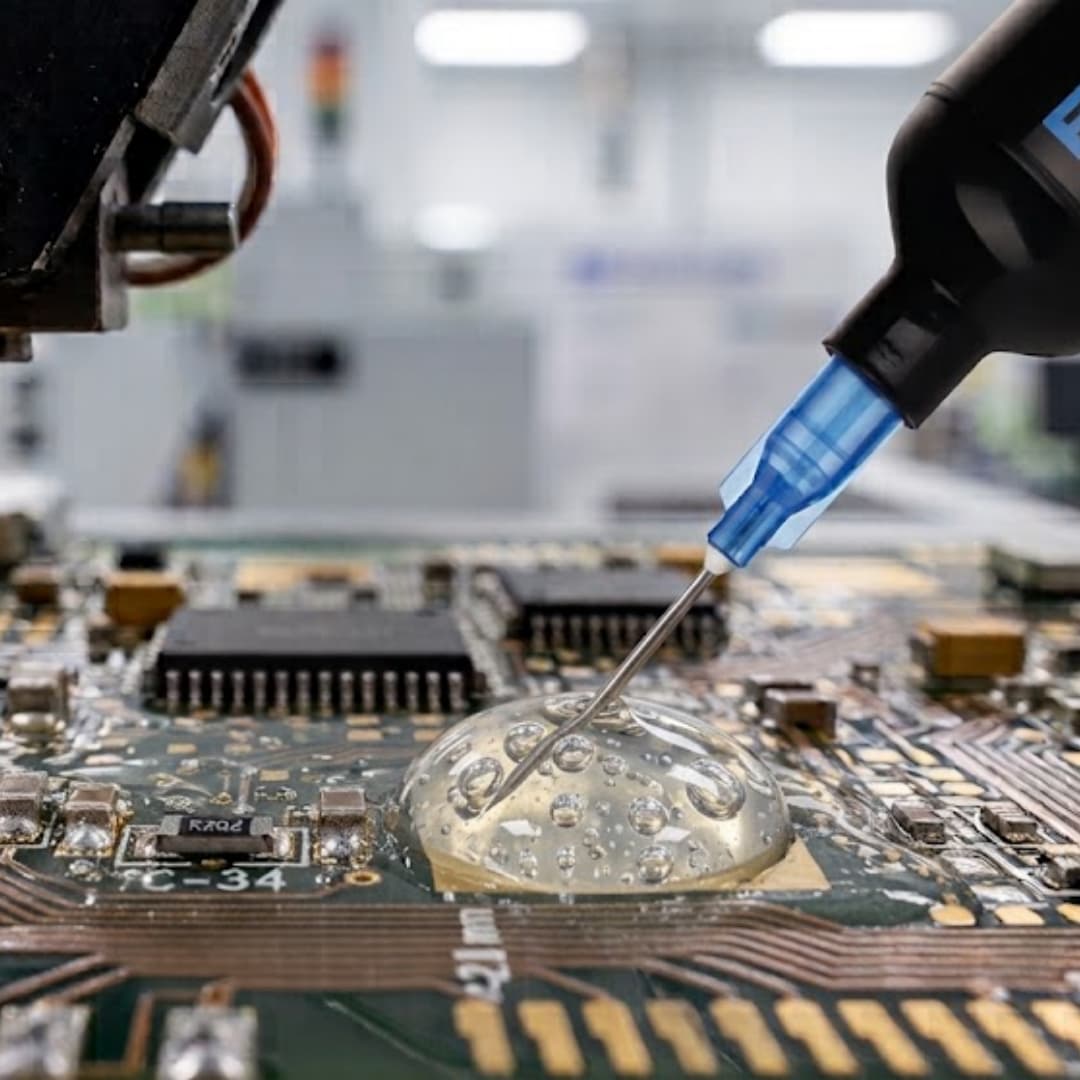
Highly filled thermal adhesives act like liquid sandpaper when moving at high speeds through narrow nozzle outlets.
- Small ceramic or metal particles within the adhesive bead can physically abrade the internal plastic surface of the cartridge nozzle.
- If the material is not specified for high wear resistance, the nozzle geometry will erode over time.
- This erosion increases the internal diameter of the orifice, directly impacting the precision of the dispensed bead size.
Using virgin engineered polymers like PBT minimizes the rate of material loss and maintains nozzle accuracy during long-duration dispensing.
Viscosity Imbalances in Highly Thixotropic Microelectronics Potting
Many thermal materials are thixotropic, meaning their viscosity decreases only when subjected to high shear forces.
- If the cartridge wall or mixing element introduces excessive friction, it can cause the material to prematurely shear and thicken.
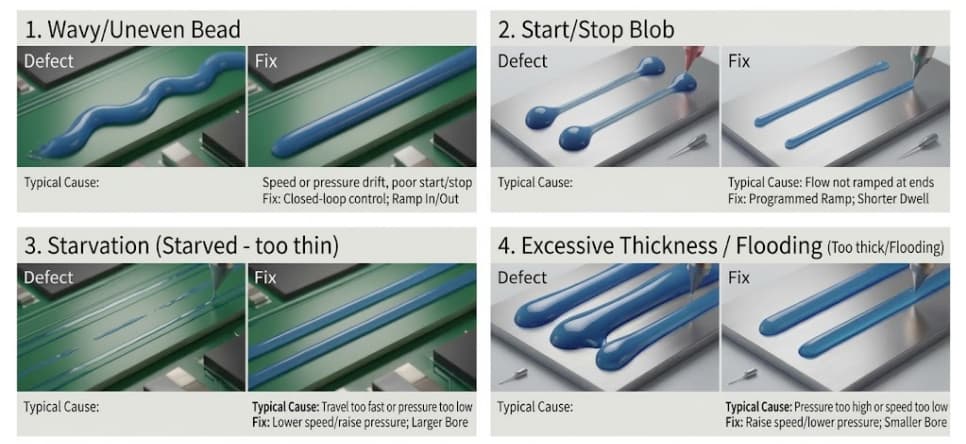
- This inconsistency leads to erratic fluid output, making it impossible for automated systems to maintain a uniform dispensing bead.
- Precision-molded virgin plastic surfaces minimize these uncontrolled internal shear events.
Predictable surface friction ensures that thixotropic materials behave according to their rheological specifications throughout the entire dispensing process.
Air Entrapment Dynamics and the Detrimental Run-On Phenomenon
The transition from high-pressure movement to an immediate stop is a major challenge when handling thick thermal pastes.
- If the system exhibits excessive run-on, the adhesive continues to flow from the nozzle even after the pneumatic drive has stopped.
- Air bubbles trapped during the filling process can act as a spring, compressing under pressure and expanding when the system stops.
- Minimizing these air pockets requires ultra-tight piston tolerances that are only achievable with high-precision virgin polymer molding.
Properly engineered virgin components eliminate these spring-like air effects, allowing for the instantaneous starts and stops required by modern microelectronics assembly lines.
Do Automated Robotic Workstations Demand Stricter Hardware Tolerances?
Meeting High-Speed Fluid Dynamics Constraints at 800mm/s
Robotic arms often traverse at velocities reaching 800mm/s during rapid-cycle adhesive dispensing.
- At these high speeds, any slight structural imbalance in the cartridge will cause vibrations that ruin the dispensed bead.
- Only virgin engineered polymers provide the necessary rigidity to prevent harmonic oscillation during these rapid arm movements.
- Maintaining perfect fluid stability at speed is essential for consistent production throughput in high-volume electronics manufacturing.
Uniform polymer wall thickness ensures that the center of mass remains stable during every high-acceleration robotic maneuver.
Positional Repeatability Needs for High-Rigidity Platforms
Automated platforms require extreme positional repeatability to apply adhesive beads with sub-millimeter precision.
- If the cartridge interface flexes under the weight of the material, the nozzle tip will shift out of the programmed alignment.
- This shift leads to misaligned adhesive beads, resulting in poor electronic component seating and eventual assembly failure.
- Virgin materials resist the minor stresses of robotic mounting, ensuring the nozzle remains anchored in its exact calibrated position.
Rigid cartridge hardware minimizes system deflection, allowing robotics to maintain their high-speed operational accuracy throughout the entire day.
Optical Alignment Compatibility With CCD Vision Systems
Advanced robotic lines utilize CCD vision systems to inspect bead quality in real-time during the dispensing cycle.
- Vision systems require clear, unobstructed views of the nozzle tip to verify bead placement and continuity.
- Virgin polymers can be molded with exceptional clarity and surface finish, reducing light reflection artifacts during optical inspection.
- By eliminating material impurities, these cartridges prevent false error triggers in the sophisticated automated vision detection software.
Superior surface quality and structural precision make virgin cartridges the only viable choice for integration with modern automated optical inspection technologies.
Frequently Asked Questions
Why is virgin plastic preferred over recycled plastic in fluid packaging?
Virgin plastic polymers feature longer, consistent molecular chains that maintain structural integrity under pressure. Recycled plastics often contain microscopic impurities and shorter chains, which lead to brittleness, wall thinning, and potential bursting under high pneumatic thrust.
What causes an adhesive cartridge to burst during pneumatic dispensing?
Cartridge bursts typically occur due to excessive internal pressure exceeding the tensile strength of the housing material. This failure is frequently exacerbated by localized wall thinning in low-quality plastics or air entrapment caused by improper filling protocols.
How does moisture vapor transmission rate affect polyurethane shelf life?
Reactive polyurethanes harden immediately upon contact with atmospheric humidity. A material with a high Moisture Vapor Transmission Rate (MVTR) allows ambient water vapor to penetrate the cartridge wall, initiating premature curing and ruining the adhesive before it reaches the application nozzle.
What is the structural difference between PP, POM, and PBT in engineering?
PP (Polypropylene) acts as a flexible, chemical-resistant barrier. POM (Polyoxymethylene) provides exceptional stiffness and low friction for moving mechanical parts. PBT (Polybutylene Terephthalate) offers superior high-pressure rigidity to prevent cartridge expansion in demanding structural bonding applications.
Why do dual-component cartridges require extreme wall rigidity?
The central partition wall must maintain a precise ratio between the resin and hardener chambers. If this wall flexes or balloons under the pressure of the dispensing pistons, the mix ratio becomes inconsistent, leading to soft spots and incomplete bonding in the cured material.
What is the run-on phenomenon in automated fluid dispensing?
Run-on describes the uncontrolled oozing of adhesive from the nozzle tip after the dispensing system stops. This failure typically results from the expansion of trapped air pockets compressed inside the fluid volume, pushing out material even without active pneumatic pressure.
How do static mixer geometries affect adhesive mixing homogeneity?
Internal static mixer blades mathematically divide and fold the two-part chemical stream into smaller, thinner layers. Geometrically optimized designs ensure more folding cycles within a shorter distance, which results in a perfectly homogeneous mixture without excessive pressure drop or fluid waste.
Conclusion
Modern industrial assembly relies on consistent, void-free adhesive application to ensure structural integrity and product reliability. Precision hardware, engineered from 100% virgin polymers, provides the necessary rigidity and chemical compatibility to meet these strict requirements. By eliminating microscopic material imperfections and molding inconsistencies, manufacturers achieve the high-speed repeatability essential for Industry 4.0 environments.
For brands seeking these exact technical standards and high-fidelity dispensing solutions, Haijing Company provides the comprehensive manufacturing infrastructure required to bridge the gap from conceptual chemical formulation to final assembly line integration. Their commitment to material integrity ensures your dispensing performance remains faultless.