If you are sourcing static mixers, you have probably already shortlisted a few names — Sulzer Mixpac, Nordson, StaMixCo, Komax — and then found that comparing them is surprisingly hard. Public data sheets rarely line up, and most “top manufacturer” lists are written by the manufacturers themselves.
This page compares five static mixer manufacturers on the things that actually decide a purchase: the mixer formats each one covers, material options, whether they will take on custom geometry, and how they behave when you need a technical answer fast. Then it walks through the criteria to weigh when you choose.
Short on time? If you need a standard mixer inside a large integrated dispensing platform, the European and US names below are the obvious first call. If you need custom geometry, OEM labeling, IP protection under NDA, and a quote that comes back in days rather than weeks, that is the specific gap HaiJing was built to fill — see the OEM & custom mixer guide.
Top 5 Static Mixer Manufacturers at a Glance
None of these five is “best” in the abstract. Each one is the right answer to a different question — match the profile to your project, not the other way round.
| Manufacturer | Base | Mixer focus | Materials | Custom / OEM | Right fit when… |
|---|---|---|---|---|---|
| HaiJing | Dongguan, China | Cartridge static mixers (helical & square), mixing nozzles, A/B/C/F interfaces | PP, PE, PVC, PA, POM | Yes — custom geometry, private label, new tooling under NDA | You need custom geometry, OEM supply or a fast technical answer |
| Sulzer Mixpac | Switzerland | Integrated 2K cartridge & mixer systems (helical, square, specialty nozzles) | PP, POM, PA and specialty grades | Limited for external OEM projects | You want one integrated system from a single large supplier |
| Nordson | USA | Mixer consumables integrated with dispensing equipment and automated lines | Range tied to equipment platforms | Equipment-led rather than part-led | Your mixer must integrate with an automated dispensing line |
| Komax Systems | USA | Inline static mixers for continuous process mixing | Metal and engineered plastic | Tailored inline designs | You are mixing inline in a process stream, not in a cartridge |
| StaMixCo | Switzerland | Dedicated static mixer range for process and adhesive applications | Broad process-grade range | Standard range with application support | You want a proven, dedicated mixer line for a standard process |
The Five in More Detail
1. HaiJing — custom geometry, OEM and fast turnaround

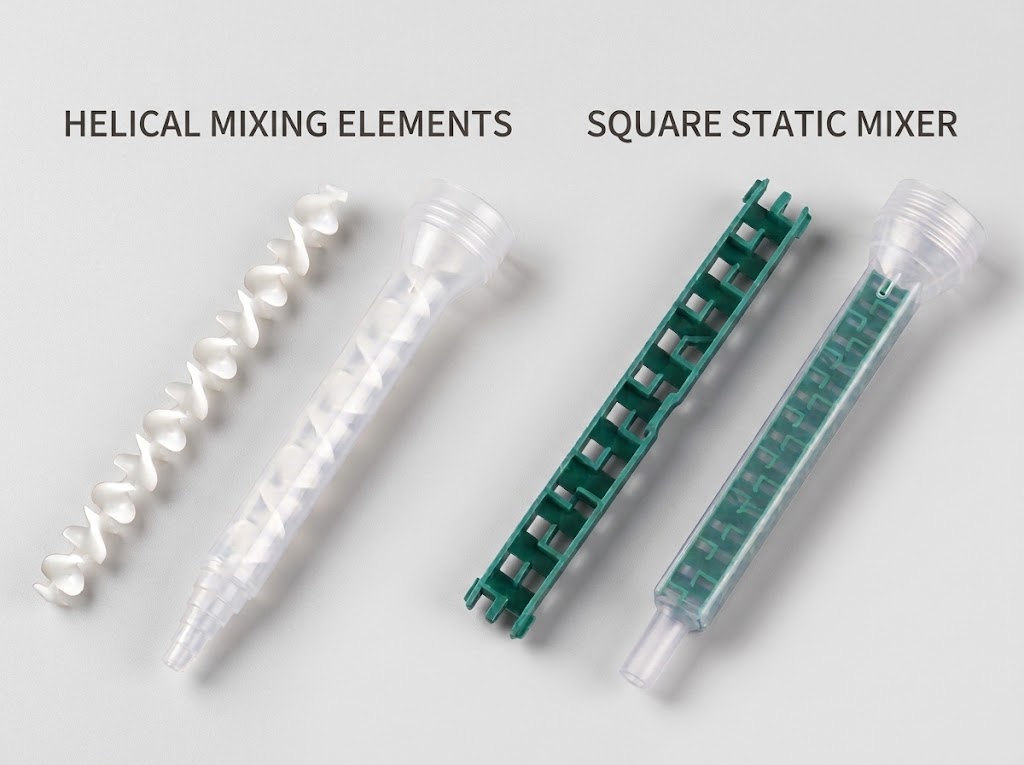
HaiJing is an engineering-led mixer and cartridge manufacturer covering helical and square cartridge mixers, mixing nozzles and A/B/C/F interface formats in PP, PE, PVC, PA and POM. The difference is in how projects are handled: element count and geometry are worked out from the adhesive, mix ratio and bead target rather than defaulted to a catalogue part; dimensional quality is held under an ISO 9001 system with in-house inspection and lot traceability; and custom geometry, private-label and new-tool projects run under NDA with tooling ownership agreed up front.
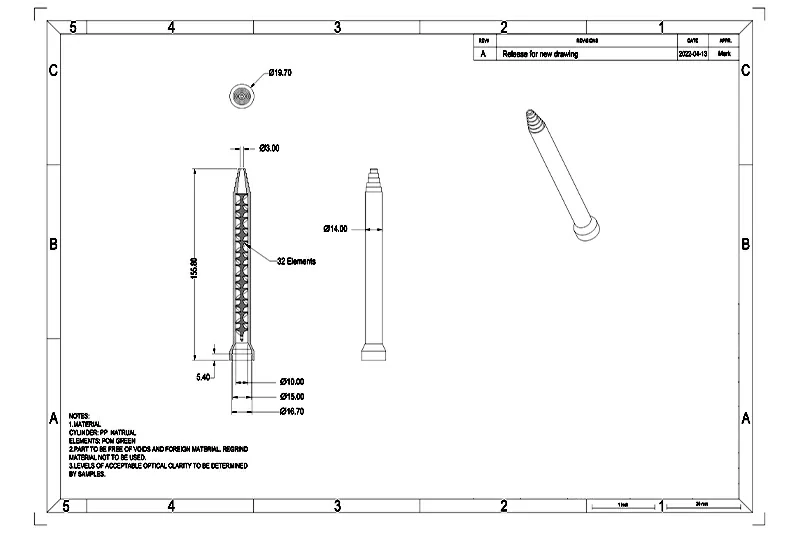
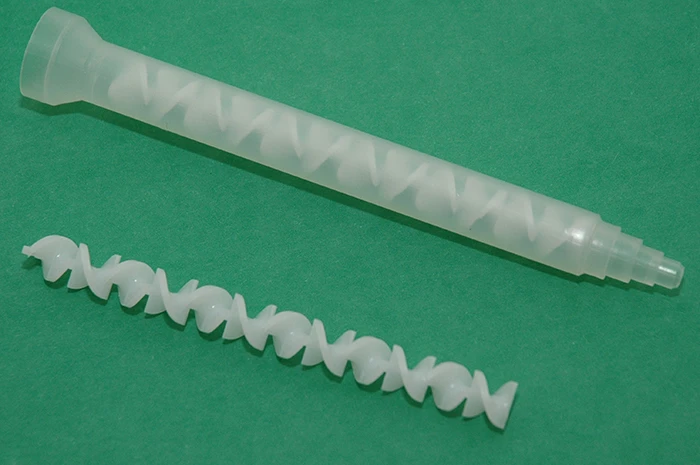
That is not a marketing claim so much as a workflow. Geometry is fixed on a dimensioned drawing before tooling is cut — outlet, body and inlet diameters, element pitch and overall length all specified — and the first article is checked against that drawing, not against a feel for how it dispenses.
Best for: OEM and private-label programmes, custom geometries, buyers who need a technical reply in days and a stable repeat-order schedule. Consider elsewhere if you need a fully integrated dispensing platform or a metal inline mixer.
People also compare: custom static mixer manufacturer · OEM static mixer supplier · static mixer manufacturer China
2. Sulzer Mixpac — the integrated system benchmark

Sulzer Mixpac is the reference point most 2K cartridge systems are measured against: a wide mixer and cartridge portfolio, strong application documentation and global availability. The trade-off is typical of large integrated platforms — you get consistency and breadth, but custom geometry and OEM-specific tooling are harder to obtain, and the mixer is usually bought as part of the system rather than designed around your application.
Best for: standard 2K dispensing where a fully integrated, globally supported system matters more than customization. Consider elsewhere if your requirement is a non-standard geometry, a private label, or a lower-volume custom run.
People also compare: Sulzer Mixpac alternative · Mixpac compatible static mixer · Mixpac vs
3. Nordson — equipment-first, mixer as a component

Nordson’s strength is the dispensing line around the mixer: valves, controllers, automation and the engineering support that comes with them. If your project is really an equipment project, that integration is worth a lot. If your project is a consumable mixer for existing hardware, you are buying through an equipment channel rather than dealing with the mixer’s manufacturer directly.
Best for: automated dispensing lines where the mixer must be specified together with valves and controls. Consider elsewhere if you only need mixer consumables and want direct engineering contact on geometry.
People also compare: Nordson static mixer alternative · dispensing mixer consumables
4. Komax Systems — inline, not cartridge

Komax is known for inline static mixers used in continuous process streams, with tailored designs for process industries. This is a genuinely different product category from cartridge mixers, and it is worth being clear about that: if your adhesive is dispensed from a cartridge or a 2K gun, an inline process mixer is not the substitute.
Best for: continuous inline mixing in a process line. Not a fit for cartridge-format adhesive dispensing — use a cartridge mixer instead.
People also compare: inline static mixer · Komax static mixer alternative
5. StaMixCo — the dedicated mixer specialist

StaMixCo is a focused static mixer specialist with a quality-driven range and a long record in process applications. Where it wins is depth in mixing itself. Where a custom cartridge interface, a private label or a fast small-lot programme is the requirement, a specialist of this size may not be the most flexible route.
Best for: standard process mixing where a proven dedicated mixer line is what you need. Consider elsewhere if you need OEM tooling or a customized cartridge interface.
People also compare: StaMixCo alternative · static mixer specialist
Looking for an Alternative to One of These?
Most people searching a manufacturer name are not shopping for a brand — they are trying to solve a fit problem: the geometry does not exist, the MOQ is wrong, the lead time slipped, or the interface needs to match hardware they already own. That is a specification question, and it is worth separating from the brand question.
If you need a Sulzer Mixpac-compatible format
The practical issues are interface fit (bayonet, bell-mouth, threaded, or A/B/C/F), mix ratio and element count. A compatible mixer has to seat and seal on your existing cartridge and deliver the same mix quality — that is a dimensional question, answerable from a drawing and a sample, not a brand question. Send the interface type and ratio and it can be matched; see cartridge sizing and ratio compatibility for the common mismatch points.
If you need an SD-type or PP static mixer
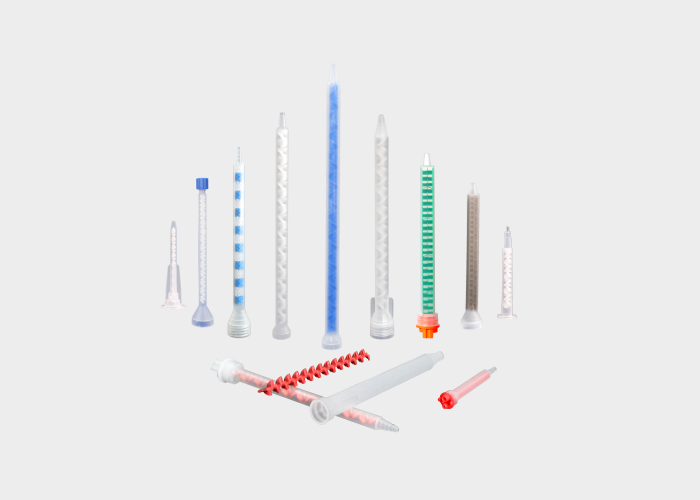
SD-type and PP-bodied mixers are among the most requested formats in two-component dispensing, and they are frequently searched as a generic type rather than a brand. If that is your case, what matters is element count against viscosity, the housing material against your adhesive’s chemistry, and whether the interface matches your gun. Start with the element count guide and the selection guide.
If you are comparing static against dynamic mixing
Before switching suppliers, check that a static mixer is the right method at all — mixing efficiency, cleanup and cost trade off differently at high ratios and short pot life. The static vs dynamic mixer comparison covers where each wins. Before you shortlist, run the static mixer factory checklist against each supplier.
How to Choose the Right One
1. Geometry range and element-count expertise
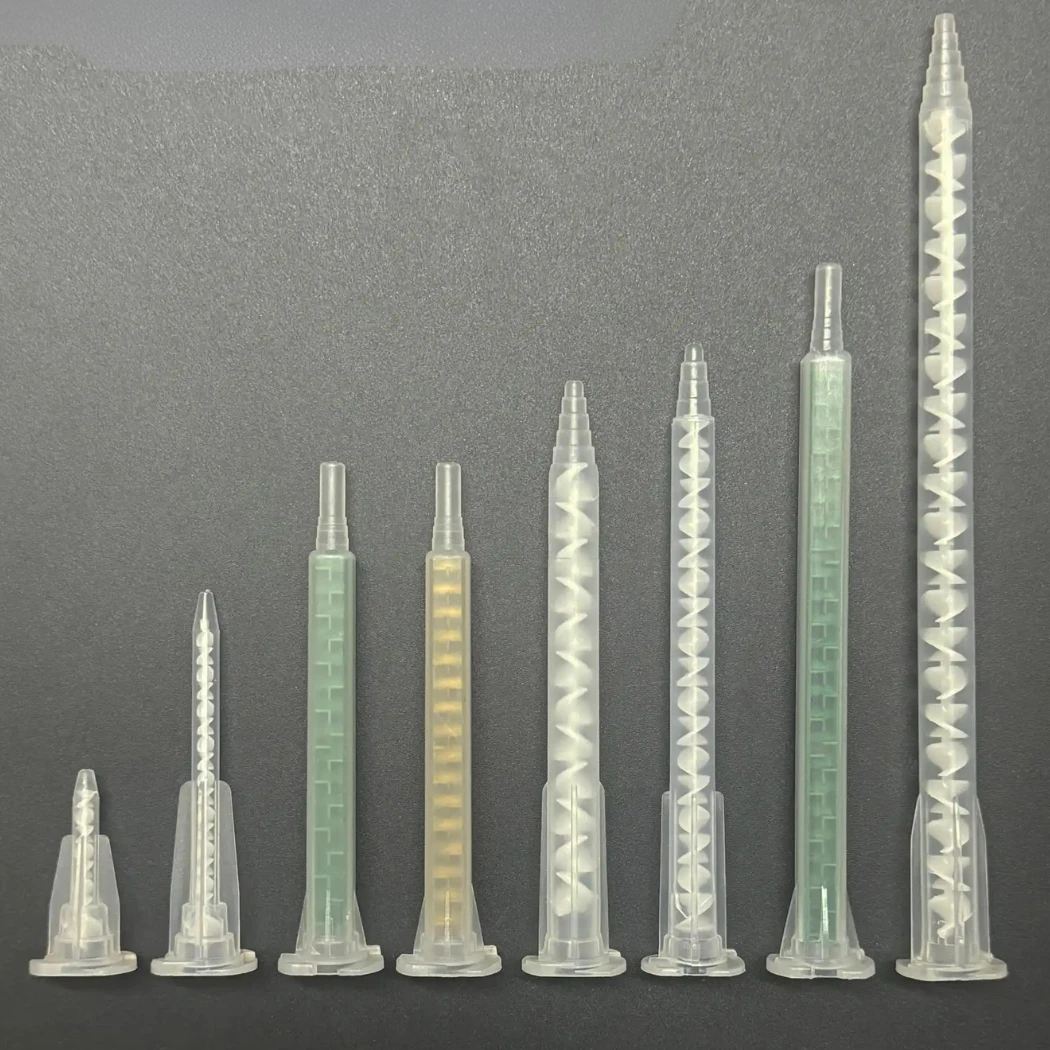
Helical and square mixers behave differently across viscosity and flow rate. A supplier who maps element count to your application, instead of defaulting to one SKU, is worth more than a lower unit price.
2. Material options and chemical compatibility
PP, PE, PVC, PA and POM each behave differently with solvents, epoxies and UV exposure. Ask for material data and compatibility guidance — especially for electronics-grade or silicone-free requirements. For electronics-grade, silicone-free or UL-listed programmes, see our ROHS, REACH and silicone-free compliance notes.
3. Mix ratio and cartridge interface compatibility
1:1, 2:1, 4:1 and 10:1 systems place different demands on both mixer and interface. Confirm fit against your existing hardware before committing to volume.
4. Dimensional quality control and traceability
Element pitch, wall thickness and interface tolerances decide whether a mixer seats and seals reliably. Look for a certified quality system, in-house inspection and lot traceability. Consistency — not one good sample — protects your line.
5. Customization and IP protection
For a custom geometry, private label or new tool, ask directly about NDAs and who owns the tooling. A supplier who is vague about tooling ownership is a risk you carry for years.
6. MOQ, lead time and supply continuity
A realistic MOQ and a stable lead time matter more than a promotional first order. Ask what happens to lead time after the PO, and how repeat orders are scheduled.
7. Engineering communication
Cross-border sourcing lives or dies on response speed and clarity. A supplier who answers technical questions promptly and flags risks early saves more time than any price difference — see dispensing gun selection for how hardware and mixer choices interact.
Red Flags When Vetting a Supplier
- Cannot explain element count or mix-ratio logic for your application
- No material data or chemical-compatibility guidance
- No stated tolerances or QC process
- Quotes a price without asking about your adhesive, ratio or hardware
- Lead time changes after the PO is placed
- Vague about tooling ownership on custom work
A Practical Evaluation Checklist
- Send two or three real applications — not a generic inquiry
- Request samples and measure element pitch and interface fit
- Run a cure and bead-quality test on your actual adhesive
- Time how fast the supplier answers a technical follow-up
- Confirm MOQ, lead time and tooling terms in writing
Frequently Asked Questions
Which static mixer manufacturer is best for custom or OEM projects?
For custom geometry, private label or new tooling, look for a manufacturer whose core business is custom work rather than catalogue resale: element count designed around your adhesive, tooling ownership stated in writing, and NDA coverage before drawings are shared. Large integrated system suppliers are usually the weaker fit for this.
Are there static mixers compatible with Sulzer Mixpac cartridges?
Compatibility is a dimensional question, not a brand question: it depends on interface type (bayonet, bell-mouth, threaded, A/B/C/F), mix ratio and element count. A mixer that matches your interface and delivers the required mix quality will work regardless of who made it. Confirm with a drawing and a sample test before ordering volume.
What is an SD-type static mixer?
SD-type generally refers to a static mixing element format used in two-component cartridge dispensing, commonly supplied in PP housings for epoxies and polyurethanes. Specify it by element count against viscosity, housing material against adhesive chemistry, and interface fit against your existing gun or cartridge.
How do HaiJing and Sulzer Mixpac differ?
They solve different problems. Sulzer Mixpac is an integrated cartridge-and-mixer system with global availability and broad documentation. HaiJing is a mixer and cartridge manufacturer set up for custom geometry, private label and small-to-mid volume OEM work, with tooling and NDA arrangements as a normal part of the project. If you need a standard part of a large integrated system, Sulzer is the natural fit; if you need a part designed around your application, that is HaiJing’s case.
How do I choose the right static mixer element count?
Element count should follow viscosity, mix ratio and bead-quality target. Higher counts improve mixing at demanding ratios but raise pressure drop. Start from the application, not the catalogue.
Can I get custom or OEM static mixers under NDA?
Yes. Custom geometry, private label and new tooling can be handled under an NDA, with tooling ownership agreed in writing before production.
What is the typical MOQ and lead time?
Both depend on geometry, material and whether tooling is new. Ask for both in writing, and confirm how repeat orders are scheduled rather than accepting a first-order estimate.
Send your application, get a recommendation
Share your adhesive type, mix ratio, cartridge interface and annual volume — we will come back with the mixer geometry and element count that fits, plus lead time.
Related reading: sourcing static mixers in bulk and CE and ROHS dispensing components.
How this comparison was compiled: product scope and formats are taken from each manufacturer’s published product information; the assessments describe positioning and project fit, not measured quality rankings. No manufacturer paid for inclusion. Last reviewed October 2026.