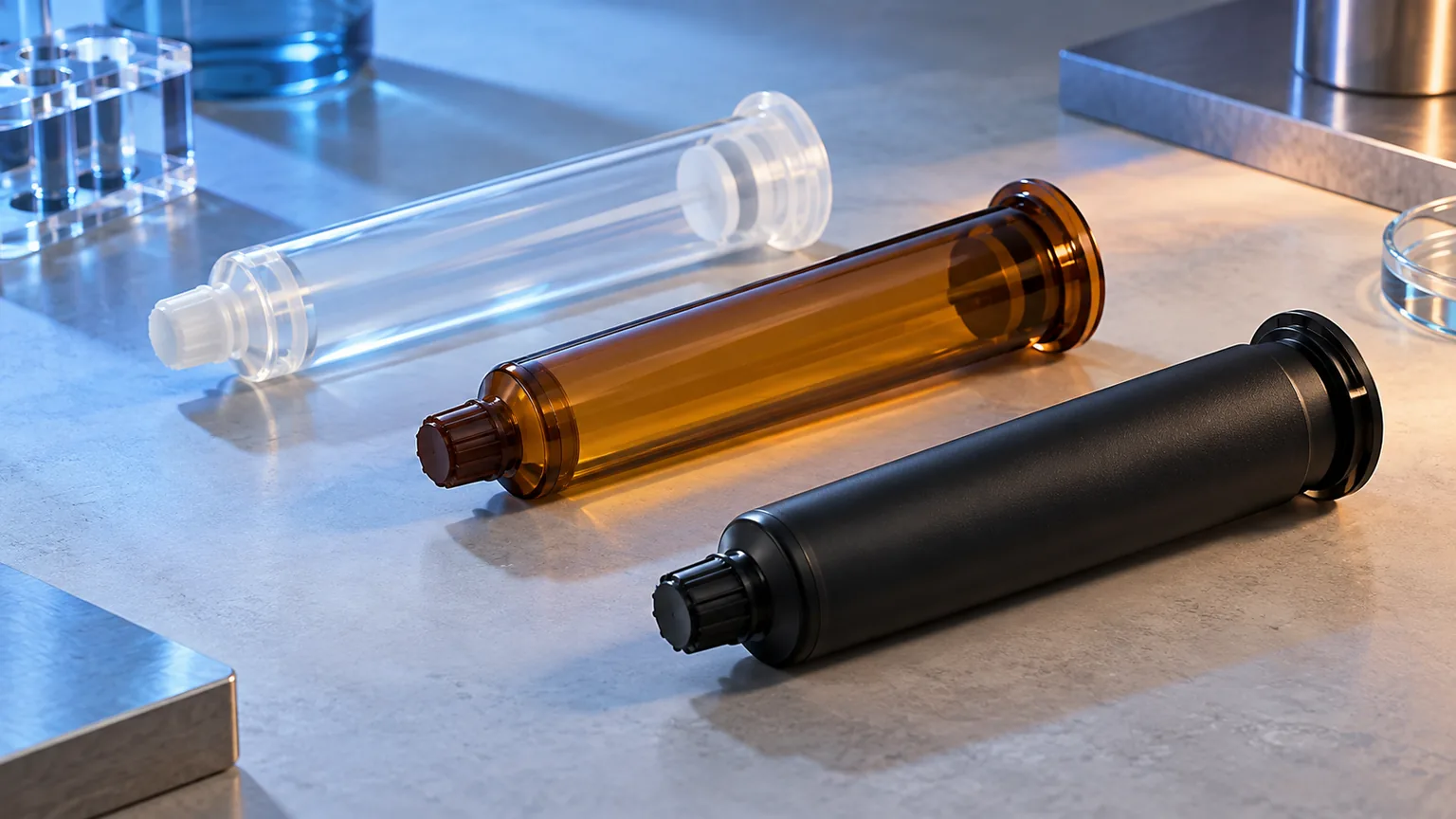
Most construction sealant failures that look like “bad adhesive” actually start at the dispensing end. The cartridge, gun, and static mixer are one pressure system; when any part is mismatched to the material and joint, the bead fails even though the chemistry is fine. This guide gives contractors, distributors, and sealant-brand engineers a complete construction sealant cartridge dispensing path: match the package, thrust ratio, drive type, and mixer to real site conditions, then verify with a field troubleshooting table and a pre-spec compatibility checklist. By the end you will be able to size a combination that holds up under load, cold, and continuous production instead of finding the weak link after the first rejected joint.
Why Construction Sealant Jobs Fail at the Dispensing End
A sealant that passes lab tests can still fail on site when the dispensing system in front of the operator is mismatched. The usual causes show up as recognizable patterns.
| Symptom | System root cause |
|---|---|
| Bead breaks or starves mid-joint | Material resistance exceeds gun thrust at current viscosity |
| Cartridge bursts at base | Seal not pierced, mixer restriction, or plunger skew |
| Off-ratio or streaky two-part bead | Plunger-seal drift, dual-rod misalignment, mixer back pressure |
| Drips on vertical faces | Nozzle bore too large; drive release not controlled |
| Air pockets in mixed output | Entrained air from restriction or wrong mixer fit |
The sections below prevent each of these: pick the package, size the resistance, choose the drive, and match the mixer. For two-component failure modes, see our 2K cartridge failure analysis.
Choose the Package Before the Tool
Pick the package first — it decides the tool, the mixer, and the changeover cost.
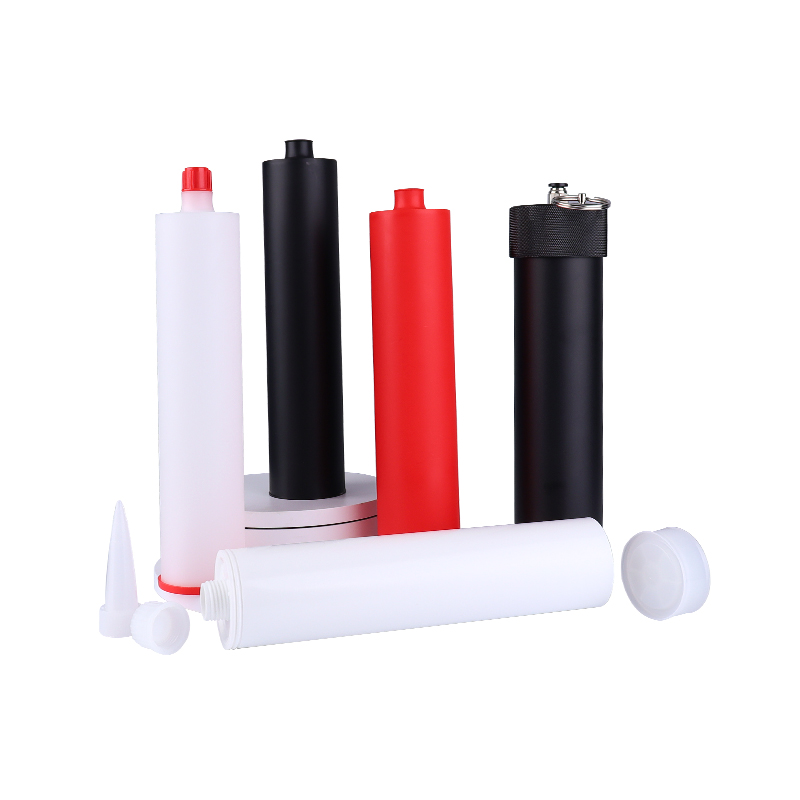
Rigid cartridge (single-component). The standard rigid cartridge (commonly 310 ml) stays the default for one-part sealants: pre-dosed, lot-traceable, low waste. Choose it for short to medium scattered joints with no mixing. See our single-component sealant cartridges.
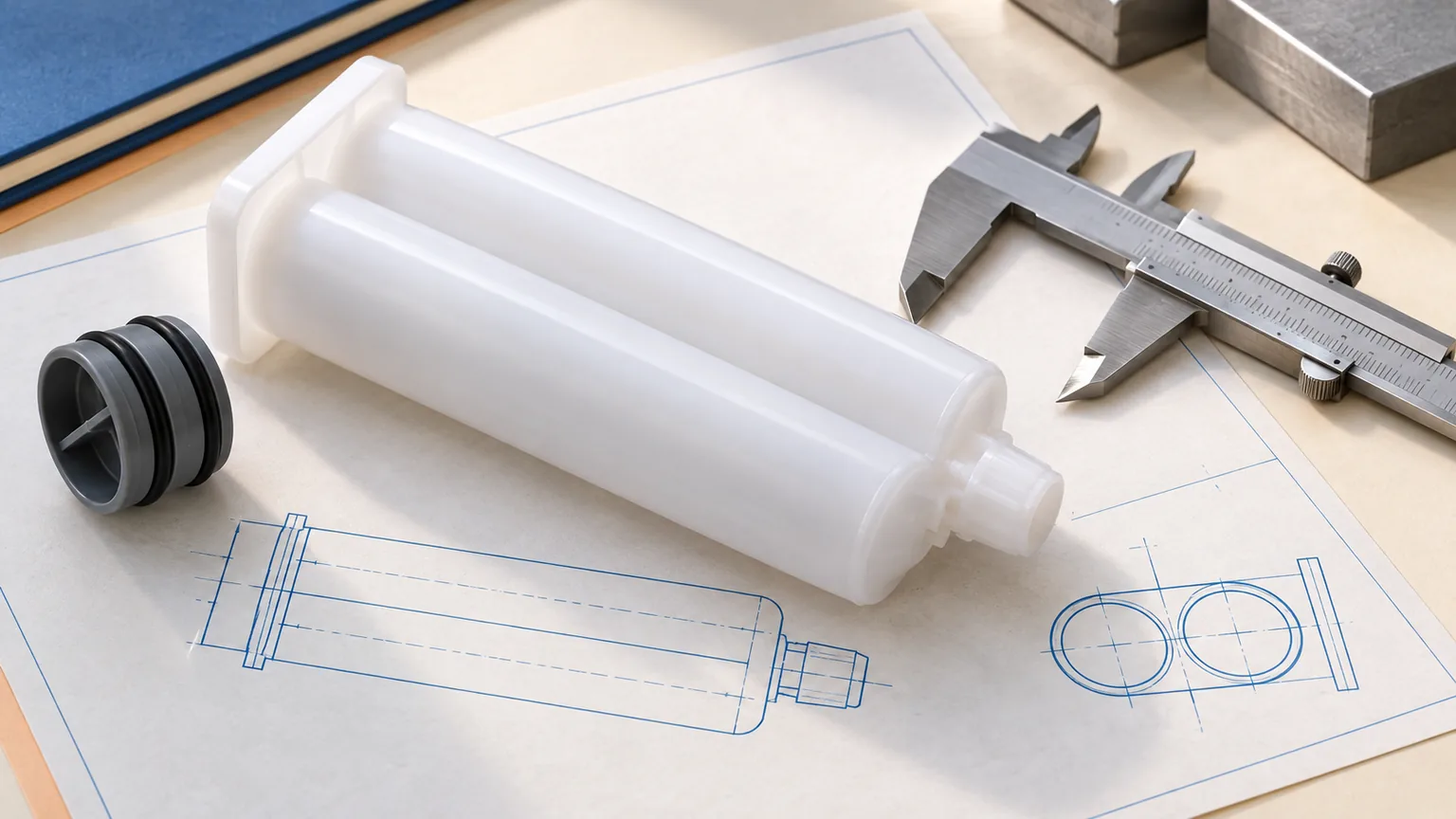
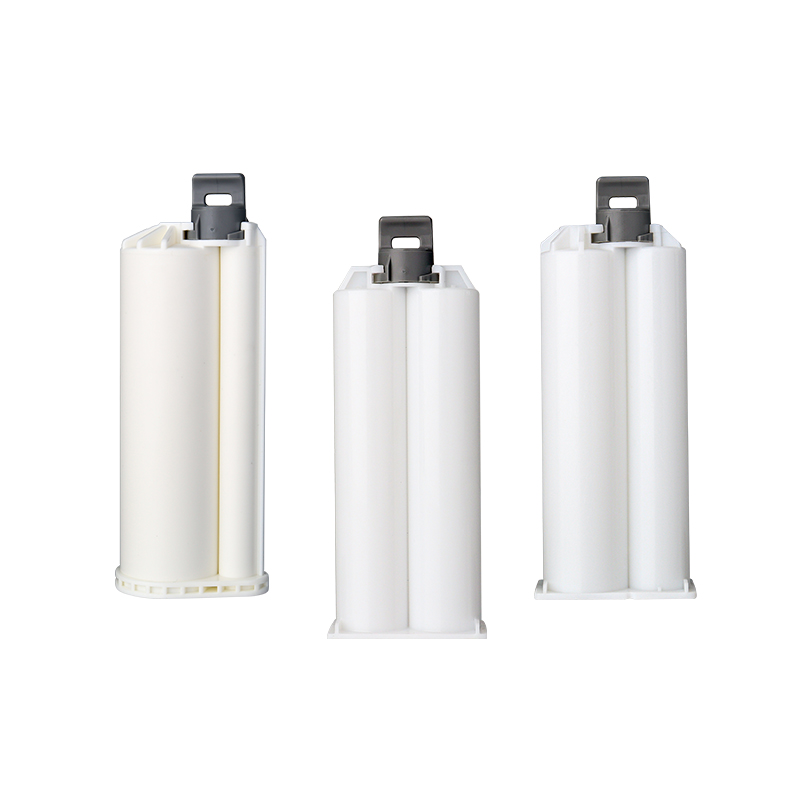
Dual-component coaxial and side-by-side cartridges. Two-part chemistry fixes the format: the mix ratio dictates the cartridge geometry. Coaxial and side-by-side dual cartridges keep resin and hardener separated until the mixer, so the ratio is set by chamber volumes.
| Mix ratio | Typical chemistry | Cartridge / gun implication |
|---|---|---|
| 1:1 | Structural epoxies, acrylics | Coaxial; balanced dual-rod gun |
| 2:1 | Polyurethanes, hybrids | Coaxial or side-by-side |
| 4:1 / 10:1 | Faster-set or specialty | Ratio-specific chambers |
Confirm the exact ratio and capacity with our dual-component cartridges; the 1K vs 2K comparison explains when two-part packaging is worth the handling.
Sausage packs and bulk. Sausage packs (e.g. 600 ml) and bulk packs (e.g. 1500 ml) cut reloads on long runs; the trade is waste control on partial use. See the cartridge systems overview.
Dispensing Resistance Is Cumulative
The most useful idea here: dispensing resistance stacks. Ignore any one load and a gun that worked yesterday stalls today — the failure rarely announces itself until the bead breaks mid-joint.
- Material resistance — high-viscosity polyurethane, thick epoxy, and non-sag hybrids need more force per unit flow than thin sealants, and that force rises sharply as the chemistry thickens.
- Mixer resistance — every element and inch of nozzle adds back pressure; a mixer chosen for blend quality can silently consume the margin a manual gun had left.
- Structure resistance — a deep anchor hole or narrow gap restricts flow at the delivery end, adding load the closer you get to the substrate.
- Environmental correction — viscosity rises as temperature drops; the same setup that dispenses cleanly at 25 °C can stall at 5 °C because the sealant thickened in the cartridge, not because the tool changed.
| Resistance source | Effect on thrust need | On-site adjust |
|---|---|---|
| Material viscosity | Increases | Warm cartridge within safe limits |
| Mixer length / elements | Increases | Use shortest mixer that still blends |
| Nozzle bore | Smaller = more | Open bore for high-viscosity material |
| Joint depth / gap | Increases | Longer nozzle, steady feed |
| Cold temperature | Increases | Pre-condition material; step up thrust |
Plan thrust from the top of this stack, not the gun’s nameplate. Our thrust ratio guide maps ratio to material.
Match Drive Type and Thrust Ratio to the Duty Cycle
Thrust ratio only matters next to the duty cycle. A high ratio helps, but the drive type decides whether that thrust holds across a full shift.
| Drive type | Fits duty cycle | Site constraint |
|---|---|---|
| Manual high-thrust | Low-duty, repair, access-limited | Operator fatigue limits output |
| Pneumatic | Continuous, high-volume bead | Needs clean, dry air |
| Powered / battery | Mobile volume, no air line | Charge and tool qualification |
Manual high-thrust guns stay right for access-limited spots and repair — they need no air line and give direct lever feedback, but output is bounded by the operator and by fatigue over a full shift. A pneumatic dispensing gun holds steadier pressure for long runs and structural repair; the cost is a clean, dry air supply and seal maintenance. Powered and battery tools remove the air-line dependency for mobile work but add charge management and tool qualification to the site checklist, so they are not a default upgrade for low-duty repair. For very high-viscosity chemistry, a high-thrust class such as 26:1 matches heavy construction duty — confirm the exact figure with the supplier. See manual dispensing guns and the adhesive dispensing gun guide.
Select the Static Mixer for Site Conditions
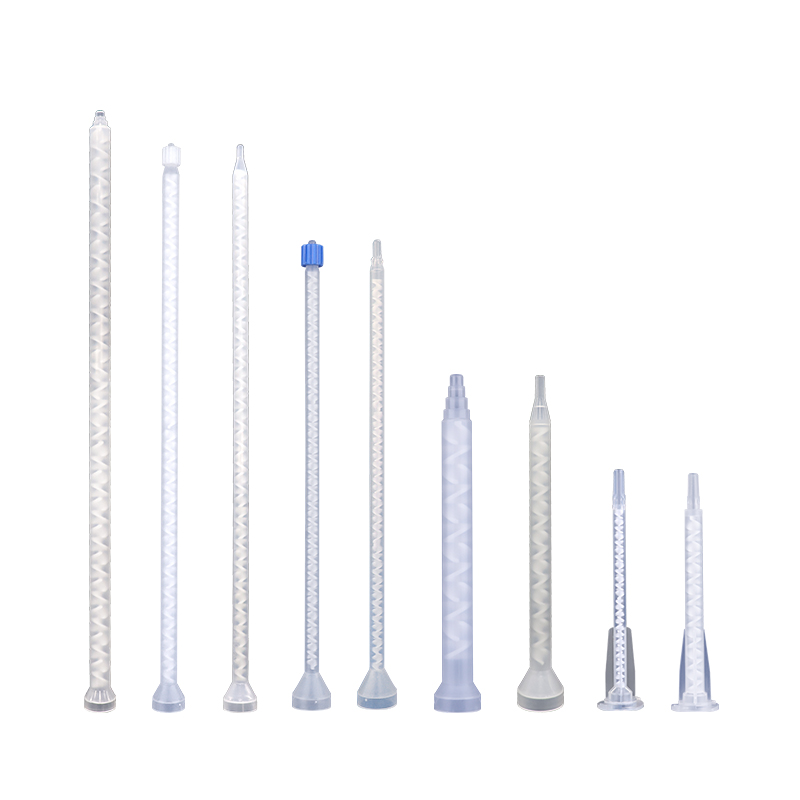
The mixer is the most overlooked part and the one that most affects both thrust and bead quality.
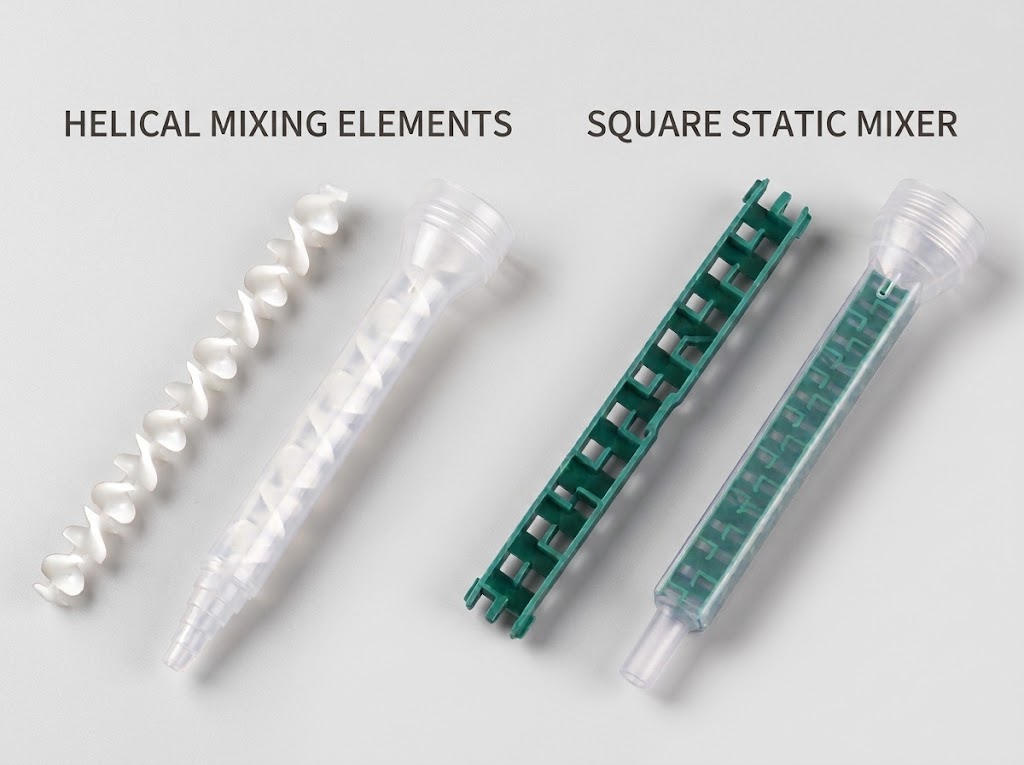
- Element count vs. waste: more elements blend better but waste more at pack start and add back pressure. Use the minimum that still gives a streak-free bead.
- Nozzle length / bore: length reaches deep holes; bore sets bead width and resistance together — too small starves the joint, too large loses control on a vertical face.
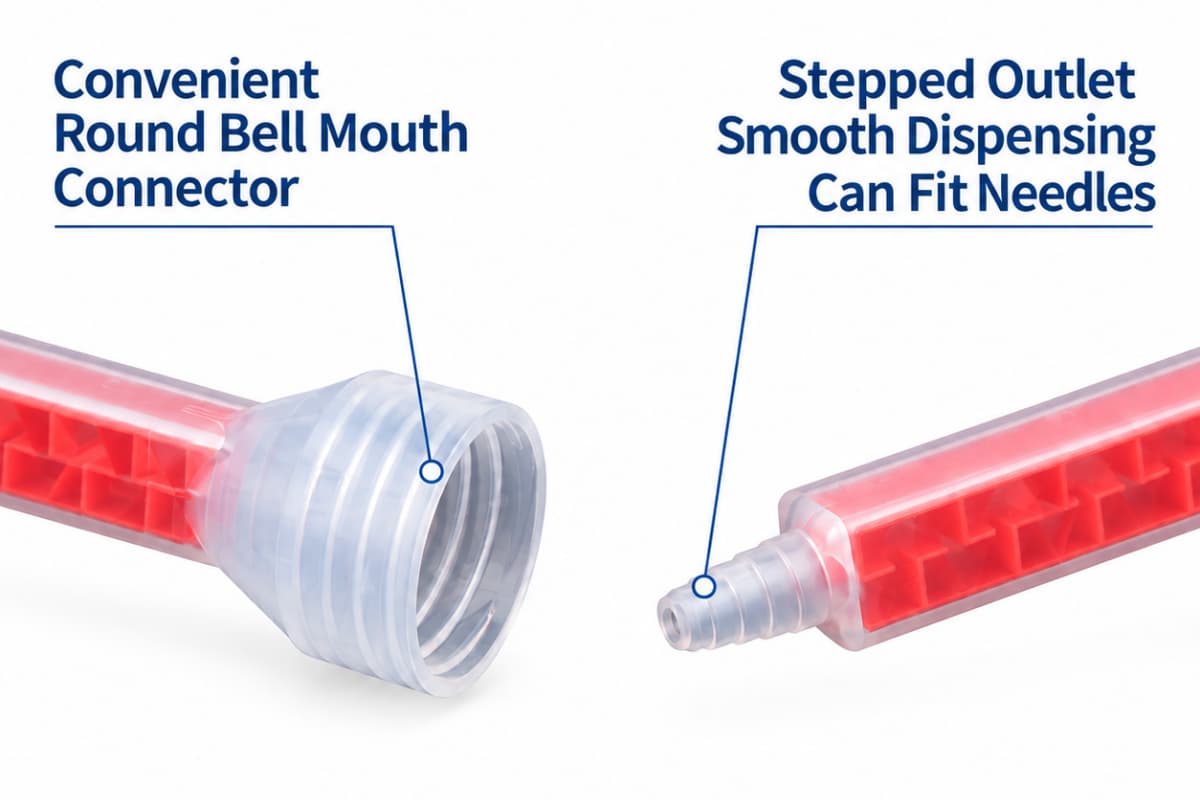
- Interface family: the mixer must lock to the cartridge outlet or the ratio drifts. Match bayonet (A/B), bell mouth (C), or threaded (F) before ordering. See our A, B, C, and F system mixer pages, plus the interface explainer.
Application Playbooks: Four Construction Sealing Scenarios
| Scenario | Package | Drive | Mixer focus | Key risk |
|---|---|---|---|---|
| Chemical anchoring | Dual cartridge | Pneumatic / high-thrust | Long nozzle, full blend | Unmixed streak in hole |
| Facade / window | 1K or dual | High-thrust, controlled release | Bore to joint width | Drip, sag |
| Concrete / expansion joint | Sausage / bulk | Pneumatic | Open bore | Base burst from restriction |
| Structural bonding | Ratio-specific dual | Dual-rod, aligned | Enough elements | Off-ratio, weak cure |
Chemical anchoring & rebar fixing — high-viscosity two-part adhesive injected into a deep hole; zero tolerance for streaks. Pierce the seal, purge the first material, and verify streak-free before anchoring. Our cartridge filling machines support consistent two-part fills.
Facade, window, curtain-wall — long vertical non-sag beads; control release at stroke end to avoid drip.
Concrete / expansion joint — large-area continuous work; sausage or bulk packs cut reloads, pneumatic keeps the bead steady.
Structural bonding — thick ratio-sensitive epoxy where a weak cure means a failed load path; confirm dual-plunger alignment every pack and verify no off-ratio streak before the bond is closed. See the dual-cartridge epoxy gun guide.
Field Troubleshooting
| Symptom | Most likely root cause | On-site fix |
|---|---|---|
| Gun will not push material | Nozzle/mixer restriction; seal un-pierced | Open bore / change mixer; pierce seal |
| Cartridge bursts at base | Cured seal, blockage, plunger skew | Pierce, clear mixer, reseat |
| Sealant leaks from nozzle | Worn plunger seal; wrong interface | Replace seal; fit correct mixer |
| Off-ratio bead | Plunger drift; dual-rod misalignment | Realign rods; replace seal |
| Streaky output | Too few elements | Use longer mixer |
| Drips on vertical face | Bore too large | Smaller bore; control release |
| Air pockets | Entrained air from restriction | Purge; check fit |
For leaking nozzles, see adhesive leaking from the mixing nozzle; for ratio problems, how to fix uneven 2K dispensing.
Pre-Spec Compatibility Checklist
Confirm before ordering, not after the first rejected joint:
- Cartridge: capacity matches joint length and changeover; mix ratio matches chemistry; shell rigidity suits pressure; plunger seal controls leakage; flange/interface matches gun and mixer.
- Gun: stroke covers capacity; plunger plate / dual rods align; drive fits duty cycle; release controls drip; changeover matches workflow.
- Mixer: interface matches outlet family; element count blends ratio and viscosity; bore sets bead width; length reaches joint or hole.
Our dispensing system compatibility page supports this check; for branded formats see customization.
For Sealant and Adhesive Brands
If you sell sealant, the package your customer loads decides whether your chemistry performs on site. Three packaging decisions move complaint rate more than most marketing:
- Tube-body stiffness — the shell must resist deformation under high-pressure injection; a bulging base is a direct path to burst and backflow.
- Plunger seal and rebound — decides leakage, backflow, and residue at empty.
- Interface consistency — a standard, available mixer/gun interface lets customers buy replacements anywhere and keeps your brand in use.
See our B2B guide to OEM dual-component cartridges. For production, see the cartridge filling machine selection guide.
FAQ
What thrust ratio do I need for construction sealants? Start from the resistance stack, then pick the lowest ratio that covers your worst case. Thin sealants need only a standard ratio; viscous two-part chemistry in cold conditions needs a high-thrust gun such as the 26:1 class. See the thrust ratio guide.
Can a standard caulking gun be used with two-component cartridges? Not reliably. Two-part cartridges need a dual-rod gun that drives both chambers at the locked ratio; a single-rod gun skews the plungers and the bead goes off-ratio. Confirm against our dual-component cartridges.
Sausage pack or rigid cartridge? Base it on joint length per reload. Short, scattered joints favor the rigid cartridge; long, continuous runs favor a sausage or bulk pack. See the sizes and materials guide.
Why does my cartridge burst at the base? One of four causes: un-pierced seal, restricted nozzle/mixer, skewed plunger, or gun thrust beyond what the shell takes. Our 2K cartridge failure analysis maps each.
Do I need a longer mixer in cold weather? Often yes — viscosity and mixing resistance both rise as temperature falls, so a longer or properly sized mixer (and sometimes higher thrust) keeps the bead blended.
How many mixing elements for structural epoxy? Enough to remove streaks at your ratio and viscosity, no more — extra elements waste material and add back pressure.
What causes an off-ratio bead? Plunger-seal drift, dual-rod misalignment, or mixer back pressure that unbalances flow. See how to fix uneven 2K dispensing.
How do I verify compatibility before ordering? Run the three-side check: capacity and ratio on the cartridge, stroke and drive on the gun, interface and element count on the mixer. Our dispensing system compatibility page is the reference.
Please contact the HaiJing team for technical support
Treat the cartridge, gun, and mixer as one pressure system, size thrust from the full resistance stack, and confirm the interface before you load the first cartridge.
- For contractors and applicators: send us your joint geometry, material viscosity, and daily output for a matched recommendation built around our heavy-duty dispensing systems for construction sealants.
- For sealant and adhesive brands: request a cartridge–gun–mixer compatibility review through our customization programs, or start a conversation on our contact page.