Caulking Gun Types and Thrust Ratio: How to Pick a Gun for High-Viscosity Adhesives
Table of Contents
Caulking Gun Types and Thrust Ratio: How to Pick a Gun for High-Viscosity Adhesives
Selecting the right dispensing tool for thick industrial adhesives comes down to matching fluid resistance with mechanical leverage. Different caulking gun types generate vastly different output forces, and using an underpowered tool leads to inconsistent bead profiles, cartridge blowback, and severe operator hand fatigue.
To choose the correct tool for high-viscosity formulations—such as thick epoxies, polyurethanes, and structural adhesives—engineers and procurement teams must evaluate adhesive viscosity, dynamic backpressure from mixing elements, and drive mechanisms. This guide examines how thrust ratios work, compares manual versus pneumatic configurations, and outlines a step-by-step framework for selecting industrial glue guns.
What Is Caulking Gun Thrust Ratio and Why Does It Matter?
A caulking gun’s thrust ratio represents its mechanical advantage: the ratio of the force applied to the trigger relative to the force exerted by the drive plunger against the cartridge piston.
Thrust Ratio = Distance Traveled by Trigger / Distance Traveled by Plunger
For example, a 12:1 thrust ratio means that applying 10 lbs of force to the trigger generates approximately 120 lbs of pushing force at the plunger. A 26:1 high thrust caulking gun turns that same 10 lbs of trigger squeeze into 260 lbs of forward force.
When dispensing high-viscosity materials, mechanical resistance increases exponentially. Using an insufficient thrust ratio creates three primary failure modes:
Operator Fatigue: Manual repetition causes physical strain, slowing assembly lines and leading to uneven dispensing speeds.
Cartridge Warping and Blowback: Excessive manual straining often tilts the drive plate, cocking the internal piston and allowing adhesive to leak backward past the plunger seal.
Incomplete Joint Fill: Stalled travel rates result in inconsistent bead diameters and voids across critical bonding lines.
Matching Adhesive Viscosity with the Correct Thrust Ratio
Adhesive viscosity is typically measured in centipoise (cps) or millipascal-seconds (mPa·s). As fluid thickness rises from light oils (1–100 cps) to thick structural pastes (exceeding 500,000 cps), the required dispensing pressure climbs dramatically.
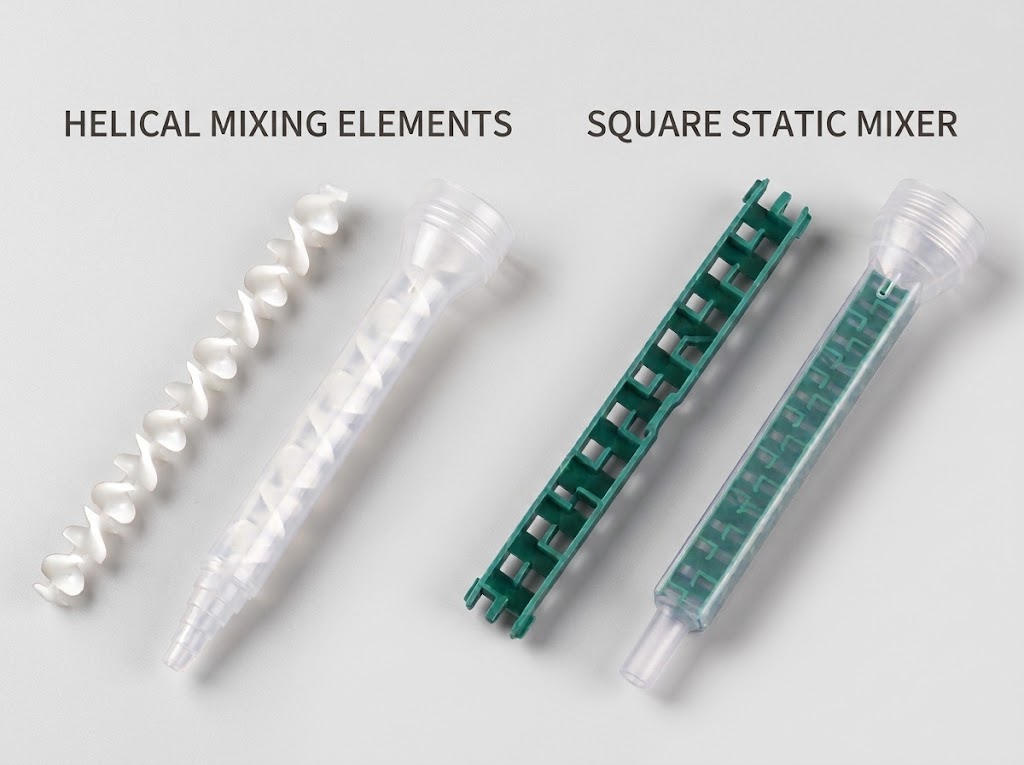
Furthermore, dispensing two-component (2K) formulations through static-dynamic mixers creates substantial fluid shear and hydrodynamic backpressure. The narrower the mixer elements and the longer the mixing nozzle, the higher the required mechanical ratio.
Adhesive Category
Typical Viscosity Range (cps / mPa·s)
Typical Fluid Examples
Minimum Recommended Thrust Ratio
Recommended Drive Type
Low Viscosity
1,000 – 25,000
Thin silicones, acrylic latex sealants
6:1 to 10:1
Standard Manual
Medium Viscosity
25,000 – 100,000
Standard polyurethanes, hybrid MS polymers
12:1 to 18:1
Medium-Duty Manual
High Viscosity
100,000 – 400,000
Heavy-body epoxies, structural adhesives
24:1 to 26:1
High-Thrust Manual or Pneumatic
Ultra-High / Paste
400,000 – 1,000,000+
Non-sag mastics, rubberized structural pastes
26:1 to 35:1+
Heavy-Duty Pneumatic / High-Ratio Manual
Note: Viscosities fluctuate significantly with ambient temperature. Lower working temperatures stiffen materials, necessitating a jump to a higher ratio tier.
Primary Caulking Gun Types for Industrial & 2K Applications
Industrial adhesive applications rely primarily on two main drive formats: heavy-duty manual mechanical systems and pneumatic line-fed dispensers.
Industrial gun types are mainly divided into two categories. One is the manual high-thrust type, available in ratios of 26:1 and 35:1, which is suitable for field work and low-to-medium cycle applications. The other is pneumatic dispensers, which are designed for high-volume production lines and can handle ultra-thick pastes.
High-Thrust Manual Caulk Guns
A manual caulk gun engineered for industrial use utilizes heat-treated steel drive plates, reinforced side-plates, and precision catch plates rather than stamped sheet metal.
Advantages: Completely portable; requires no air compressors or electrical drops; allows precise tactile control for field service and maintenance.
Disadvantages: Output remains limited by operator stamina; shot-to-shot volume repeatability depends entirely on manual technique.
Industrial operations handling structural cartridges rely on heavy-duty manual dispensing guns equipped with hardened double-gripper plates to prevent slippage when pushing past 200,000 cps.
Pneumatic Dispensers
A pneumatic dispenser uses regulated plant air pressure (typically 60 to 100 psi) applied directly through internal air pistons to drive the cartridge plungers forward.
Disadvantages: Tethered to a compressed air line; higher initial equipment cost; requires regular air-line filtration and seal maintenance.
For medium- to high-volume assembly lines, industrial pneumatic dispensing guns ensure that bond line consistency remains identical from the beginning of a shift to the end.
Special Dispensing Requirements for 2K High-Viscosity Systems
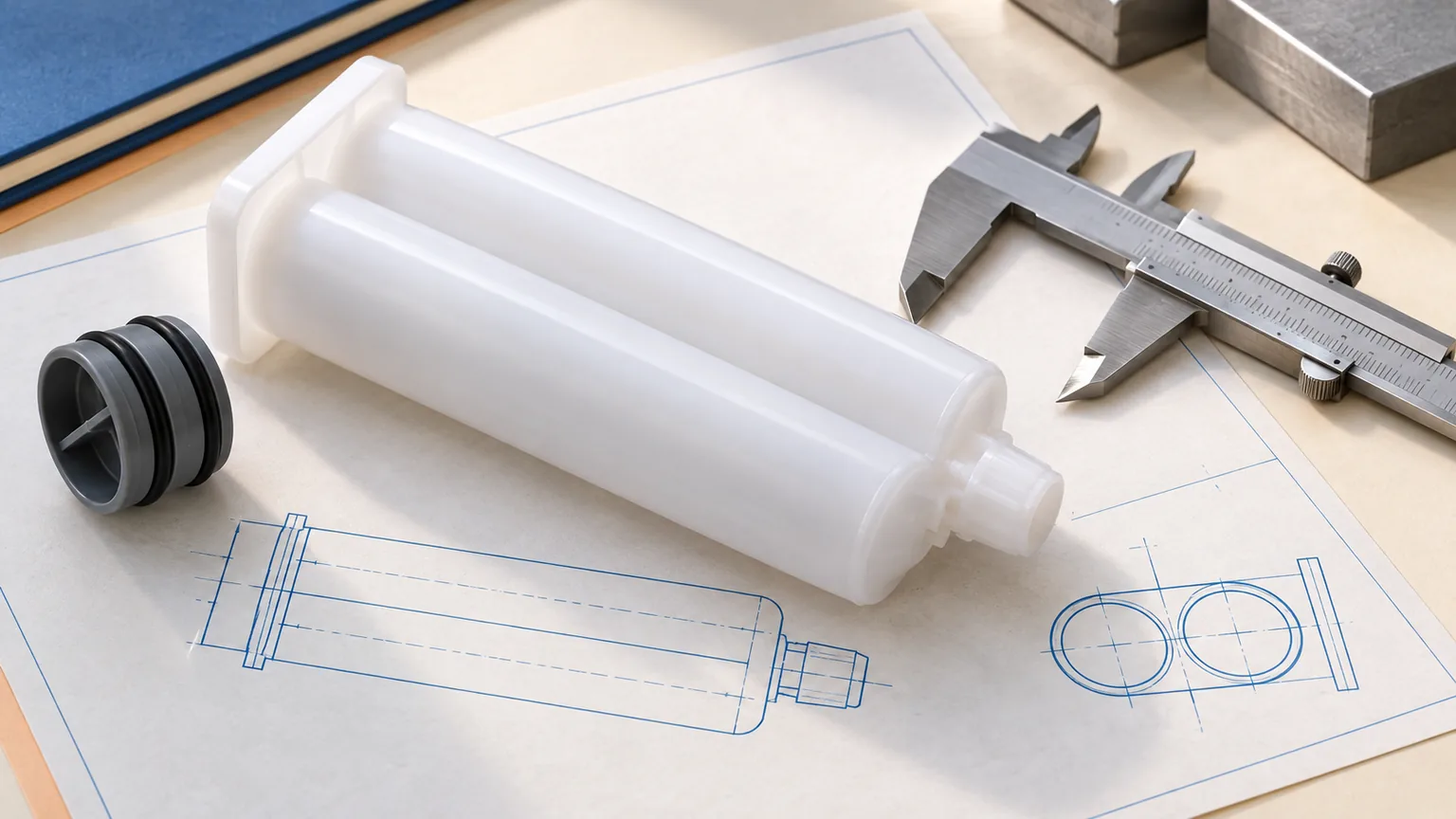
Single-component cartridges use a centered, circular piston. In contrast, two-component (2K or AB) systems split the drive force between two dedicated chambers (such as 1:1, 2:1, 4:1, or 10:1 volume ratios).
A dual-plunger 2K cartridge contains two plungers. Plunger A pushes the resin component, which has a high viscosity. Plunger B pushes the hardener component, which has a low viscosity. The two components exit their respective cylinders and then join together into a static mixer, where they are thoroughly mixed. Finally, the mixed adhesive is dispensed onto the substrate.
When selecting equipment for high-viscosity dual-component setups, check the following criteria:
Dual Plunger Alignment: High-viscosity systems exert extreme counter-pressure. Ensure the gun’s drive frame prevents racking or bending of the twin push-rods.
Viscosity Ratio Asymmetry: If Part A is a thick paste (e.g., 300,000 cps) and Part B is a low-viscosity liquid (e.g., 5,000 cps), unbalanced plungers will cause off-ratio dispensing. Select reinforced push-plates designed specifically for rigid cartridges and cartridge systems.
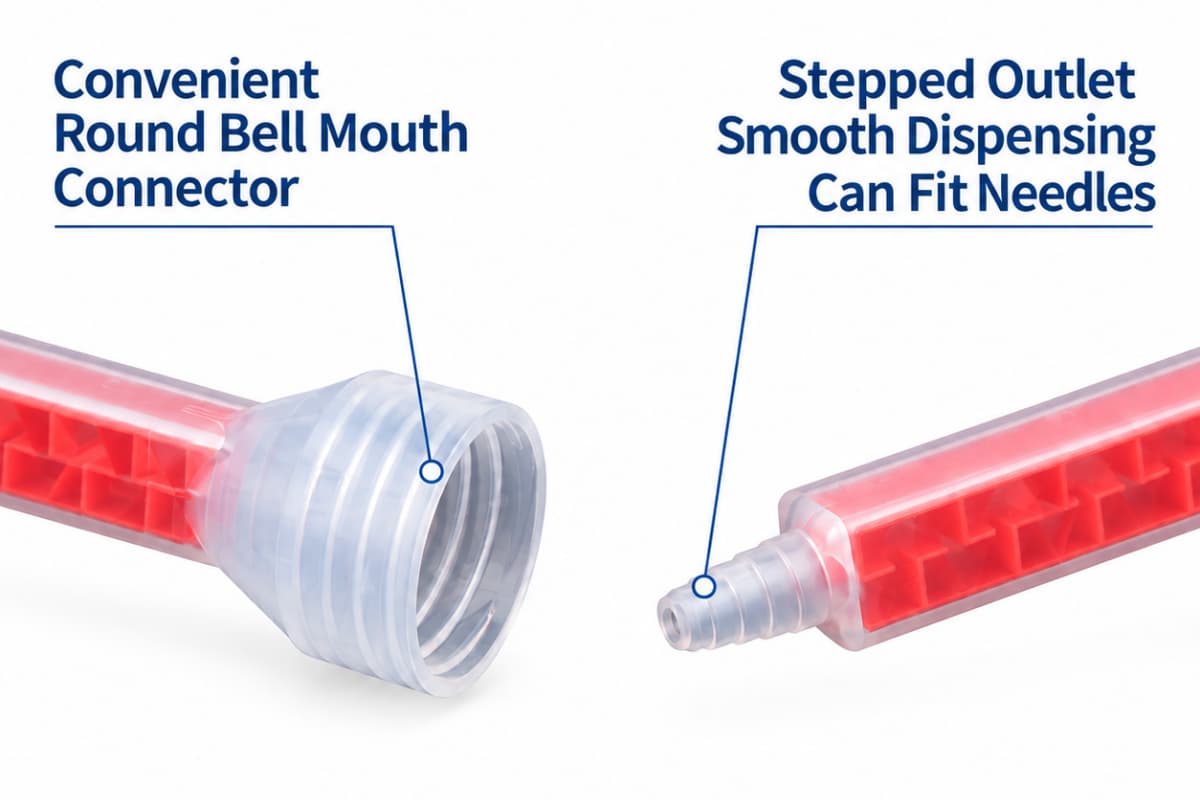
Mixer Element Drag: Static mixers create internal flow resistance. A setup that dispenses easily from an open port might require twice the drive force once a 24-element mixer nozzle is attached.
Step-by-Step Decision Framework: How to Pick the Right Gun
Step 1: Fluid Characterization – Record viscosity (cps), mix ratio, and thixotropy at operating temperature
Step 2: Mixing and Nozzle Backpressure – Select mixer length and diameter; calculate the combined flow resistance
Step 3: Production Duty Cycle – For low duty or field repair, use a high-thrust manual tool (ratio ≥26:1); for continuous line or bench work, use a pneumatic dispenser with a regulator
Step 4: Tool-Cartridge Interface – Match the carrier bay, stroke length, and plunger discs to the cartridge specifications
If your production line uses proprietary cartridge dimensions, irregular mix ratios, or non-standard fluid packaging, explore engineered customization options to build matched cartridge-and-gun systems tailored to your exact mechanical tolerances.
Key Takeaways
Thrust ratio determines mechanical leverage: Higher ratios (such as 26:1 or 35:1) translate minimal trigger effort into the massive plunger force needed for thick pastes.
Fluid resistance is cumulative: Adhesive viscosity, cold operating temperatures, and static mixer element counts all contribute to total dispensing backpressure.
Select drive type by production environment: Use high-thrust manual guns for field service and maintenance; deploy pneumatic dispensers on assembly lines to maintain bead uniformity and protect workers from repetitive strain.
2K systems demand structural rigidity: Dual-component dispensing requires reinforced push-rods to prevent off-ratio mixing and cartridge blowback.
Frequently Asked Questions (FAQ)
Can a standard 12:1 caulking gun dispense high-viscosity epoxy?
No. A 12:1 ratio gun does not provide enough mechanical advantage to push high-viscosity structural epoxy through a static mixer. Attempting to do so can bend the trigger assembly, crack the cartridge flange, or cause adhesive blowback past the rear piston.
How does ambient temperature affect required thrust ratios?
Adhesive viscosity increases as temperature drops. A material that dispenses smoothly at 25°C (77°F) with an 18:1 gun may become unworkable at 10°C (50°F), requiring a 26:1 manual gun or a pneumatic dispenser to overcome the added fluid resistance.
What causes adhesive blowback behind the cartridge plunger?
Blowback occurs when internal hydrodynamic backpressure exceeds the sealing capacity of the cartridge piston. This typically happens when using an undersized nozzle, attempting to force high-viscosity fluid through a clogged mixer, or using a gun with misaligned drive plates that tilt the piston during advancement.
Please contact Haijing for technical support
Optimize Your High-Viscosity Dispensing Setup
Selecting the wrong gun ratio leads to production downtime, off-ratio bonding, and operator fatigue. Contact the engineering team at HaiJing with your adhesive viscosity specifications, operating temperatures, and cartridge dimensions. We will help you configure the ideal combination of dual-component cartridges, static mixers, and high-thrust dispensing guns for your production line.
Adhesive cartridge dimensional inspection starts with an agreed drawing, not a caliper reading. Confirm the part and revision, identify the specified datums …
Static mixer geometry decides bead quality. Learn what causes stringing, streaks, and off-ratio beads,
Let's Build Your Next Dispensing Solution Together
Send us your requirements, drawings, or questions. Our engineering team is ready to provide a professional solution and a competitive quote, typically within one business day.