The Hidden Costs of Adhesive Leakage in Your Dispensing System
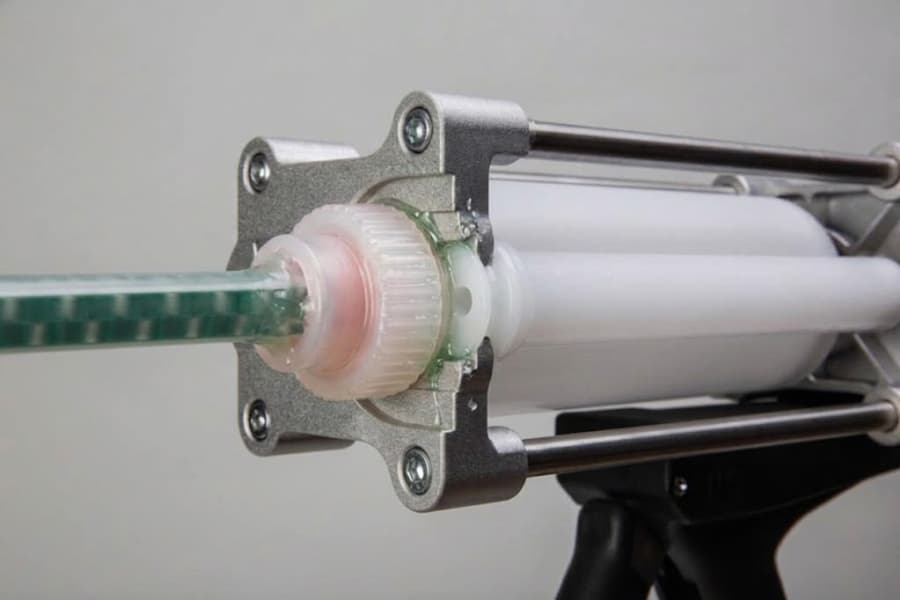
Adhesive leaking from between the mixing nozzle and the cartridge typically occurs because of mismatched component interfaces, excessive internal backpressure, incorrect mixer selection, or improper assembly. When you attach a garden hose to a mismatched or poorly threaded faucet, the water pressure forces fluid out of the connection point rather than through the hose. A dual component cartridge system operates on the exact same physical principle.
For assembly line engineers and production managers, interface leakage is more than just a messy workspace. It directly results in wasted structural adhesives, which are often expensive. More importantly, leakage rarely happens equally between the two chambers. If part A leaks while part B flows normally, the dispensed ratio is compromised, leading to partial curing, weak bonds, and eventual product failure. Understanding the mechanical causes behind this leakage is the first step to eliminating the problem and protecting your production line.
4 Common Reasons Why Your Static Mixing Nozzles Are Leaking
1. Mismatched Interfaces and Inferior Tolerances
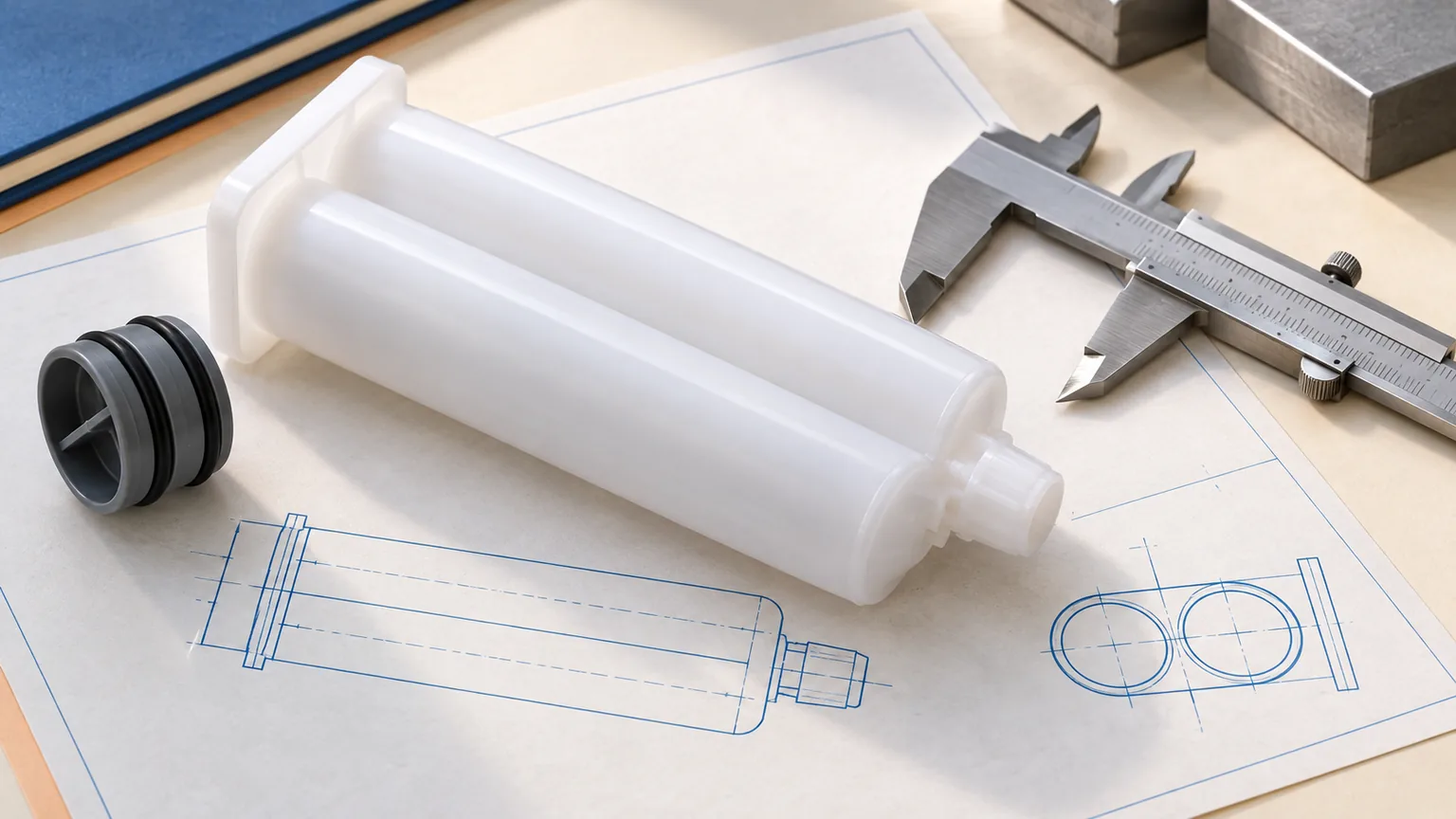
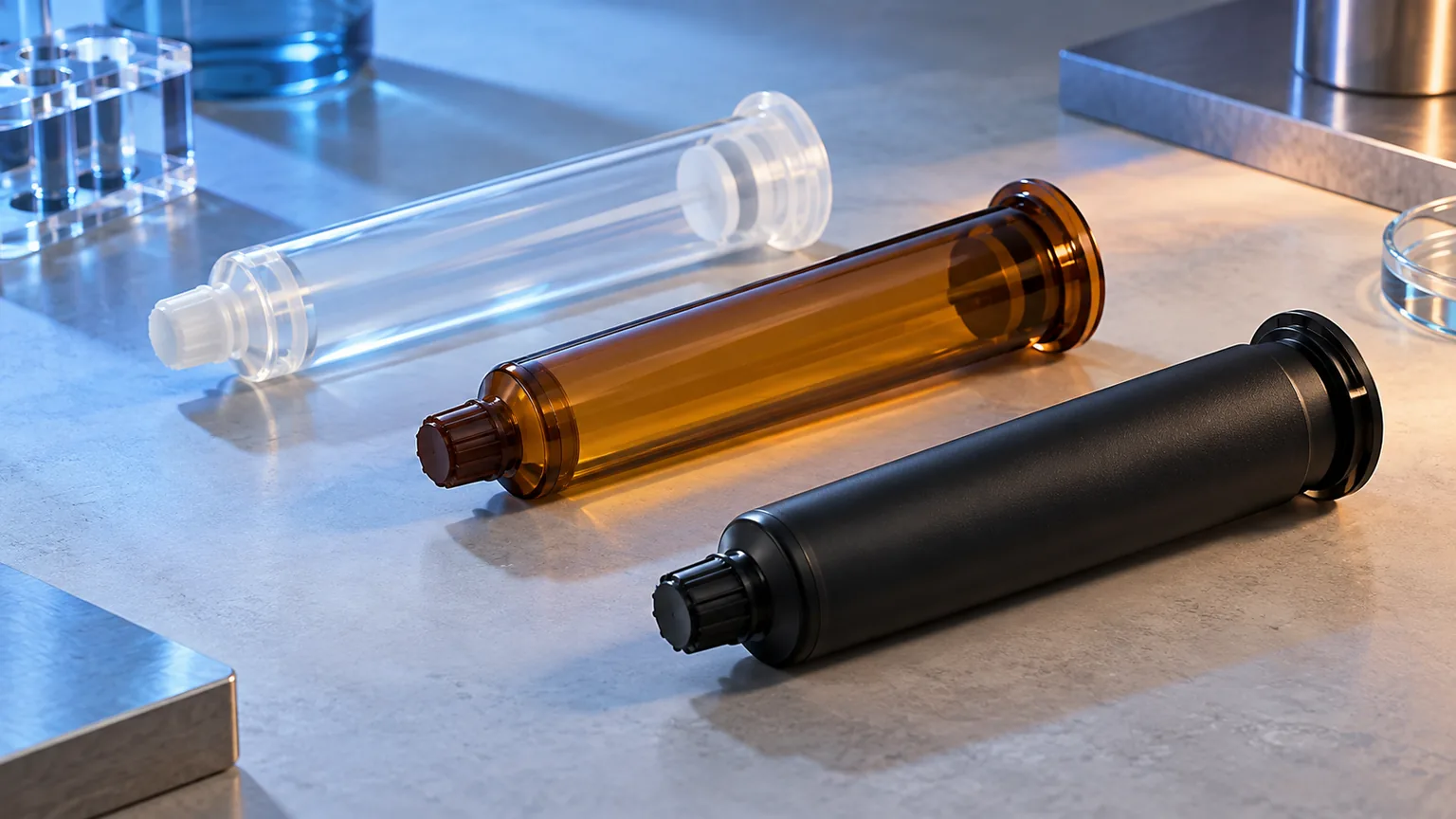
The connection between the cartridge and the mixer must form a perfect mechanical seal. If you are using cheap, low-quality empty cartridges for two part adhesives, the flange (the lip where the nozzle connects) may have microscopic warps, burrs, or uneven thickness. When the static mixing nozzles are attached, the connection is not completely flush. Under high pressure, the adhesive will naturally escape through these millimeter-sized gaps.
2. Excessive Backpressure Inside the Nozzle
Fluids always follow the path of least resistance. When pushing high-viscosity adhesives through a static mixer, resistance builds up. If the inner diameter of the mixer is too small, or if there are too many mixing elements for the required flow rate, the pressure inside the nozzle exceeds the burst strength of the connection interface. Instead of flowing out the tip, the adhesive is forced backward and out through the cartridge seal.
3. Incorrect Static Mixer Selection (Quadro vs. Helical)
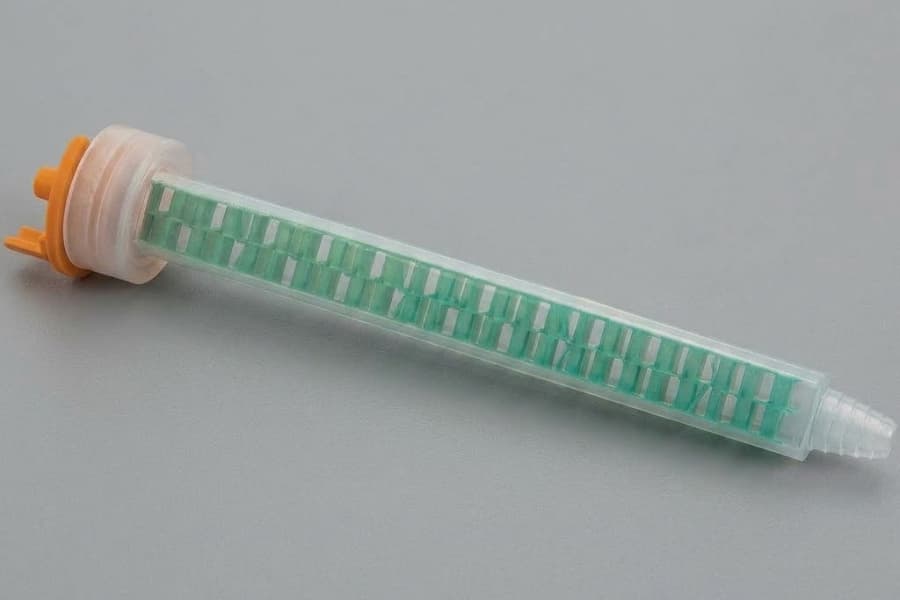
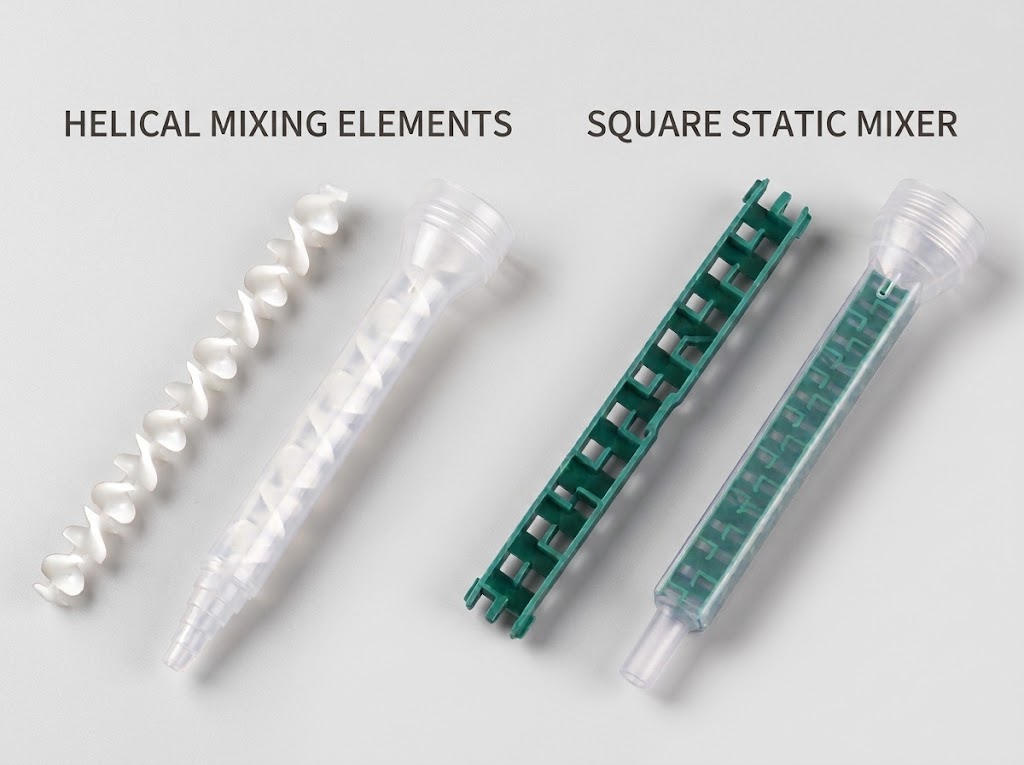
The geometry of the internal mixing elements directly affects fluid resistance. For instance, a quadro static mixer nozzle features a grid-like internal structure that provides excellent mixing in a shorter length, which is highly efficient but can create different flow resistance compared to a standard helical static mixer nozzle. If you select a mixer style that is not rated for the specific viscosity or flow characteristics of your adhesive, the resulting pressure spikes will cause the interface to rupture.
4. Improper Assembly or Retaining Nut Misalignment
Even with high-quality components, human error during setup can cause leaks. If the retaining nut or retaining sleeve used to lock the mixer to the cartridge is cross-threaded, not tightened fully, or cracked from overtightening, the physical clamping force will be insufficient to hold the pressure during dispensing.
How to Diagnose and Fix the Leak: A Step-by-Step Checklist
When facing a leaking dispensing setup on the factory floor, use this diagnostic matrix to quickly identify and resolve the issue.
| What You See | Probable Cause | How to Fix |
| Leakage starts immediately upon pulling the trigger | Loose retaining nut or cross-threaded connection | Remove the nozzle, clean the cartridge interface, and reattach a new nozzle ensuring the nut is threaded straight and tightened firmly. |
| Leakage occurs only after a few seconds of continuous dispensing | Excessive backpressure building up in the mixer | Switch to a static mixer with a larger inner diameter or fewer mixing elements. Check if the adhesive viscosity is too high for the current ambient temperature. |
| Adhesive leaks from one specific side of the interface (A or B side) | Defective cartridge flange or mismatched component tolerances | Inspect the empty sealant cartridge for warping. Switch to a matched cartridge and nozzle system from a single manufacturer to ensure identical tolerances. |
| Pulsing leakage matching the speed of the dispenser | Inconsistent pressure from the dispensing equipment | If using pneumatic dispensing guns, regulate the air pressure to ensure a smooth, constant push rather than sudden spikes. |
Why Choosing the Right A, B, C, or F System Matters
The most effective way to eliminate leakage is to ensure absolute compatibility between the cartridge and the mixer. Mixing and matching generic components often leads to the tolerance issues discussed above. Recognizing this, the industry relies on standardized interface designs, categorized into distinct systems. When you pair a System A cartridge with System A static mixers, the locking mechanisms are specifically engineered to interlock and seal under pressure.
| System Type | Interface Characteristics | Best For Preventing Leaks In |
| System A | Features a specific bayonet connection for standard 50ml cartridges. | Low to medium viscosity adhesives requiring quick, twist-and-lock assembly. |
| System B | Designed with a unique port alignment and robust locking mechanism. | Medium viscosity structural adhesives requiring precise A/B alignment. |
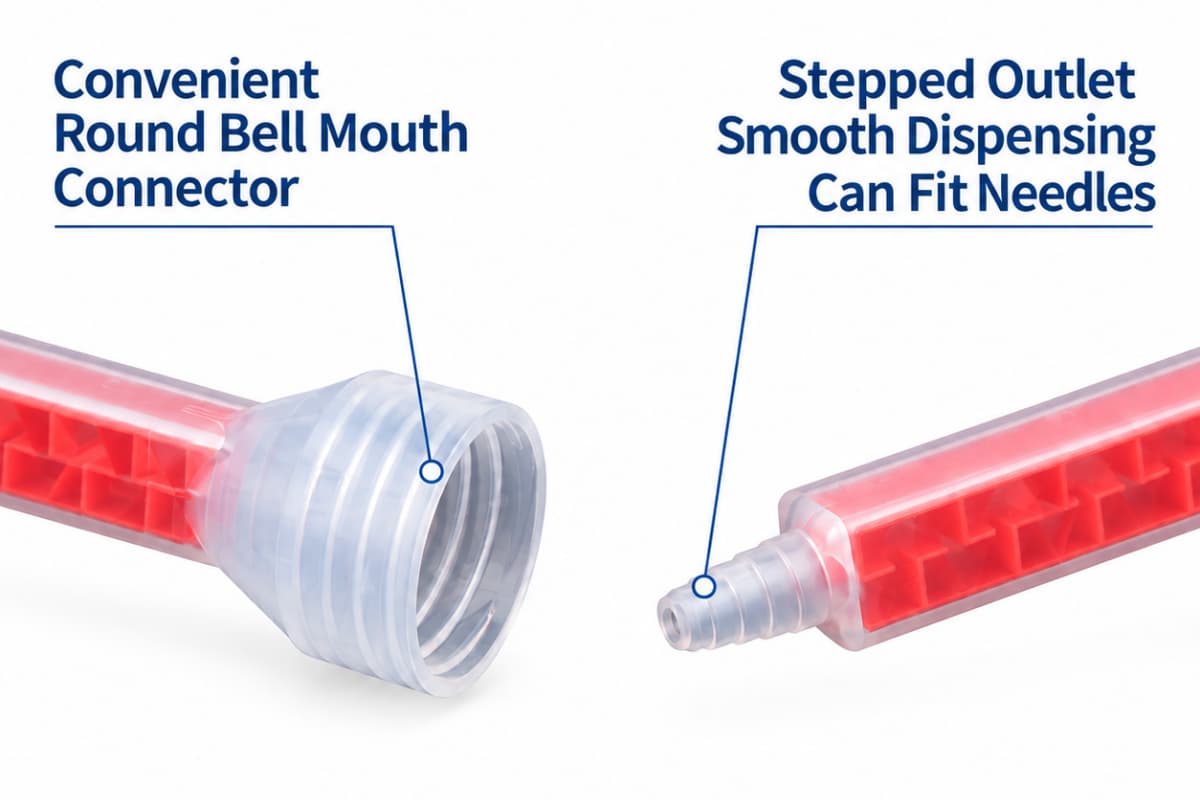
| System C | Utilizes a robust bell inlet designed for high-pressure retention. | High-pressure dispensing where backpressure is a known risk. |
| System F | Features a separated dual-port connection preventing cross-contamination before the mixing elements. | High-viscosity materials and processes highly sensitive to pre-curing at the interface. |
Need a Specialized Solution? The Role of Custom Static Mixers
Standard systems resolve the vast majority of dispensing issues. However, if your production involves adhesives with extreme viscosity differences between Part A and Part B, heavy fillers that clog standard elements, or non-standard mixing ratios (like 10:1), standard off-the-shelf nozzles will still generate dangerous backpressure and cause leakage.
In these scenarios, working with a dedicated static mixer manufacturer is necessary. Custom static mixers can be engineered with specific inlet diameters, stepped internal elements, and reinforced interface housings tailored to your exact material profile. This level of customization is especially critical in aerospace adhesive applications and semiconductor manufacturing, where a single leak can compromise an entire expensive assembly.
Stop the Leaks and Protect Your Bottom Line
Adhesive leakage at the mixing interface is not an inevitable part of the dispensing process; it is a symptom of physical incompatibility or excessive pressure. By understanding the mechanics of backpressure, matching the correct mixer geometry to your fluid viscosity, and ensuring you are using a strictly compatible dual component cartridge system, you can eliminate interface leaks entirely. This prevents material waste, protects dispensing equipment, and guarantees that every application cures at the exact specified ratio.
Key Takeaways
- Adhesive leaks are primarily caused by excessive internal backpressure or poorly matched cartridge-to-nozzle connections.
- Selecting a mixer with an inner diameter that is too small for a high-viscosity adhesive forces fluid out through the connection interface.
- Using matched, industry-standard connections (like System A or System F) ensures the tolerances are tight enough to withstand dispensing pressure.
- For highly specialized, filled, or extreme-viscosity adhesives, custom static mixers are required to prevent clogging and backpressure leaks.
FAQ
Why does the adhesive back up into the cartridge?
Adhesive backs up into the cartridge when the resistance inside the static mixing nozzle is greater than the pressure pushing the fluid forward. This is usually caused by using a nozzle with too narrow an inner diameter or too many mixing elements for the specific viscosity of the adhesive.
Can I reuse a static mixer if it leaks?
No. Once a leak occurs, the adhesive begins to cross-contaminate and cure at the connection interface. Reusing the mixer will cause improper seating, and the cured adhesive will act as a physical blockage, guaranteeing further leakage and ratio imbalance.
How do I reduce backpressure in my dispensing system?
To reduce backpressure, you can lower the dispensing speed, use a static mixer with a larger inner diameter, use a mixer with fewer internal elements, or gently warm the adhesive (if permitted by the technical data sheet) to lower its viscosity before dispensing.
Contact HaiJing for technical support
Are you tired of cleaning up wasted adhesive and dealing with inconsistent curing caused by leaking connections? Upgrade your assembly line with HaiJing’s precision-engineered dual component systems. Tell us about your adhesive viscosity and dispensing process, and contact our engineering team to request a free sample kit or discuss custom static mixers tailored to your specific application.