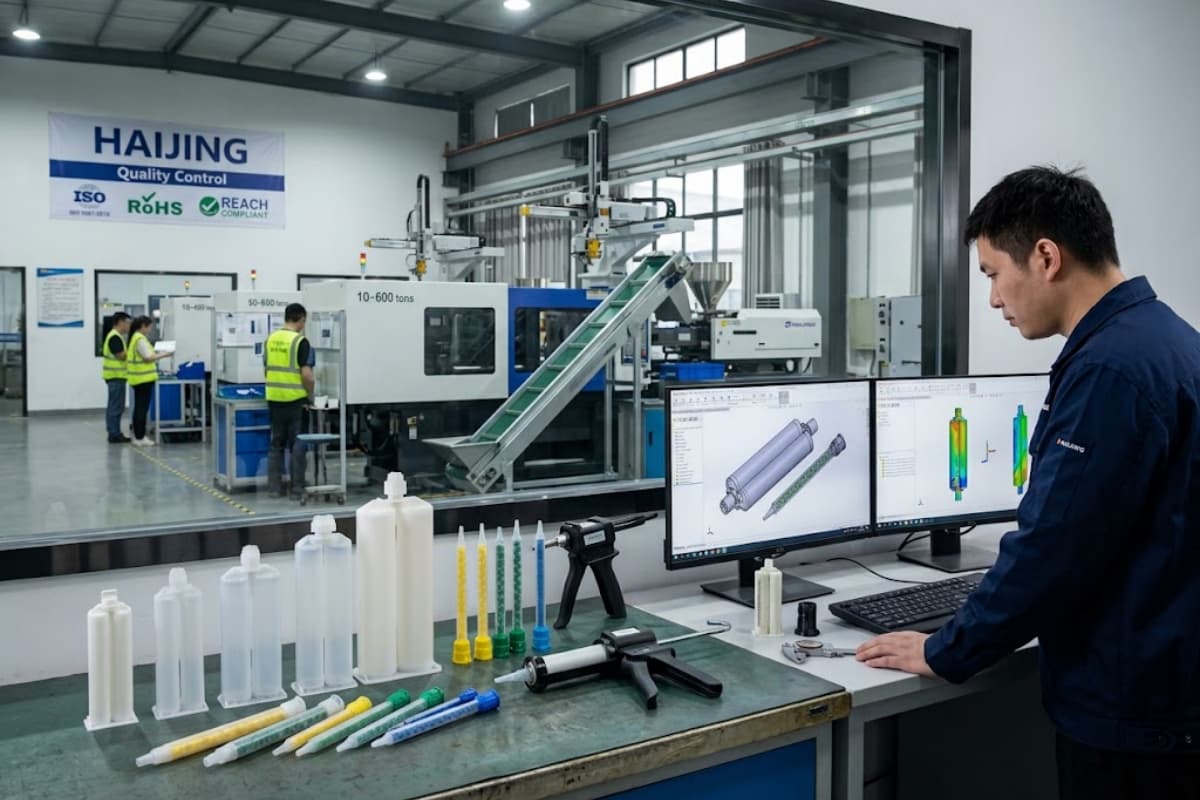
Most 2K adhesive failures blamed on “bad mixing” actually start in storage. A static mixer left on a partially used cartridge, a moisture-sensitive polyurethane left in an open booth, or a drum that breathed humid air all degrade before they ever reach the bond line. Shelf life is not a label on the box — it is the result of temperature, humidity, and sealing discipline. This article explains what is storable versus single-use, how shelf life varies by chemistry, a practical storage protocol for mixed and partial systems, and how to control moisture so your adhesive does not cure in the package.
Is Your Mixed System Storable, or Single-Use?
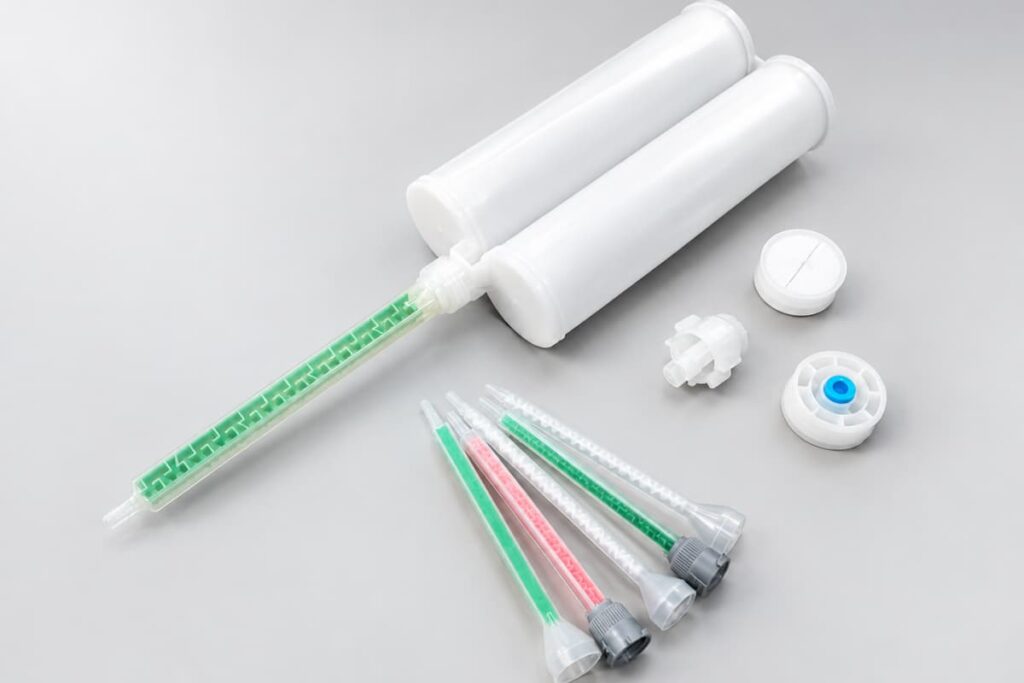
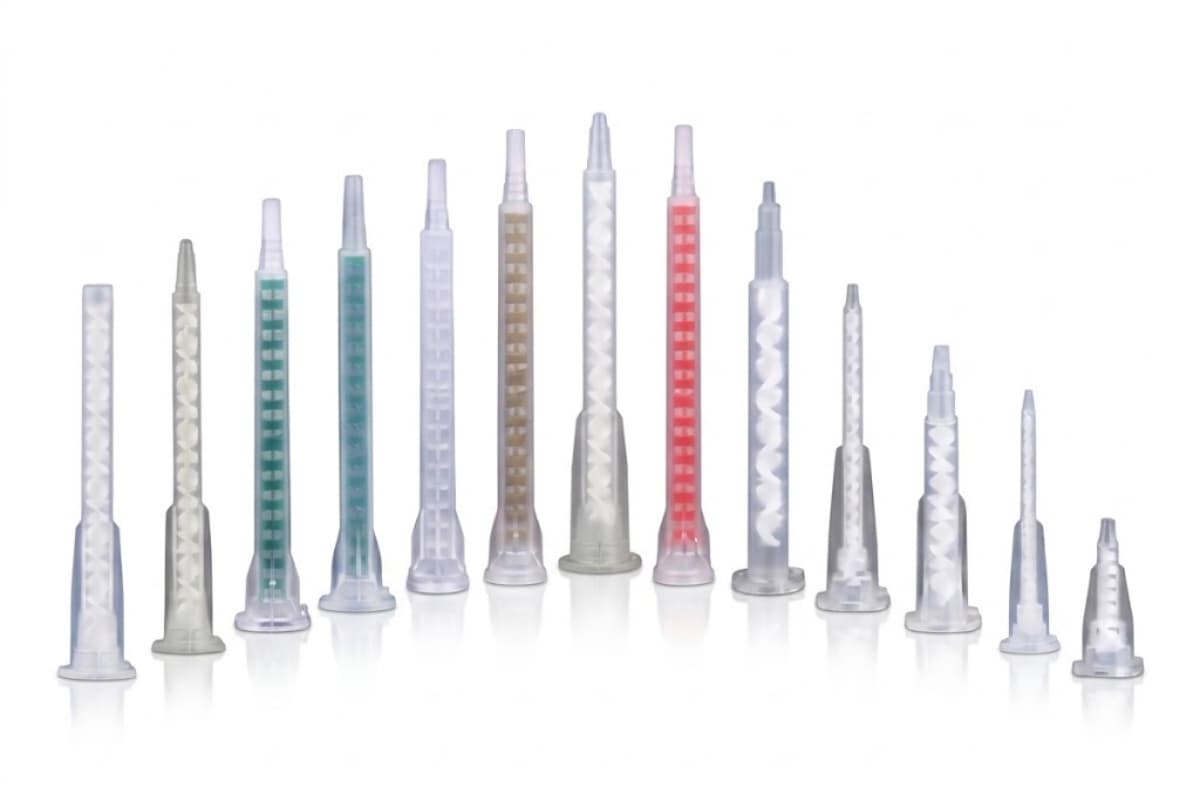
A static mixer nozzle is single-use by design because its long, narrow element path traps uncured 2K resin that cures or skins and cannot be flushed. But the cartridge, chamber, or bulk canister behind it can often be held. The rule: anything that traps resin in a narrow flow path should be discarded; anything you can cap and seal — cartridge, manifold, drum — can be stored under the right conditions.
| Component | State after use | Action |
|---|---|---|
| Static mixer nozzle | Resin inside elements | Discard; cannot be flushed or stored |
| Cartridge with mixer attached | Uncured, capped in time | Cap nozzle, store upright, use within maker window |
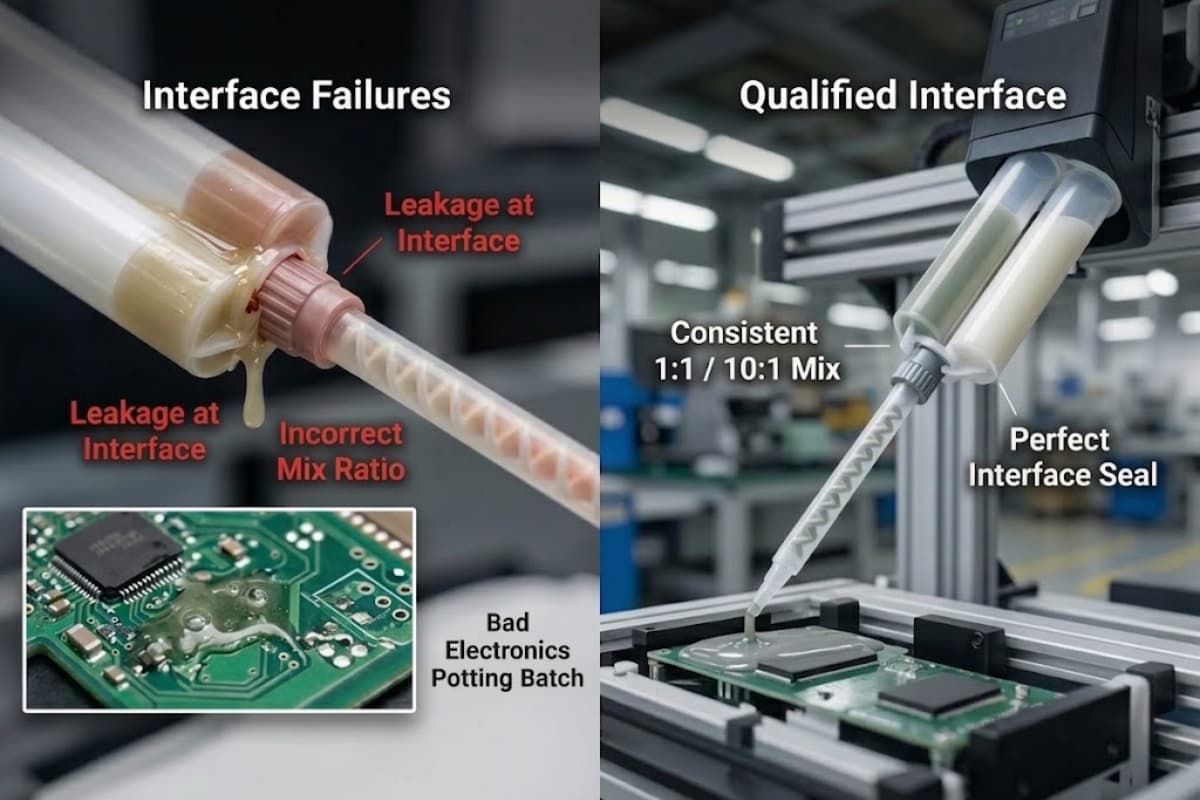
| Cartridge, mixer removed | Resin at interface | Wipe interface, re-cap, store |
| Reusable chamber / manifold | Flushed | Dry completely, seal, store |
| Bulk drum / IBC | Resealed | Nitrogen or dry-air blanket, store per TDS |
| Meter-mix equipment | Purged | Store dry, prevent moisture ingress |
Why Moisture and Temperature Decide Shelf Life
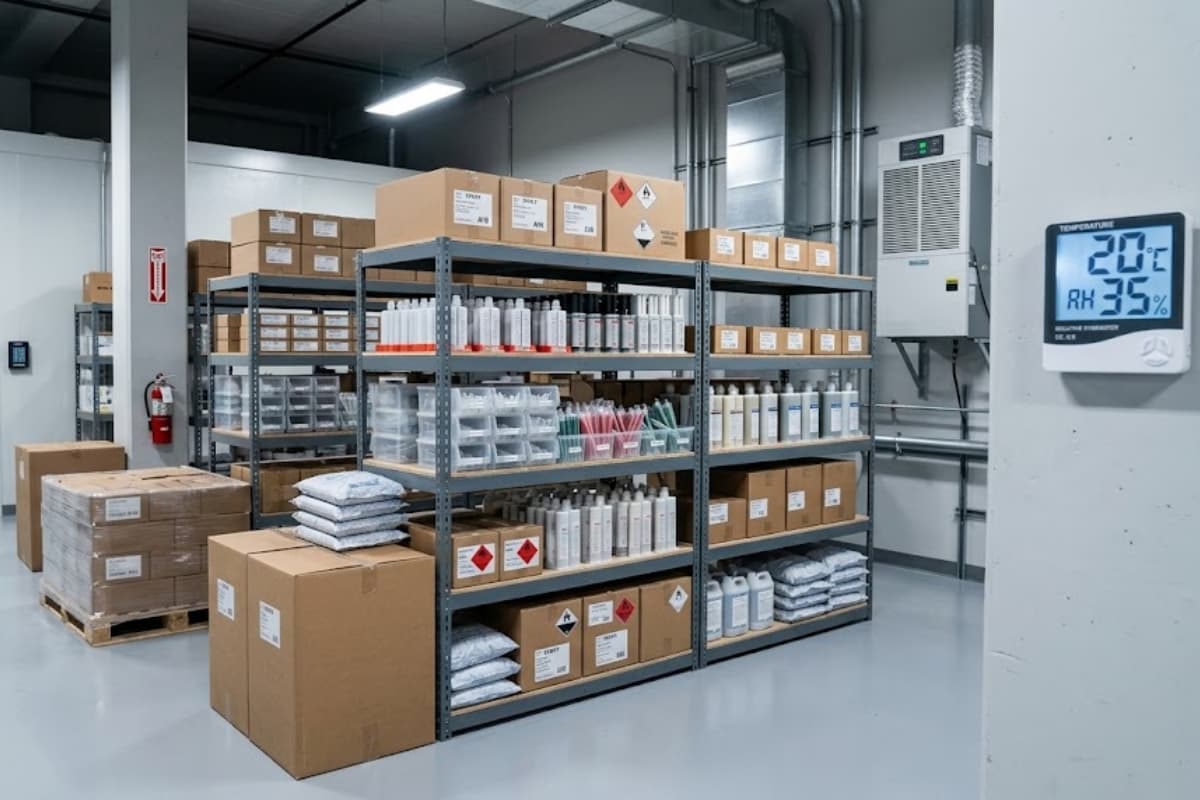
Three variables govern stored adhesive: temperature, humidity, and frost. Moisture is the silent killer for 1K moisture-cure products and for 2K systems where one component is hygroscopic. The widely cited “critical trio” for industrial adhesives is controlled temperature (10–25 °C, away from heat), frost protection for water-based chemistries, and humidity control because moisture can initiate polymerization of MS-polymer or polyurethane through the packaging. Darkness and airtightness close the loop: original boxes block UV, and sealed opened containers block air.
- Keep stocks at 10–25 °C, away from radiators and running machinery.
- Protect from frost — non-negotiable for water-based (PVA/vinyl) adhesives; freezing splits the phases irreversibly.
- Control humidity: store dry; humidity initiates polymerization of MS-polymer and PUR through the packaging.
- Darkness and airtightness: keep original boxes for UV protection; seal any opened container immediately.
- Wake up the chemistry: bring cold adhesive to room temperature before use; agitate sedimenting adhesives.
Shelf Life by Chemistry and Package
Shelf life is chemistry- and package-specific, not a single number. Polypropylene mixer bodies and metal chambers store differently, so match material to chemistry using the static mixer nozzle selection guide. Public data sheets show the spread: Sika AnchorFix static mixers keep 5 years unopened at +5 to +35 °C; an MMA such as VM100 holds 12 months refrigerated at 6–12 °C but only ~20 days at 35 °C; Tec7 2K-Fix keeps 24 months unopened and is reusable for up to 6 months after opening; ACROM specifies MMA between +2 and +8 °C.
| Chemistry | Typical shelf life (unopened) | Recommended storage | Moisture sensitivity |
|---|---|---|---|
| Epoxy (2K) | 12–24 months | 15–25 °C, dry | Low (hardener can cloud) |
| Polyurethane (2K / PUR) | 6–12 months | 10–25 °C, dry, <50% RH | High (moisture-cure) |
| MMA / methacrylate | 9–12 months | 2–8 °C refrigerated | Low–moderate |
| Silicone (2K) | 6–12 months | 15–25 °C, dry | Low |
| MS polymer | 12 months | 10–25 °C, dry, sealed | High (humidity cures) |
| Cyanoacrylate | 6–12 months | 2–8 °C, very dry | Very high |
Figures compiled from public technical data sheets (Sika, Easy Composites / VM100, Tec7 2K-Fix, ACROM) as industry examples; they are not Haijing product specifications. Confirm against your specific product TDS.
A Practical Storage Protocol for Mixed and Partial Systems
For cartridges, chambers, and bulk you intend to hold, a consistent cap-and-seal routine protects the next shot. Build it into the line so it is discipline, not heroics. Before trusting stored mixers or chambers on the line, the mixing nozzle qualification test confirms the part is still in specification.
- Stop the dispenser and cap the nozzle (or remove the mixer) within the open working time.
- Wipe the interface and exterior resin before it skins over.
- For cartridges: leave the mixer installed only if the chemistry allows reuse; otherwise fit a fresh nozzle next use and cap the cartridge.
- For reusable chambers / manifolds: flush, dry completely, seal.
- For bulk: reseal immediately after each draw; fit a dry-air or nitrogen blanket on drums / IBCs.
- Label with date, lot, and reseal time; apply FIFO.
- Inspect and re-qualify before trusting stored parts.
| Symptom | Likely cause | Fix |
|---|---|---|
| Gelled resin in mixer after hold | Moisture or elapsed open time | Discard nozzle; cap sooner; lower humidity |
| Skinned surface on cartridge | Air exposure at interface | Wipe, re-cap; use fresh interface |
| Clogged nozzle on restart | Solvent / air cure at tip | Fit fresh nozzle; purge first 2 cm |
| Bubbles / off-ratio after storage | Component separation or cold | Warm to RT, agitate, re-qualify ratio |
| Premature cure in drum | Humid air ingress | Reseal; nitrogen blanket; desiccant |
Moisture Control Methods Compared
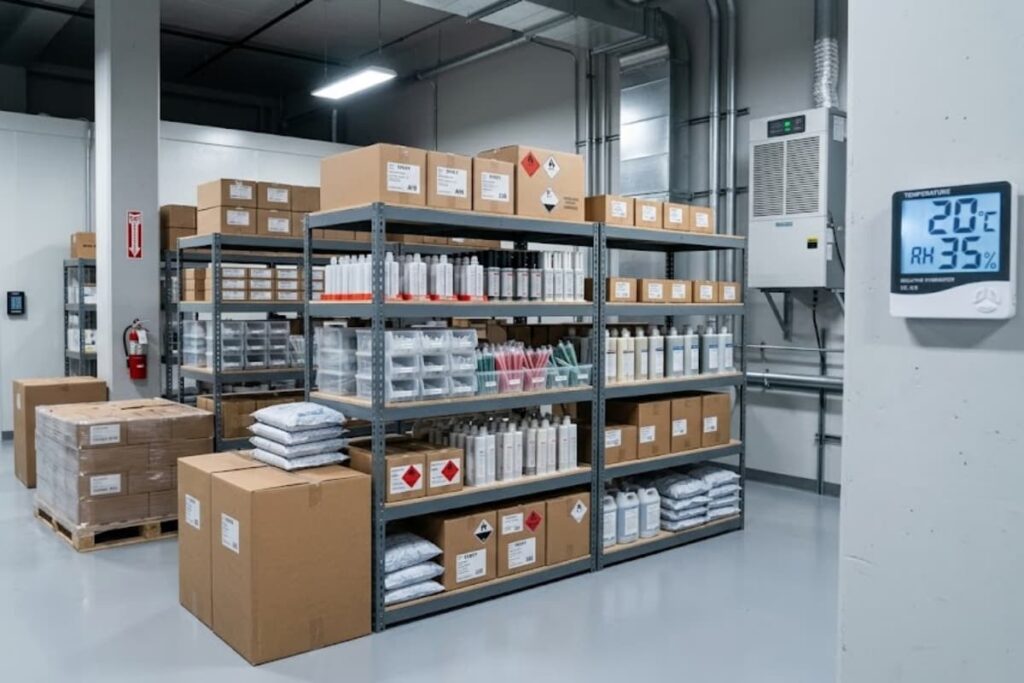
Pick the method by chemistry risk and volume, not by habit. A moisture-cure or cyanoacrylate line needs active control; a stable epoxy cartridge mostly needs a dry shelf and a sealed cap.
| Method | Best for | Relative cost | Caveat |
|---|---|---|---|
| Sealed original pack + desiccant | Low-volume cartridges | Low | Only until pack is opened |
| Humidity-controlled storeroom (<30% RH) | Mixed inventory | Med | Needs monitoring / logging |
| Desiccator cabinet | Moisture-cure / CA, small parts | Med | Capacity limited |
| Nitrogen blanket on drum / IBC | Bulk PUR / moisture-cure | Med–High | Requires gas + regulator |
| Silica gel in chamber | Reusable mixer storage | Low | Replace when saturated |
| Dry-air purge | Automated lines | Med | Compressor must be dry |
Storage for Automated Lines and Bulk
Scaling from cartridge to drum / IBC multiplies risk. Your dual-component cartridge sizing and ratio choice sets the reseal window you must respect, while cartridge filling machines and their closure discipline decide how stable filled cartridges stay in storage. The broader adhesive dispensing systems overview connects storage cost to the full line. The main failure at bulk scale is humid air ingress during draws.
| Format | Reseal discipline | Max hold after open | Key risk |
|---|---|---|---|
| 50 ml cartridge | Cap nozzle | Per TDS (days–weeks) | Tip cure |
| 400 ml cartridge | Cap, store upright | Per TDS | Piston imbalance |
| Drum (20 L) | Nitrogen / dry-air blanket | Weeks–months | Humid ingress |
| IBC (1000 L) | Sealed, monitored | Months | Large loss if breached |
Compliance & Handling Notes
Storage is also a documented safety step. A standardized procedure should keep the paperwork an audit expects, especially for solvent-laden or moisture-reactive chemistries.
| Item | Action |
|---|---|
| SDS on file | Keep adhesive + cleaner SDS accessible; train operators on PPE |
| FIFO rotation | Oldest lot first; log reseal dates |
| Label integrity | Batch, date, RH/temp if critical |
| Spill kit | Absorbent for resin / solvent near the store |
| Disposal | Cured / hardened waste to licensed disposal |
| Audit trail | Log temperature / humidity for traceability |
Need a storage spec for your 2K line?
Send the chemistry, package format, throughput, and your ambient conditions. Haijing can discuss a storage and moisture-control protocol and the drawings needed to keep mixed systems in spec between shots.
FAQ
Can you store a static mixer nozzle with resin still inside?
No. The narrow element path traps uncured 2K resin that cures or skins; once set it cannot be flushed. Discard the nozzle and cap the cartridge instead.
How long can a 2K cartridge sit after opening?
It depends on chemistry and seal. Some PUR / cartridge systems are reusable for months if the mixer is removed and the cartridge recapped per the TDS; others specify use within days. Always follow the product data sheet and label the reseal date.
Why does humidity ruin polyurethane adhesive?
Many PUR and MS-polymer systems are moisture-cure; ambient humidity initiates polymerization through the packaging or at the interface, gelling the material before use. Store them dry, sealed, and below the specified RH.
Should MMA adhesives be refrigerated?
Yes for maximum shelf life. Public data (e.g., VM100) shows MMA at 6–12 °C keeps 12 months, while 35 °C cuts life to ~20 days. Bring to room temperature before dispensing and purge a little product without the mixer.
How do I store bulk drums of 2K adhesive?
Reseal immediately after each draw, fit a dry-air or nitrogen blanket, log temperature / humidity, and apply FIFO. Humid air ingress is the main cause of premature cure in bulk.
Conclusion
A static mixer is single-use, but everything behind it — cartridge, chamber, drum — can be held if you control temperature, seal against humidity, and log the discipline. Match storage to chemistry: refrigerate MMA, keep PUR and MS polymer dry, and never let moist air reach a moisture-cure system. Build the cap-and-seal routine into your line, and requalify stored parts before they reach the bond.
Need a storage and moisture-control spec for your 2K line? Contact our engineering team for a chemistry-matched protocol, or start from the static mixer nozzle selection guide to match material and ratio to your process.