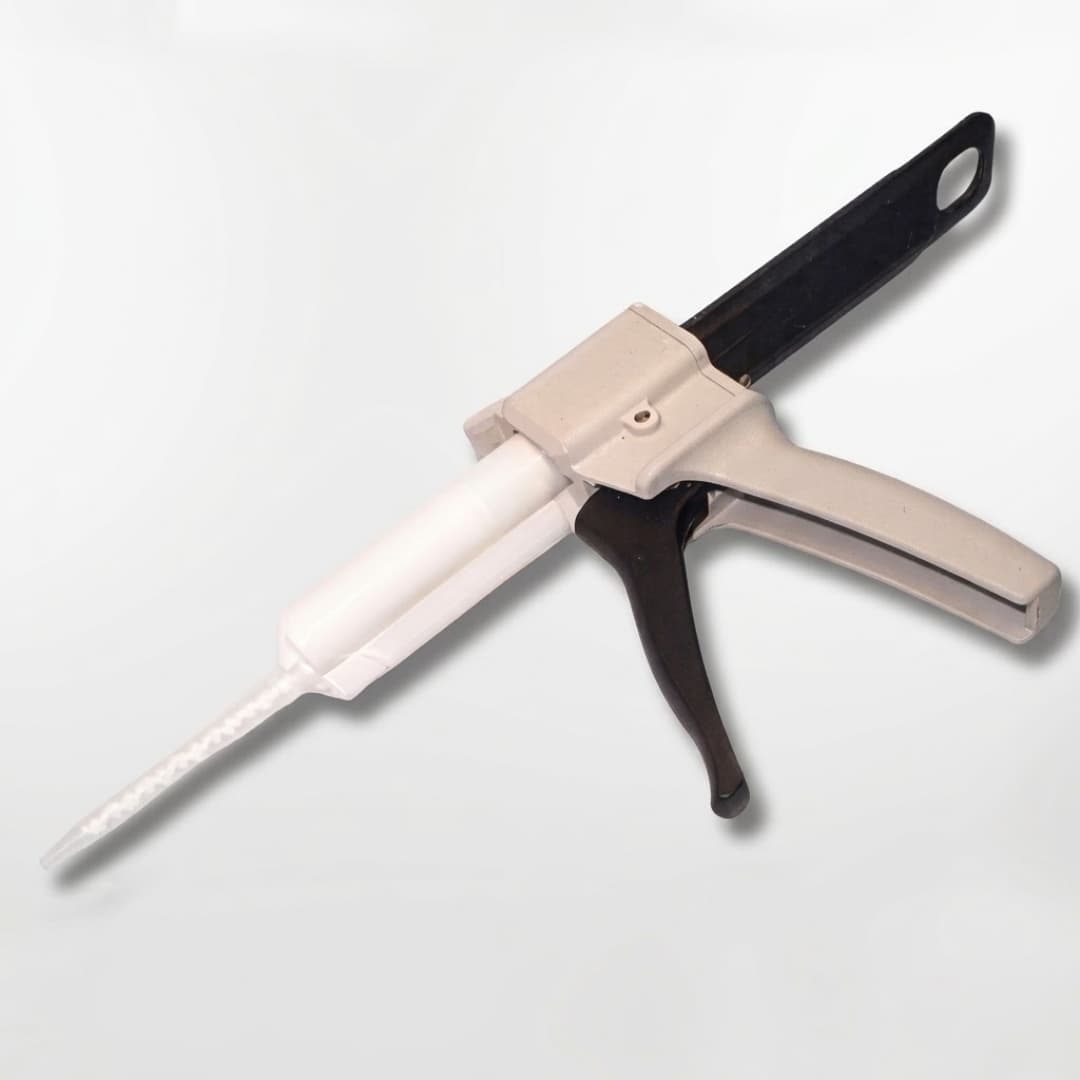
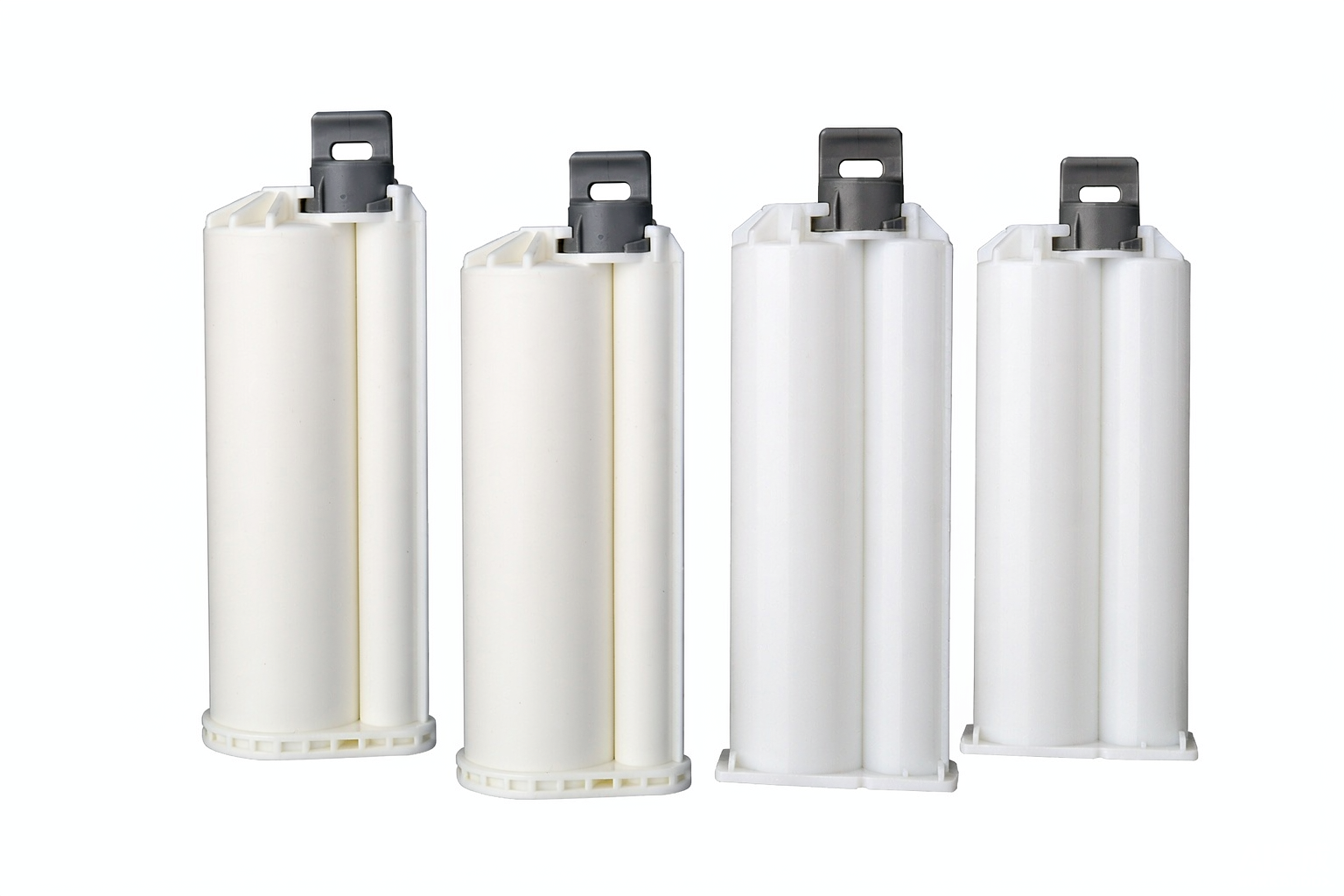
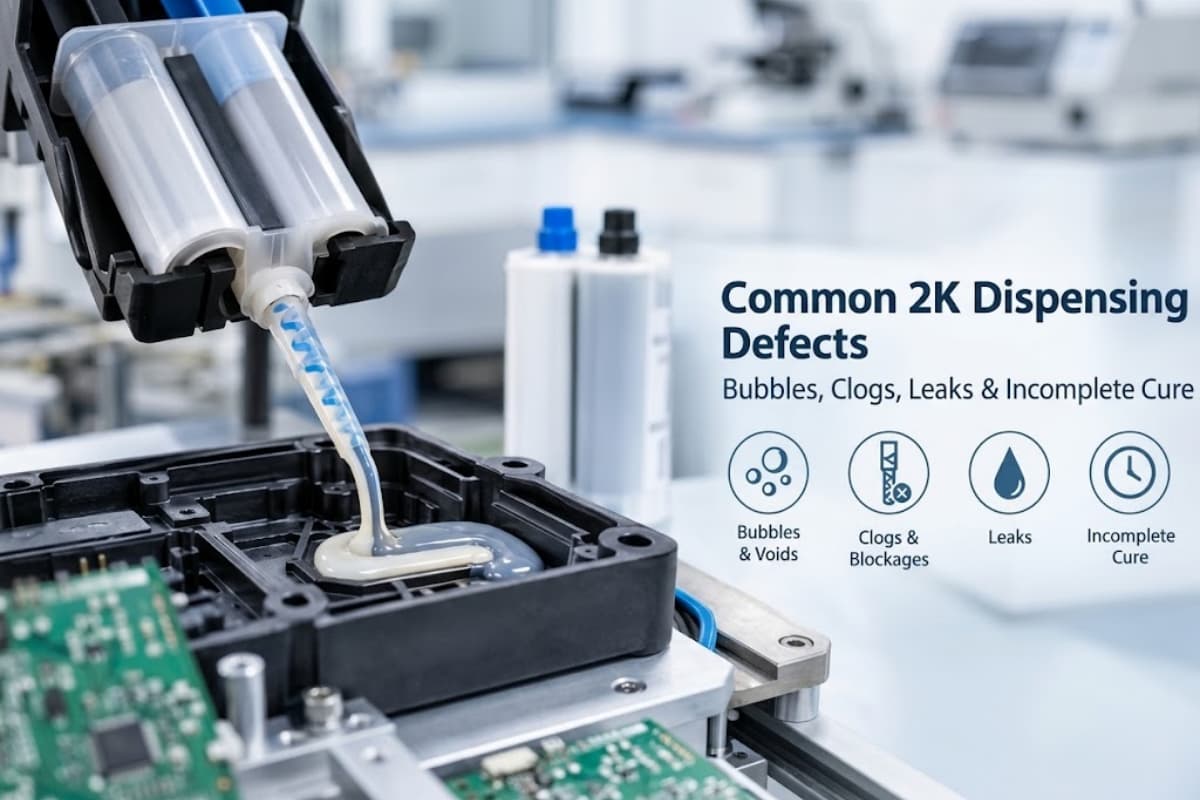
Dispensing gun selection starts with two questions, not a brand catalog: what adhesive are you pushing, and how much do you need to dispense per cycle or per shift? The bonded material sets the chemistry, viscosity, and packaging format that determine the gun’s plunger type, ratio hardware, and wetted-part compatibility. The output volume sets the cartridge size and drive type — manual, pneumatic, or cordless — that keep bead consistency and operator load within tolerance. This guide lays out a two-axis framework (material × volume) and a selection matrix so you can match a gun to your exact adhesive and duty cycle, then lists the compatibility checks to run before you order.
Start With the Bonded Material, Not the Gun Brand
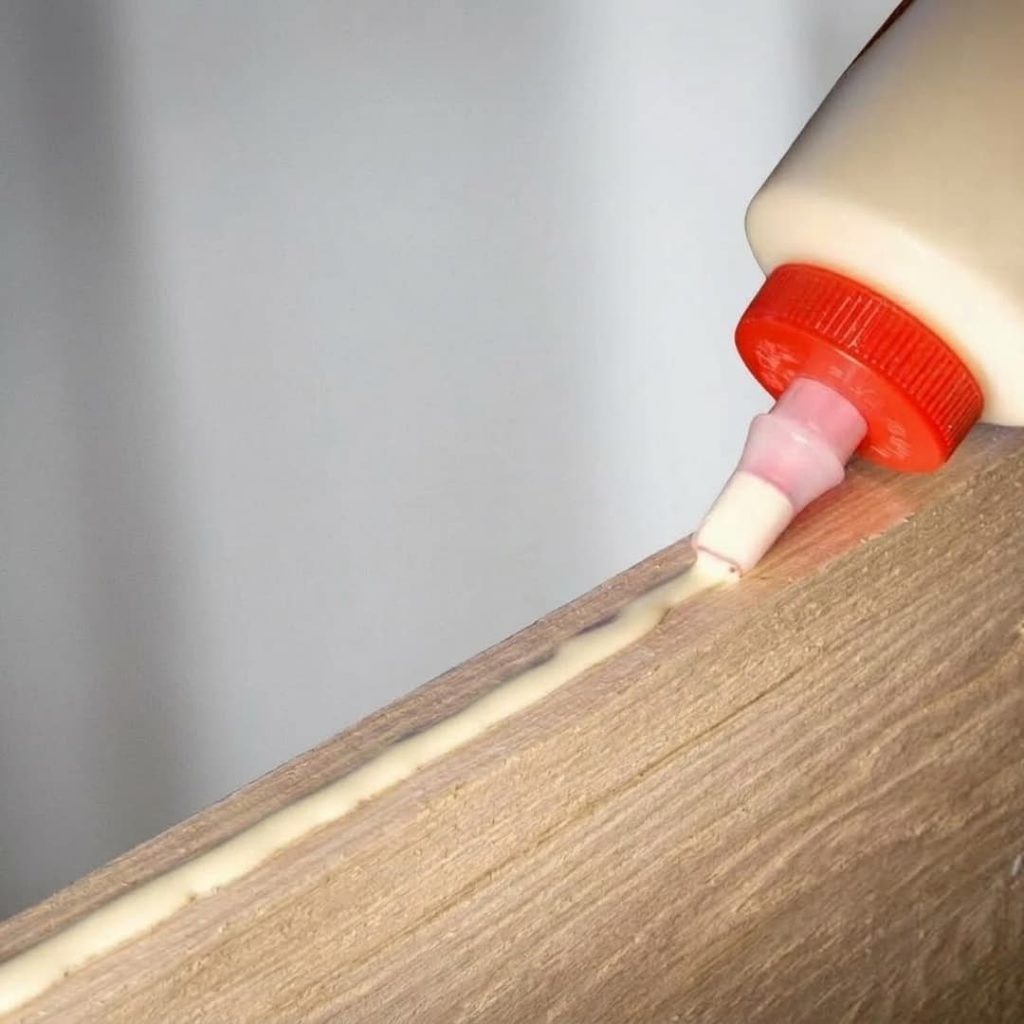
Most dispensing failures begin when a buyer picks a gun model first and the adhesive second. A dispensing gun is only the force-control component: it pushes material out of its package at the correct ratio and rate. Two inputs decide everything downstream.
- Material axis — the adhesive chemistry, viscosity, and package format (1K cartridge, 2K dual cartridge, sausage pack, or syringe) decide the plunger structure, ratio hardware, and which wetted parts can contact the chemistry without degrading.
- Volume axis — the volume you must dispense per shot and per shift decides the cartridge size and drive type that hold bead uniformity and limit operator fatigue.
Build the shortlist from those two axes, then read the gun catalog. Our dispensing gun systems are grouped the same way — by cartridge fit and drive — so the catalog maps directly onto this framework.
Map Material Chemistry to Gun Requirements
The material axis splits cleanly between single-component (one chemistry in one chamber) and two-component (resin and hardener in separate chambers that must stay at ratio).
One-Component Sealants and Adhesives (Silicone, PU, Acrylic, Mastic)
A 1K product uses a single centered piston, so the gun only needs enough thrust to overcome viscosity and outlet resistance. Viscosity, not chemistry name, drives the thrust class.
| Material | Typical viscosity band | Suggested thrust class | Common package |
|---|---|---|---|
| Acrylic / latex (low) | Low | Standard manual | 300 ml cartridge |
| Silicone (general) | Low–medium | Standard (higher band) | 300 ml cartridge |
| Polyurethane sealant | High | High-thrust | 300 / 600 ml cartridge, sausage |
| Mastic / butyl | Very high | Very-high-thrust or pneumatic | Sausage, bulk |
These thrust classes are directional. Exact thrust ratio moves with operating temperature and nozzle or mixer restriction, so confirm the figure against the thrust ratio and cartridge format guide. A thin silicone at 25 °C may dispense on a standard gun; the same tube at 5 °C can need a high-thrust frame.
Two-Component Epoxies, Acrylics and Polyurethanes
A 2K system splits drive force between two plungers that must advance at the correct displacement ratio (1:1, 2:1, 4:1, or 10:1). The gun therefore needs matched plunger pairs and a rigid frame; the static mixer does the combining, not the ratio setting.
| Chemistry | Common ratio | Dual-plunger requirement | Wetted-part note |
|---|---|---|---|
| Epoxy | 1:1, 2:1, 4:1, 10:1 | Dedicated 2K gun with matched plungers | Steel or polymer parts; verify solvent resistance |
| Polyurethane (2K) | 1:1, 2:1 | Dual plunger; fast skinning needs steady drive | Check isocyanate compatibility |
| Acrylic / MMA | 1:1, 10:1 | Dual plunger; precise ratio matters | Check monomer compatibility |
Cause and effect: when Part A is a thick paste and Part B a thin liquid, unbalanced plungers let the low-viscosity side advance faster, pushing the mix off-ratio and leaving the bond under-cured. Reinforced push-plates built for rigid cartridges hold both plungers square under that counter-pressure. Pair the gun with a compatible static mixing nozzle sized to the viscosity, and confirm the two-component cartridge ratios match the gun’s plunger set.
Sensitive and Specialty Materials
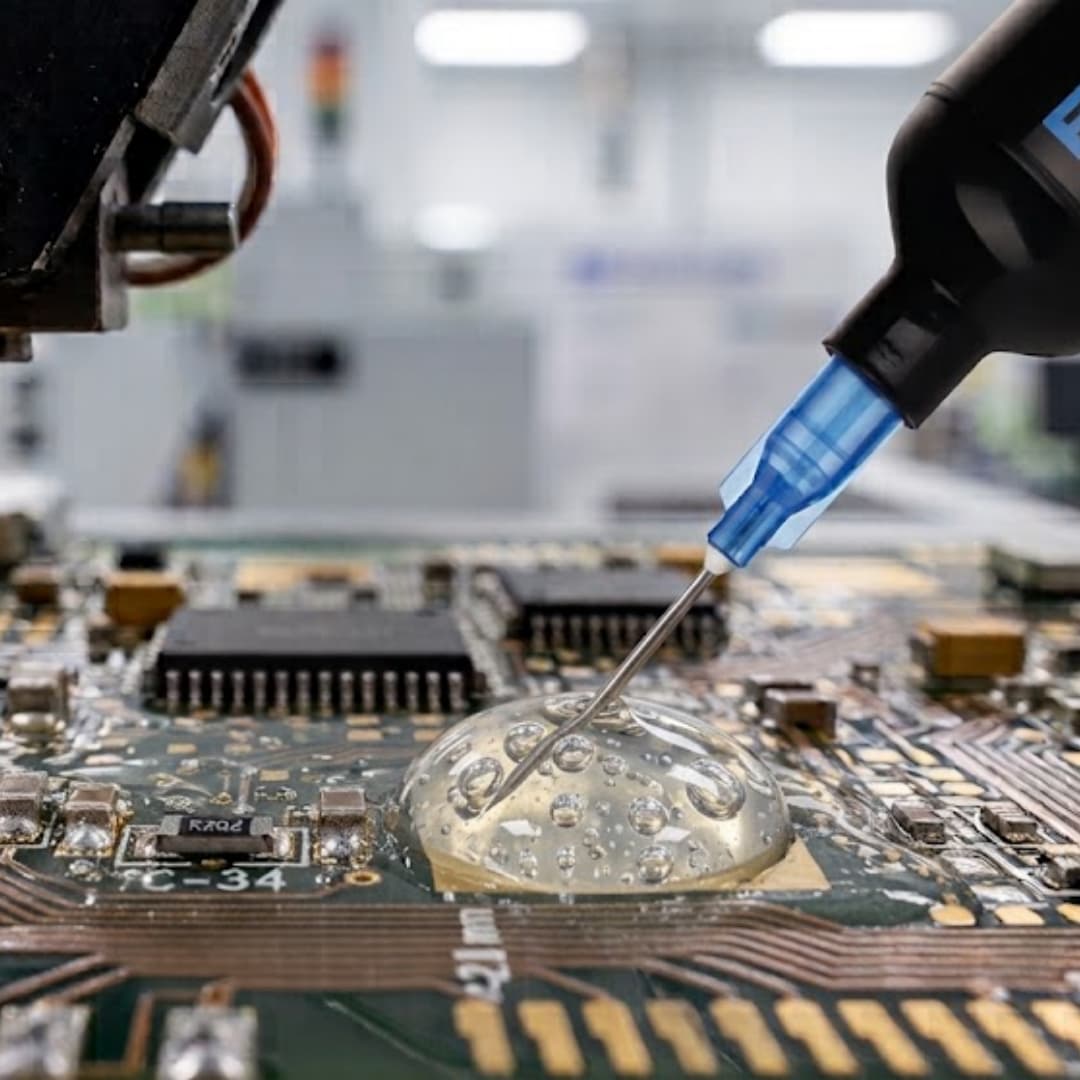
Electronics-grade and medical adhesives add a purity constraint: wetted parts and cartridge walls must not shed silicone oil, plasticizer, or particulates that weaken a micro-bond. Where the spec calls for it, specify silicone-free cartridges and high-purity polymers, and treat the gun’s contact surfaces the same way. The electronics potting dispensing guide covers the full packaging chain for those processes.
Match Output Volume to Cartridge Size and Drive
The volume axis decides whether a manual gun is enough or a pneumatic/cordless drive is required.
Small-Volume and Precision (50–200 ml)
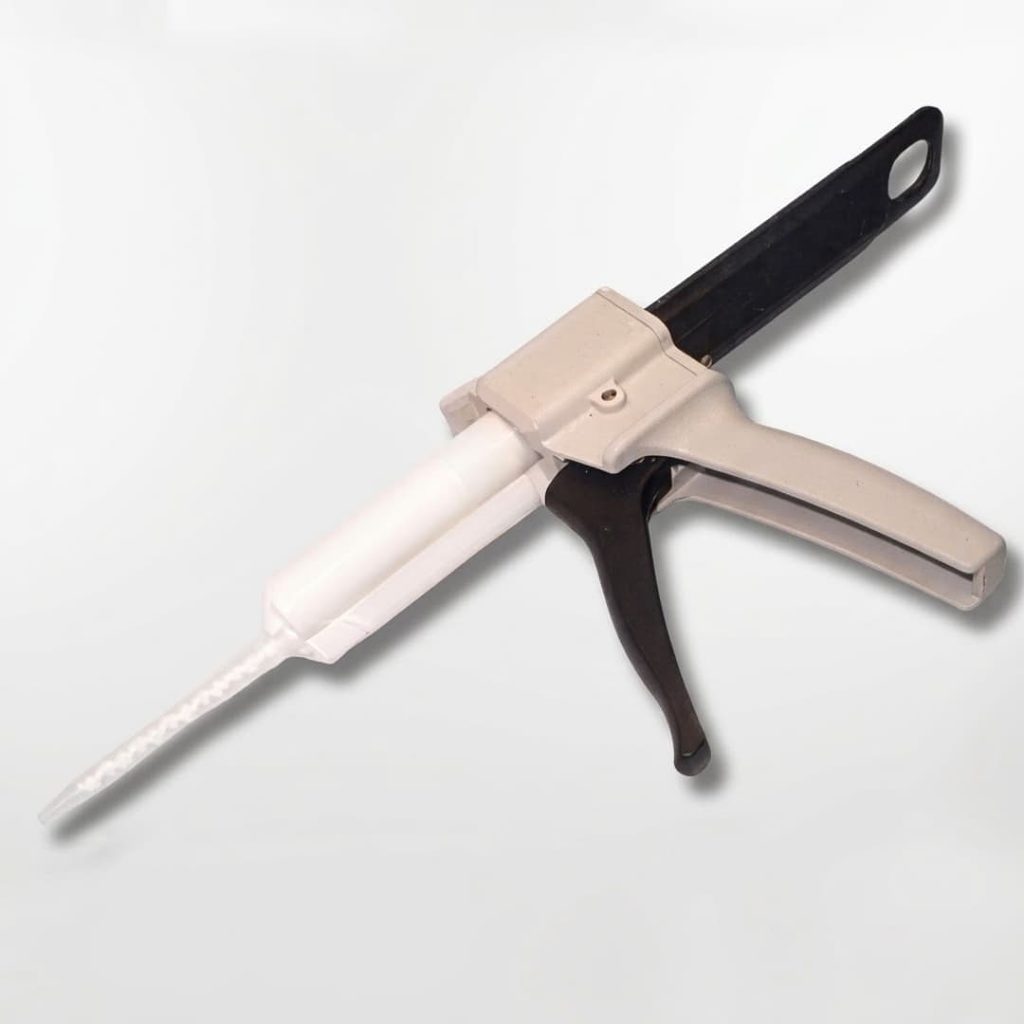
Syringe barrels and mini dual cartridges at 50–200 ml suit repair, dotting, and sampling where shot size matters more than speed. A manual gun gives tactile control and needs no air line or battery. For low duty and tight spaces, manual dispensing for low volume stays the practical choice.
Mid-Volume Bench and Field (200–490 ml Dual)
This tier covers most 2K bench assembly and field service. A high-thrust manual gun (typically the 20:1–26:1 class) handles intermittent use; a pneumatic gun removes fatigue on a busy bench.
| Volume tier | Manual high-thrust | Pneumatic | Switch to pneumatic when |
|---|---|---|---|
| 200–400 ml dual | Portable, no utilities | Steady bead, low fatigue | > several cartridges per shift or repeatability drift |
Remember the static mixer adds back-pressure: a 2K paste that flows freely open-port can need roughly double the drive force once a long mixer is attached. Size the gun for the mixed condition, not the open port.
High-Volume and Continuous (600 ml, Sausage, Bulk)
At 600 ml dual cartridges, sausage packs, or bulk pails, output per shift dominates. Pneumatic or cordless drives hold bead geometry from the first shot to the last and cut the fatigue that causes mid-shift variation. Where pneumatic for production lines fits the cell, it also standardizes the process and protects operators from repetitive strain.
The Two-Axis Selection Matrix
Read your material family across the top and your volume tier down the side; the cell gives the gun class, drive, and ratio hardware to specify.
| Material family | < 200 ml (precision) | 200–490 ml (bench / field) | 600 ml+ (continuous) |
|---|---|---|---|
| Silicone (1K) | Manual, standard cartridge | Manual high-thrust or pneumatic | Pneumatic / sausage |
| PU sealant (1K) | Manual high-thrust | Pneumatic or high-thrust manual | Pneumatic / sausage / bulk |
| Epoxy (2K) | Manual dual mini (1:1, 2:1) | Manual dual 20:1–26:1 or pneumatic | Pneumatic dual 600 ml |
| PU (2K) | Manual dual | Pneumatic dual | Pneumatic dual 600 ml |
| Acrylic / MMA (2K) | Manual dual | Manual or pneumatic dual | Pneumatic dual |
| Mastic / butyl (1K) | (uncommon at small volume) | High-thrust manual / pneumatic | Pneumatic / bulk |
Every 2K cell assumes a compatible static mixer and a cartridge whose ratio matches the gun’s plunger set. For non-standard dimensions or ratios, a matched cartridge and gun system closes the gap.
Confirm Cartridge, Ratio and Drive Compatibility Before You Order
Run this checklist against the supplier before purchase so the gun fits the line on arrival:
- Cartridge system — Sulzer C, F, coaxial, or side-by-side; must match the gun bay.
- Cartridge volume — 50 / 200 / 400 / 490 / 600 ml, or sausage / bulk.
- Mix ratio — 1:1, 2:1, 4:1, 10:1; matched plunger pair required for 2K.
- Thrust class vs viscosity at operating temperature — confirm with the thrust ratio guide.
- Wetted-part material vs chemical compatibility — solvent, isocyanate, or monomer resistance.
- Drive type vs available utility — compressed air, battery, or manual only.
- Drip control and regulator needs — anti-drip for vertical beads, air-dump for pneumatic.
Lock these against the OEM cartridge specifications so the gun, cartridge, and mixer arrive as one matched set.
Selection Mistakes That Cause Bead and Ratio Failures
These are the selection errors that show up as scrap and rework, not as obvious breakage:
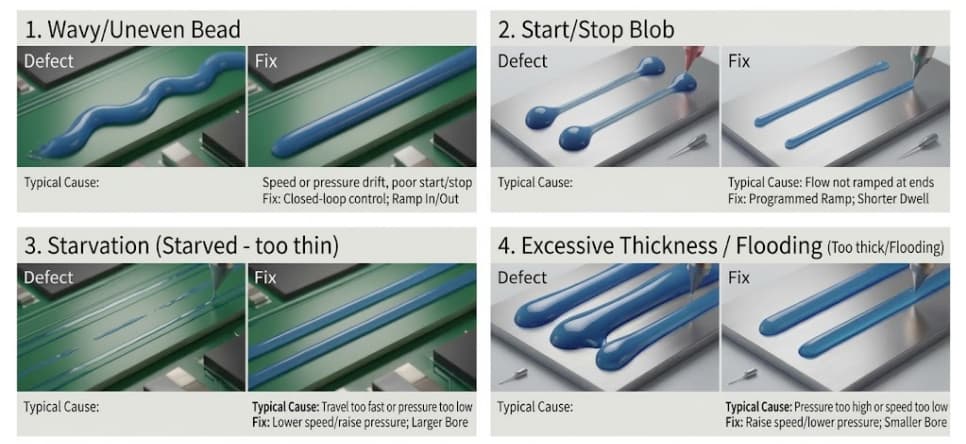
- Undersized thrust for viscosity — pulsed bead, cartridge blowback, or cracked flange. Size for the cold-temperature viscosity, not the warm one.
- Ignoring static-mixer back-pressure — the force needed roughly doubles with a long mixer; a gun sized open-port will stall mixed.
- Mismatched ratio hardware on 2K — wrong plunger pair pushes components off-ratio; the mixer cannot correct it, so cure and strength drop.
- Oversized gun for tiny volume — too much mechanical advantage makes a thin material hard to meter; you waste material and lose dot control.
- Wrong wetted-part material — chemical attack swells seals or contaminates the adhesive; confirm compatibility before the first fill.
Where viscosity and thrust are the deciding factor, the thrust ratio for high-viscosity adhesives piece gives the mechanics; the gun-to-cartridge fitment guide covers the interface details.
FAQ
What thrust ratio do I need for epoxy in a dispensing gun?
Epoxy ranges from paste to low-viscosity liquid, so the thrust class follows viscosity and temperature more than the word “epoxy.” Structural pastes typically need the high-thrust band (around 26:1 or higher), while thin epoxies run on standard guns. Confirm against the thrust ratio guide using your viscosity at operating temperature.
Which dispensing gun fits a 600 ml dual cartridge?
A 600 ml dual cartridge needs a gun with the correct bay and a 1:1 or 2:1 plunger set, plus enough thrust for the mixed material. For continuous output, a pneumatic dual-cartridge gun holds bead uniformity across a shift; a high-thrust manual gun suits intermittent field use.
Can one gun handle multiple 2K ratios (1:1, 2:1, 4:1, 10:1)?
Yes, if the gun uses interchangeable push-discs or plunger pairs that reconfigure the displacement ratio. Confirm the conversion hardware covers every ratio in your lineup before purchase, and keep the matched static mixer for each ratio.
Manual or pneumatic for thick polyurethane sealant?
Thick PU sealant needs high thrust; a high-thrust manual gun works for low duty, but a pneumatic gun removes the fatigue and holds a steady bead when you dispense many cartridges per shift or work a production line.
How do I confirm cartridge size compatibility with a gun?
Match the cartridge system (C / F / coaxial / side-by-side), the volume (50–600 ml or sausage), and — for 2K — the mix ratio to the gun’s bay and plunger set. Verify all three against the supplier’s fitment list before ordering.
Does silicone-free requirement change gun selection?
It changes the wetted parts and cartridge more than the gun drive: specify silicone-free cartridges and check that the gun’s contact surfaces do not introduce silicone oil or plasticizer. The dispensing force and drive choice follow the same material and volume axes.
Send Your Material and Volume, Get a Matched System
If you are matching a gun to a specific adhesive right now, send us your material chemistry, viscosity at operating temperature, cartridge size, and target output per shift. We return a matched dispensing gun, compatible cartridge, and static mixer — with OEM/ODM options where standard parts do not fit — so your first shipment dispenses cleanly without a rework loop. Explore our dispensing gun systems to see the full range.