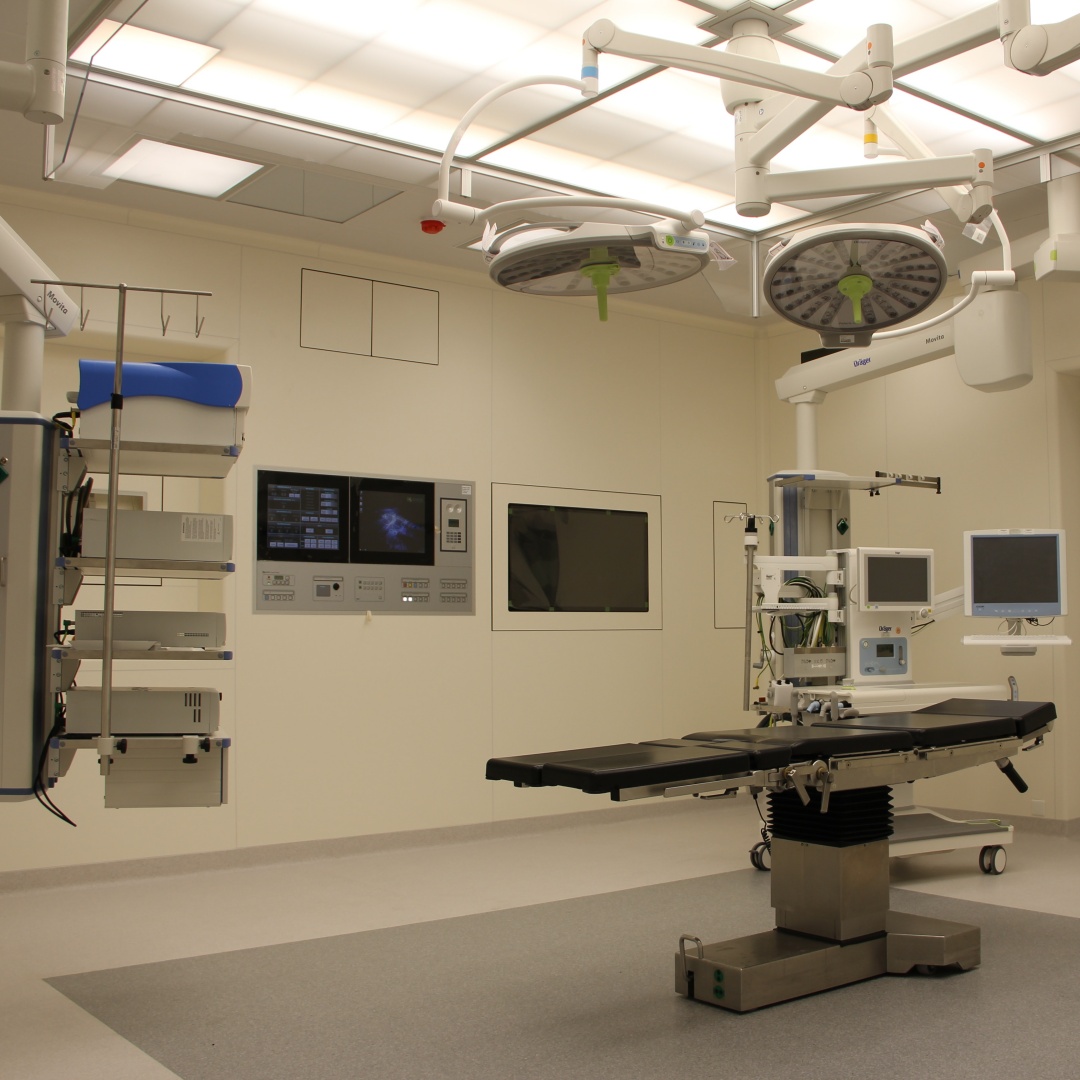
The right electronics potting dispensing system is the one that delivers a void-free, contamination-free deposit at the volume and accuracy your process requires. The decision comes down to four factors: the material format (one-part or two-part), its viscosity and filler load, the deposit size and tolerance, and your production throughput. This guide walks through manual cartridge systems, automated dispensing workstations, and the cartridges, static mixers, and guns that connect them, so you can match a configuration to your application instead of guessing.
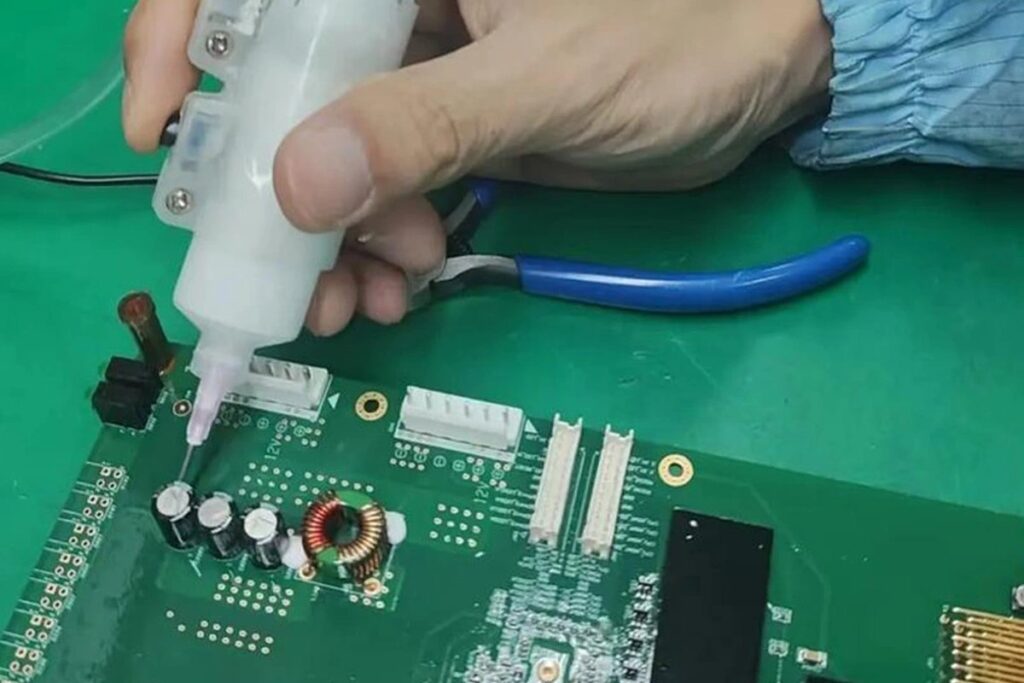
What Electronics Potting and Encapsulation Dispensing Actually Requires
Potting, encapsulation, conformal coating, and underfill all protect sensitive components, but they place different demands on the dispensing hardware.
- Potting fills a cavity around a component with a solid or gel-like compound to shield it from moisture, vibration, and thermal shock.
- Encapsulation surrounds the component completely, often for harsh-environment or high-reliability sealing.
- Conformal coating applies a thin, uniform layer across a PCB for environmental protection without adding bulk.
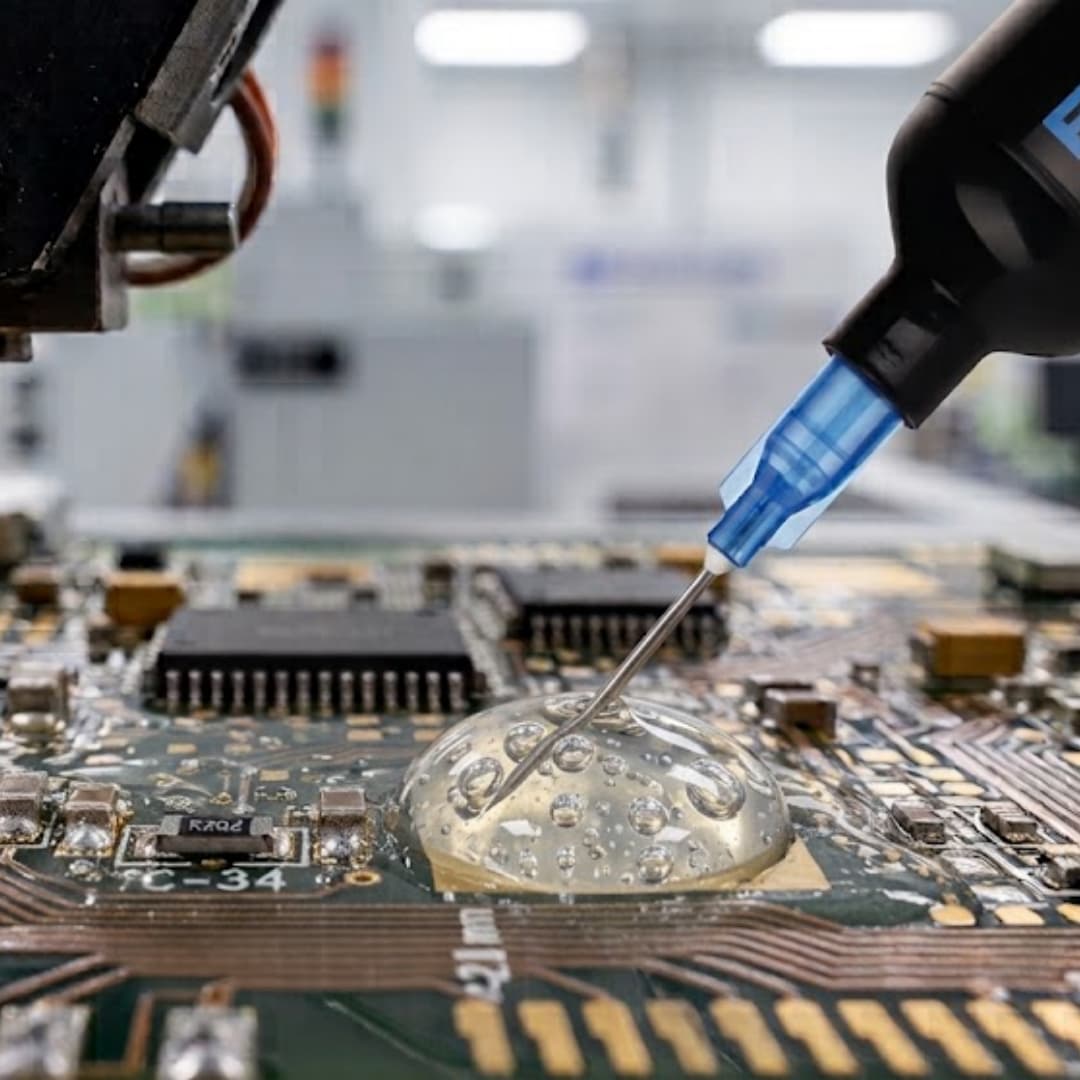
- Underfill is a microscopic deposit beneath a chip or BGA that relieves thermal and mechanical stress at the joint.
Air voids or contamination inside these materials cause thermal failure, dielectric breakdown, or cracked bonds. That is why electronics-grade dispensing cares about two things most: a clean material path (no trapped air, no silicone oil migration) and repeatable volume control at microscopic scale. The packaging and dispensing hardware, not just the chemistry, determines whether those conditions are met.
Manual vs Automated: Which Dispensing Method Fits Your Volume
The first fork in the decision is whether a handheld cartridge system is enough or whether the process needs a programmable workstation.
| Factor | Manual cartridge + gun | Automated dispensing workstation |
|---|---|---|
| Typical throughput | Low to medium, operator-paced | High, continuous, 24/7 capable |
| Deposit consistency | Depends on operator; acceptable for larger beads | Micron-level repeatability, programmable paths |
| Best for | Prototyping, rework, low-volume or variable parts | Mass production, identical dots/paths, SMT lines |
| Capital cost | Low | Higher, recovered through labor and scrap savings |
| Integration | Portable, no line change | Fixed cell; can add vision and fixtures |
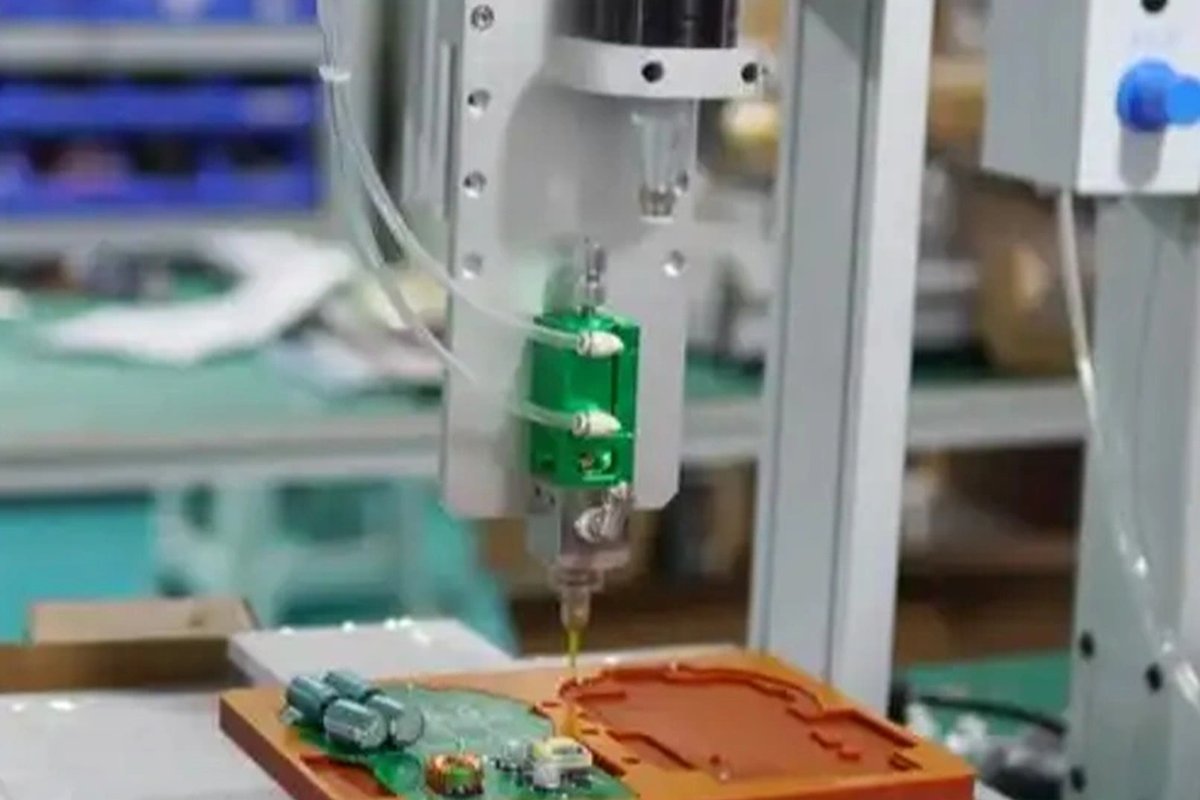
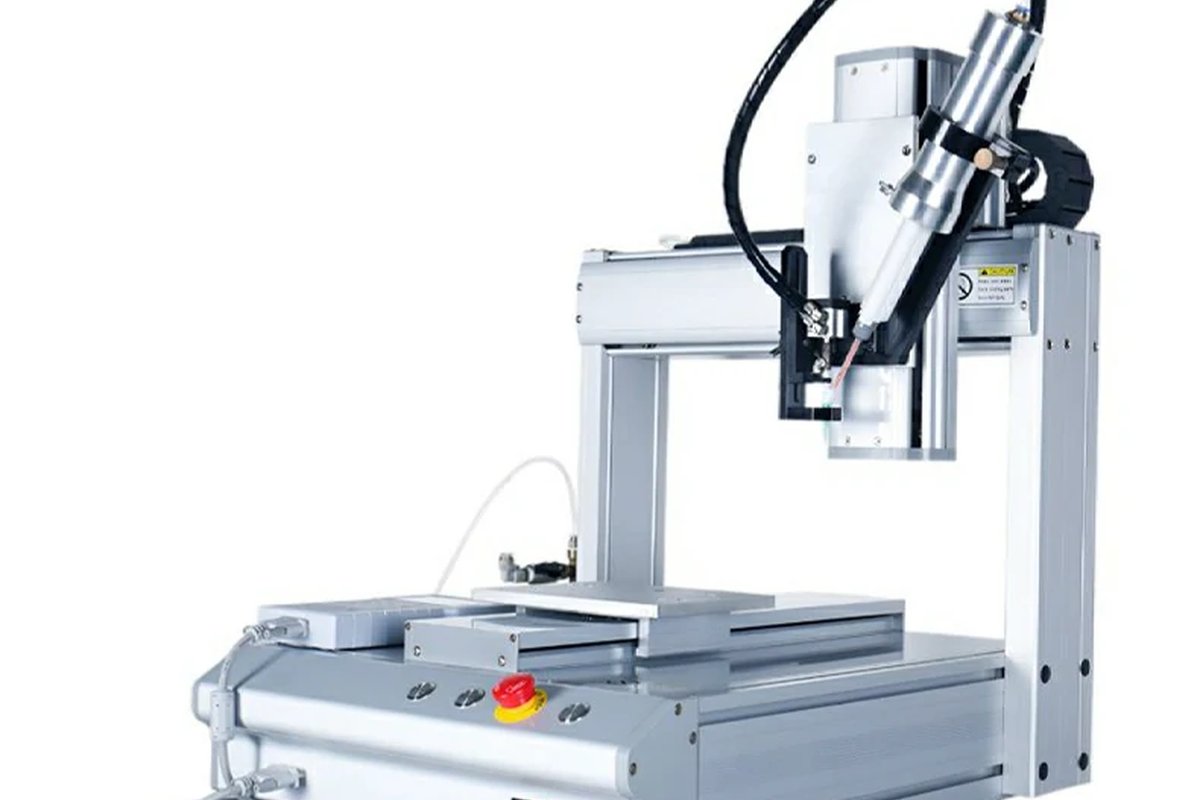
A manual system pays off when batch sizes are small, parts vary, or the deposit tolerance is forgiving. An automated coordinate glue applicator becomes the lower-cost option once volume rises, because it removes operator variation, reduces material waste, and frees skilled labor. For example, a servo-driven platform such as the HJ-XYZ-600 uses a PLC and high-rigidity frame to hold micron-level accuracy across complex paths, while a peristaltic unit like the HJ-TP50 handles precision micro-dripping of instant adhesives without compressed air.
One-Part vs Two-Part Materials: Packaging and Mixing
Material format decides the entire cartridge and mixer architecture.
- One-part materials (UV-cure coatings, some silicones, greases) ship pre-mixed in a single-component cartridge. They need no mixing, only controlled extrusion through a tip or valve.
- Two-part materials (epoxies, polyurethanes, some silicones) arrive as resin and hardener that must be metered at a fixed ratio. They require a dual-component cartridge plus a static mixer to combine them at the point of application.
For two-part electronics compounds, the mix ratio is not optional. Common ratios are 1:1, 2:1, 4:1, and 10:1, and the cartridge, gun, and mixer must all be matched to that ratio so the cure and bond strength stay correct. A 10:1 ratio, for instance, is typical of high-flow thermal interface materials used in EV battery packs, where a high-ratio dual cartridge keeps the two components in the right proportion through the whole dispense.
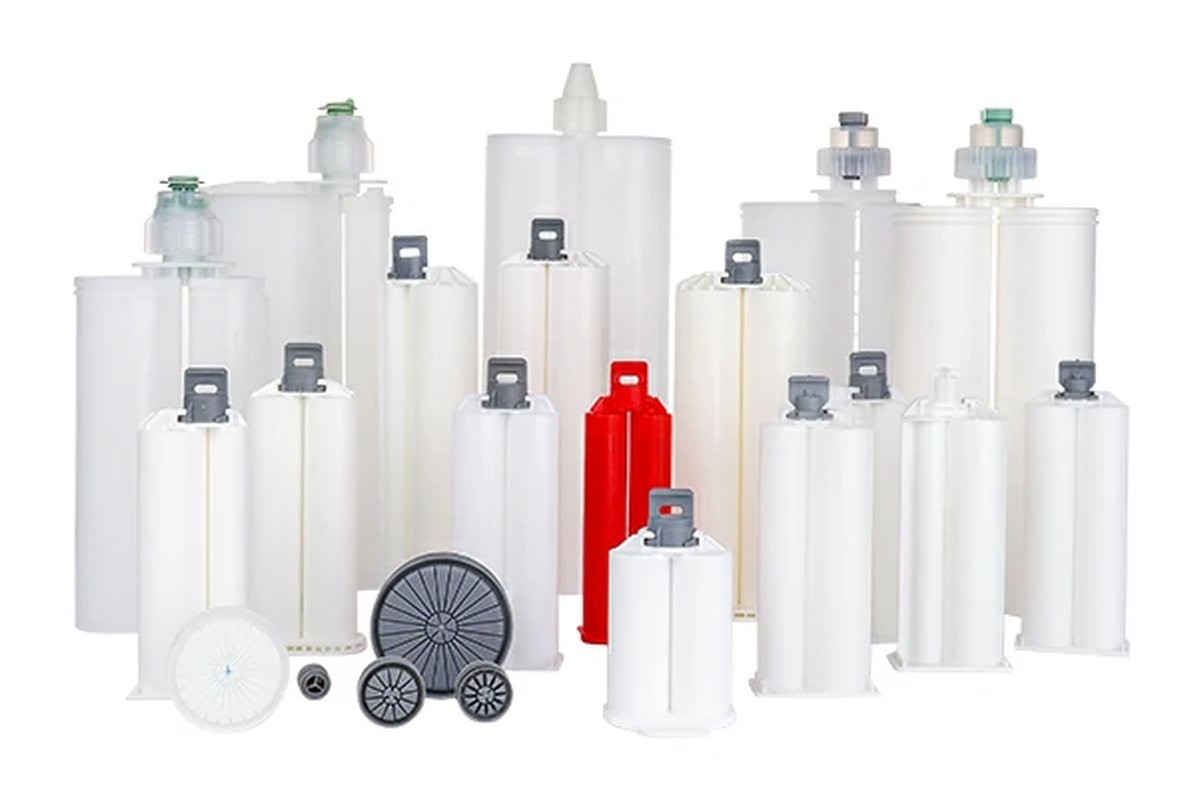
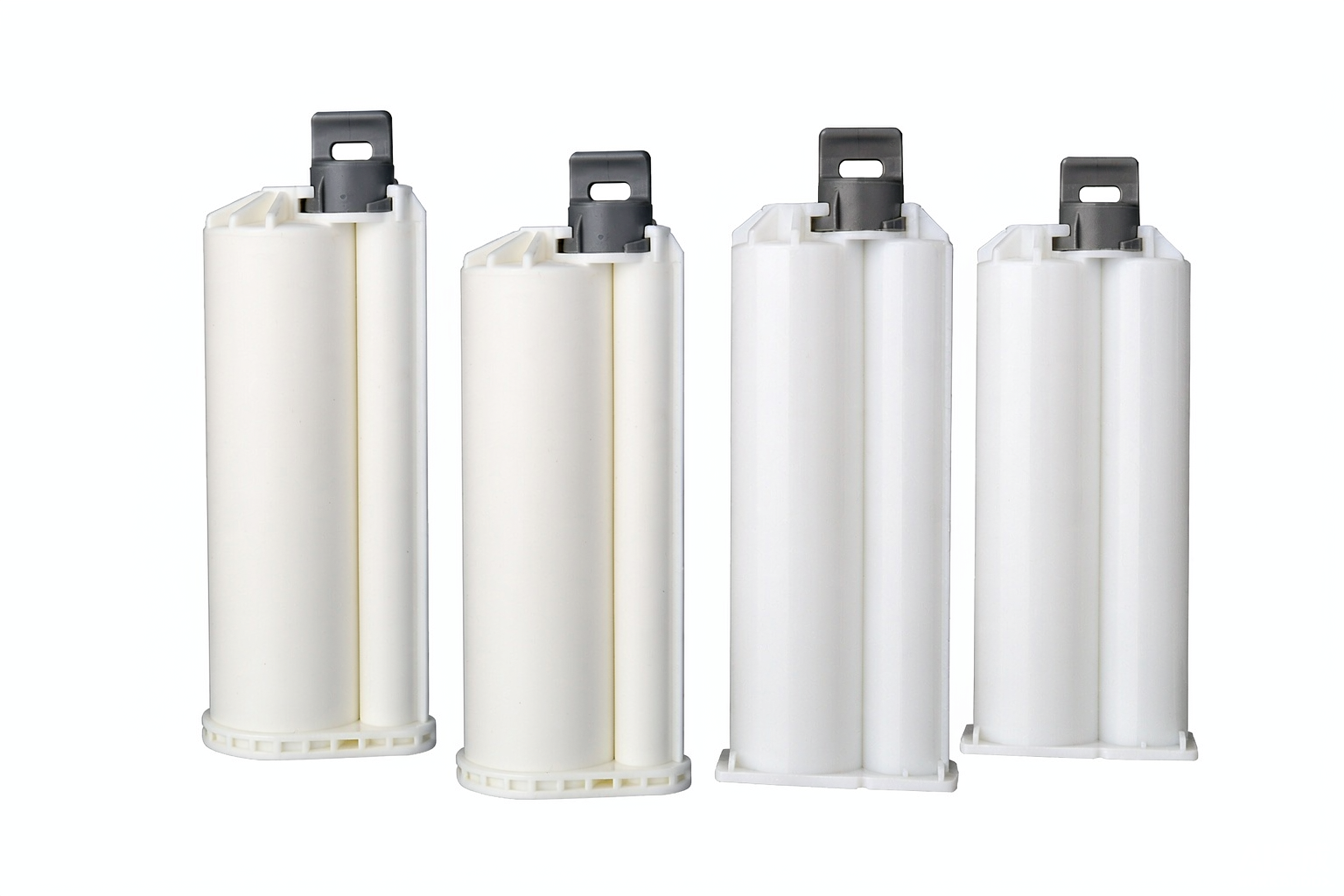
Purity matters for electronics. Silicone-free cartridges in small volumes such as 3 cc, 5 cc, and 10 cc prevent silicone oil from contaminating sensitive formulations, and consistent internal diameters with frictionless pistons keep pressure stable on automated dispensers. Void-free molding of the cartridge body also stops trapped air from entering the adhesive before it even reaches the mixer.
Core Components of an Electronics Dispensing System
A complete system is built from a few interchangeable parts. Choosing each one against your material keeps the whole line reliable.
| Component | What to check | Notes for electronics |
|---|---|---|
| Cartridge | Single or dual, volume, ratio, material (PP / PBT / Nylon) | Silicone-free, tight dimensional tolerance for automation |
| Static mixer | Connection type, element count, diameter, pressure rating | A-System for 50 ml dual cartridges; C-System bayonet for high pressure; F-System twist-lock for quick change; dynamic mixers for high viscosity ratios |
| Dispensing gun | Manual vs pneumatic, thrust ratio | High thrust ratios (around 26:1) move high-viscosity materials; dual-cartridge guns keep both parts synchronized |
| Dispense tip / nozzle | Bore size, Luer lock, taper | Precision stainless steel tips for repeatable micro-dots; tapered tips for viscous paste without clogging |
| Automated platform | Working area, drive, vision | PLC + servo for micron repeatability; customizable fixtures and valves |
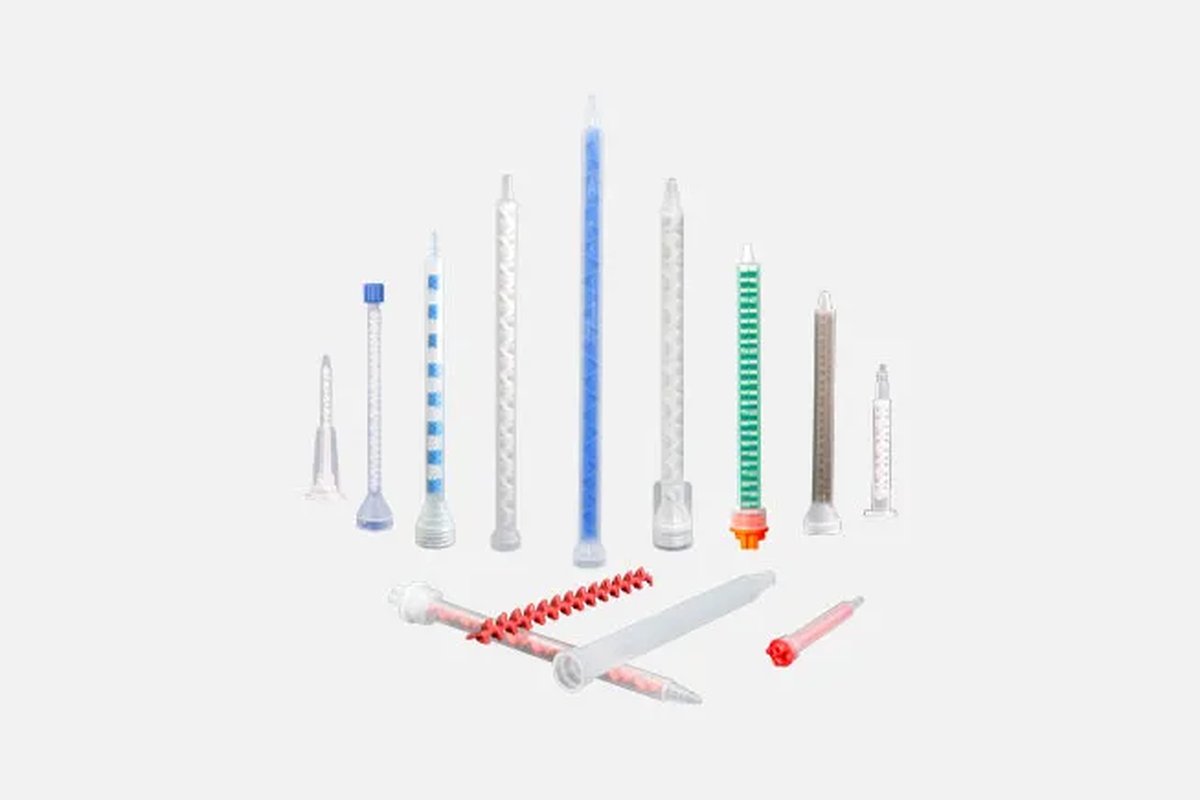
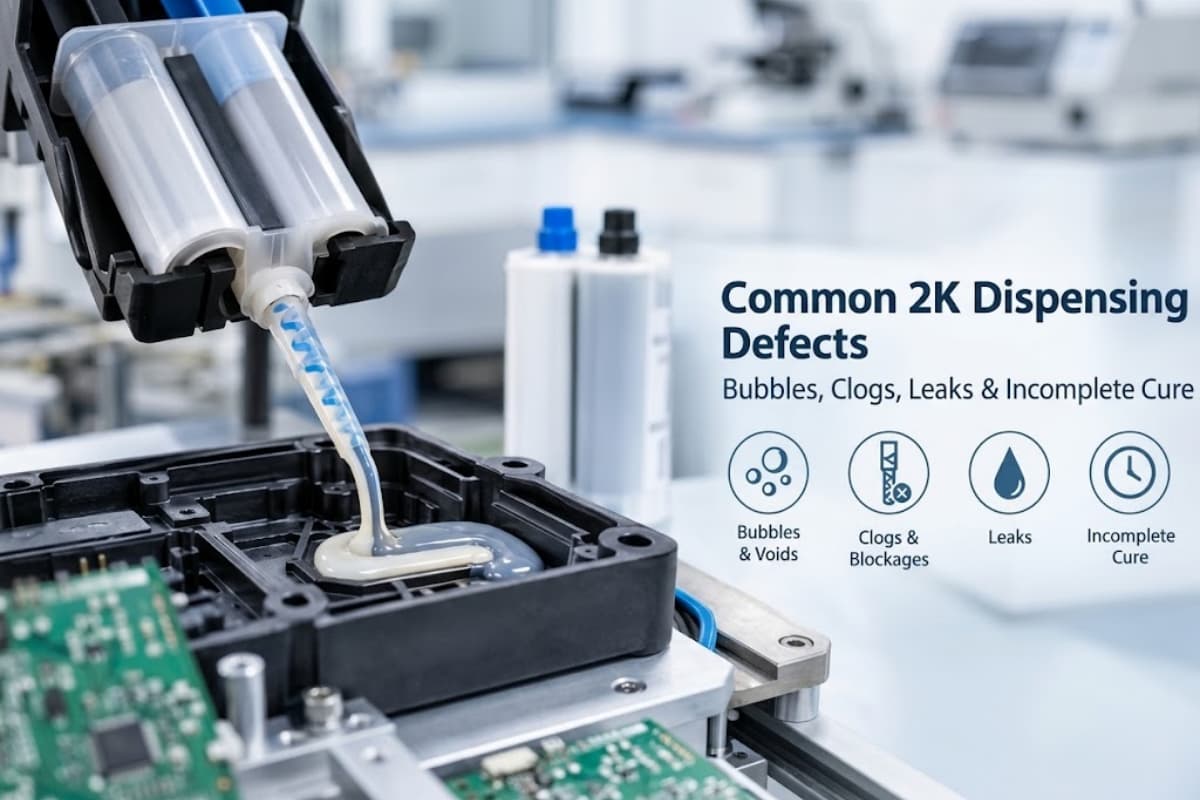
A dispensing gun or pneumatic feed pushes the material; the static mixer does the combining. The mixer elements split and recombine the flow so a two-part epoxy or polyurethane leaves the nozzle homogeneous and bubble-free. For materials with very different viscosities, a dynamic mixer with a rotating element gives a more uniform result than a passive static design.
Matching the System to the Process
The same hardware serves very different electronics processes. Use this matrix to narrow the configuration.
| Process | Typical material | Suitable configuration |
|---|---|---|
| Underfill & encapsulation (semiconductor) | Low-viscosity epoxy, filler-loaded compounds | Silicone-free small cartridges (3/5/10 cc) + precision Luer-lock tip; void-free molding |
| Conformal coating & potting (PCB) | One-part UV, two-part silicone | Cartridge + tip/valve; two-part needs matched static mixer |
| Frame bonding, camera module sealing | Structural adhesives, UV cure | Programmable workstation with micron path control |
| SMT red glue dispensing | Viscous paste | Tapered tip + consistent-ID cartridge on high-speed line |
| Automotive sensor potting, battery TIM | Two-part PU / silicone, 10:1 TIM | High-ratio dual cartridge + high-flow static mixer + automated cell |
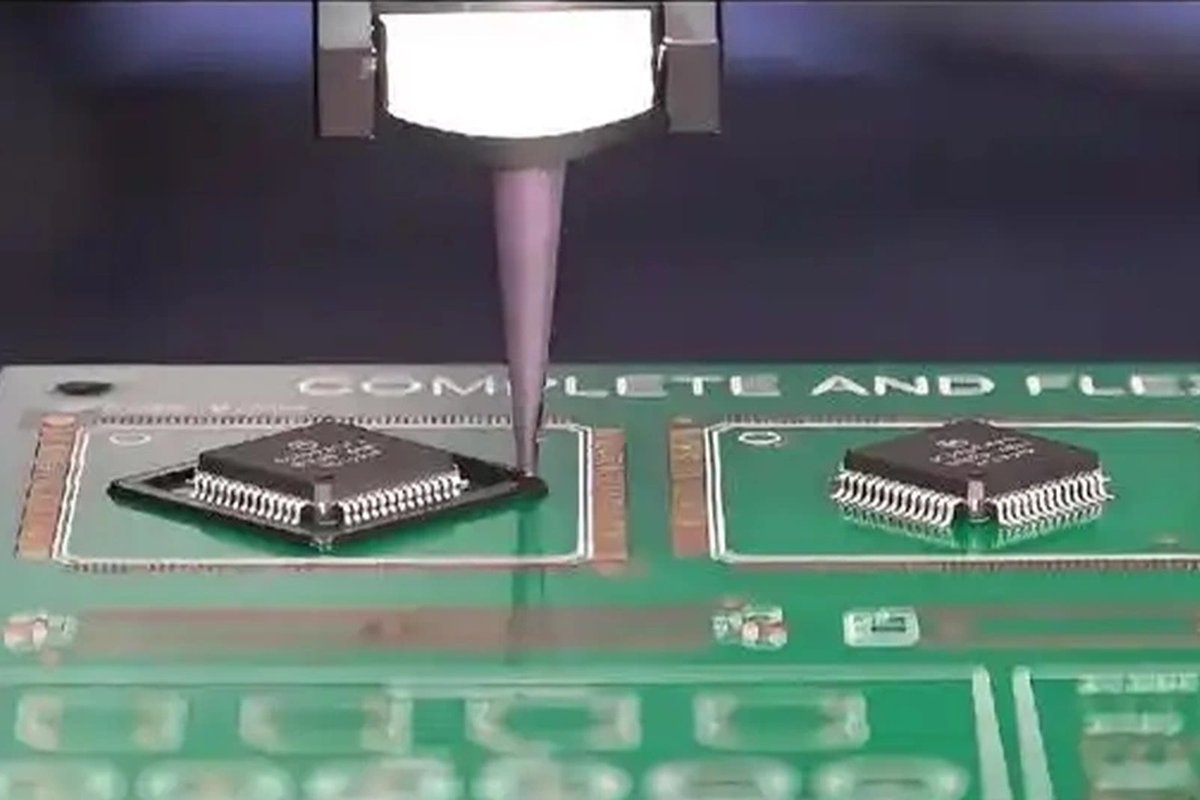
An electronics-focused packaging line is built around purity and micro-accuracy, while an automotive dispensing setup adds high-pressure and high-throughput demands. The component choices shift with those requirements rather than with the adhesive brand.
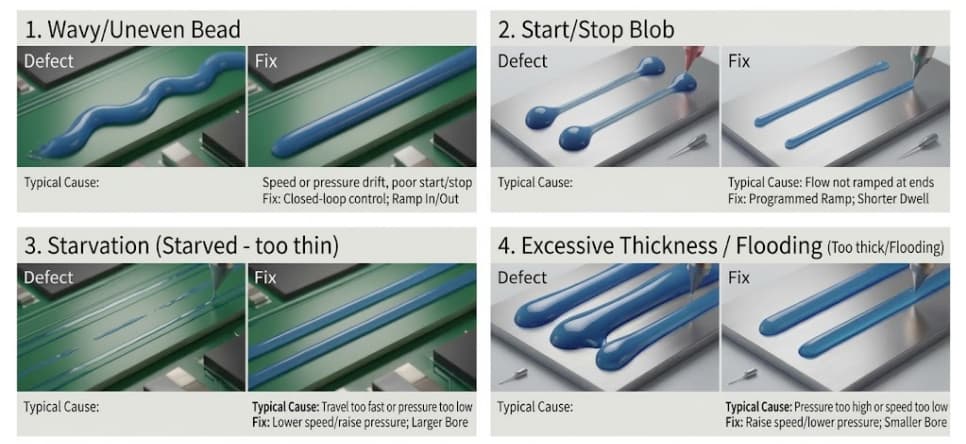
Common Quality Risks and How to Avoid Them
- Air bubbles and voids. Caused by trapped air in filling or poor mixing. Use vacuum or low-pressure filling and a mixer sized to the viscosity; a centrifugal defoaming step after filling further reduces voids in high-viscosity compounds.
- Contamination. Silicone oil or particulates weaken bonds. Specify silicone-free cartridges and high-purity virgin polymers (PP, POM, PBT) for electronics grades.
- Ratio error. Wrong mix ratio changes cure and strength. Match cartridge, gun, and mixer to the exact ratio (1:1, 2:1, 4:1, 10:1) and verify with the supplier.
- Dimensional inconsistency. Off-tolerance cartridges jam automated dispensers. Require 100% dimensional inspection or tight-tolerance molding so every part is automation-ready.
Most of these risks are designed out at the packaging stage, which is why the cartridge and mixer choice matters as much as the adhesive formulation.
What to Confirm Before Ordering
Before requesting a quote, lock down these details so the supplier can match the system:
- Material format: one-part or two-part, and the exact mix ratio if two-part.
- Viscosity range and whether the compound contains fillers (affects mixer type and gun thrust).
- Deposit volume, tolerance, and whether deposits are identical or variable.
- Throughput target: pieces per hour or per shift.
- Cartridge size and any regulatory needs (silicone-free, ISO 9001, RoHS/REACH as applicable).
- Whether standard parts fit or a custom OEM/ODM configuration (mixer geometry, cartridge color/print, private label, integrated vision) is required.
For production filling itself, a cartridge filling machine such as a two-component unit handling 50–490 ml at 1:1 to 10:1 ratios, or a centrifugal defoaming machine for bubble removal, prepares the cartridges consistently before they reach the line.
Key Takeaways
- Choose the method by volume and tolerance: manual cartridge systems for low/variable volume, automated workstations for high repeatability.
- Two-part electronics materials require a matched dual cartridge, static mixer, and gun at the correct ratio (1:1, 2:1, 4:1, or 10:1).
- Electronics grades need silicone-free, high-purity, dimensionally consistent cartridges to avoid contamination and automation jams.
- Most quality failures (bubbles, ratio error, contamination) are prevented at the packaging and filling stage, not after curing.
- Confirm material properties, throughput, and compliance before ordering; use custom OEM support when standard parts do not fit.
Frequently Asked Questions
What is the difference between potting and encapsulation in electronics?
Potting fills a cavity around a component for protection, while encapsulation surrounds the component completely. Both use similar dispensing hardware; encapsulation usually demands a fuller, void-free fill.
Do two-part electronics adhesives always need a static mixer?
Yes, when a two-part resin and hardener are packaged separately in a dual cartridge, a static mixer combines them at the correct ratio at the point of dispense. Skipping it leads to incomplete mixing and weak or uncured bonds.
When should I move from manual dispensing to an automated workstation?
Move to automation when deposit tolerance is tight, volume is high and repetitive, or labor and scrap costs outweigh the higher capital cost. A servo-driven coordinate applicator holds micron-level repeatability that manual guns cannot.
Why are silicone-free cartridges specified for electronics?
Silicone oil can migrate and contaminate sensitive formulations, causing cure or reliability problems. Silicone-free cartridges in small volumes protect the purity of underfill and encapsulation materials.
Which mix ratio is common for EV battery thermal interface materials?
A 10:1 ratio is common for high-flow two-part thermal interface materials in EV battery packs, and it requires a high-ratio dual cartridge and a high-flow static mixer matched to that proportion.
Contact Us
Selecting an electronics potting dispensing system is a matching exercise: material format sets the cartridge and mixer, viscosity and deposit tolerance set the gun or workstation, and production volume sets the level of automation. Start from the material and the process, confirm the ratio and purity requirements, then choose components that keep the material path clean and repeatable. If your application uses non-standard ratios, sizes, or compliance needs, discuss the specification with the engineering team before ordering.
Ready to specify a system? Share your material format, mix ratio, viscosity, deposit tolerance, and target throughput with Haijing’s engineering team, and they will propose a cartridge, mixer, gun, and automation configuration matched to your process. For production filling, ask about two-component filling machines and centrifugal defoaming to prepare consistent, bubble-free cartridges.