
Adhesive Dispensing Gun Guide: Cartridge Format, Ratio, Thrust, and Drive
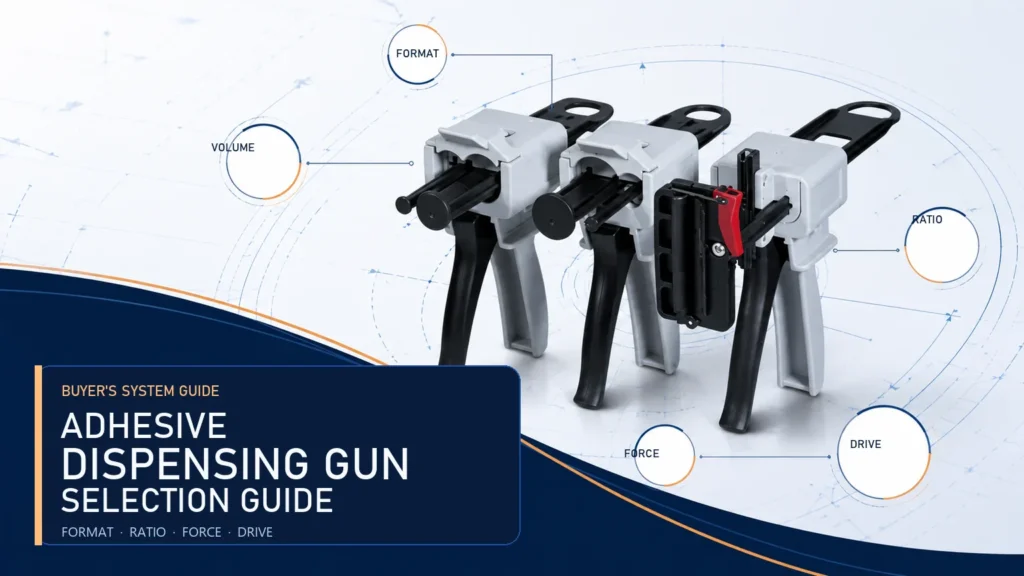
An adhesive dispensing gun should never be the first item selected in a two-component dispensing stack. Start with the cartridge system, volume, and volumetric ratio. Only then should you choose the drive and prove that the available force can move the actual adhesive through the actual mixer. Key Takeaways Package first. Cartridge system, volume, ratio, […]
Automated Adhesive Dispensing Systems vs Robots: Which Architecture Fits?
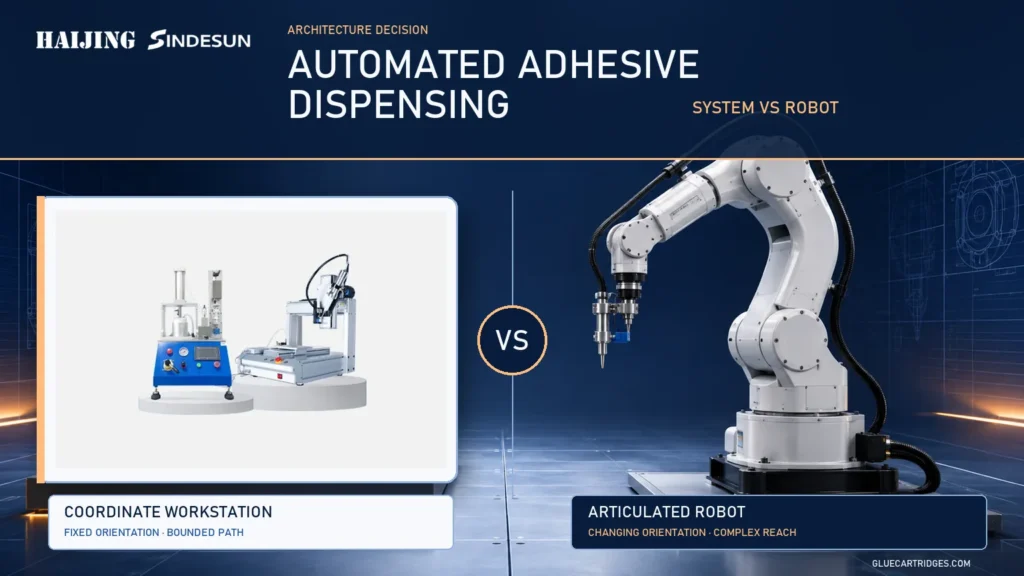
An automated adhesive dispensing system does not need an articulated robot to be production-ready. If the part sits in a repeatable fixture and the outlet can reach every point with straight X, Y, and Z moves, a dedicated coordinate dispenser is usually the cleaner choice. A SCARA can cover the middle ground when jointed horizontal […]
Adhesive Dispensing Systems: Components, Methods, and Selection Guide
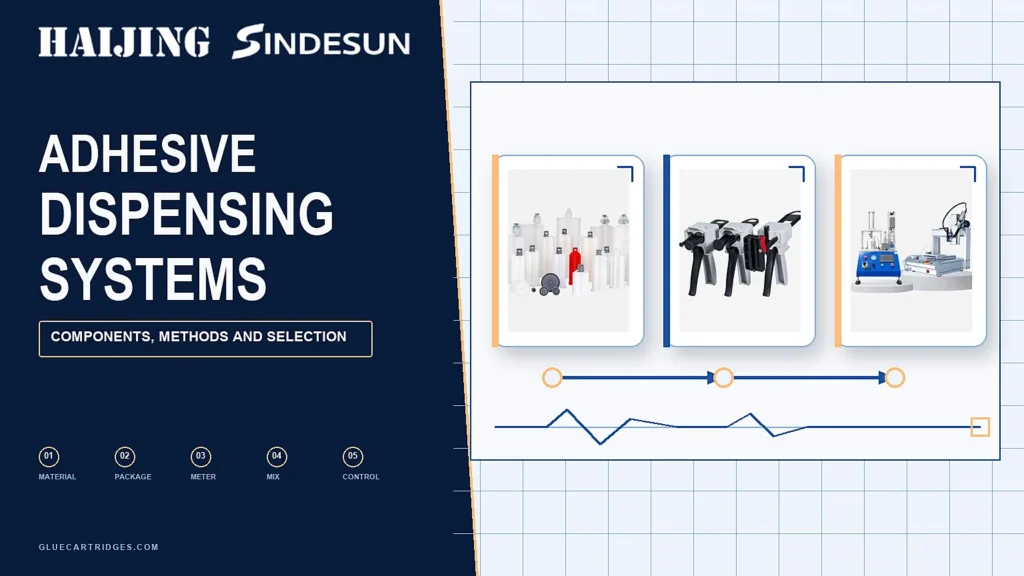
The most expensive mistake in adhesive dispensing systems often happens before anyone compares machines. A team chooses an applicator, then tries to force the material package, mixer, controls, and inspection plan around it. The hardware may run, yet the deposit can still miss its ratio, shape, location, or cure requirement. In short: define the accepted […]
Epoxy Mixing Nozzle Buying Guide: Compatibility, Waste, Samples, and Bulk Orders
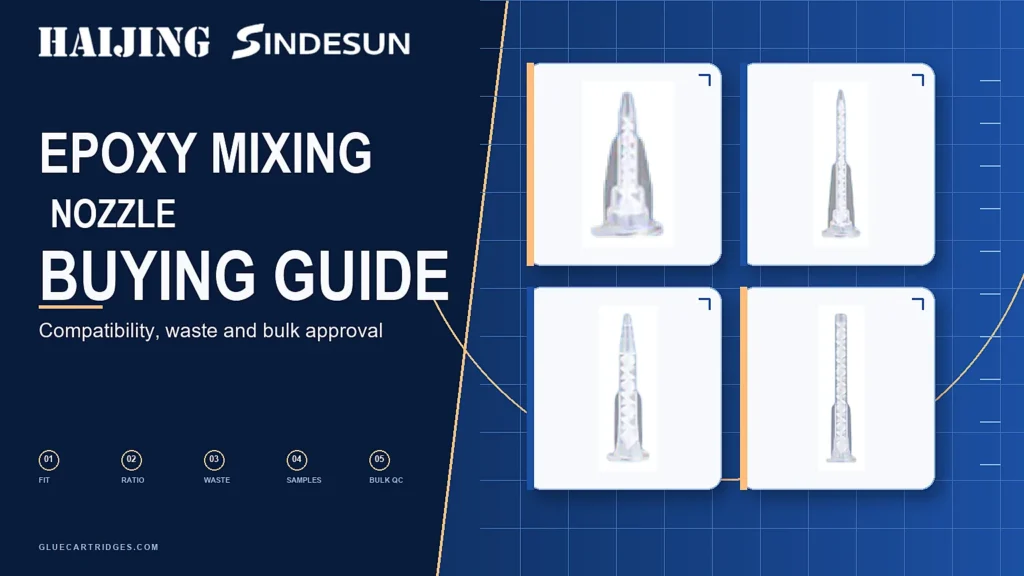
Key Takeaways Identify the full system. Record the cartridge family, nominal ratio, inlet, mixer geometry, outlet, and dispensing method before comparing nozzle part numbers. Approve with your own epoxy. Physical fit does not prove seal integrity, acceptable pressure behavior, mixed-bead quality, or cure performance. Measure retained material. A scale and a controlled shot sequence give […]
Why Does Adhesive Leak Between the Mixing Nozzle and Cartridge? (A Complete Troubleshooting Guide)
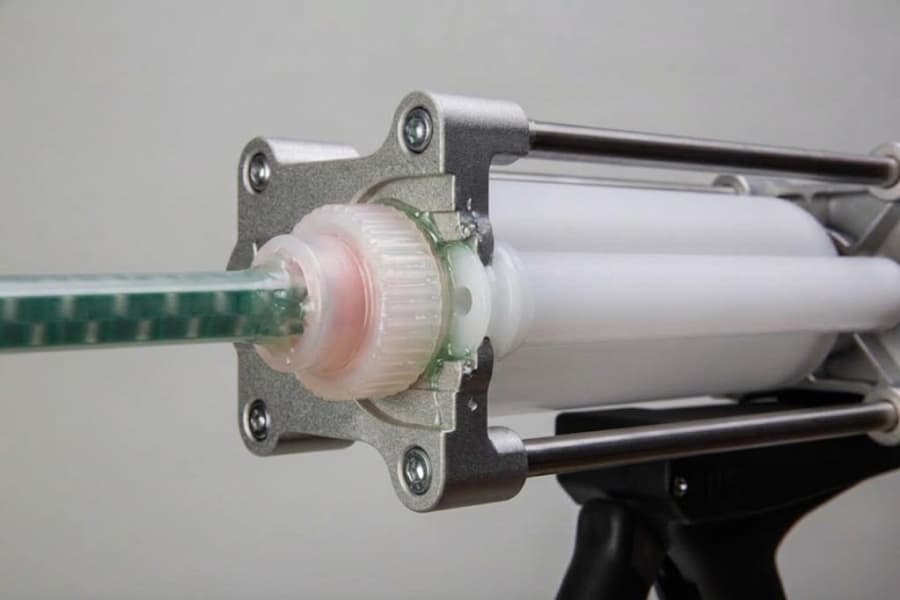
The Hidden Costs of Adhesive Leakage in Your Dispensing System Adhesive leaking from between the mixing nozzle and the cartridge typically occurs because of mismatched component interfaces, excessive internal backpressure, incorrect mixer selection, or improper assembly. When you attach a garden hose to a mismatched or poorly threaded faucet, the water pressure forces fluid out […]
Guide to Static Mixing Nozzles: A, B, C, and F Interface Selection
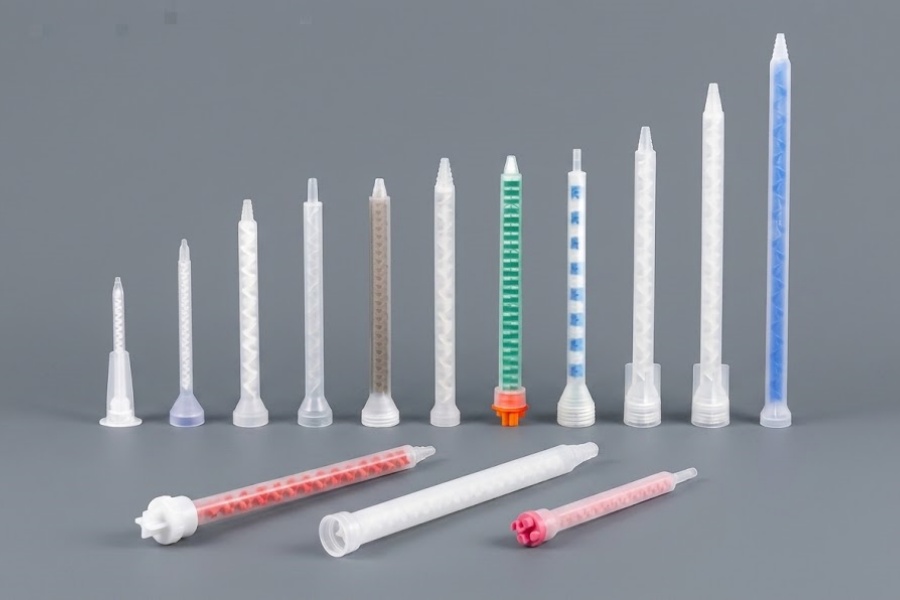
Introduction: The Critical Role of Interface Design in Two-Component Dispensing When sourcing a static mixing nozzle for two-component (2K) adhesive systems, selecting the correct interface design is the primary factor in preventing dispensing failures. A mismatched connection between the dual cartridge and the nozzle leads to fluid cross-contamination (cross-talk), chemical leakage at the bayonet, and […]
What Are the Advantages of a Square Static Mixer?
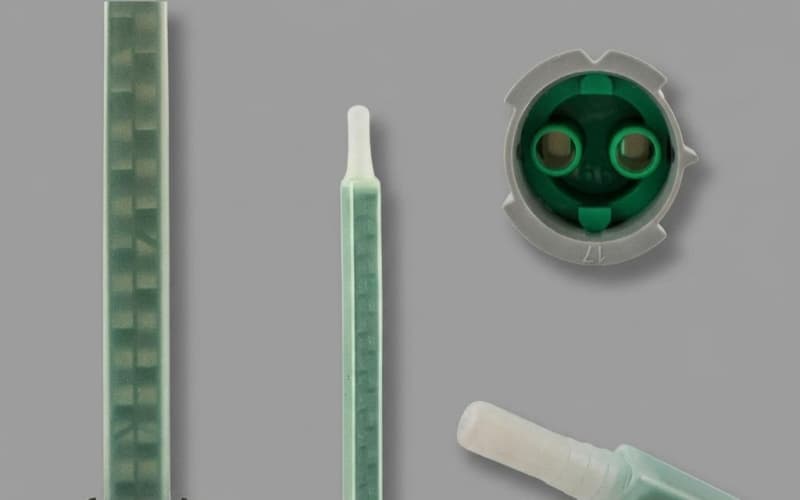
A square static mixer (also known as a Quadro mixer) is an engineered dispensing attachment that uses alternating square-shaped internal baffles to divide, shear, and blend two-component (2K) reactive adhesives. Compared to traditional round helical nozzles, the primary advantages of a square static mixer include a 40% to 50% reduction in overall housing length, a […]
CE and RoHS Compliance for Plastic Dispensing Components Sold in Europe

Key Takeaways RoHS is a substance restriction; CE is a marking framework. RoHS limits lead, mercury, cadmium, hexavalent chromium, two flame retardants, and four phthalates in electrical equipment; CE marks conformity with applicable EU directives — different questions, often both needed. Assess the product placed on the market. Apply CE marking only where applicable EU […]
Epoxy Mixing Nozzle Materials: PP vs PA vs PBT
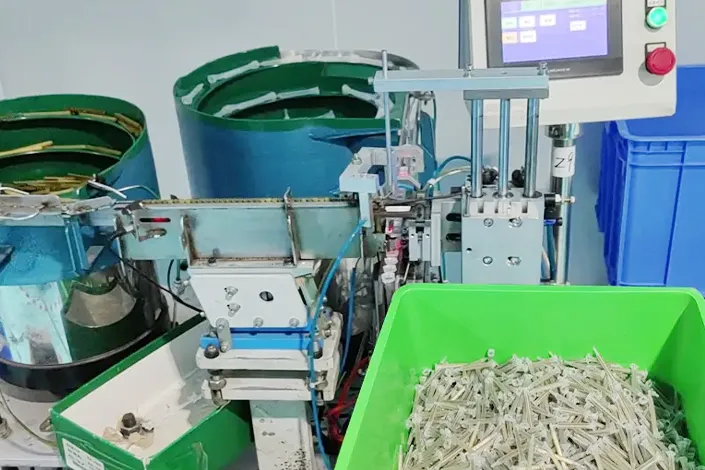
Key Takeaways Screen by grade and service conditions. Request the housing resin grade and check its behavior with the actual formulation, temperature, loading time and molded geometry. PA adds strength. Polyamide housings resist higher pressures and temperatures where PP would creep or soften. PBT leads on dimensional stability. Tighter as-molded tolerances and better chemical resistance […]
200ml vs 400ml Dual Cartridges: Choosing the Right Size

Key Takeaways Size for actual consumption. Compare material used before the opened-cartridge limit with the labor and downtime saved by fewer changes. Check the exact interface. Verify series, ratio, outlet, holder and drive for each proposed size before carrying over an approved mixer. Ratio availability is equal. Both formats carry 1:1, 2:1, 4:1, and 10:1 […]