
Desktop Dispensing Robots: A Specification Guide for Adhesive Assembly Lines
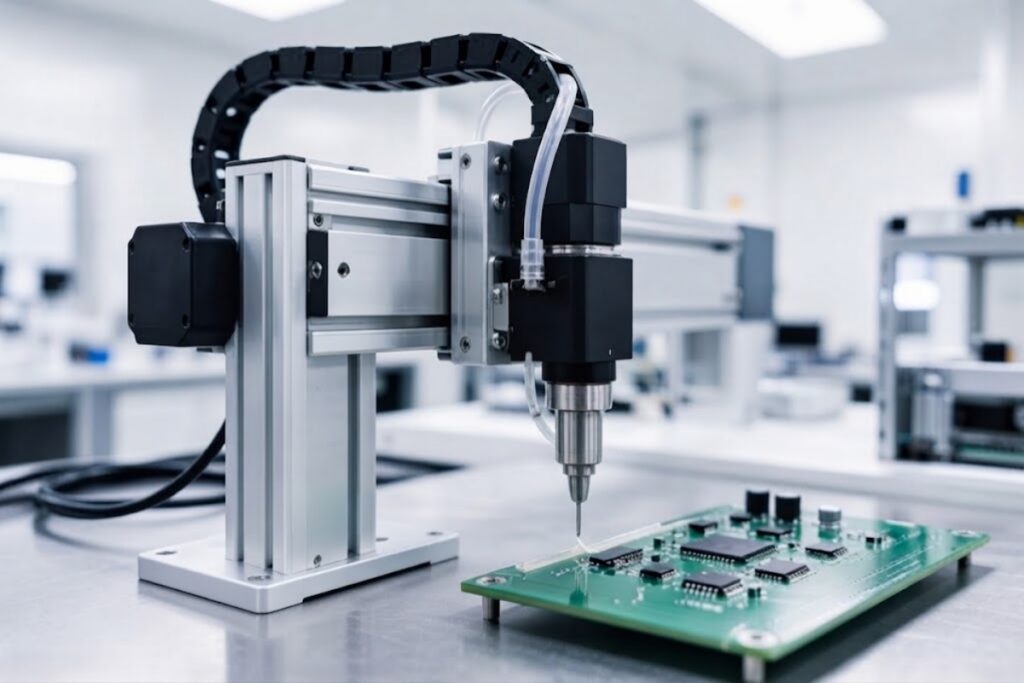
How to specify a desktop dispensing robot: work envelope, repeatability, valve and feed method, programming, utilities and a vendor checklist for adhesive assembly.
Electronics Potting & Encapsulation Dispensing: Choosing the Right System
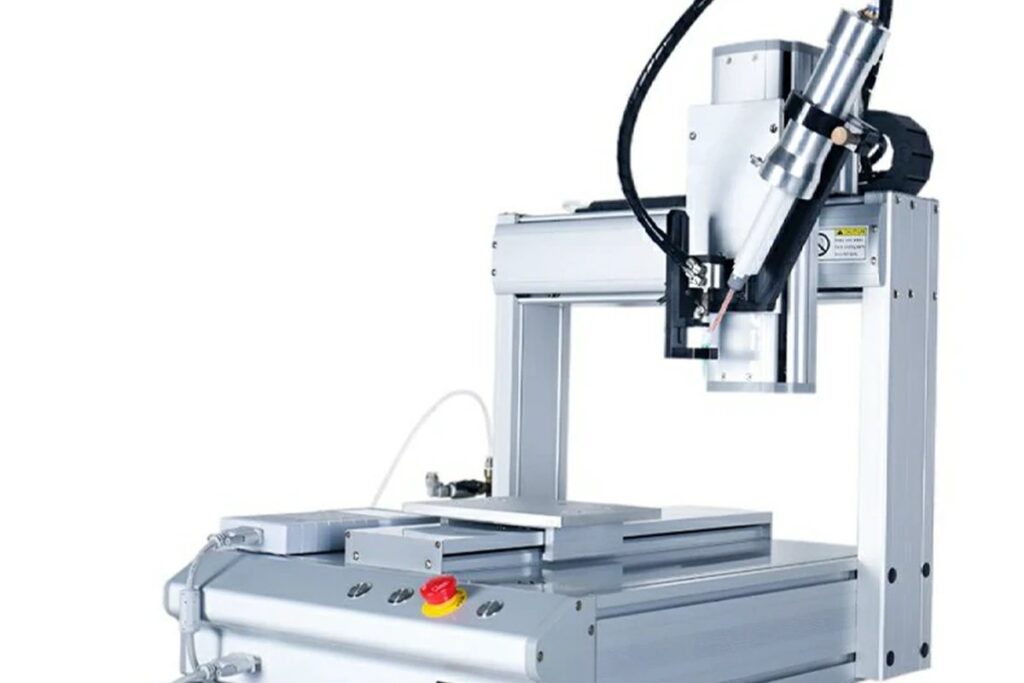
Learn how to choose an electronics potting dispensing system: manual vs automated, one-part vs two-part materials, cartridges, static mixers, and guns.
Static Mixer Part Numbers Explained: What Codes Tell You and What They Don’t

A static mixer part number can look precise while leaving the most important question unanswered: will this mixer seal, keep both components separated, and work with the approved adhesive process? A buyer may receive three codes for parts that look alike, yet each code belongs to a different supplier’s naming system. Key Takeaways Treat the […]
Mixpac MA / MB / MC / MCX Compatibility Guide: Which Static Mixers Are Interchangeable

Mixpac MAH/MAHX/MBH/MCH/MCQ nozzles: which cartridges do they fit? Map Mixpac A/B/C/F systems, Nordson EFD cross-fit, and when mixing brands backfires.
AB Cartridge Connection Types Explained: Bayonet vs Bell-Mouth vs Threaded (A/B/C/F Systems)

Bayonet, bell-mouth, or threaded? Learn the three AB cartridge connection types, how Mixpac A/B/C/F maps to them, and how to avoid ordering the wrong interface.
How Many Mixing Elements Do You Actually Need? Element Count, Mix Quality and Waste
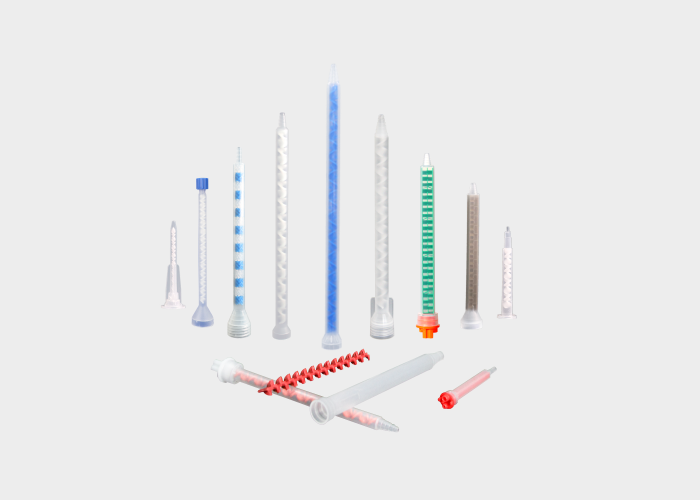
Choosing a static mixing nozzle often starts with a simple question: How many mixing elements do I need? The problem is that element count alone does not determine mixing performance. A mixer with too few elements may not provide the required homogenization. A mixer with more elements may improve mixing in some applications, but it […]
Bubble Control in Cartridge Filling: Vacuum Filling Technology vs. Conventional Filling
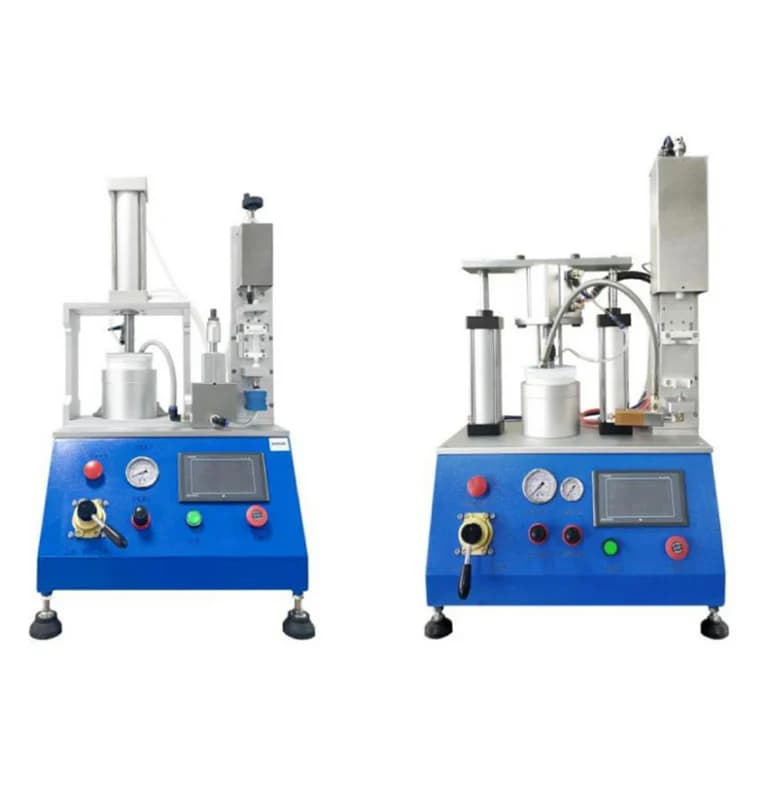
Air bubbles inside adhesive cartridges can cause inconsistent dispensing, internal voids, and downstream quality problems. For manufacturers using a glue filling machine, controlling air during the filling process is therefore an important part of production quality. Conventional filling can work well for materials and applications where small amounts of residual air are acceptable. However, high-viscosity […]
Dispensing Thermal Interface Materials in EV Battery Packs: Equipment Requirements
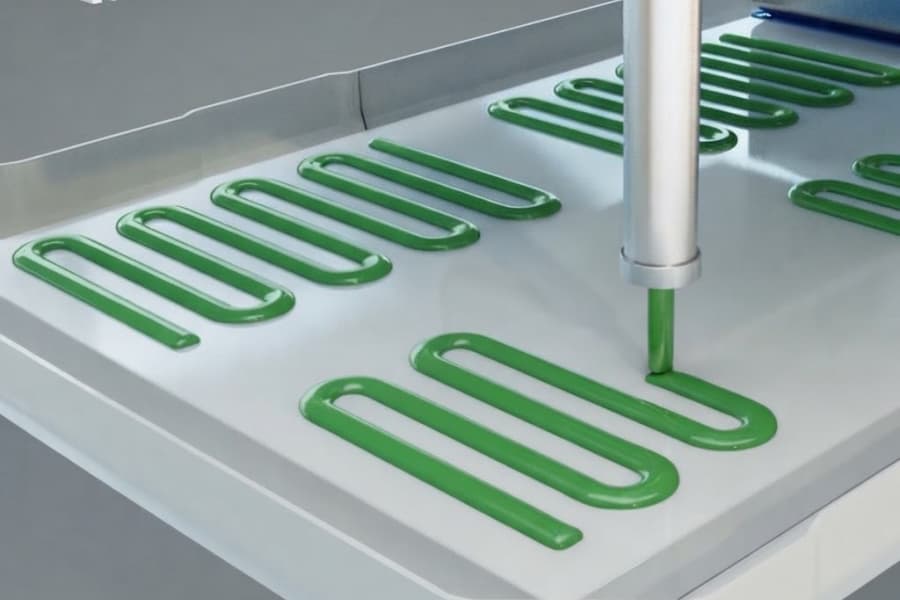
Dispensing thermal interface material (TIM) in EV battery packs requires careful coordination between the material, cartridge, mixer, dispensing equipment, and application method. Unlike lower-viscosity adhesives, many TIM formulations can contain high levels of thermal fillers and may create substantial flow resistance during dispensing. For EV battery process engineers, equipment selection should therefore begin with the […]
Pneumatic Dispensing Gun Guide: Setup, Pressure, and Troubleshooting
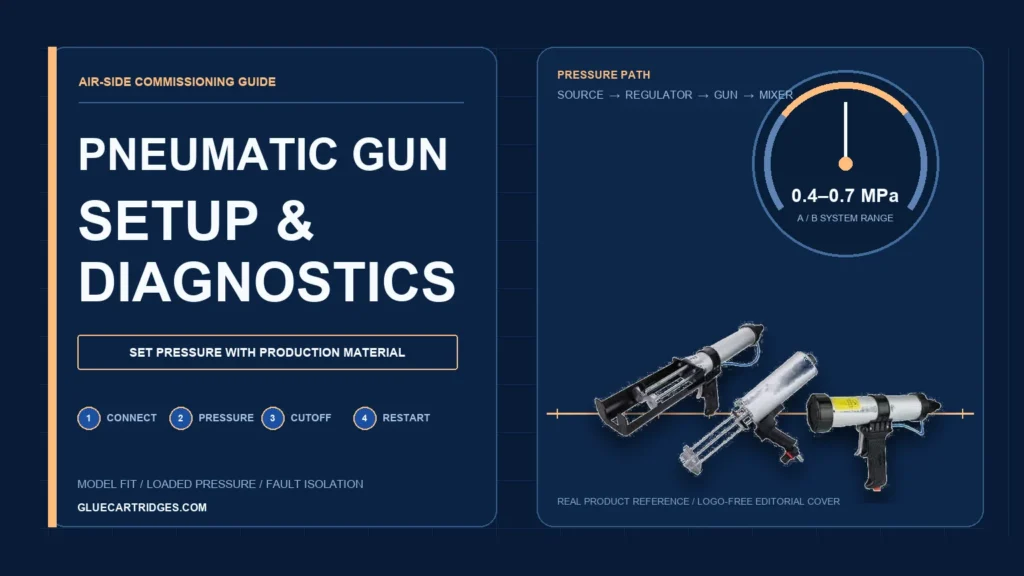
A pneumatic dispensing gun often fails its first restart for a reason outside the gun. The regulator was recorded at idle, the mixer changed after approval, or a similar-looking plunger entered the station. Turning up the air may restore flow for one cycle while hiding the actual mismatch. Key Takeaways Separate drive from ratio. Compressed […]
Dual-Cartridge Epoxy Gun Selection Guide: Ratios, Sizes, and Thrust
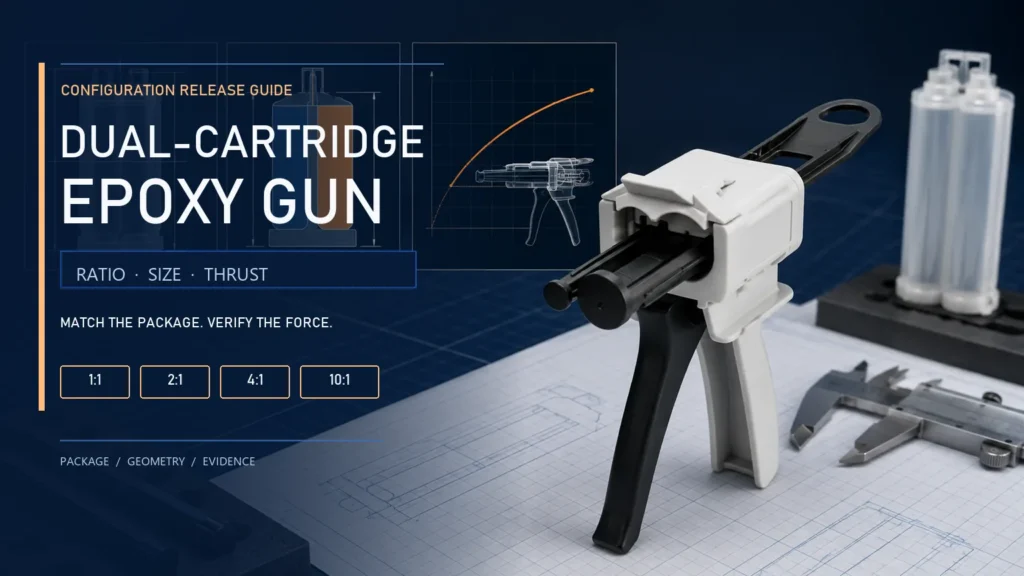
A dual cartridge epoxy gun can look correct and still be mechanically wrong. A purchasing description such as “400 ml, 2:1” leaves out the cartridge system, flange, barrel spacing, piston faces, retainer, mixer interface, and the evidence behind the tool’s available force. Those missing fields are where most avoidable selection failures begin. Key Takeaways Start […]