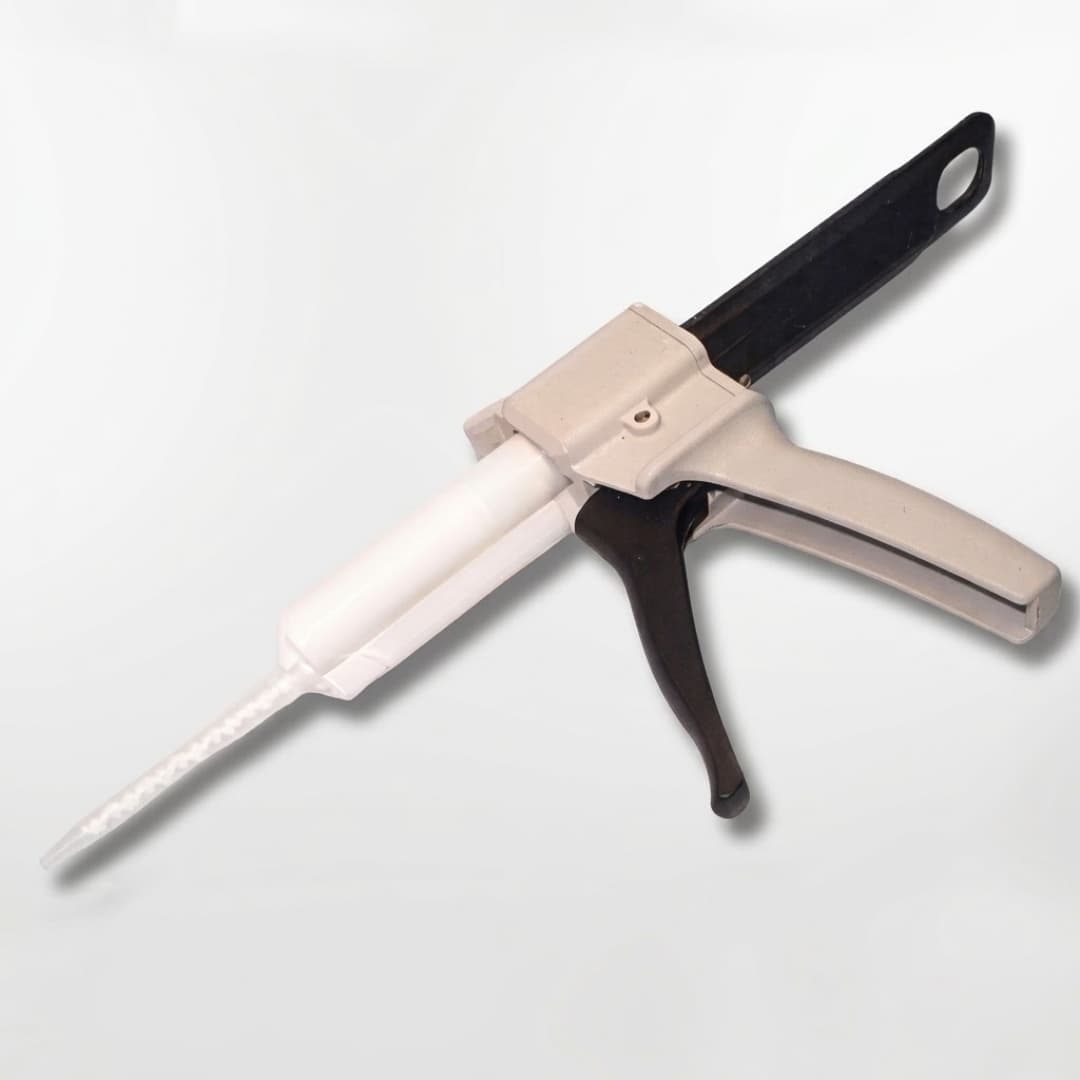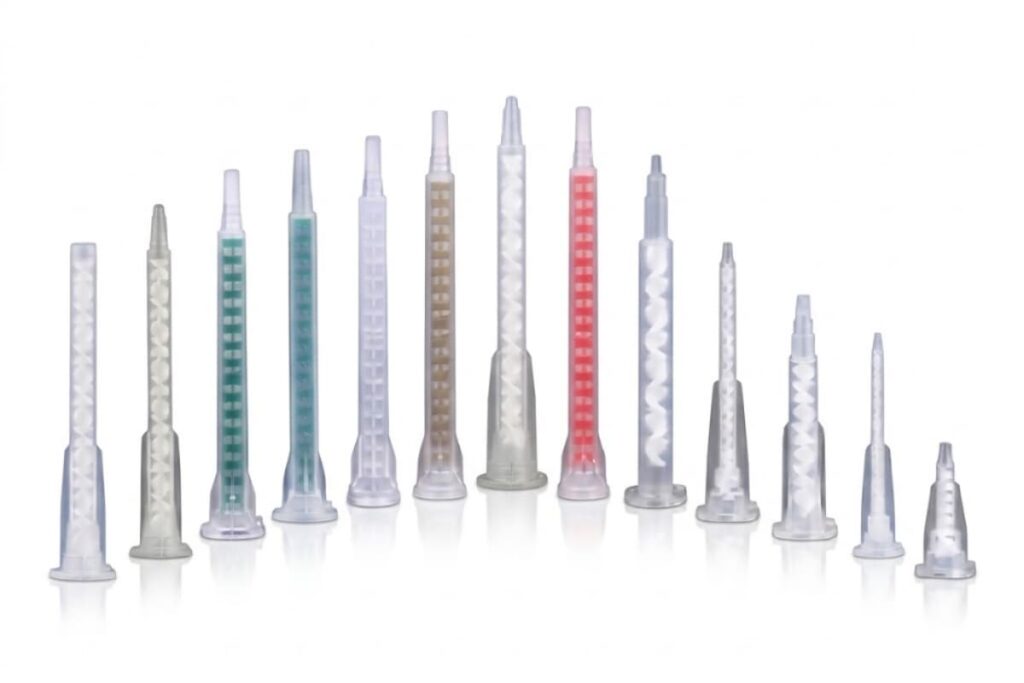
Most cartridge static mixers for 2K adhesives are built to be disposable: the tightly stacked mixing elements are hard to flush completely, and any trapped residue cross-contaminates the next shot. A reusable static mixer only pays off when you are cleaning the reusable parts of the system — the mixing chamber body, meter-mix equipment, and fixturing — not the low-cost nozzle itself. Whether cleaning makes sense comes down to three factors: the resin state at cleaning time (uncured versus gelled), the mixer or tooling material (polypropylene, nylon, or metal), and the labor and solvent cost per cycle. This article explains when to clean, which solvents are safe on polypropylene, a practical cleaning protocol, and how to compare cleaning against replacement cost.
Is Your Static Mixer Reusable? The Core Decision
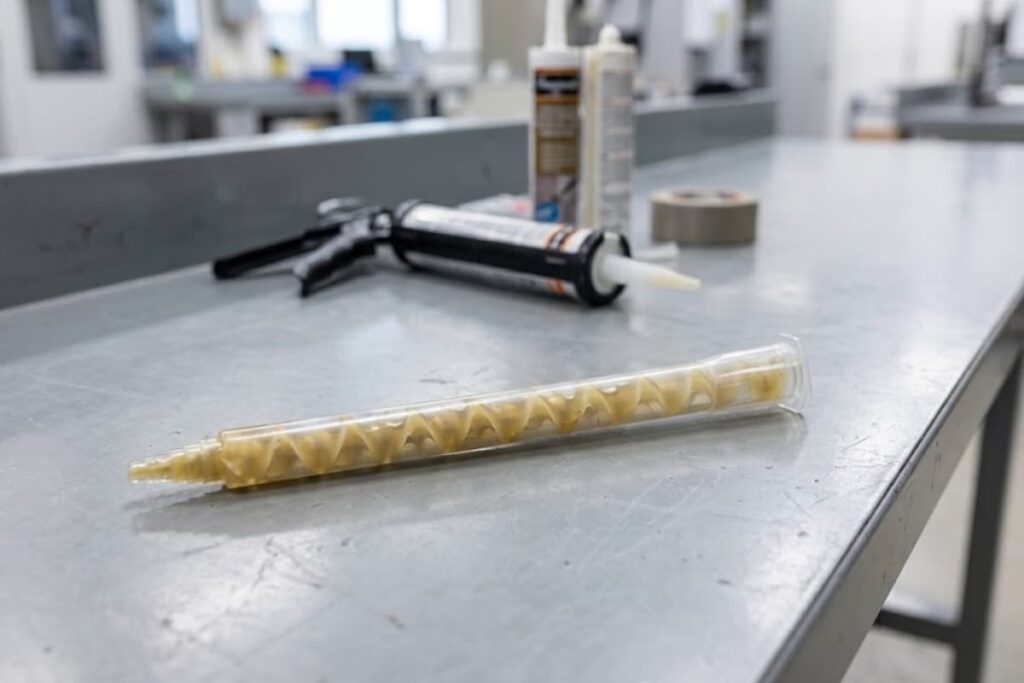
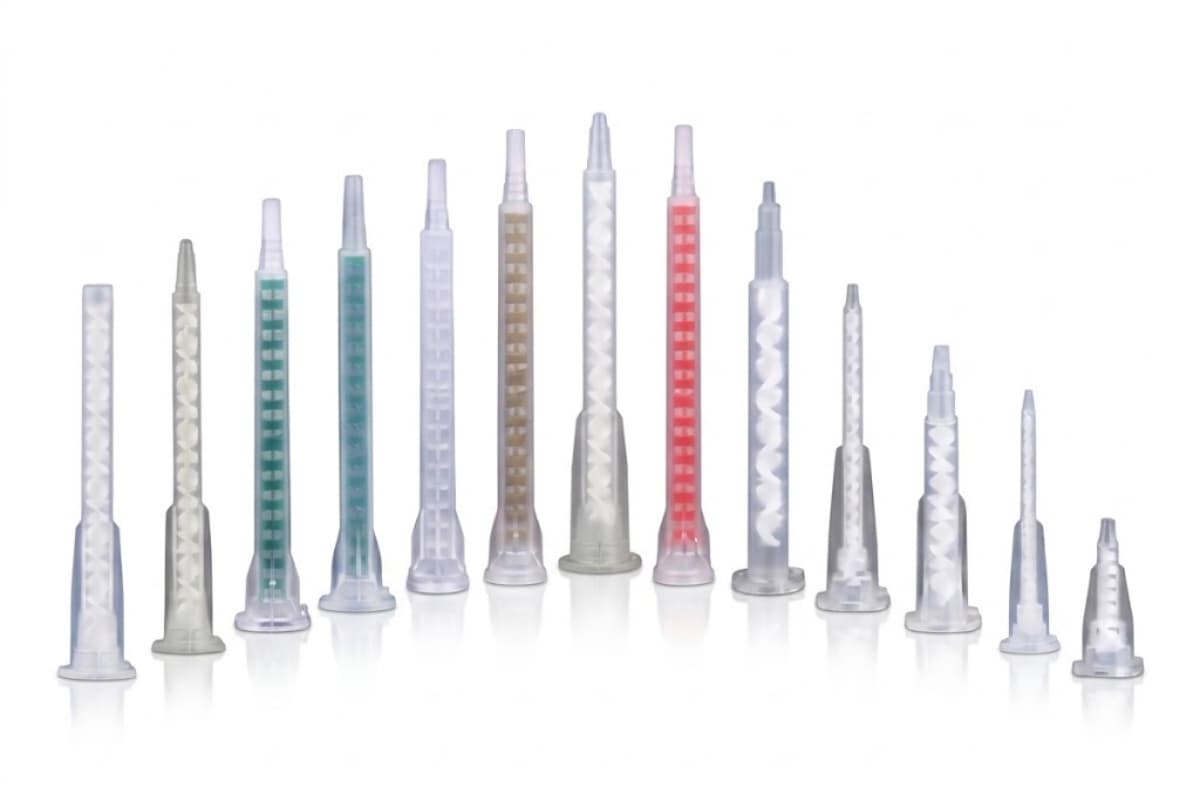
A cartridge static mixer is disposable by design because the internal elements form a long, narrow flow path. Solvent cannot reach every surface, so the next dispense carries old, partly reacted material into a fresh batch. That is why most suppliers treat the nozzle as a consumable. Reuse becomes a real option only for the durable parts around it: reusable mixing chambers and manifolds, meter-mix equipment, dispensing heads, retainers, and fixtures. Forcing reuse on a disposable nozzle trades a few cents of plastic for off-ratio, streaking, or cured-blockage risk.
Use this decision framework before you decide to clean or discard:
| Part type | Resin state | Action |
|---|---|---|
| Disposable nozzle / cartridge mixer | Uncured, within open time | Wipe exterior; replace nozzle (do not rely on reuse) |
| Disposable nozzle | Gelled or cured | Discard; cured resin cannot be flushed |
| Reusable mixing chamber / manifold | Uncured | Flush with compatible solvent, dry, reuse |
| Reusable metal tooling | Cured residue | Soak in specialty cleaner, mechanically remove, dry |
| Retainers / fixtures | Any | Clean per material compatibility |
Material and ratio choice at specification time drives how cleanable a part is, so start with the static mixer nozzle selection guide before committing to a cleaning program.
Why Resin State Dictates Your Cleaning Window
Every 2K resin has an open working time — the period after mixing during which it stays fluid enough to wipe or flush away. That window is defined by the adhesive supplier’s data sheet, not by the solvent you pick. Clean inside that window and uncured resin comes off a polypropylene element with a few seconds of isopropanol (IPA) wiping. Wait until the next production cycle and the resin gels or cures inside the elements; at that point no flush restores flow, and you are left with a long soak, mechanical removal, or scrapping the part.
A wipe-down that fits inside the open working time:
- Detach the mixer or nozzle from the cartridge or gun.
- Wipe exterior resin with a shop towel before it skins over.
- Dampen a lint-free cloth with IPA and wipe the internal bore and element faces.
- Air-dry, then reassemble or store in a sealed container.
Because material and specification decide whether a part can be cleaned and reused, the mixing nozzle qualification test is the reference step that confirms what you are working with before a cleaning program starts.
Solvent Compatibility by Mixer Material: Don’t Dissolve Your Own Tool
Polypropylene (PP) is the standard body material for disposable cartridge mixers, and its chemical resistance sets the safe solvent list. Public chemical-resistance tables (Braskem, Engineering Toolbox) rate PP as recommended for IPA, ethanol, and acetone, but as not recommended for aromatic solvents (benzene, toluene, xylene) and chlorinated solvents (chloroform, dichloromethane), which swell or dissolve it. High heat accelerates the attack: non-polar solvents such as xylene can dissolve PP at elevated temperature. Metal tooling (stainless steel, aluminum) tolerates most solvents, though repeated exposure can degrade anodized or coated surfaces.
Solvent compatibility by mixer or tooling material:
| Material | IPA | Acetone | Ethyl acetate | Aromatics (toluene/xylene) | Chlorinated (DCM) |
|---|---|---|---|---|---|
| Polypropylene (PP) | A | A* | A | D (swells/dissolves) | D |
| Nylon (PA) | A | C (absorbs, swells) | A | D | D |
| Stainless steel | A | A | A | A | A |
| Aluminum / anodized | A | A** | A | A | C |
* Acetone is rated acceptable for PP on short contact but is highly volatile and can stress-crack some plastics over repeated use; IPA is the safer routine choice. ** Anodized aluminum may degrade with repeated solvent exposure. Ratings A = recommended, C = caution, D = not recommended, per public chemical-resistance references — confirm against your specific resin and cleaner data sheet.
Confirm the actual mixer material before choosing a solvent; the mixing nozzle qualification test is where material and specification get verified rather than assumed.
A Practical Cleaning Protocol for Reusable Mixing Elements
For the reusable chambers, manifolds, and metal tooling, a consistent soak-and-dry routine keeps parts in specification. The key discipline is complete drying: trapped solvent contaminates the next shot or reacts with the fresh resin.
- Remove the element or chamber from the line and purge excess uncured resin.
- Pre-wipe the exterior with a shop towel.
- Select a compatible solvent (IPA or ethyl acetate for uncured PP; a high-boiling specialty cleaner for cured residue).
- Soak: light residue for minutes to a few hours; heavy cured buildup can take up to a day, per the cleaner data sheet.
- Mechanically remove remaining cured spots with a soft, non-abrasive brush.
- Rinse thoroughly with fresh solvent to remove loosened material.
- Dry completely (air or low heat) before reassembly — never reuse a damp part.
- Inspect; re-qualify the part if the cleaning interval or material is in question.
Troubleshooting checklist:
| Symptom | Likely cause | Fix |
|---|---|---|
| Residue remains after soak | Soak too short or solvent too weak | Extend soak or step up to a still-compatible solvent; verify material |
| White haze / crazing on plastic | Incompatible solvent | Discard part; switch to IPA-class solvent |
| Solvent smell in next shot | Insufficient drying | Extend dry time; verify no trapped pockets |
| Off-ratio after reuse | Disposable nozzle reused | Use a fresh nozzle; clean only durable parts |
The reusable mixing chambers and meter-mix hardware live inside the broader adhesive dispensing equipment overview, which is where replacement and cleaning cost decisions connect to the full line.
Cleaning Agents Compared: IPA, Acetone, and Specialty Cleaners
Pick the cleaner by residue state and material, not by habit. IPA is the everyday choice for uncured acrylic or epoxy wipe-down on PP. Acetone dissolves faster but is more aggressive and flammable. Ethyl acetate is common for daily flushing of 2K automatic mixers. For silicone or fully cured residue, a high-boiling proprietary cleaner does the work that IPA cannot.
| Cleaner | Best for | PP safety | VOC / safety | Relative cost |
|---|---|---|---|---|
| IPA (99%) | Uncured acrylic/epoxy wipe | Safe | Flammable; control VOC | Low |
| Acetone | Fast dissolve, light residue | Caution (stress-crack) | High VOC, very flammable | Low |
| Ethyl acetate | 2K machine daily flush | Safe | Flammable, VOC | Low–Med |
| Sika Mixer Cleaner-type (high-boiling) | Silicone / cured residue | Check TDS | High-boiling, CFC-free | Med–High |
| WEVO-Cleaner PS-type | Cured PUR / epoxy | Check TDS | Flash pt 108°C, CFC-free | Med–High |
The Sika and WEVO figures are cited from publicly available cleaner data sheets as industry examples; they are not Haijing product specifications. Always read the cleaner TDS for the exact material you are cleaning.
Cleaner choice ties back to the equipment you run, covered in the adhesive dispensing equipment overview.
Cost Reality: Cleaning vs Replacement
The honest comparison is total cost per cycle, not sticker price of a nozzle. Wiping uncured residue inside the open working time costs almost nothing and adds no downtime. Waiting until heavy cured buildup forces a long solvent soak plus waste disposal plus line stoppage. The widely held view in dispensing operations is that equipment resin buildup is a maintenance-interval problem: tighten the interval and the saved downtime and scrap usually pay the effort back within a quarter.
| Approach | Labor | Solvent | Disposal | Downtime | Best when |
|---|---|---|---|---|---|
| Wipe within open time | Low | Low | Low | Negligible | High mix frequency, uncured |
| Periodic soak | Med | Med | Med | Med | Reusable chambers |
| Replace nozzle each cycle | None | None | Med (plastic) | None | Disposable nozzles |
Match the rhythm to throughput:
- Low volume / infrequent mixing — discard the nozzle, clean only the reusable tooling lightly.
- High volume automated line — schedule recurring soaks of reusable equipment and track the interval.
Replacement parts and equipment cost sit inside the adhesive dispensing equipment overview, which helps size the cleaning-versus-replacement trade-off for your line.
Disposal & Compliance Notes
A hardened resin and plastic nozzle is generally not recyclable and goes to industrial or non-recyclable waste. Solvent-laden rags and flush liquid are regulated: they carry VOC load and fall under local rules such as REACH or RoHS where applicable. A standardized cleaning procedure should keep the paperwork that an audit expects.
Disposal and compliance checklist:
| Item | Action |
|---|---|
| Solvent-laden rags / waste | Segregate into a closed, labeled container; hand to licensed disposal |
| Cured nozzles | Dispose as industrial / non-recyclable per local rule |
| Cleaner SDS | Keep on file; train operators on handling and PPE |
| Cleaning interval | Log it so buildup and cost are auditable |
| Waste volume | Select correct size and ratio upfront to cut nozzle waste |
Selecting the right size and ratio at specification time reduces waste volume; start from the static mixer nozzle selection guide.
Need help qualifying a reusable mixer?
Send the resin system, mixer specification, throughput and your acceptance method. Haijing can discuss a cleaning protocol and the drawings needed for a controlled comparison.
FAQ
Can you reuse a static mixer after the resin cures?
No. Once the 2K resin gels or cures inside the mixing element, solvent flushing cannot restore flow. For disposable nozzles, discard them. For reusable chambers, use a high-boiling specialty cleaner per its data sheet and remove residue mechanically.
Is acetone safe on polypropylene static mixers?
Short-term contact is generally rated acceptable for PP, but acetone is highly volatile and can stress-crack some plastics over repeated exposure. IPA is the safer routine choice for PP elements. Never use aromatics or chlorinated solvents on PP.
What is the best solvent for 2K epoxy residue?
Uncured epoxy: IPA or ethyl acetate. Cured epoxy: a high-boiling proprietary cleaner (Sika Mixer Cleaner-type or WEVO-Cleaner PS-type) used per its data sheet. Confirm the mixer material before selecting the solvent.
How often should I clean dispensing tooling?
Clean uncured residue inside the open working time. For reusable equipment, schedule recurring soaks based on throughput — tighter intervals typically pay back within a quarter by avoiding buildup and downtime.
Are static mixer nozzles recyclable?
Generally not once the resin cures; they go to industrial or non-recyclable waste. Choosing the correct size and ratio upfront is the practical way to cut nozzle waste volume.
Conclusion
A reusable static mixer pays off only on the durable parts of the line — chambers, manifolds, and metal tooling — not on the disposable nozzle. Clean inside the open working time with a material-compatible solvent (IPA for PP), dry completely, and track the interval so buildup never reaches a costly soak. Pick the cleaner by residue state, and treat disposal as a logged compliance step.
Need help qualifying a reusable mixer or a cleaning protocol for your 2K line? Contact our engineering team for a solvent-compatibility check, or browse the static mixer nozzle selection guide to match material and ratio to your process.