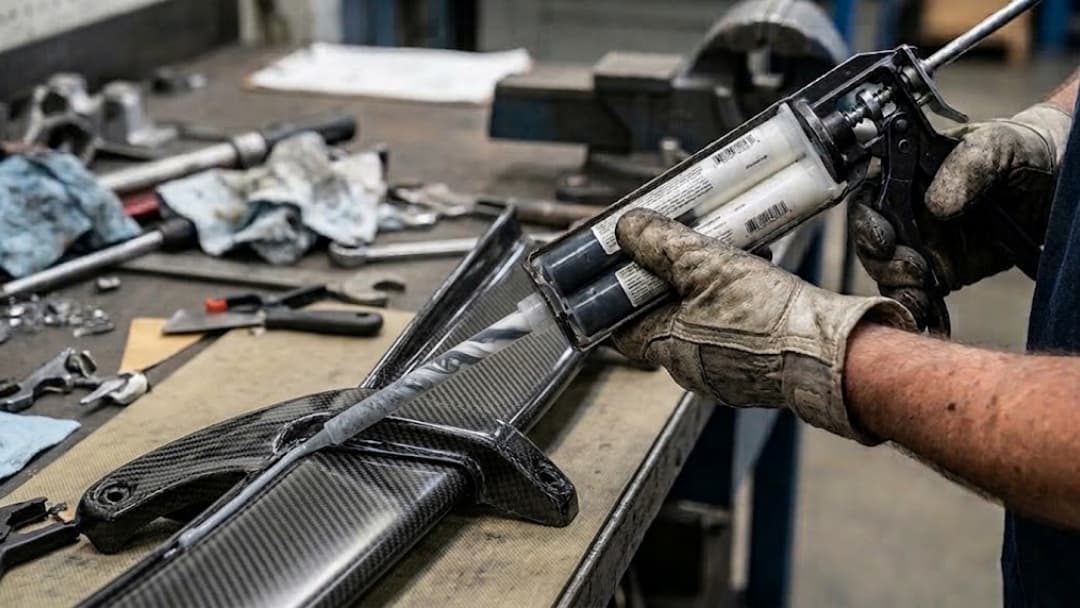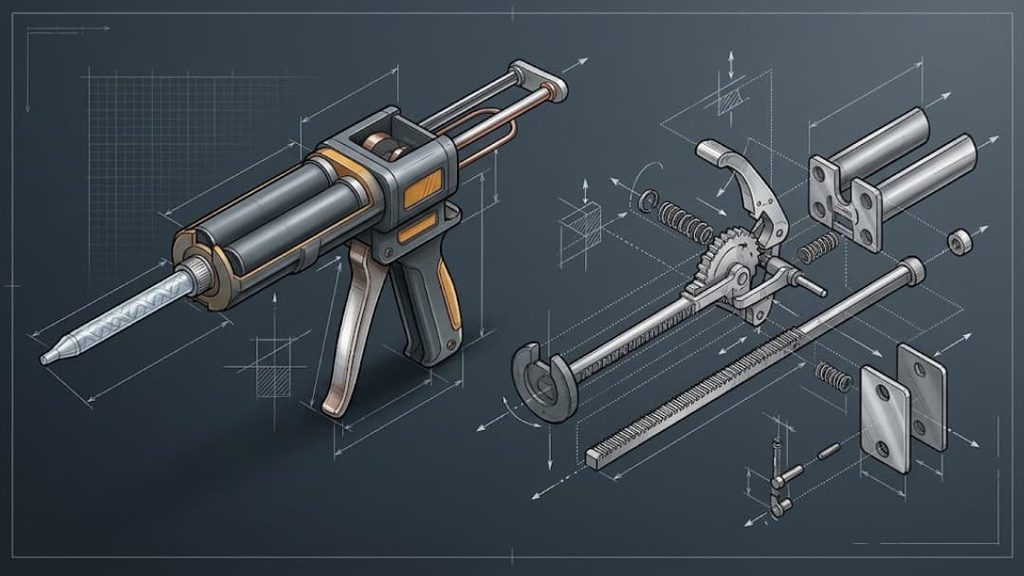
Short answer: thrust ratio is the mechanical advantage of a manual dispensing tool — output force at the plunger divided by the force your hand applies. A manual gun is a leverage-and-gear system: the trigger drives a pawl along a toothed rack, which pushes the plunger to force fluid out of the cartridge. When a thick paste stalls or your hand cramps, the cause is almost always a mismatch between the gun’s thrust ratio and the adhesive’s viscosity — not your effort.
Bottom line up front: the plunger delivers the force, the ratchet sets the ratio — match the ratio to your adhesive’s viscosity, not to the price tag.
The Drive Chain: Turning Hand Force into Thrust
Force moves through a manual dispensing gun in a straight mechanical line:
- Leverage amplification. The trigger pivot creates the first mechanical gain.
- Ratchet engagement. The drive pawl catches the toothed rack and advances it by one precise pitch.
- Plunger delivery. The plunger face concentrates that amplified force onto the rear of the cartridge’s piston.
- Material displacement. The force overcomes viscous resistance and pushes material through the nozzle without back-pressure leakage.
Thrust ratio is pure geometry. A longer trigger arm with a finer rack pitch gives a higher ratio — but each squeeze moves the plunger less. The dispensing gun family includes manual, pneumatic, and battery builds, but every manual gun lives on this same chain. On a manual dispensing gun, that chain is entirely hand-driven.
Thrust Ratio Selection Matrix
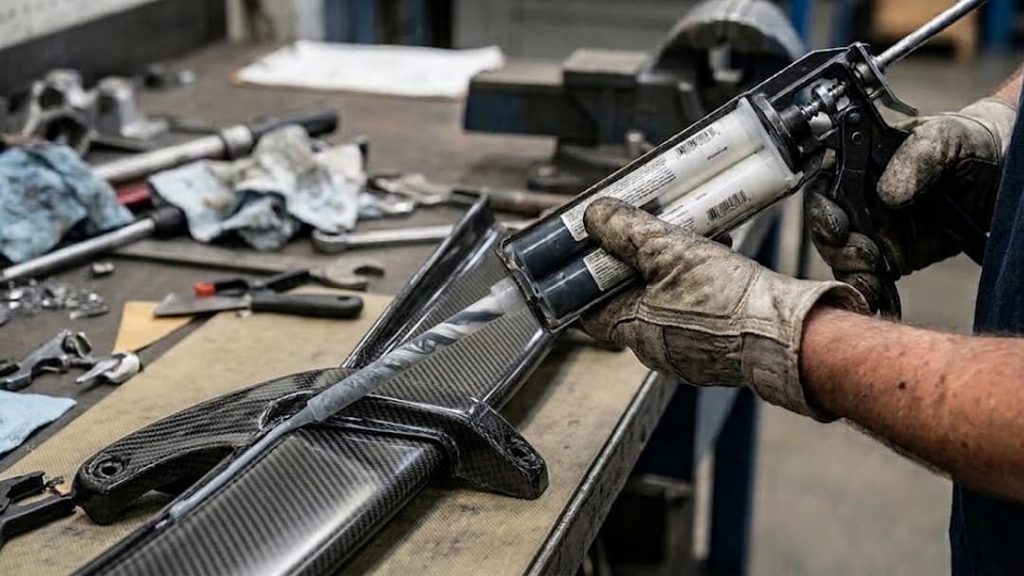
Match the ratio to material viscosity — never to tool price alone. At a 50 N hand grip, the output at the plunger scales with the ratio:
| Thrust ratio band | Output force (at 50 N grip) | Typical adhesive chemistry | Operational trade-off |
|---|---|---|---|
| Low (6:1 – 10:1) | ~300 – 500 N | Low-viscosity acrylics, thin sealants, watery primers | Fast bead, long travel per stroke; locks up on thick pastes |
| Mid (12:1 – 18:1) | ~600 – 900 N | Standard 1:1 epoxy, silicones, flexible MS polymers | Balanced stroke and fatigue; the universal job-site standard |
| High (20:1 – 26:1+) | ~1000 – 1300 N+ | High-viscosity structural epoxies, dense polyurethanes, cold-weather fills | Drives dense material smoothly; needs more pulls to empty |
Exact ratios vary by gun model — confirm the rating with the supplier before you spec. For the full lineup of gun types matched to thrust ratio and viscosity, see the selection guide.
Plunger Design: Seal Integrity and Waste
The ratchet sets the leverage; the plunger sets how much you waste and whether the seal holds:
- Solid rod plungers. Simple and cheap. Fine for low-cost single-component fills where a little edge bypass is acceptable.
- Follower plate plungers. A machined disc that tracks the cartridge wall. Cuts residual waste in costly dual-component systems and prevents back-flow under pressure.
- Pneumatic conversions. On repetitive lines, swapping the manual ratchet for a pneumatic or battery feed removes fatigue and keeps bead volume consistent.
Why Thick Adhesive Locks Up in Cold Weather
Viscosity climbs as temperature drops. In an unheated shop, without pre-warming cartridges, a mid-ratio gun can stall. Step up to a 20:1+ gun with a tight-fitting follower plate so the higher push overcomes the cold-thickened material.
Procurement Checklist
Ask the gun maker these before you buy:
- What is the verified thrust ratio, and does force drop near the end of the stroke?
- Does it use a basic push rod or a clean-sweep follower plate?
- Are the ratchet and pawl heat-treated steel, or stamped sheet metal that wears early?
FAQ
What does thrust ratio mean on a dispensing gun? Output force at the plunger divided by hand force applied. At a 50 N grip, a 12:1 gun delivers about 600 N at the plunger.
Is a higher thrust ratio always better? No. Higher ratios shorten travel per squeeze. A 26:1 gun on a thin adhesive means hundreds of short strokes, over-dispense risk, and blow-by around the seal.
Why does thick adhesive freeze up in cold weather? Viscosity rises as temperature falls. Without pre-warming, step up to a 20:1+ gun with a follower plate.
How does a caulk gun mechanism work? Trigger → pawl → toothed rack → plunger → material out. Lever length and rack pitch set the thrust ratio.
What plunger types exist? Solid rod (cheap, simple), follower plate (less residual, better seal), pneumatic (no hand fatigue on lines).
Bottom Line
A manual gun’s output is one chain: trigger → ratchet → plunger → material. The thrust ratio — set by ratchet geometry — decides whether your adhesive actually moves. Size it to viscosity, pick the plunger that wastes the least, and confirm the exact ratio and pawl material with the supplier.
Match a Gun to Your Material
A gun that stalls halfway through a cartridge is almost never a bad tool — it’s a ratio sitting outside the viscosity it has to push. Send us three things: the adhesive’s viscosity range, the volume you dispense per shot, and the shop temperature the gun runs in. We’ll come back with the thrust ratio band and plunger type that fit, and whether manual, pneumatic, or battery drive makes more sense at your volume. Because we make both the cartridges and the guns that drive them, the pair gets matched up front instead of failing on the first pallet.