Dual-Component Adhesive Cartridges: Sizing, Mix Ratios (1:1 to 10:1), and Material Compatibility
Precision Dispensing Starts at Packaging: Understanding the 2K Adhesive Cartridge System
| 2K Cartridge Functional Elements | |
| Component A Barrel (Resin) | Component B Barrel (Hardener) |
| [Piston A] -> Fluid Path | [Piston B] -> Fluid Path |
| Shared Outlet Neck / Interface (Twist-Lock, Bayonet, Bell) | |
A complete system includes four integrated elements:
-
Rigid Dual Barrels: Parallel cylinders molded with precise internal wall tolerances to eliminate fluid bypass.
-
Matched Pistons: Plugs featuring single-lip, double-lip, or mechanical air-release vents to seal the chemistry and wipe the barrel walls cleanly during actuation.
-
Sealing Cap / Retaining Nut: Prevents cross-contamination at the fluid outlets during transit and storage.
-
Mixer Interface Neck: A dedicated connection point engineered for attachment to static or dynamic mixing elements.
Cartridge Sizing Guide: From 50ml R&D Prototyping to 400ml+ High-Volume Production
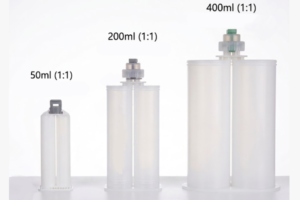
| Nominal Volume | Typical Ratio Options | Primary Dispenser Interface | Typical Production Environment |
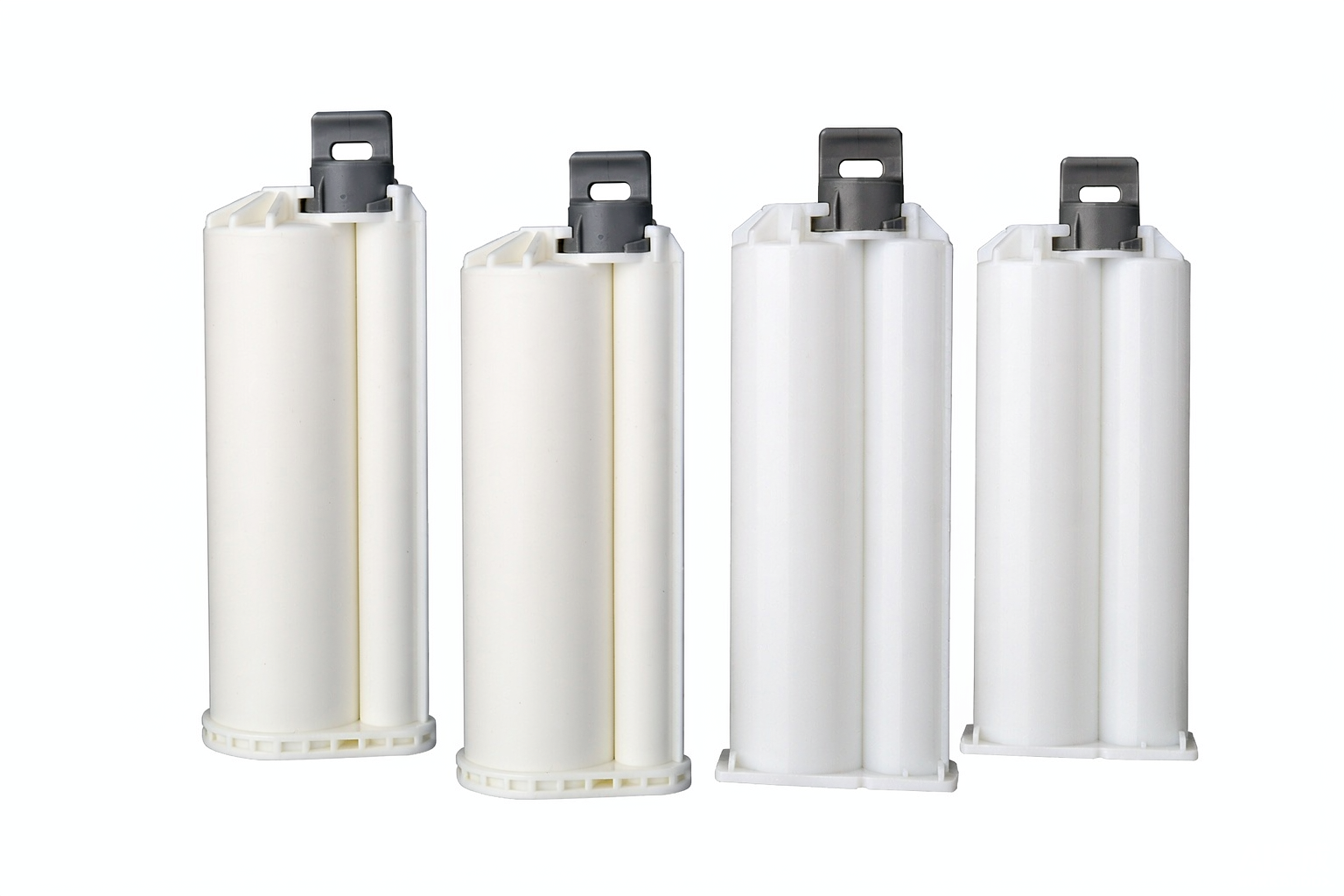
| 50ml | 1:1, 2:1, 4:1, 10:1 | Manual hand gun, pneumatic benchtop | Laboratory testing, field repairs, micro-electronics encapsulation |
| 200ml | 1:1, 2:1 | Manual mechanical, pneumatic applicator | Medium-duty component bonding, maintenance operations |
| 400ml / 490ml | 1:1, 2:1, 4:1, 10:1 | Heavy pneumatic gun, automated robotic cell | Structural automotive bonding, composite assembly, continuous lines |
50ml Dual Cartridges
200ml to 400ml Dual Cartridges
Mastering Volumetric Mix Ratios: 1:1, 2:1, 4:1, and 10:1 Configurations
The volumetric ratio is determined by the cross-sectional areas of the two barrels. A 1:1 configuration has equal internal diameters, giving 50% volume to each barrel. A 10:1 configuration uses a large resin barrel (90.9%) and a small catalyst barrel (9.1%).
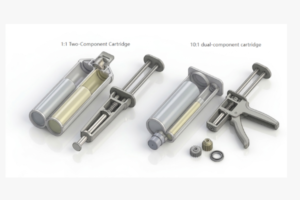
1:1 and 2:1 Mix Ratios
4:1 and 10:1 Mix Ratios
-
Structural Methyl Methacrylates (MMA)
-
Fast-curing acrylic systems using concentrated peroxide catalysts
-
Specialized polyurethanes requiring low-volume cross-linkers
Cartridge Material Selection: PP, PA, and PBT Compatibility with Reactive Chemistries
| Polymer Selection vs. Target Fluid Matrix | ||
| Polymer Type | Key Barrier Strengths | Recommended Chemistries |
| Polypropylene (PP) | Moisture barrier | Epoxies, Standard PU |
| Polyamide (PA/Nylon) | Solvent/Monomer resist | MMAs, Acrylics |
| Polybutylene (PBT) | Gas/Vapor barrier | Moisture-sensitive PU |
-
Polypropylene (PP): Standard material for general-purpose adhesive packaging. PP provides moisture barrier performance and broad chemical resistance, making it suitable for standard epoxies and general-purpose adhesives.
-
Polyamide (PA / Nylon): Resistant to aggressive monomers, esters, and ketones. PA is the standard choice for methyl methacrylate (MMA) and structural acrylics, which can cause PP barrels to soften or swell over time.
-
Polybutylene Terephthalate (PBT): Selected for high gas-barrier and vapor-barrier requirements. PBT prevents moisture transmission in sensitive isocyanate-based polyurethanes and specialized electronics encapsulation solutions.
System Integration: Integrating Cartridges with Static Mixers and Dispensing Guns
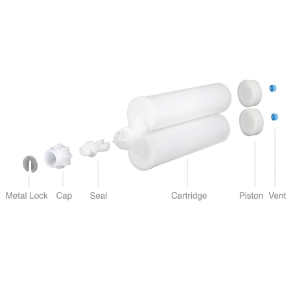
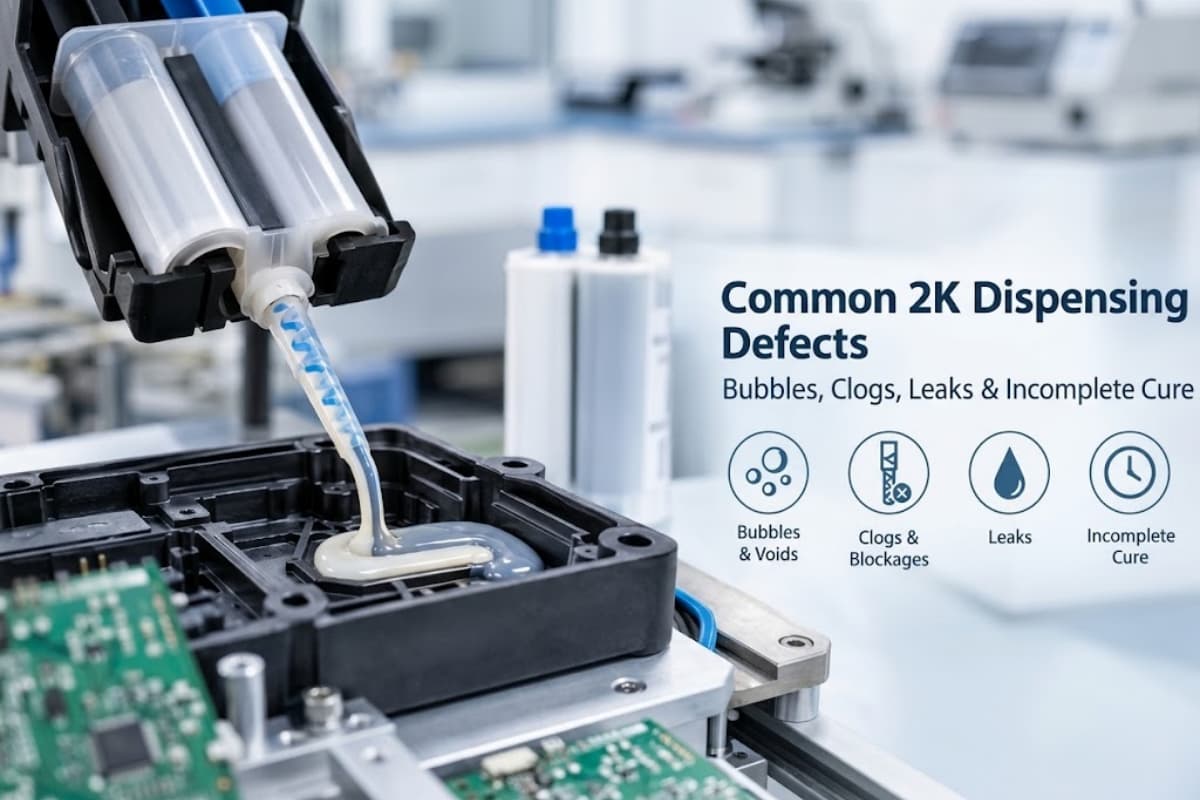
Dual Cartridge → Outlet Interface → Static Mixer Nozzle; Dispensing Tool Plungers → Matched Air-Release Pistons.
Mixer Interface Connections
-
Bayonet / Twist-Lock: Common on 50ml systems for quick installation.
-
Bell Mouth with Retaining Nut: Standard on 200ml and 400ml systems to withstand high hydraulic extrusion pressures without dislodging.
Piston Design and Air Bleed Mechanics
-
Standard Lip Pistons: Suitable for vacuum-assisted back-filling setups.
-
Air-Release (Self-Venting) Pistons: Feature micro-valves or permeable center plugs that allow air to escape during manual or automated insertion, sealing immediately upon contact with the liquid resin.
Standard vs. Custom 2K Cartridges: When to Request Custom Tooling
- Standard 50ml / 200ml / 400ml configurations
- Universal bayonet / bell connections
- Rapid delivery for standard production
- Non-standard mix ratios (e.g., 3:1, 5:1, or 8:1)
- Dedicated keyway interfaces (prevents using incorrect mixers)
- Custom barrier additive compounding and custom opaque colors
- In-mold branding and automated pack-line integration
When production demands proprietary fluid interfaces or custom volumetric capacities, manufacturers can evaluate custom cartridge manufacturing capabilities to develop dedicated mold tooling and packaging solutions.
Key Takeaways
-
Volumetric Mix Integrity: Dual cartridges mechanically control stoichiometric dispensing ratios (1:1, 2:1, 4:1, 10:1); barrel rigidity is critical to prevent ratio skewing under pressure.
-
Application-Driven Sizing: 50ml cartridges serve precision and manual tasks; 200ml to 400ml formats provide the volume needed for structural bonding and automated production cells.
-
Chemical Compatibility: Use PP for epoxies and general moisture resistance, PA (Nylon) to prevent swelling from acrylic/MMA monomers, and PBT for moisture-sensitive polyurethanes.
-
System Integration: Successful dispensing relies on pairing the cartridge with matched air-release pistons, correct interface connections, and properly sized static mixers.
Once the package is defined, match it to the tool with this cartridge-format and dispensing-gun selection guide.
After identifying the package, the dual-cartridge epoxy gun guide shows how ratio geometry, force evidence, and the material-loaded sample become one controlled release.
Frequently Asked Questions (FAQ)
Can I use a 1:1 static mixer on a 10:1 ratio dual cartridge?
What is the difference between standard PE pistons and air-release pistons?
Are industrial 2K adhesive cartridges compatible with standard dispensing guns?
Please contact Haijing for technical support.
Package ratio does not prove that a line can fill both chambers correctly. Use the cartridge filling machine selection guide to connect the approved cartridge drawing to separate material paths, chamber-dose evidence, closing, and FAT.