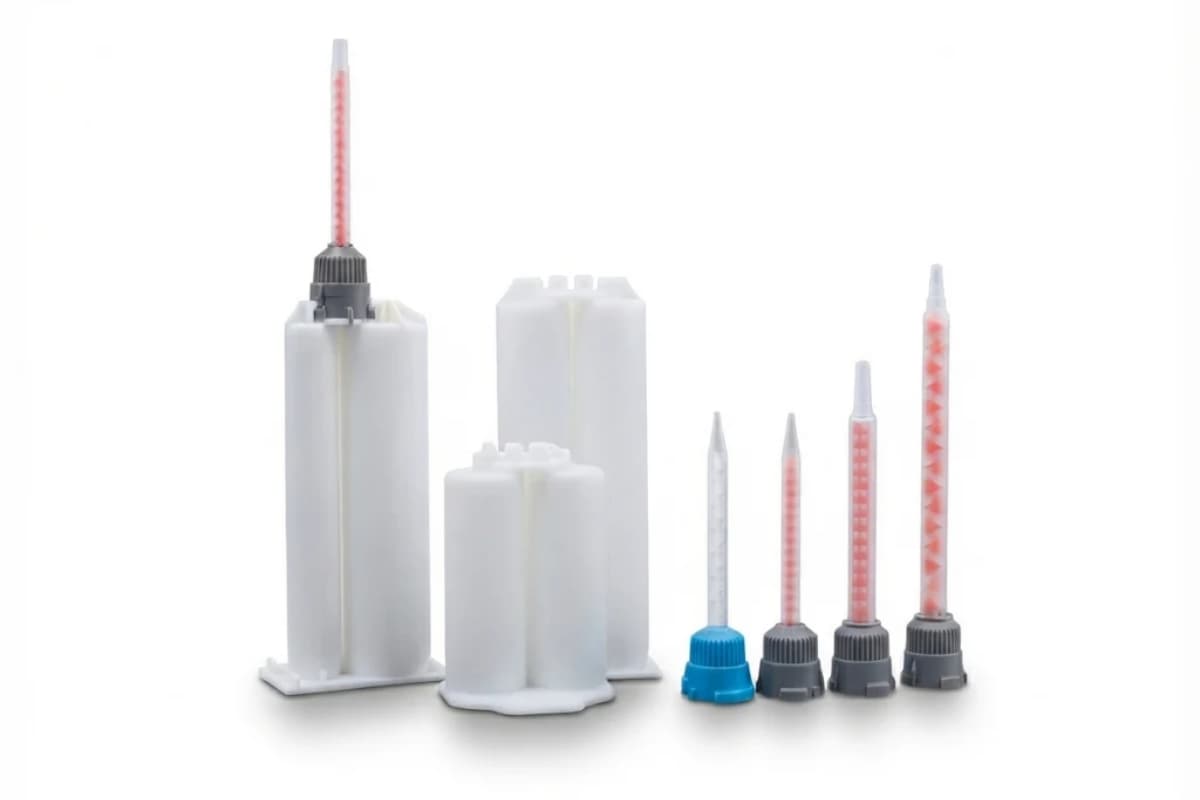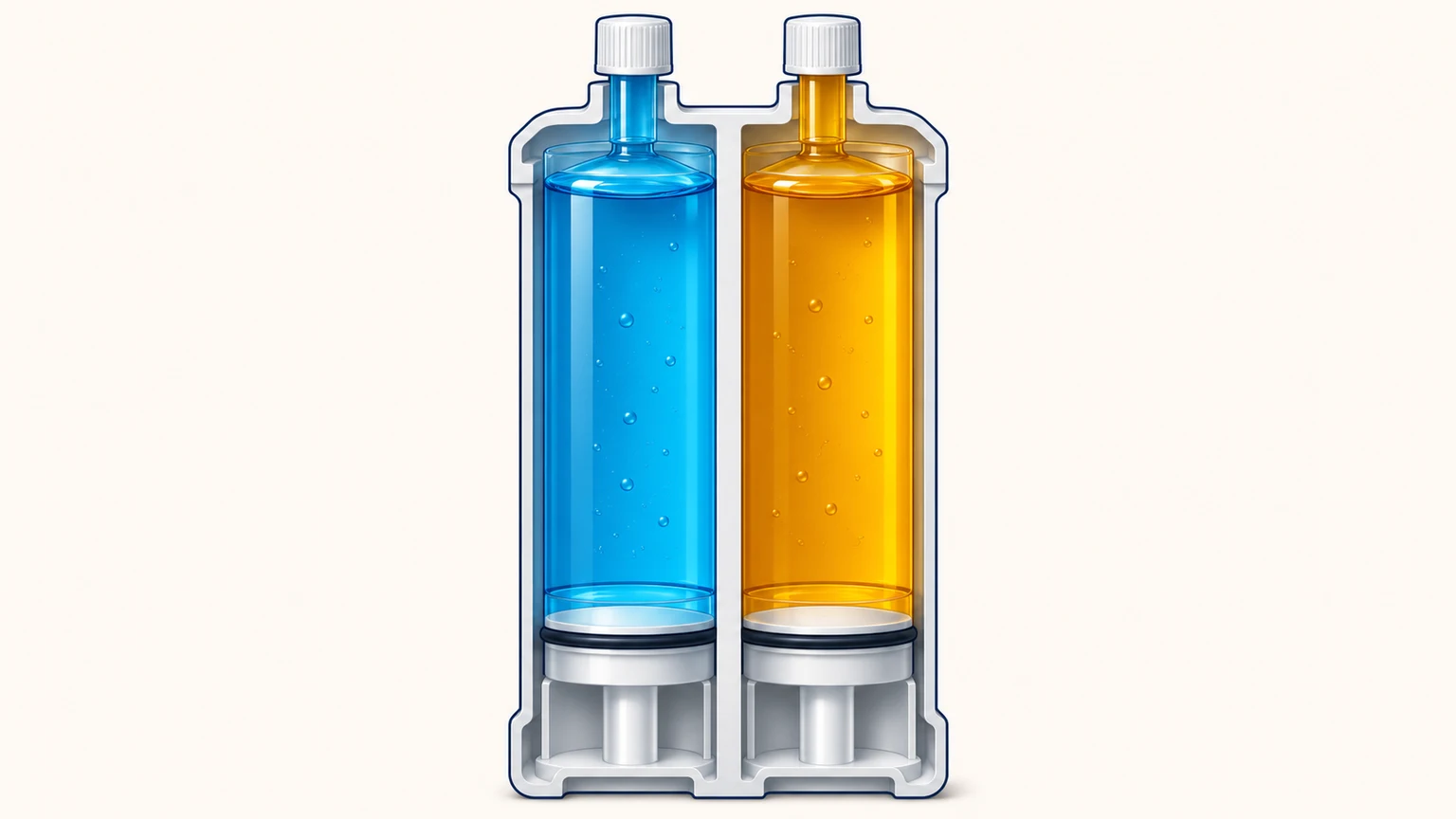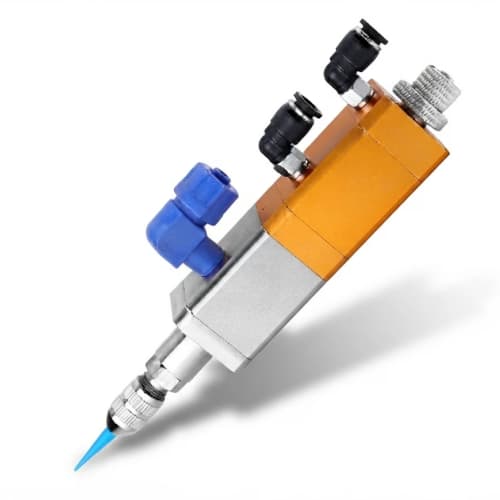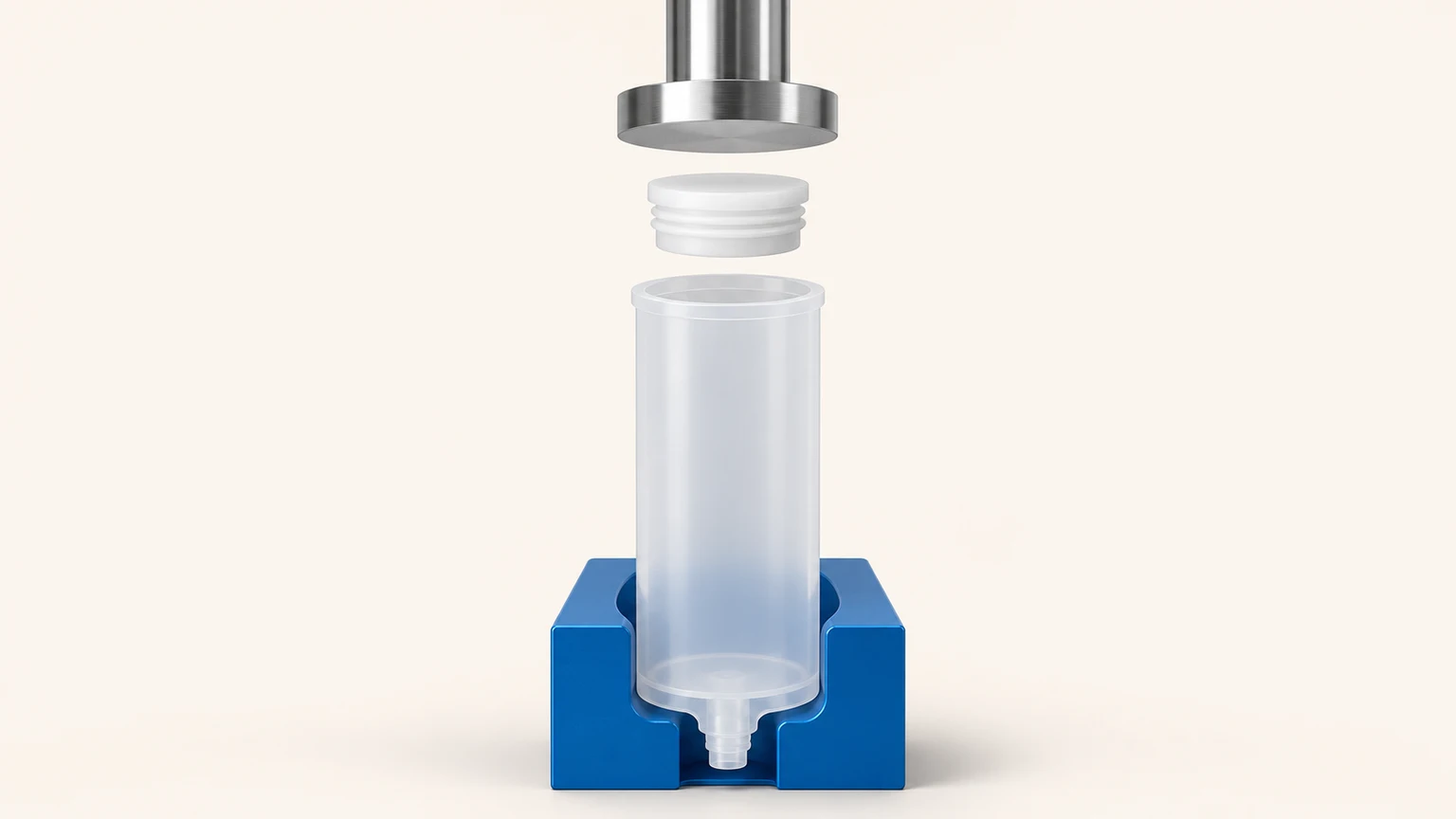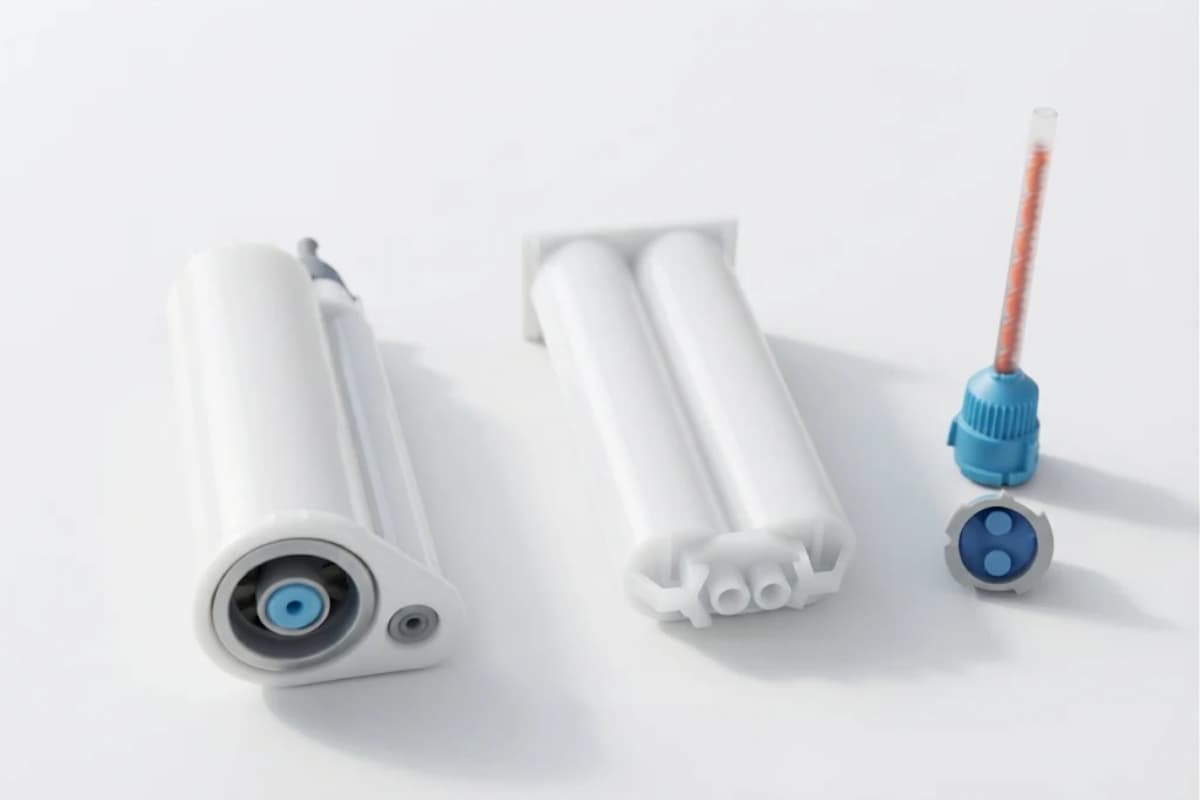
Most adhesive assembly starts the same way: a syringe barrel, air pressure, and a needle. Of all glue dispensing methods, the dispensing needle vs dispensing valve decision comes first: keep dispensing through a needle, or move to an actuated dispensing valve? The answer is a function of deposit tolerance, shot rate, and how much variation your process can absorb.
How to Decide Between Needle and Valve in 3 Steps
- Define the deposit: weight or bead volume tolerance, and how often it must repeat.
- Check the material: viscosity at operating temperature, fillers, and whether it strings or drips.
- Match the hardware: pressure-driven needle flow for simple fills, an actuated valve for repeatable shots.
Each step is expanded below, with a comparison table and a decision checklist.
Needle Dispensing: Time-Pressure Flow Through a Bore
Needle dispensing — often run as time-pressure dispensing from an air-pressure dispensing syringe — drives material from a barrel or bottle through a dispensing needle using regulated air, a syringe plunger, or hand squeeze. Flow rate follows the pressure setting, the needle gauge, and the material’s viscosity — which is exactly why it is simple and why it drifts.
Where needle dispensing wins:
- Low-volume, manual or benchtop work where an operator controls the shot
- Potting, gasket beads, and tacking where a small variation is acceptable
- Very low budgets: a barrel, a pressure pot, and needles cost a fraction of a valve station
- Frequent material changes: swap the barrel, not the valve
Where it struggles: pressure-based flow responds to every viscosity change. A cold-morning material or a settling-filled epoxy changes the deposit without anyone touching a setting. Strings and post-shot dribble are common because pressure decay, not a mechanical shut-off, ends the shot.
Valve Dispensing: Mechanical Control of the Shot
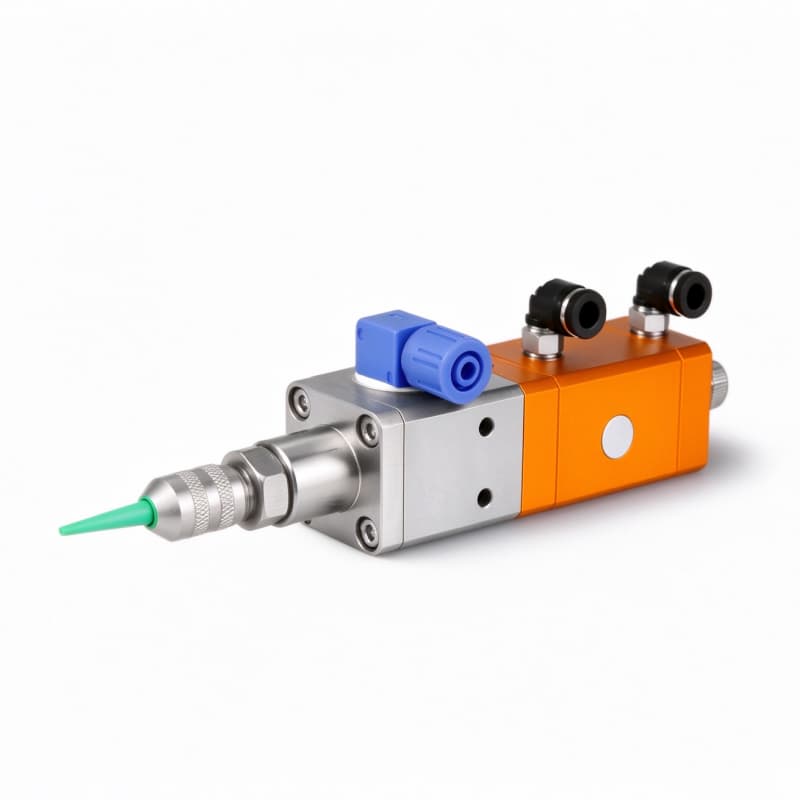
A dispensing valve meters and shut-offs the flow mechanically — diaphragm, spool, auger, piston or needle-seat designs meter an exact stroke and close positively at the end of it. What changes is repeatability: the shot is defined by stroke, time, or shot volume rather than by line pressure fighting viscosity. That repeatability is the core of the dispensing valve advantages case, and it is what precision glue dispensing at production rates actually depends on.
Where valves win:
- Repeatable shots at production rates — same weight, every cycle
- String-free shut-off: suck-back or positive close ends the bead cleanly
- Automated lines with robots, vision, or traceability requirements — the usual dividing line in manual vs automated glue dispensing
- Materials that demand control: thixotropic fluids, filled epoxies, cyanoacrylates needing micro-shots
Where they cost: capital, per-station plumbing, and maintenance intervals. A valve also fixes the metering principle — changing to a different deposit style may mean changing the valve, not just the tip.
Side-by-Side Comparison
| Factor | Needle (pressure-driven) | Valve (actuated) |
|---|---|---|
| Deposit repeatability | Drifts with viscosity and pressure | Defined by stroke/timer; highly repeatable |
| Cycle speed | Limited by fill and pressure settling | Fast, timed cycles on automation |
| Shut-off quality | Strings and dribble are common | Positive close or suck-back |
| Capital cost | Very low | Moderate to high per station |
| Maintenance | Replace needle | Seals, needles, wetted parts on schedule |
| Best fit | Manual work, prototypes, low volume | Production, automation, tight tolerances |
How to Choose: Four Questions
- What tolerance? If the deposit tolerance is a percentage of weight, and the budget depends on hitting it, an actuated valve is the safer route.
- How many shots per shift? Hundreds of timed cycles favor a valve; dozens of operator-paced shots do not.
- Who controls variation? A skilled operator can compensate for viscosity drift; a robot cannot — it needs a valve’s repeatability.
- What is the material doing? Stringing, settling fillers, or fast-cure chemistry push toward valve designs built for that behavior.
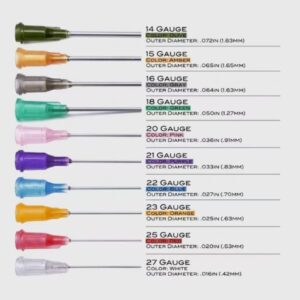
If geometry questions remain — bore size, reach, tip style — those decisions sit downstream of this one and are covered in our needle gauge size chart, tip flow rate, and tip geometry guides. Material behavior — viscosity, pot life, cure speed — is compared in our viscosity and pot life guide.
When the Answer Is “Both”
Production lines rarely choose once. A common architecture dispenses with a valve for the metered shot and finishes with a manual needle station for touch-up or low-volume variants. Valves and needles are not competing technologies; they sit at different points on the repeatability-cost curve. Size shots and material weights with our dispense volume calculator to see where your deposit actually lands, and review dispensing valve types before selecting a metering principle.
FAQ
Is a dispensing valve more accurate than a needle?
For repeated shots, yes: the valve meters a fixed stroke and closes mechanically, while needle flow varies with pressure and viscosity. A skilled operator with a needle can match one shot, but not hundreds.
When should I use a dispensing valve?
Use one when the shot must repeat hundreds of times per shift, when the line is automated, or when shut-off quality (no strings, no drips) affects the assembly. Below that threshold, needle dispensing is the cheaper and simpler route.
When can I stay with needle dispensing?
Low volume, manual control, forgiving tolerances, and changing materials. Benchtop work, prototypes and repair jobs rarely justify a valve.
Does a valve eliminate strings and dripping?
Positive shut-off designs and suck-back reduce them substantially; the material still matters. Low-viscosity, string-prone chemistry needs a valve family chosen for that behavior.
What does upgrading from needle to valve involve?
A valve station, air or electric actuation, controller plumbing, and a maintenance schedule. Budget for seal and needle replacement intervals, not just purchase price.
Can I keep my existing needles with a valve?
Often yes — most industrial valves accept standard luer/tip fittings. Verify the wetted path and fitting standard with the valve supplier.
Conclusion
Needle dispensing buys simplicity and low cost at the price of viscosity-driven variation. Valve dispensing buys repeatability and speed at the price of capital and maintenance. Decide with deposit tolerance and shot rate, not habit — and remember the two are complements on the same line, not rivals.
Contact HaiJing for Technical Support
Not sure which side of the line your process falls on? You are welcome to contact the HaiJing team for technical support — send us your material data sheet, target deposit, and cycle count, and our engineers will recommend needle, valve, or a mixed architecture with the reasoning documented.