Key Takeaways
- Size follows the shift, not the price. A 200ml cartridge suits single-station manual work; 400ml suits multi-station and pneumatic setups where changeovers cost more than material.
- Same interfaces, different roles. Both sizes mount the same C- and F-system mixers, so the choice is operational, not hardware.
- Ratio availability is equal. Both formats carry 1:1, 2:1, 4:1, and 10:1 configurations.
- Waste scales with swaps. The wrong size shows up as cured material in discarded cartridges, not on the price quote.
- Open cartridges are a shelf-life liability. Interrupted runs with fast resins favor the smaller format every time.
Picking between a 200ml and a 400ml dual cartridge sounds like arithmetic — bigger is cheaper per milliliter, so buy bigger. That reasoning fails the moment it meets a real production floor, where the true cost of a cartridge is measured in changeovers, shelf life, and how much material cures unused at the end of a run.
In short: match the cartridge to the work pattern. Low-volume, precise, single-station work favors 200ml. High-throughput, multi-station, or pneumatic dispensing favors 400ml. The overlap zone is wider than most buyers assume, and that is where this guide spends its time.

What Actually Differs Between the Two
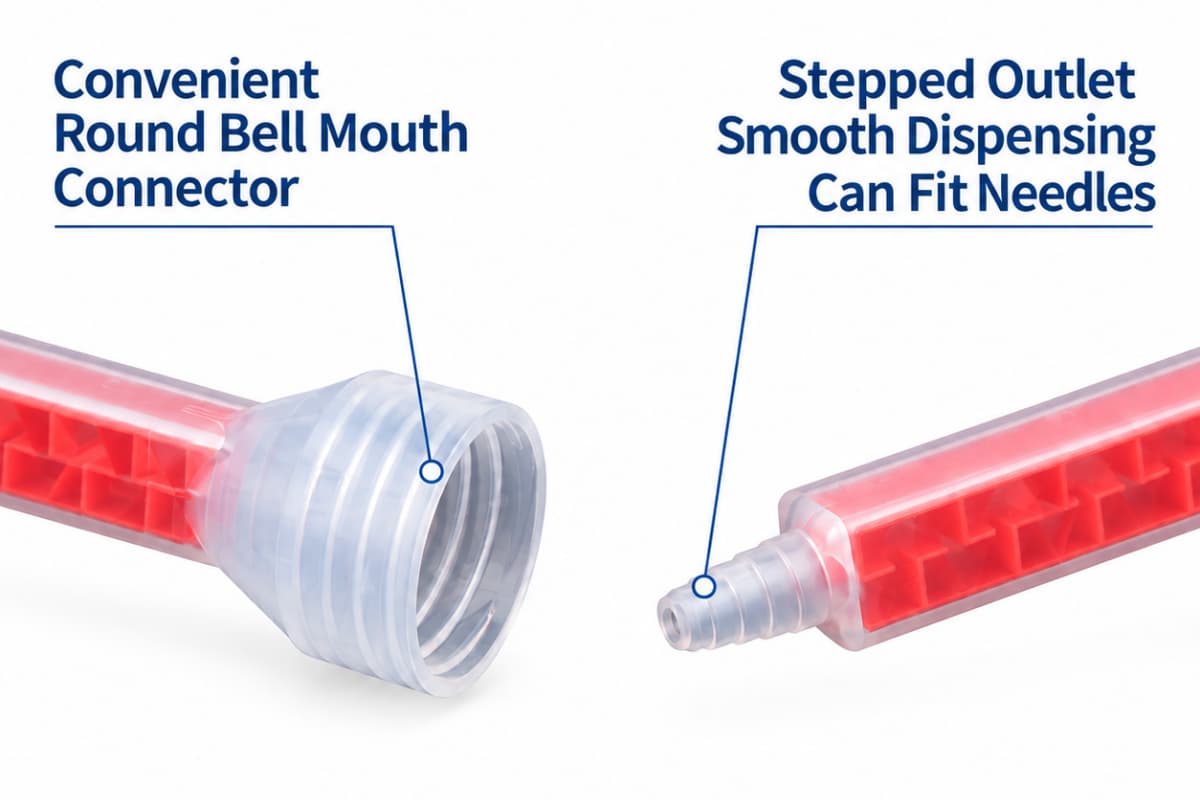
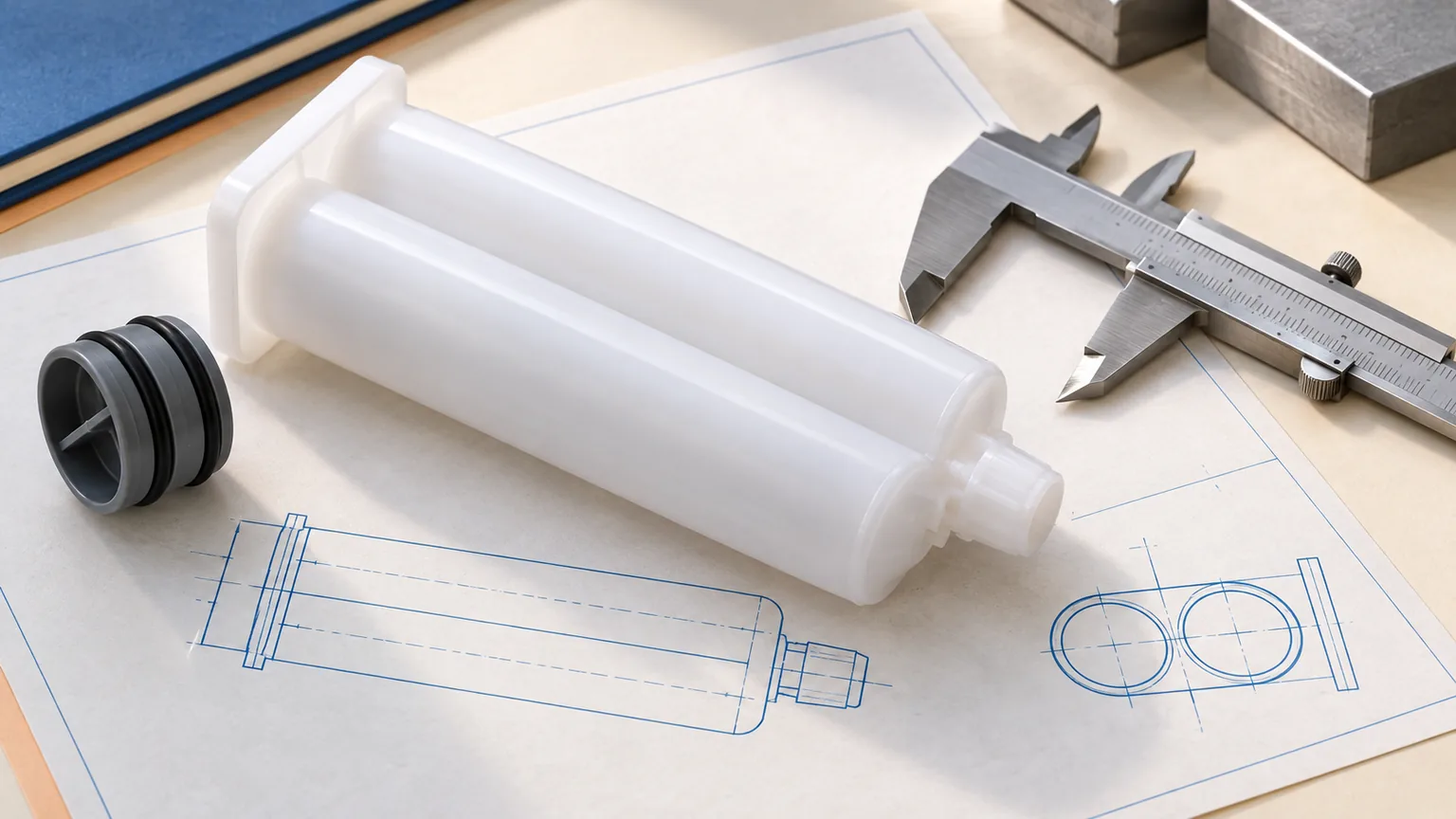
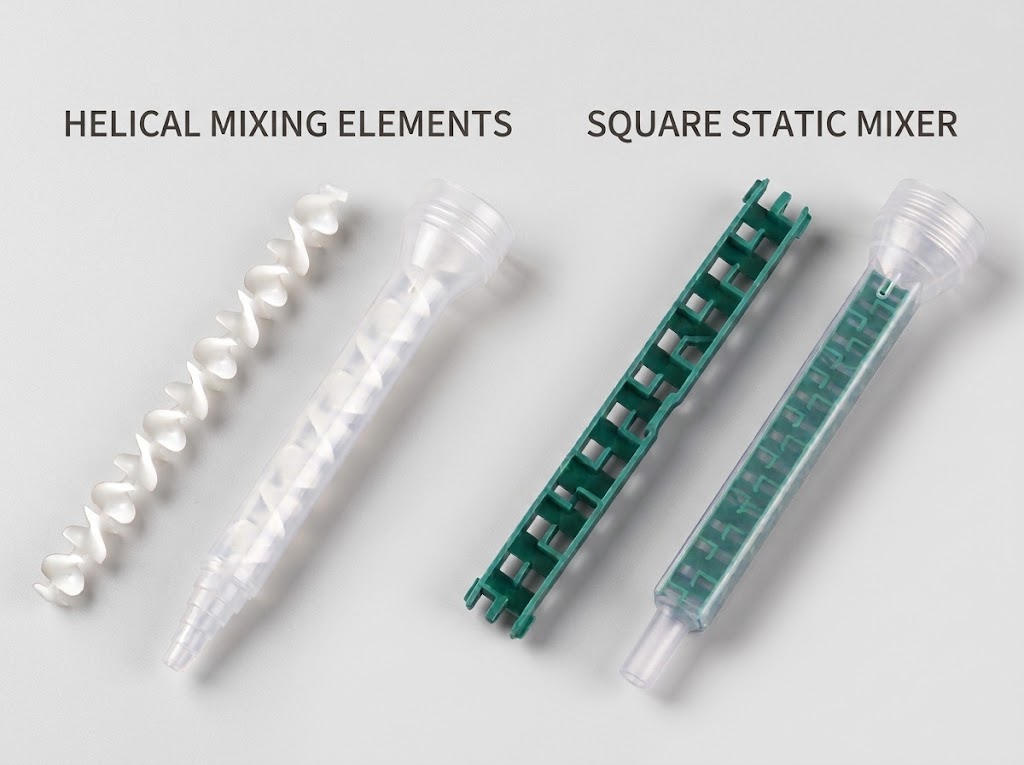
Both are dual-barrel cartridges: two sealed chambers, a center wall keeping Part A and Part B apart, interconnected pistons dispensing both at the specified ratio, and an outlet that accepts a static mixer. Both carry the same ratio options — 1:1, 2:1, 4:1, and 10:1 — and both mate with the same C-system and F-system mixer interfaces used across the industry.
What changes with size is everything operational:
| Factor | 200ml | 400ml |
|---|---|---|
| Typical dispensing mode | Manual gun, single station | Pneumatic gun, multi-station, meter-mix feed |
| Changeover frequency | Higher | Lower |
| Weight handling (loaded) | Lighter, better for fine manual work | Heavier, favors tooling or bench mounts |
| Material exposed per swap | Smaller — less cured waste at end of run | Larger — more waste if the run stops short |
| Pot-life exposure | Shorter working window per unit | Longer working window per unit |
| Mixer compatibility | C-System / F-System | C-System / F-System |
The table is the overview; the three decision questions below are how you actually land on one.
Three Questions That Decide the Size
- Question 1 — How many stations draw from one cartridge? One operator, one gun, steady pace: 200ml. Several stations, a pneumatic setup, or a shared feed: 400ml, because the changeover downtime you save outweighs the end-of-run waste.
- Question 2 — How long does a mixed batch last? If your adhesive has a short worklife and runs stop frequently, a 400ml cartridge risks curing before it empties. Short, interrupted runs favor 200ml; long continuous runs favor 400ml.
- Question 3 — What does the operator do all day? Precision manual dispensing for hours favors the lighter 200ml format. High-volume bead laying or bench-mounted dispensing favors 400ml with a pneumatic gun.
Work through the questions in order. Most programs answer the first one immediately and never need the other two; the interesting cases are the ones where question one says 400ml and question two says 200ml — those lines genuinely need to test both.
The Changeover Economics, Structured
The core trade is between two kinds of waste. A 200ml program wastes time: more cartridge changes per shift, each one costing minutes of purging, mixer mounting, and re-priming. A 400ml program wastes material: whenever a run stops before the cartridge empties, everything left in the chambers and the mounted mixer cures and goes in the bin.
Which waste dominates is arithmetic you can do before ordering. Count your cartridge changes per shift at each size, time one change honestly including purge and prime, and multiply. Then estimate how often runs stop with cartridges partially full, and how much material that strands. Lines with continuous schedules almost always land on 400ml; lines with interrupted, small-batch, or engineering-change-heavy schedules land on 200ml.
The two numbers — change-minutes per shift and stranded-milliliters per week — are the whole decision.
One subtlety deserves a flag: stranded material is not only what is in the cartridge. The mounted mixer’s retained volume cures too, and a 400ml line’s mixers are no larger than a 200ml line’s — the waste per stop is cartridge-plus-mixer, which means the marginal cost of stopping mid-cartridge grows with cartridge size.
This is exactly why fast-curing resins and stop-start production do not mix with large formats.
Shelf Life and the Opened-Cartridge Problem
Dual cartridges store well sealed — the center wall and piston system keep the components apart until dispensing begins. The clock that matters starts when the cartridge is opened and first dispensed, because from that moment the mixed residue at the outlet and the piston seals begin their exposure countdown.
Practical policies follow from this:
- Match cartridge to shift consumption — if a shift uses 250ml, a 400ml cartridge leaves half its contents aging overnight, every night, and the worklife math quietly fails.
- Fast-turning lines are free — a line that empties cartridges within hours of opening can run any size the ergonomics allow.
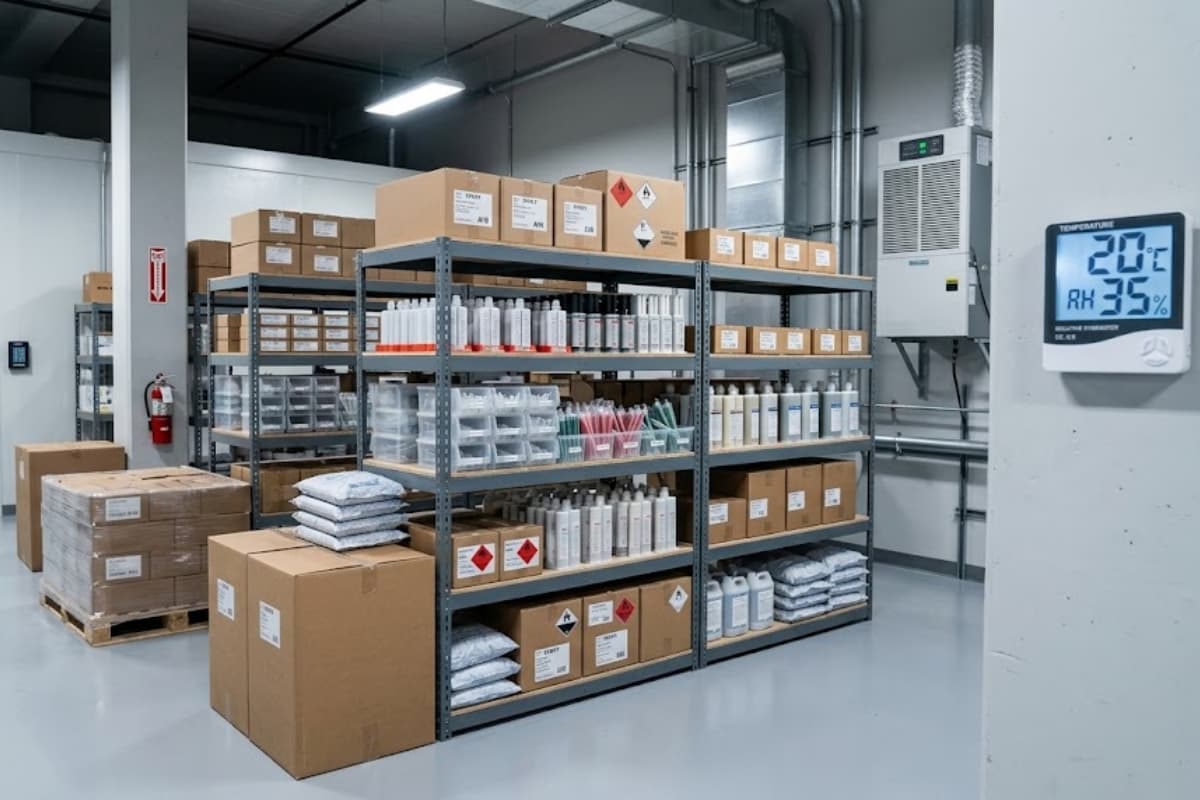
- Store sealed stock properly — rotate first-in-first-out and keep sealed cartridges in climate-controlled storage; the formulations you are packaging have their own shelf life independent of the hardware.

Ergonomics Across a Shift
The loaded weight difference between a 200ml and a 400ml cartridge is modest in absolute terms, but dispensing is not a single lift — it is hundreds of positioned movements across a shift. For fine manual work such as small-part encapsulation or precise bead placement, operators tracking a fixture with a lighter assembly make fewer positioning errors late in the shift, and positioning errors are quality escapes, not just fatigue complaints.
The counterweight is throughput: a heavier format on a bench-mounted pneumatic gun eliminates the ergonomics question entirely and doubles the material per change. The dividing line is whether the gun is handheld or fixtured. Handheld favors 200ml more often than pure arithmetic suggests; fixtured almost always favors 400ml.
Worked scenario: one shop, two sizes
Consider a contract assembler running two lines from the same 2:1 epoxy. Line A is a single manual station doing small encapsulation work in short batches — it standardized on 200ml cartridges years ago and throws away almost nothing. Line B is a pneumatic bead-laying cell that runs near-continuously through two shifts; it moved to 400ml after changeover frequency, not material price, showed up as its largest downtime line. Same adhesive, same mixer interface, two correct answers.
Specifying a dual cartridge program?
Send your adhesive ratio, dispensing mode, and daily volume — we will match the cartridge size, outlet system, and mixer pairing, and ship samples for line trials.
Construction Details That Matter Either Way
Whichever size you choose, the engineering that separates a reliable dual cartridge from a problematic one is identical. The interconnected pistons must meter both chambers at the specified ratio from the first drop to the last — a solid center wall keeps the components isolated in storage, and the outlet must seat the mixer without cross-contamination at the interface.
Wall construction deserves attention at both sizes. Cartridges molded from 100% virgin polymer with uniform wall thickness resist the internal pressures of medium and high-viscosity dispensing without bulging or bursting. Dimensional consistency is what keeps automated stations from jamming — a tolerance drift of a fraction of a millimeter can stop a fixture built around one cartridge population.
Material options run across PP, PA, and PBT in both sizes, so a chemistry-driven material decision never forces a size decision — the two selections are independent. Both sizes and the full ratio range, from 50ml through 600ml and up to 1500ml formats, are covered under our cartridge systems page, with mixer pairings under static mixers.
Scaling Beyond 400ml: When to Jump
Two thresholds govern the move to 600ml and 1500ml formats. The first is changeover arithmetic: when your change-minutes per shift at 400ml still rank among your top downtime lines, the larger format halves them again. The second is dispensing mode: the large formats assume powered dispensing — pneumatic guns or meter-mix feed — because manual operation at that scale is impractical.
The scaling logic does not change, only the magnitude. The same three questions — stations, worklife, operator pattern — decide 600ml versus 1500ml exactly as they decided 200ml versus 400ml. What does change at scale is the cost of a wrong call: a 1500ml cartridge that repeatedly stops half-full strands more material in a week than a 200ml program strands in a quarter, so the jump should follow measured changeover data, not an optimistic throughput forecast.
Operator Training and Error Rates
Cartridge size touches human factors beyond weight. Larger formats change the force profile of manual dispensing — more material moving per stroke means either more trigger travel or higher line pressure — and operators calibrated on one size make predictable errors when handed the other: over-dispensing beads at the start of the transition and under-filling at the end. Lines that standardize one size per cell avoid the recalibration period entirely; lines that mix sizes should budget for it whenever staffing rotates between cells.
The error mode worth engineering out is the partial cartridge restart. An operator who finds a half-empty cartridge at shift start faces a judgment call — dispense through possibly aged material or discard and start fresh. Clear line-side rules remove the judgment: any cartridge opened beyond a defined window is scrapped regardless of contents, and the window is set from your adhesive’s worklife data, not from optimism. The rule costs material; the absence of the rule costs field failures, which cost more.
Why We Write This
We manufacture dual cartridges across the full size range — 35 million-plus cartridges a year — so we have no bias toward either format. The right answer for your line is the one that minimizes your total cost per dispensed milliliter, including the waste you cannot see on the quote.
References
- Dual cartridge formats and ratios (50–1500ml, 1:1/2:1/4:1/10:1) — gluecartridges.com cartridge systems page, 2026.
- C-system (200/400/600ml) and F-system (200/400ml) mixer interfaces — gluecartridges.com product pages, 2026.
- Construction features (interconnected pistons, center wall, virgin polymer, uniform wall) — HaiJing product engineering documentation, 2026.
- Manufacturing scale (35M+ cartridges/year) — HaiJing manufacturing documentation, 2026.
Capacity is only one part of package approval. The empty adhesive cartridge qualification guide connects size with material evidence, piston and cap selection, filling, and filled-package storage validation.
Frequently Asked Questions
Is 400ml always cheaper per milliliter?
Do both sizes use the same mixers?
Which size suits short-worklife adhesives?
What ratios are available in each size?
Is there a format larger than 400ml?
Does cartridge material differ by size?