Dynamic vs Static Mixers: A Side-by-Side Comparison for High-Viscosity Adhesives
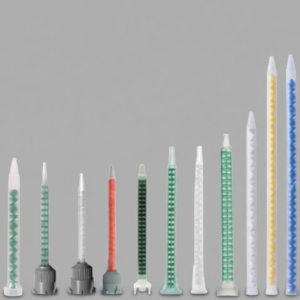
Selecting the right dispensing configuration for high-viscosity materials dictates the structural integrity and bond performance of finished assemblies. When dispensing two-component adhesives like high-viscosity epoxies and polyurethanes, engineers frequently encounter a fundamental hardware decision: choosing between a passive fluid path or a powered mixing mechanism. A proper static mixing nozzle utilizes internal geometric elements to fold and divide adhesive streams, whereas a dynamic mixer uses an externally driven rotating element to force thorough blending.
The primary decision factors governing this choice include material viscosity thresholds, reactive pot life, volumetric mix ratios, and system backpressure limits. This guide examines the mechanical differences, performance boundaries, and evaluation criteria required to optimize high-viscosity adhesive dispensing processes.
Introduction: The High-Viscosity Mixing Dilemma in Two-Component Adhesives
High-viscosity adhesives present unique fluid-handling challenges because thick resins and curing agents resist laminar flow integration. Poorly blended reactive components lead to uncured soft spots, compromised tensile strength, and structural adhesive failure. When utilizing standard dual-component cartridges, engineers must determine whether a passive fluid path can generate enough shear to blend thick materials without exceeding dispensing gun pressure limits, or if mechanical assistance is required.
This article explores the operational differences between static and dynamic mixing systems, analyzes their performance limitations under high-viscosity conditions, and provides an engineering framework for nozzle selection.
Static Mixing Nozzles: Principles, Benefits, and Limitations for Viscous Fluids
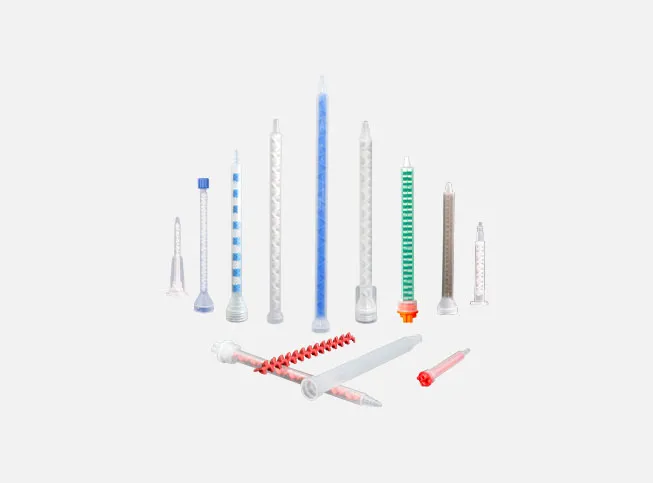
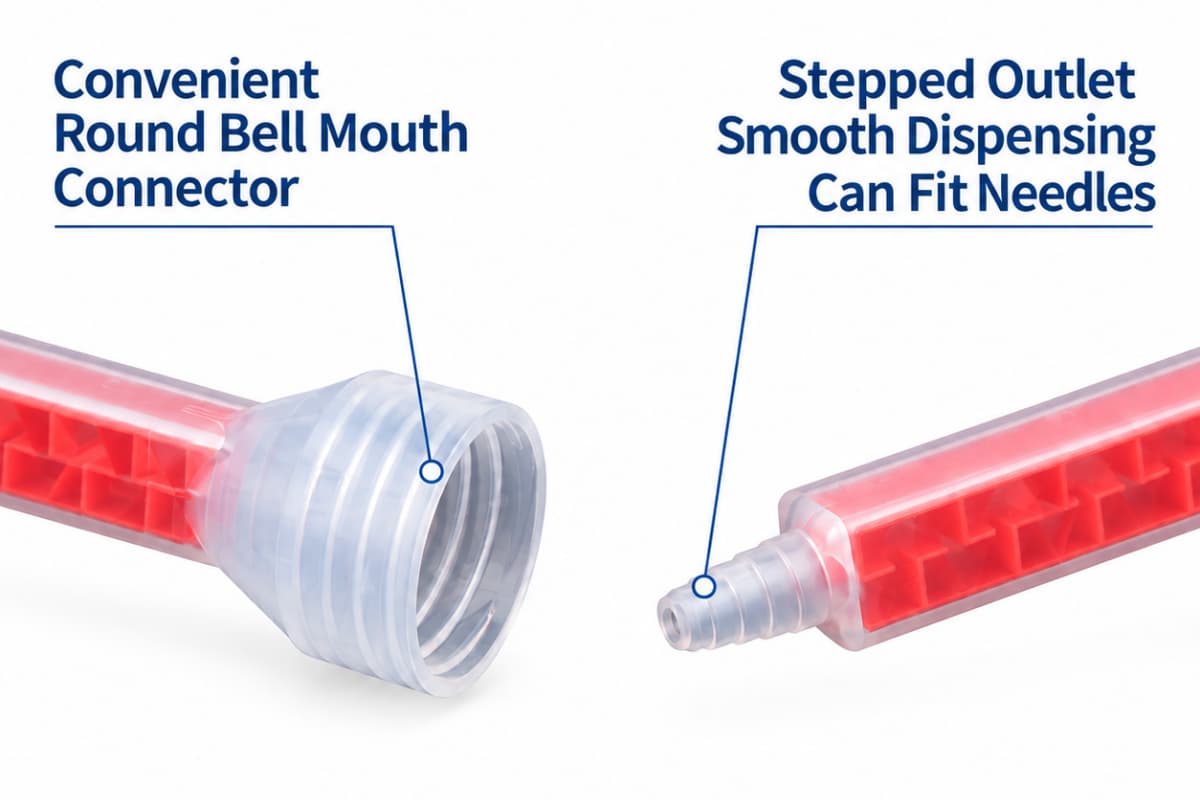
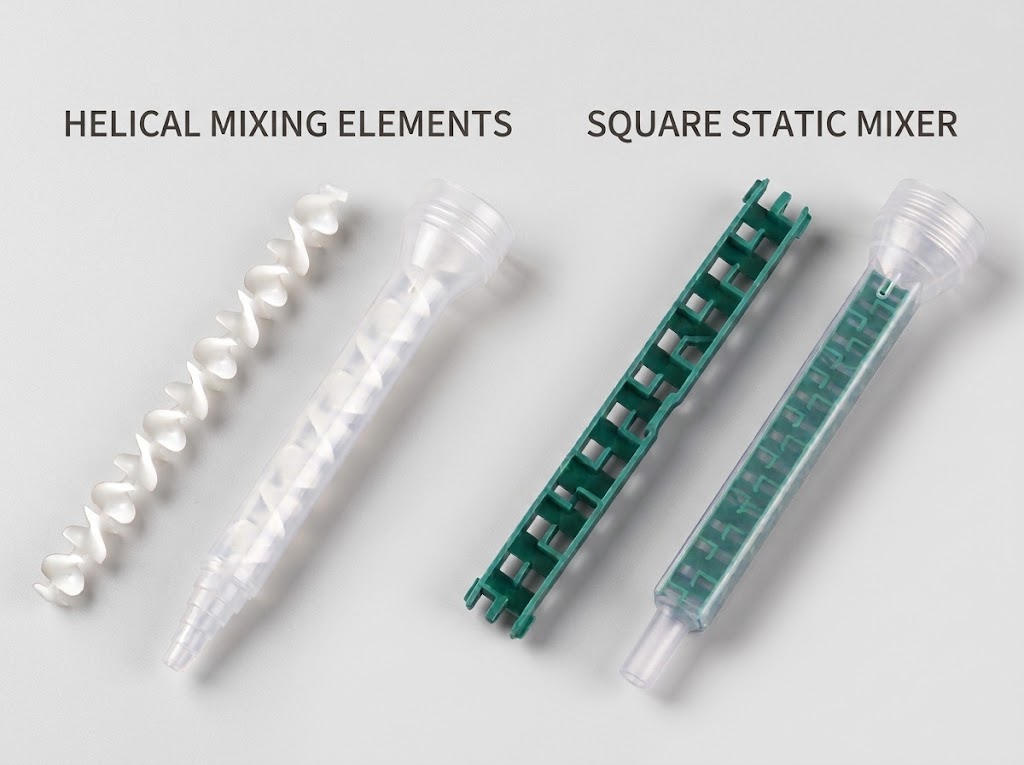
A static mixing nozzle relies entirely on the fluid energy supplied by the dispensing equipment to push resin and hardener through a fixed series of internal helical or square elements. As the components travel down the length of the element array, the flow is repeatedly divided and recombined. This passive design requires no external power source, making it cost-effective, disposable, and simple to integrate with standard manual and pneumatic application hardware.
However, processing high-viscosity fluids through a static mixing nozzle manufacturer’s standard element array introduces specific operational challenges. Thick fluids create high resistance to flow, leading to elevated backpressure within the system. If the viscosity is excessively high, the pressure required to force the material through the narrow internal channels can exceed the output limits of pneumatic dispensing guns or cause cartridge wall bulging. Furthermore, highly viscous formulations with extreme mix ratios can result in unblended streaks near the outer walls if the element count is insufficient.
For lower-to-moderate viscosity applications within compatible ranges, standard static options such as those found in a structured static mixer B system offer clean, reliable, and maintenance-free dispensing.
Dynamic Mixing Nozzles: Powered Efficiency for Extreme Viscosities
Dynamic mixing nozzles utilize an internal mixing element driven by an external motor unit rather than relying solely on fluid pressure. As the two components enter the mixing chamber, rotating blades mechanically shear and blend the resin and hardener at high speeds. This active mechanical action decouples the mixing quality from the fluid’s initial viscosity and flow velocity, ensuring complete homogenization even with thick, heavily filled, or thixotropic formulations.
The primary advantage of a dynamic mixing nozzle is its ability to handle extreme viscosities and large-volume outputs without generating unmanageable fluid backpressure. By relying on mechanical rotation rather than restricted flow channels, these systems achieve uniform blending for high-viscosity two-component adhesives that would otherwise stall or channel in passive elements. Automated industrial lines and specialized dispensing cells heavily depend on dedicated dynamic mixers to maintain consistent mix ratios and prevent batch inconsistencies during continuous, high-volume production.
Side-by-Side Comparison: Static vs. Dynamic Mixers
Evaluating the performance parameters of both technologies helps manufacturing and design engineers map fluid requirements to appropriate hardware configurations.
| Performance Parameter | Static Mixing Nozzles | Dynamic Mixing Nozzles |
| Primary Mixing Mechanism | Passive flow division via fixed internal elements | Active mechanical shear via motor-driven rotating blades |
| Viscosity Handling | Best suited for low to medium-high viscosity fluids | Ideal for extreme viscosities and heavily filled materials |
| System Backpressure | Higher pressure drop; increases with fluid thickness | Lower fluid pressure drop; powered by external rotation |
| Equipment Requirements | Standard manual, pneumatic, or automated guns | Requires specialized dispensing equipment with a drive motor |
| Cost & Maintenance | Low cost, disposable, zero maintenance | Higher initial equipment investment, replaceable mixing elements |
| Purge & Waste Volume | Contains mixed material within the element volume | Retains mixed material in the chamber; requires flushing or replacement |
Reviewing the comprehensive static and dynamic mixers range helps match specific production line throughput requirements with the correct fluid delivery architecture.
Decision Framework: How to Choose the Right Nozzle for Your Application
Selecting the optimal nozzle requires a systematic evaluation of material properties, equipment capabilities, and production parameters. Engineers should work closely with a qualified static mixing nozzle manufacturer to verify fluid compatibility before finalizing hardware selections.
-
Evaluate Material Viscosity: Determine the centipoise (cps) rating of both the resin and hardener at application temperature. Materials below moderate viscosity thresholds typically perform well with passive elements, while highly filled or paste-like formulations require mechanical assistance.
-
Analyze Mix Ratios: Extreme volumetric ratios (such as 10:1) demand rigorous blending paths to prevent unreacted pockets. Dynamic systems excel at disparate ratios, whereas high-element-count static nozzles can suffice if backpressure limits are respected.
-
Assess Dispensing Equipment Limits: Check the maximum pressure output of current pneumatic dispensing guns or meter-mix machines. If a viscous fluid requires a static element length that triggers over-pressure alarms, transition to a powered dynamic setup.
-
Calculate Consumable vs. Equipment Costs: Balance the simplicity and low cost of disposable static nozzles against the capital investment and maintenance of a motor-driven dynamic mixing setup.
Conclusion and Custom Solutions from HaiJing
Choosing between static and dynamic mixing configurations depends on balancing material viscosity, equipment capabilities, and production efficiency. While static nozzles provide an economical, maintenance-free solution for standard applications, high-viscosity and heavily filled formulations often require the mechanical shear of a dynamic mixing nozzle manufacturer’s engineered systems. HaiJing provides comprehensive fluid delivery components designed to meet rigorous industrial standards across various sectors, including automotive transportation and electronics semiconductors. Ready to optimize your high-viscosity dispensing process? Explore our customization options or contact us today to discuss specific mixing nozzle requirements or request product samples tailored to your application.
Key Takeaways
-
Static mixing nozzles rely on internal passive flow splitters, making them cost-effective and disposable for low-to-moderate viscosity applications.
-
Dynamic mixing nozzles use motor-driven rotating elements to mechanically shear thick fluids, preventing excessive backpressure during high-viscosity dispensing.
-
Viscosity thresholds, volumetric mix ratios, and equipment pressure limits are the primary criteria for selecting between passive and powered mixing systems.
-
Proper hardware selection prevents uncured adhesive spots, ensures structural bond integrity, and optimizes long-term production costs.
FAQ
Q1: At what viscosity level should I switch from a static to a dynamic mixing nozzle?
A: The transition point depends on the fluid’s thixotropic properties, temperature, and the pressure output of your dispensing equipment. When fluid resistance causes static mixing backpressure to exceed equipment limits or results in streaks, a dynamic setup should be evaluated.
Q2: Can static mixing nozzles handle 10:1 mix ratio adhesives?
A: Yes, provided the nozzle features a sufficient element count and the material viscosity allows smooth flow division. However, extreme ratios with high viscosity differences often benefit from the active blending of dynamic systems.
Q3: Are dynamic mixing nozzles disposable like static nozzles?
A: Typically, the mixing chamber or mixing head assembly on a dynamic system may require specific maintenance or replacement procedures depending on the equipment design, whereas static nozzles are designed for single-use disposal after resin cure.
Contact HaiJing for Technical Support
Ready to optimize your high-viscosity dispensing process? Contact our engineering team today to discuss custom mixing nozzle specifications or request product samples tailored to your application.
Place the mixer decision inside the complete adhesive dispensing system so package, drive, ratio, outlet, controls, and acceptance evidence are evaluated together.
Once mixing is stable, use this automated dispensing motion comparison to decide whether the outlet needs coordinate or articulated motion.