Select Epoxy Mixing Ratios Explained: 1:1, 2:1, 4:1 and 10:1 by Volume vs Weight

The Chemistry of Epoxy Mixing Ratios: Why Proportions Matter
[Part A: Epoxide Rings] + [Part B: Amine Hydrogen Atoms] —> [Crosslinked Thermoset Polymer Matrix]
-
Under-Catalyzed (Insufficient Hardener): Results in unreacted epoxide molecules. The cured polymer exhibits an incomplete network, leading to permanent surface tackiness, reduced Shore D hardness, lowered chemical resistance, and compromised shear strength.
-
Over-Catalyzed (Excess Hardener): Results in unreacted amine groups acting as plasticizers within the matrix. Excess amine migrates to the surface, creating an oily, waxy film known as “amine blush,” while drastically reducing thermal stability and making the bond brittle.
Volume vs. Weight: The Critical Density Difference
-
Resin (Part A): Typically formulated with base bisphenol-A/F epoxies and mineral fillers, resulting in a higher specific gravity (frequently 1.10 to 1.35 g/cm³).
-
Hardener (Part B): Formulated with aliphatic or cycloaliphatic amines, typically exhibiting a lower specific gravity (frequently 0.95 to 1.05 g/cm³).
Weight (Mass) = Volume × Specific Gravity (Density)
Conversion Formula: Volume to Weight
To convert a volumetric ratio to a weight ratio, use the specific gravity (SG) values from the technical data sheet (TDS):
Weight of Part B per unit Part A = (Parts by Volume of B / Parts by Volume of A) × (SG_B / SG_A)
Worked Calculation Example
-
Specified volume ratio: 2:1 (VA = 2, VB = 1).
-
Specific Gravity of Part A (SGA): 1.20 g/cm³
-
Specific Gravity of Part B (SGB): 0.96 g/cm³
Weight Ratio (B relative to A) = (1/2) × (0.96/1.20) = 0.5 × 0.8 = 0.40
Weight Ratio (A:B) = 100:40 (or 2.5:1 by weight)
Comprehensive Breakdown: 1:1, 2:1, 4:1, and 10:1 Systems
| Mixing Ratio (By Vol.) | Typical Chemical Mechanism | Viscosity Balance | Key Engineering Characteristics | Common Industrial Applications |
| 1:1 | Modified polyamides / polymercaptans | Closely matched (A ≈ B) | Fast setting, forgiving on slight ratio tolerances, balanced handling | Structural bonding, field maintenance, general assembly |
| 2:1 | Aliphatic / cycloaliphatic amine blends | Moderate disparity (A > B) | High tensile strength, balanced peel resistance, controlled exotherm | Composite laminating, aerospace panel bonding, marine structural joints |
| 4:1 | Specialized cycloaliphatic amines | Distinct disparity (A >> B) | High chemical/moisture resistance, low shrinkage, elevated Tg. | Industrial protective coatings, structural potting, toolmaking |
| 10:1 | High-performance polyamines / catalysts | Extreme disparity (A >> B) | Long pot life, low exotherm in deep pours, high thermal conductivity | Electronics semiconductors and potting, transformer casting, microelectronics |
Eliminating Mixing Errors: Manual Hand-Mixing vs. Dual Component Cartridge Systems
-
Volumetric/Gravimetric Confusion: Operators accidentally swap weight scales with volume beakers.
-
Air Entrapment: Mechanical stirring incorporates atmospheric microbubbles, introducing voids and dielectric weak points in potting layers.
-
Incomplete Edge Blending: Unmixed resin or hardener remains on the walls and bottom of the mixing container.
-
Shortened Working Life: Mixing large mass volumes causes accelerated exothermic heat buildup, shortening usable pot life.
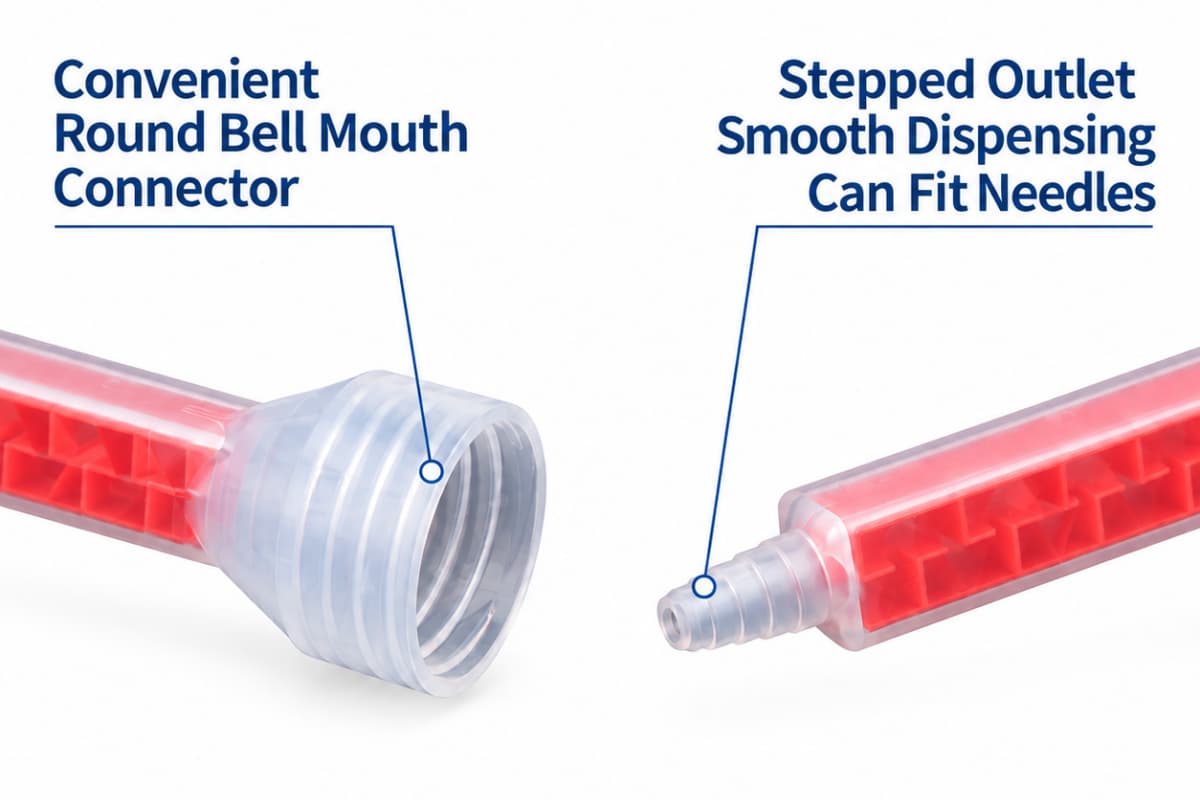
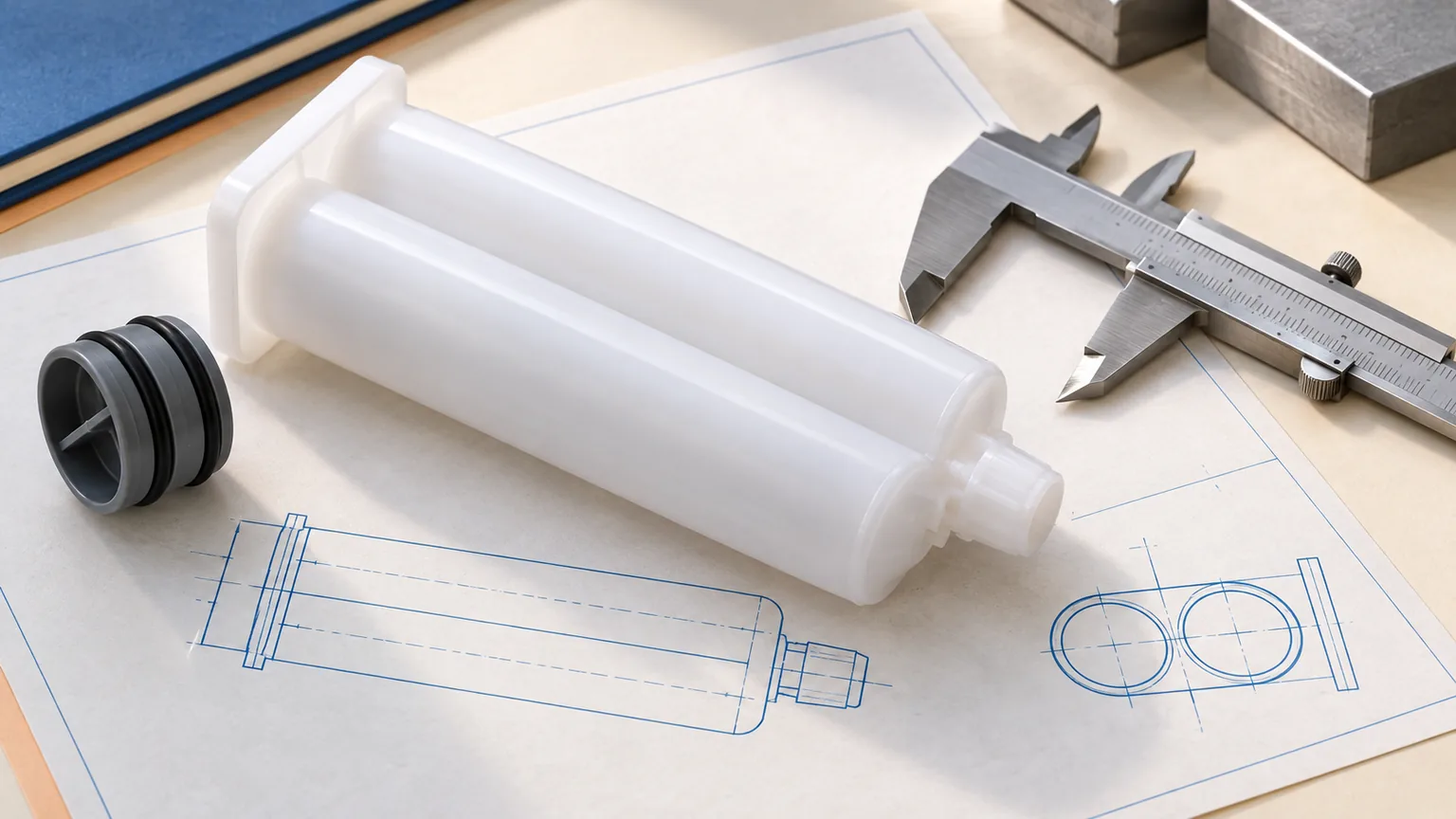
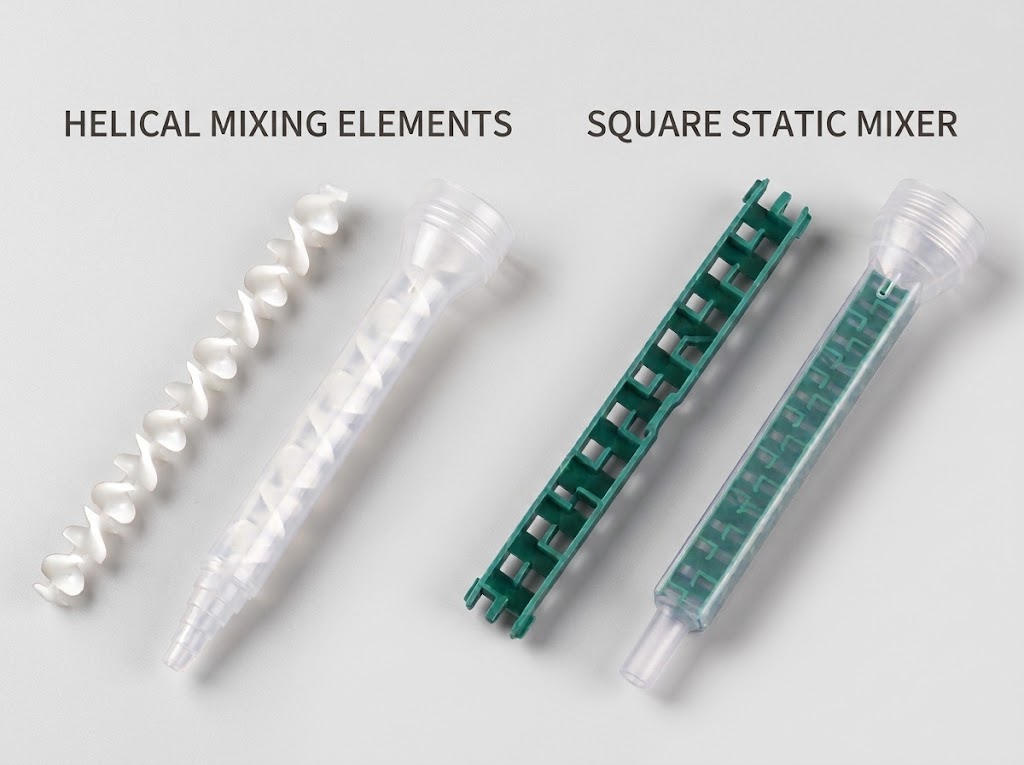
The dual-chamber cartridge features precisely volumetrically matched bores for the resin and hardener components, ensuring accurate ratio loading. The matched dispense plungers advance simultaneously at the same speed, pushing both materials out evenly. The two fluid streams then enter a helical or square static mixer, where they are repeatedly cut, folded, and recombined, creating an exponential multiplication of fluid layers. Finally, a homogeneous, air-free mixed adhesive is discharged from the outlet, ready for precise dispensing applications.
Engineering Guide: Selecting the Right Cartridge and Static Mixer for Your Ratio
1:1 Ratio Cartridge
The cartridge features two equally sized chambers, Chamber A and Chamber B, each holding 50 percent of the total volume. This design delivers a one-to-one volumetric ratio of resin to hardener, making it ideal for formulations that require equal parts of both components.
10:1 Ratio Cartridge
The cartridge features an asymmetrical design with Chamber A occupying 90.9 percent of the total volume and Chamber B occupying the remaining 9.1 percent. This configuration delivers a ten-to-one volumetric ratio of resin to hardener, commonly used for epoxy systems where significantly more resin than hardener is required.
1. Cartridge Barrel Sizing
-
1:1 and 2:1 Systems: Symmetrical or near-symmetrical chamber diameters maintain equal hydraulic backpressure across both plungers.
-
4:1 and 10:1 Systems: Asymmetrical configurations where the Part A chamber is substantially larger than the Part B chamber. High internal wall rigidity is critical to prevent barrel expansion under fluid pressure, which could distort dispensing ratios.
2. Static Mixer Element Selection
-
1:1 & 2:1 Ratios (Similar Viscosities): Typically require 16 to 24 helical elements for complete blending.
-
4:1 & 10:1 Ratios (Wide Viscosity Gaps): Require 24 to 32 elements or specialized square (quadro) mixing geometries to shear the minor, low-viscosity hardener stream thoroughly into the thick resin core.
3. Dispensing Gun Configuration
Troubleshooting Guide: Common Off-Ratio Mixing Symptoms
| Failure Symptom | Probable Root Cause | Corrective Engineering Action |
| Surface remains tacky or soft; underside is partially cured | Excess Part A (Insufficient Hardener) or volume ratio measured on a scale | Re-verify specific gravity conversion; switch to pre-packaged volumetric cartridges. |
| Oily surface film / amine blush after cure | Excess Part B (Amine oversaturation) or low ambient cure temperature | Reduce hardener proportion to match TDS stoichiometry; ensure proper mixing element count. |
| Brittle bond line; low impact/peel resistance | High-ratio system insufficiently mixed through static nozzle | Increase mixer element count (e.g., from 18 to 24 elements); verify static mixer diameter. |
| Rapid gelation, smoking, or excessive exotherm in nozzle | Large batch volume or over-metering fast-reacting hardener | Use smaller continuous dispenses; confirm correct cartridge ratio configuration. |
| Fluid leaking past cartridge pistons during dispensing | Incompatible plunger diameter or excessive fluid backpressure | Match viscosity to appropriate mixer ID; verify plunger seal profile for specific cartridge bore. |
Frequently Asked Questions (FAQ)
Can I add extra hardener to make my epoxy cure faster?
What should I do if the specific gravities of Part A and Part B are significantly different?
Can a 1:1 cartridge be used to dispense a 2:1 ratio adhesive?
How do I select between manual and pneumatic dispensers for high-ratio (10:1) epoxies?
Key Takeaways
-
Stoichiometry Governs Curing: Epoxy systems require an exact balance of epoxide rings and hardener hydrogen atoms; changing proportions does not adjust cure speed, but causes polymer degradation.
-
Volume does not equal Weight: Always convert ratios using resin and hardener specific gravities when batching by mass. A 2:1 volume ratio rarely equals a 2:1 weight ratio.
-
Hardware Matching is Critical: 1:1, 2:1, 4:1, and 10:1 systems require matching cartridge cylinders, ratio-specific plungers, and correctly calculated static mixer element counts (ranging from 16 up to 32 elements) to ensure thorough blending.
-
Industrial Packaging Eliminates Human Error: Utilizing a pre-packaged dual component cartridge system bypasses manual measuring steps, prevents air entrapment, and guarantees repeatable fluid dispensing across critical bonding processes.
Process Evaluation & Next Steps
A ratio still needs a package and mixer handoff. Use the resin static mixer input sheet to carry ratio basis, component viscosity and working life into a supplier sample request.