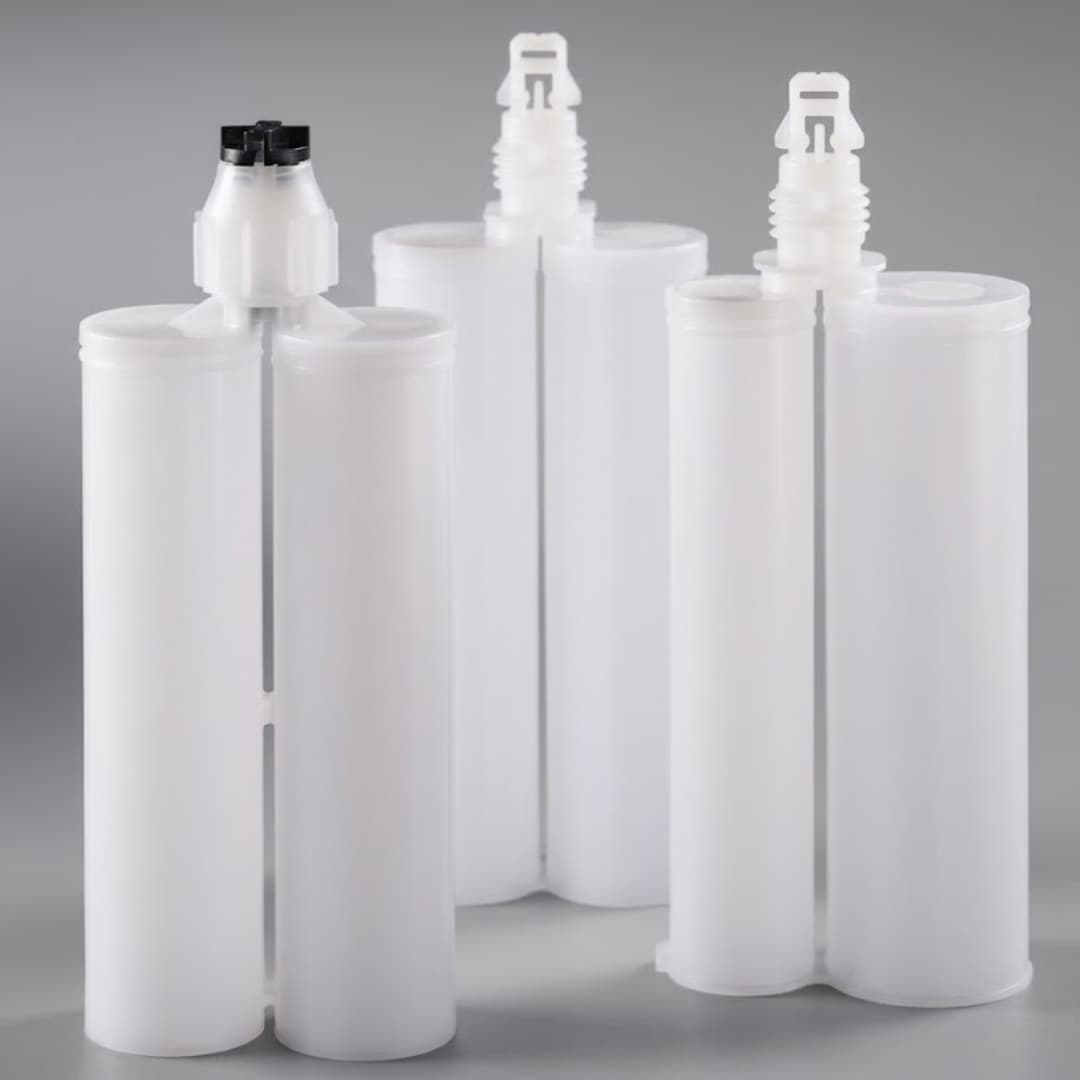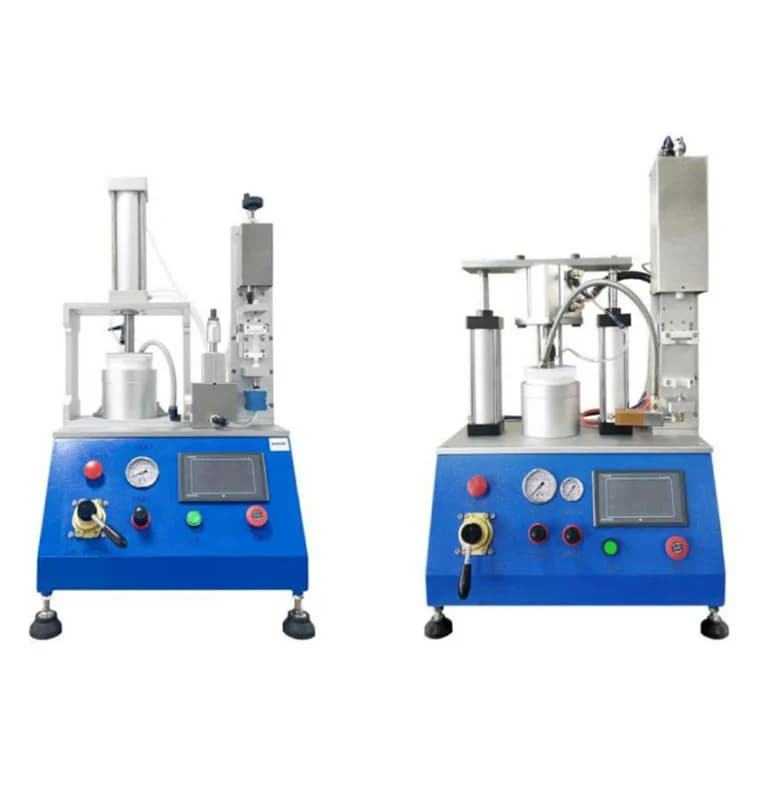
Air bubbles inside adhesive cartridges can cause inconsistent dispensing, internal voids, and downstream quality problems. For manufacturers using a glue filling machine, controlling air during the filling process is therefore an important part of production quality.
Conventional filling can work well for materials and applications where small amounts of residual air are acceptable. However, high-viscosity adhesives and bubble-sensitive applications may require additional air-removal technology, such as vacuum-assisted filling or defoaming.
This guide compares conventional and vacuum-assisted approaches and explains how to select a filling machine for single-component cartridges, two-component cartridges, and industrial syringes.
The Hidden Cost of Bubbles in Adhesive Cartridge Filling
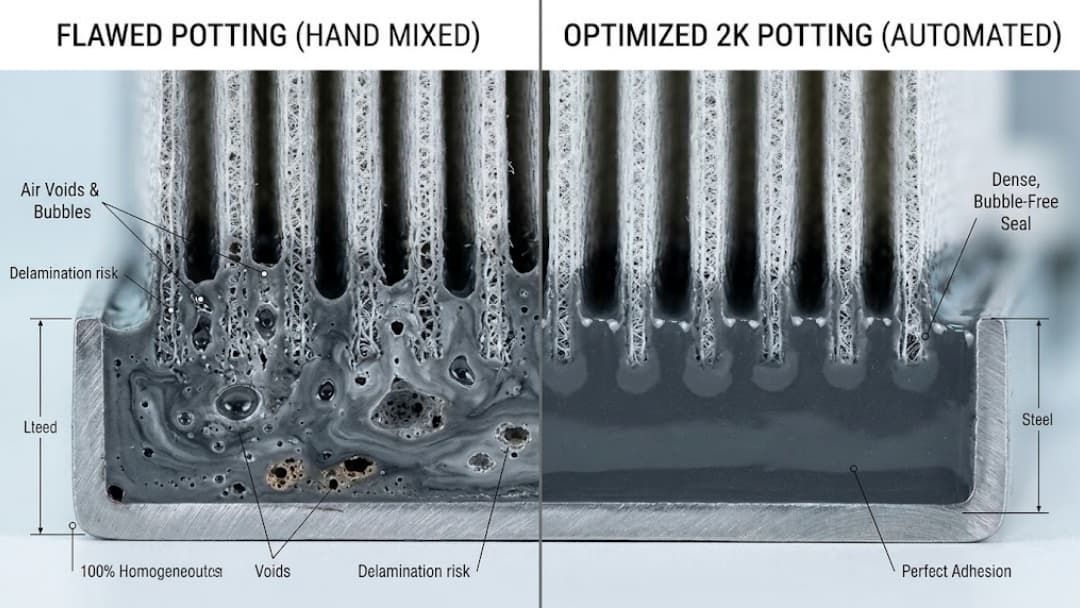
A small bubble inside an adhesive cartridge may not be visible during filling, but it can affect performance when the material is dispensed.
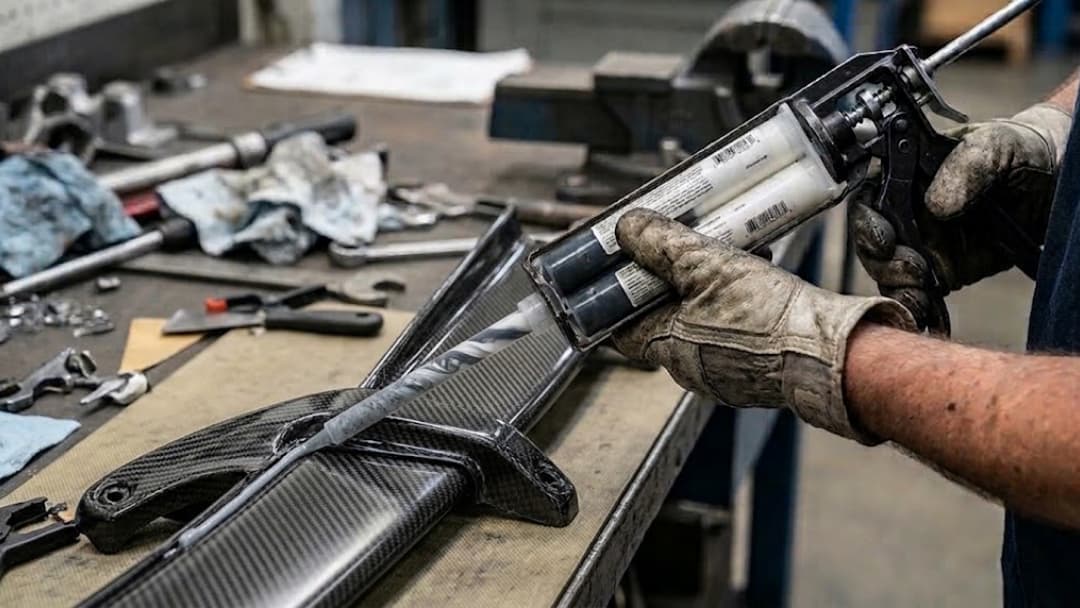
When a dispensing gun pushes the cartridge piston forward, trapped air can compress before the adhesive moves. This may result in delayed flow, inconsistent output, or unstable dispensing.
For two-component adhesives, trapped air can also affect the consistency of the dispensing process because both components must be packaged correctly before entering the mixing system.
Common problems caused by trapped air include:
- Inconsistent dispensing volume
- Irregular material flow
- Internal adhesive voids
- Additional inspection and rework
- Material waste
- Dispensing instability
- Potential defects after curing
The problem is especially important with high-viscosity materials because thick adhesives can retain air and make natural air removal more difficult.
For manufacturers using single-component cartridges, controlling air during filling can therefore be an important part of the overall dispensing process.
Conventional Filling Limitations: Why Air Becomes Trapped
A conventional cartridge filling machine primarily focuses on transferring a controlled amount of adhesive into the cartridge. Depending on the machine design, this may involve pumps, pistons, pressure systems, or other material-delivery mechanisms.
However, accurate filling does not automatically mean complete air removal.
Adhesive Viscosity
Viscosity strongly affects how easily air can move through an adhesive.
Low-viscosity materials generally allow air to move more easily, while high-viscosity adhesives can retain small air pockets.
This is why machine selection should consider the actual adhesive characteristics rather than cartridge volume alone.
Filling Speed
Higher filling speeds can increase production throughput, but the material flow must remain controlled.
If adhesive movement becomes too aggressive, air may become entrained in the material instead of escaping.
Cartridge Geometry
The shape and internal structure of a cartridge also affect air movement.
Narrow openings, internal walls, piston positions, and changes in flow direction can create areas where air remains trapped.
Material Characteristics
Epoxy, silicone, polyurethane, grease, and other industrial materials have different flow behaviors.
Fillers and non-Newtonian characteristics can further influence how adhesive behaves during filling.
Two-Component Filling
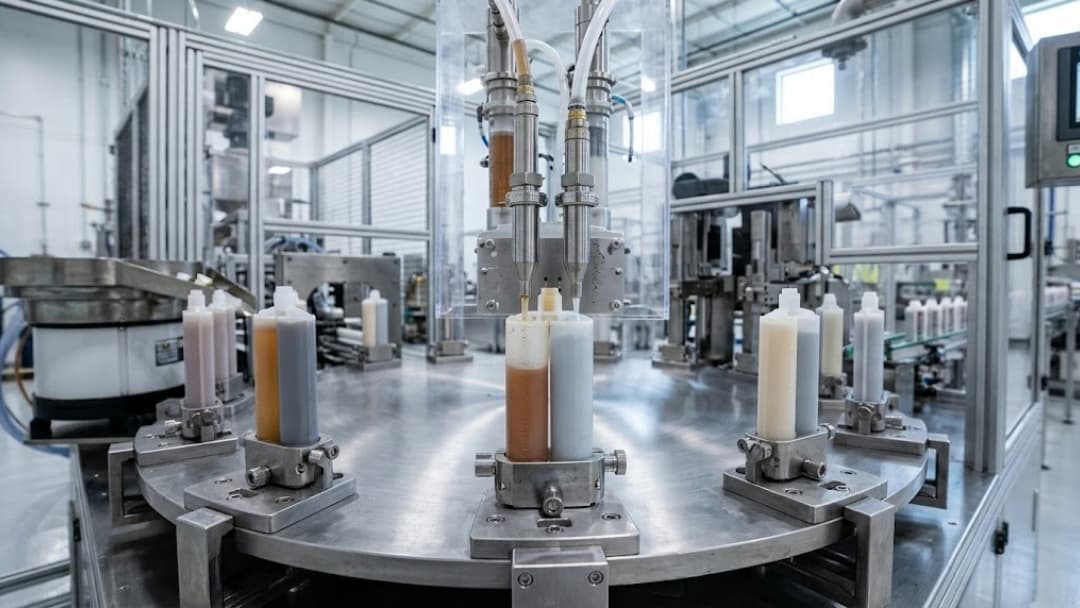
Two-component adhesives require additional control because the A and B materials must be filled into the correct chambers at the intended ratio.
For dual-component cartridges, the filling machine and cartridge should therefore be evaluated as one system.
How Vacuum Filling Technology Helps Control Trapped Air
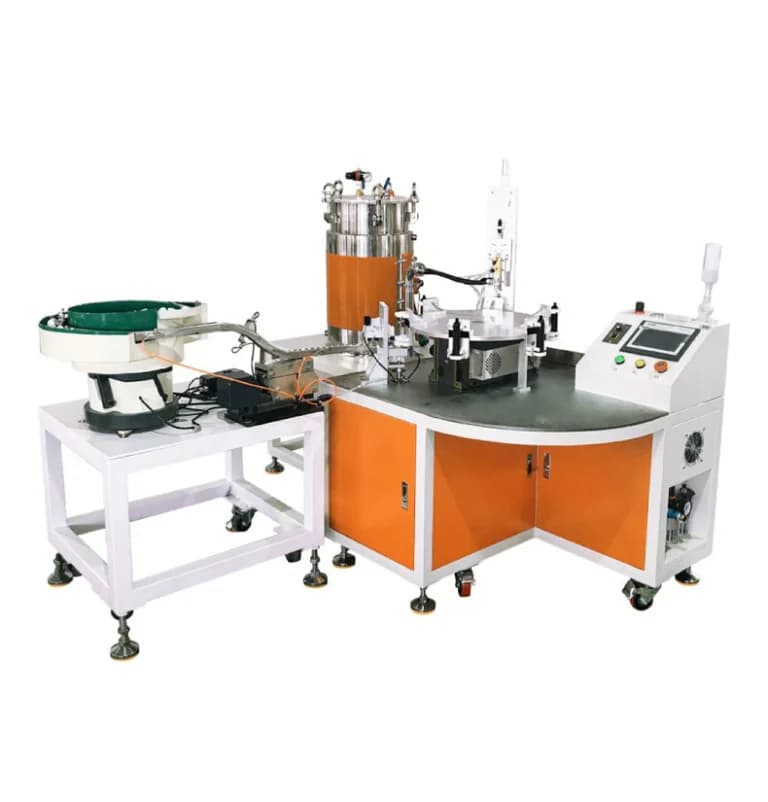
Vacuum filling uses reduced pressure to assist air removal during the filling process.
A simplified process includes several stages:
1. Cartridge preparation: The empty cartridge is correctly positioned in the filling system.
2. Vacuum creation: Air is removed from the relevant chamber or filling area.
3. Adhesive filling: The adhesive is introduced under controlled conditions.
4. Air removal: Reduced pressure can help trapped or entrained air expand and move out of the material.
5. Filling completion: The cartridge is returned to the required operating condition and prepared for subsequent assembly or dispensing.
The advantage of vacuum-assisted filling is that air removal becomes part of the filling strategy instead of relying only on the adhesive to displace air.
However, vacuum filling should not be considered a universal solution. Results depend on:
- Adhesive viscosity and rheology
- Cartridge geometry
- Vacuum conditions
- Filling speed
- Material temperature
- Filling configuration
- Required residual-air level
Actual performance should therefore be evaluated using the intended adhesive and packaging.
For buyers evaluating an adhesive filling machine, bubble-control requirements should be discussed together with the filling process.
Vacuum vs. Conventional Filling: Technical Comparison
| Factor | Conventional Filling | Vacuum / Air-Removal Assisted Filling |
|---|---|---|
| Main function | Controlled material filling | Filling with additional air-removal capability |
| Equipment complexity | Generally simpler | Generally more complex |
| Initial investment | Generally lower | Generally higher |
| Bubble control | Depends on material and process | Better suited to bubble-sensitive applications |
| High-viscosity materials | May require additional control | Can provide advantages for air removal |
| Maintenance | Simpler system | Additional air-removal components |
| Process control | Mainly filling parameters | Filling plus air-removal parameters |
| Best suited for | Less bubble-sensitive products | Bubble-sensitive or demanding applications |
The equipment price should not be the only purchasing criterion.
If conventional filling creates rejected cartridges, dispensing problems, or additional rework, a more advanced filling and air-removal process may reduce the overall production cost.
Selecting the Right Glue Filling Machine
The right machine should be selected according to four basic factors:
Material + Packaging + Production + Quality Requirements
Single-Component Cartridges
Single-component filling is generally simpler because only one adhesive needs to be transferred into the package.
Conventional filling may be suitable when:
- The adhesive has manageable viscosity.
- Residual air has limited impact.
- The application is not highly sensitive to internal voids.
- Production requirements are moderate.
Additional air-removal technology may deserve consideration when high viscosity or dispensing quality makes trapped air a recurring problem.
Two-Component Cartridges
For two-component adhesives, the filling machine must accommodate the required component relationship and cartridge design.
Important selection factors include:
- A/B component ratio
- Individual material viscosity
- Cartridge size
- Filling quantity
- Filling accuracy
- Bubble-control requirements
- Downstream dispensing system
A two component filling machine should therefore be evaluated based on the complete cartridge and dispensing process.
Industrial Syringes
An industrial syringe filling machine is typically selected according to syringe volume, material viscosity, filling accuracy, and production requirements.
For a glue syringe filling machine, buyers should also consider residual air because compressible air can affect dispensing response.
Before selecting equipment, confirm:
- Syringe size
- Adhesive viscosity
- Filling quantity
- Required production rate
- Acceptable residual air
- Manual or automatic operation
- Downstream dispensing method
High-Viscosity Adhesive Requires More Process Control
High-viscosity adhesives can be more difficult to fill consistently because they resist flow and can retain air.
For these materials, engineers should evaluate:
- Material temperature
- Filling speed
- Pumping or piston capability
- Cartridge opening
- Air-removal method
- Filling sequence
- Required dispensing performance
Simply increasing pressure or filling speed is not always the best solution.
The filling process should be tested with the actual adhesive because two materials with similar nominal viscosity can still behave differently during production.
Defoaming as an Additional Air-Control Process
Vacuum is not the only approach to bubble control.
Depending on the adhesive and production process, centrifugal defoaming can be used to remove bubbles generated during material preparation or filling.
A possible process sequence is:
Filling → Defoaming → Inspection → Packaging
This approach may be useful for certain high-viscosity adhesives where air removal after filling is practical.
The correct process depends on where bubbles are introduced and how the adhesive responds to the selected defoaming method.
How to Select the Right Technology
A simple decision framework can help procurement teams compare options.
Conventional Filling May Be Suitable When:
- The adhesive flows relatively easily.
- Small amounts of residual air are acceptable.
- Internal voids do not significantly affect performance.
- Equipment simplicity is important.
- Production requirements can be met without additional air-removal processes.
Consider Vacuum or Additional Air Removal When:
- Bubbles repeatedly appear inside filled cartridges.
- High-viscosity adhesive retains air.
- Dispensing becomes unstable.
- Internal voids affect the final product.
- Rework or material waste is increasing.
- Consistent dispensing is a critical requirement.
The decision should ultimately consider total process cost, not only the initial machine price.
What Should You Confirm Before Buying a Filling Machine?
Before requesting a quotation, provide the supplier with as much process information as possible.
Adhesive Information
- Adhesive type
- Viscosity
- One-component or two-component
- Mixing ratio
- Temperature sensitivity
- Filler content, if applicable
Packaging Information
- Cartridge or syringe format
- Package volume
- Dimensions
- Opening size
- Piston configuration
Production Information
- Required production rate
- Manual, semi-automatic, or automatic operation
- Existing production-line equipment
- Expected production volume
Quality Information
- Required filling accuracy
- Acceptable residual air
- Bubble-control requirements
- Downstream dispensing requirements
Providing this information allows the supplier to recommend equipment based on the actual process rather than simply matching the cartridge volume.
Why Material Testing Matters
A filling machine that performs well with one adhesive may not produce the same results with another.
Material testing is especially useful when working with:
- High-viscosity adhesives
- Unusual cartridge designs
- Two-component materials
- Strict bubble-control requirements
- Automated production lines
Testing can help determine whether the material can be filled consistently, whether air remains inside the cartridge, and whether additional air-removal equipment is required.
For customized applications, buyers can discuss the packaging and equipment requirements through the customization service.
Frequently Asked Questions
Can Vacuum Filling Eliminate All Bubbles?
Not necessarily. Vacuum-assisted filling can help reduce trapped air, but the final result depends on the adhesive, cartridge geometry, vacuum conditions, filling parameters, and process design.
Is Vacuum Filling Better for High-Viscosity Adhesive?
It can provide advantages because high-viscosity materials tend to retain air more easily. However, the complete process should be tested with the actual adhesive.
What Is the Best Glue Filling Machine for Epoxy?
There is no universal machine. Selection should consider epoxy viscosity, cartridge size, component ratio, filling quantity, production requirements, and bubble-control needs.
Can One Machine Fill Different Cartridge Sizes?
Some machines can accommodate multiple cartridge formats, while others are designed for specific sizes. Compatibility should be confirmed with the supplier before purchase.
How Do I Choose a Machine for 1:1 or 2:1 Adhesive?
First confirm the component ratio, cartridge configuration, material viscosity, filling quantity, and production requirements. The machine must be configured for the intended ratio.
What Information Should I Send to a Supplier?
Provide the adhesive type and viscosity, cartridge or syringe size, filling quantity, component ratio, production rate, and bubble-control requirements. Drawings or physical samples can also help with custom projects.
Key Takeaways
- Air control should be considered during adhesive filling, not only during dispensing.
- Conventional filling can be suitable for less bubble-sensitive applications.
- Vacuum-assisted filling can provide additional control when trapped air is a significant problem.
- High-viscosity adhesives usually require more careful process optimization.
- Two-component cartridges require control of both filling quantity and component ratio.
- Industrial syringe filling requires attention to both filling accuracy and residual air.
- Defoaming can provide an additional option for certain adhesive applications.
- Machine selection should be based on material, packaging, production, and quality requirements.
- Testing the actual adhesive and cartridge before equipment purchase can reduce selection risks.
Conclusion
Choosing a glue filling machine is not simply a question of selecting the fastest or lowest-cost equipment.
If residual air has little impact on the final application, conventional filling may be sufficient. When bubbles, voids, high viscosity, or dispensing instability create quality problems, vacuum-assisted filling or another air-removal process may deserve consideration.
The most effective selection process starts with the actual adhesive and packaging. By confirming viscosity, cartridge format, filling quantity, component ratio, production requirements, and acceptable residual air, manufacturers can determine the most appropriate filling strategy.
Request a Custom Bubble-Free Filling Solution
If your current filling process produces trapped air, inconsistent filling, or dispensing instability, provide your adhesive viscosity, cartridge or syringe size, filling volume, component ratio, and production requirements.
The filling and air-removal approach can then be evaluated according to your actual production conditions.