Why Your Two-Part Epoxy Isn’t Curing: 7 Mixing and Dispensing Causes
Two-part epoxy is designed to cure only when the resin and hardener are combined in the correct ratio and mixed thoroughly. If you find that your epoxy is not curing, the cause is often not the adhesive chemistry itself but issues in the mixing, cartridge system, dispensing process, or handling conditions.
Common causes include off ratio mixing, incomplete blending, trapped air bubbles, unsuitable dispensing components, and inconsistent material delivery.
For production line engineers and quality engineers, solving epoxy curing failures requires checking the complete adhesive process—not only the epoxy material.
This guide explains the seven most common mixing and dispensing causes behind epoxy curing problems and provides a practical troubleshooting framework for improving two-component adhesive dispensing consistency.
How Two-Part Epoxy Curing Works and Why Mixing Matters
Two-part epoxy consists of two separate components, commonly referred to as resin and hardener. These components remain stable when stored separately but begin the curing reaction after they are combined.
The curing process depends on three key factors:
- Correct epoxy mixing ratio
- Complete mixing between both components
- Consistent dispensing conditions
If these conditions are not controlled, the adhesive may remain soft, sticky, or partially cured.
For industrial applications, the mixing process is especially important because manual handling, incorrect cartridge selection, or unsuitable mixing components can introduce variation between dispensing cycles.
A typical two-component epoxy process follows this sequence:
| Process Step | What Must Be Controlled |
|---|---|
| Component storage | Proper handling and separation |
| Component ratio | Correct resin-to-hardener proportion |
| Mixing | Complete blending of both materials |
| Dispensing | Stable adhesive delivery |
| Curing | Suitable process conditions |
When one of these steps fails, the final adhesive performance can be affected.
7 Reasons Your Epoxy Is Not Curing
1. Incorrect Epoxy Mixing Ratio Causes Incomplete Curing
One of the most common reasons for epoxy not curing is an incorrect mixing ratio.
Two-part epoxy systems are formulated so that resin and hardener react at a specific proportion. If the components are mixed with too much of one component and not enough of the other, the chemical reaction may not proceed as expected.
This problem is often called off ratio mixing.
How Off Ratio Mixing Happens
Common causes include:
- Incorrect manual measurement
- Inconsistent dispensing volume
- Wrong cartridge ratio selection
- Uneven material flow during dispensing
Why It Causes Sticky Epoxy
When the ratio is incorrect:
- Some areas may contain excess resin
- Other areas may contain insufficient hardener
- Parts of the adhesive may remain unreacted
This can result in:
- Low bonding strength
- Sticky surfaces
- Soft cured adhesive
- Uneven hardness
- Longer curing time
Troubleshooting Checklist
| Check Item | Question |
|---|---|
| Material ratio | Are both components dispensed correctly? |
| Cartridge selection | Does the cartridge match the adhesive ratio? |
| Dispensing process | Is material output consistent? |
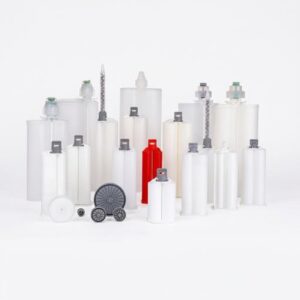
For production environments, using a suitable dual component cartridge system can help control component separation and dispensing consistency.
Related solution:
Dual component cartridges for accurate adhesive dispensing
2. Poor Mixing Creates Unreacted Adhesive Areas
Even when the epoxy mixing ratio is correct, insufficient mixing can prevent proper curing.
A two-part epoxy requires the resin and hardener to be evenly distributed. If some areas contain only one component, those sections may remain uncured.
Common Causes of Poor Mixing
- Unsuitable static mixer selection
- Manual mixing variation
- Incorrect mixing method
- Insufficient blending during dispensing
Why Static Mixing Matters
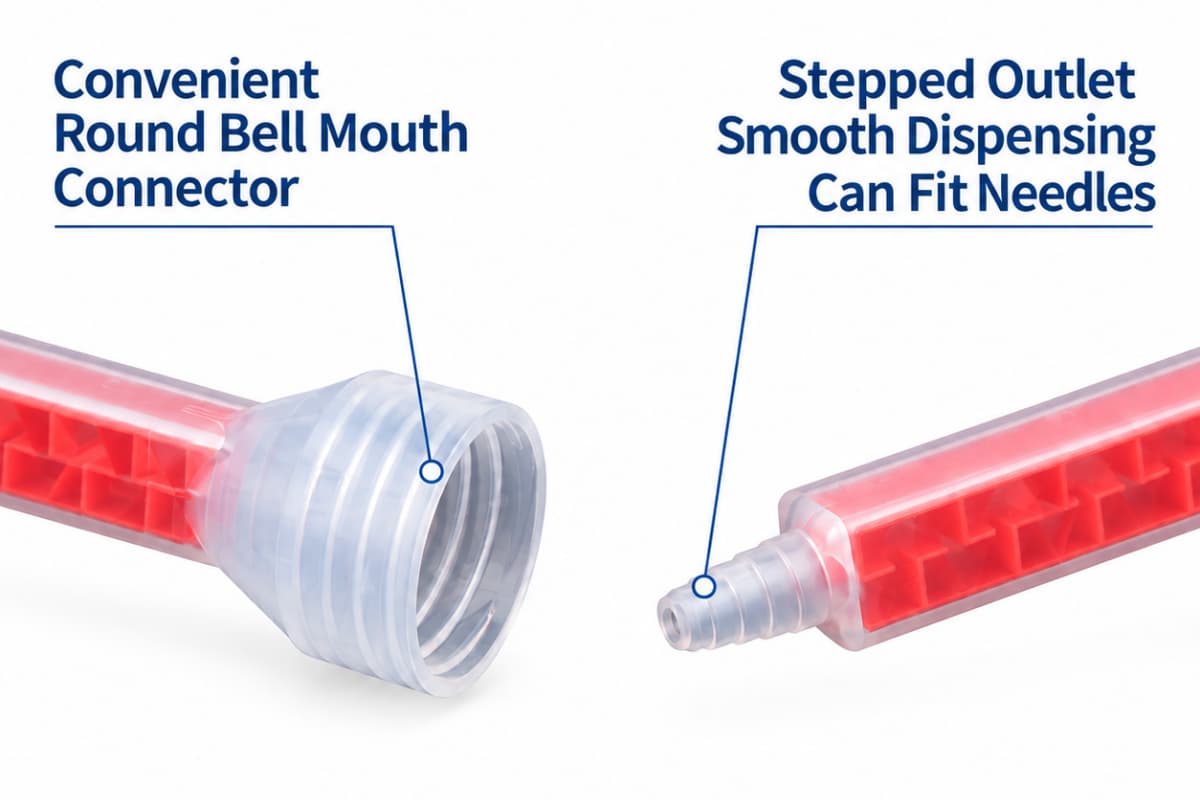
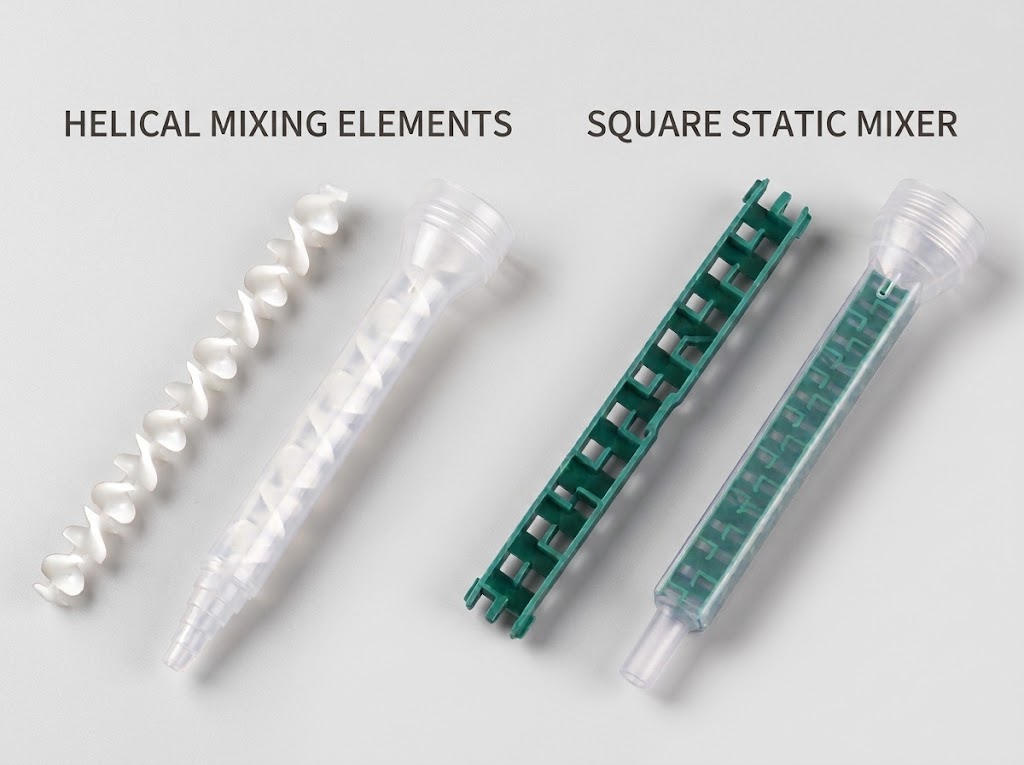
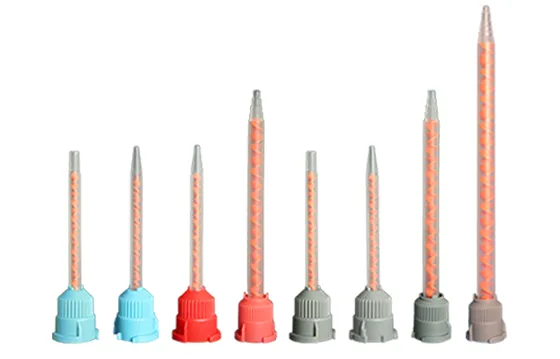
For many two-component adhesive systems, a static mixer is used to combine materials during dispensing.
A properly selected mixer helps create a more consistent mixture before the adhesive reaches the application point.
The mixing result can depend on factors such as:
- Adhesive viscosity
- Component ratio
- Dispensing conditions
- Mixer design
Actual performance should be evaluated according to the specific adhesive system and production setup.
Comparison: Manual Mixing vs Dispensing Through a Mixing System
| Manual Mixing | Controlled Dispensing System |
|---|---|
| More dependent on operator technique | More process-controlled |
| Higher variation risk | More consistent material delivery |
| Difficult to repeat exactly | Easier to standardize |
For industrial epoxy applications, selecting compatible adhesive dispense tips and mixing components is an important process consideration.
3. Air Bubbles Affect Epoxy Dispensing Quality
Air bubbles are another common issue when working with two-part epoxy.
While bubbles do not always directly stop curing, excessive trapped air can affect:
- Material consistency
- Dispensing accuracy
- Adhesive coverage
- Final appearance
How Air Bubbles Enter Epoxy
Possible causes include:
- Aggressive mixing
- Incorrect dispensing operation
- Poor material handling
- Improper cartridge usage
Air Bubble Troubleshooting Checklist
Production engineers should check:
☐ Is air introduced during mixing?
☐ Is the dispensing process stable?
☐ Is the adhesive flowing consistently?
☐ Is the dispensing component suitable for the material?
Reducing unnecessary air introduction helps create a more predictable adhesive application process.
4. Wrong Cartridge Ratio Causes Uneven Adhesive Mixing
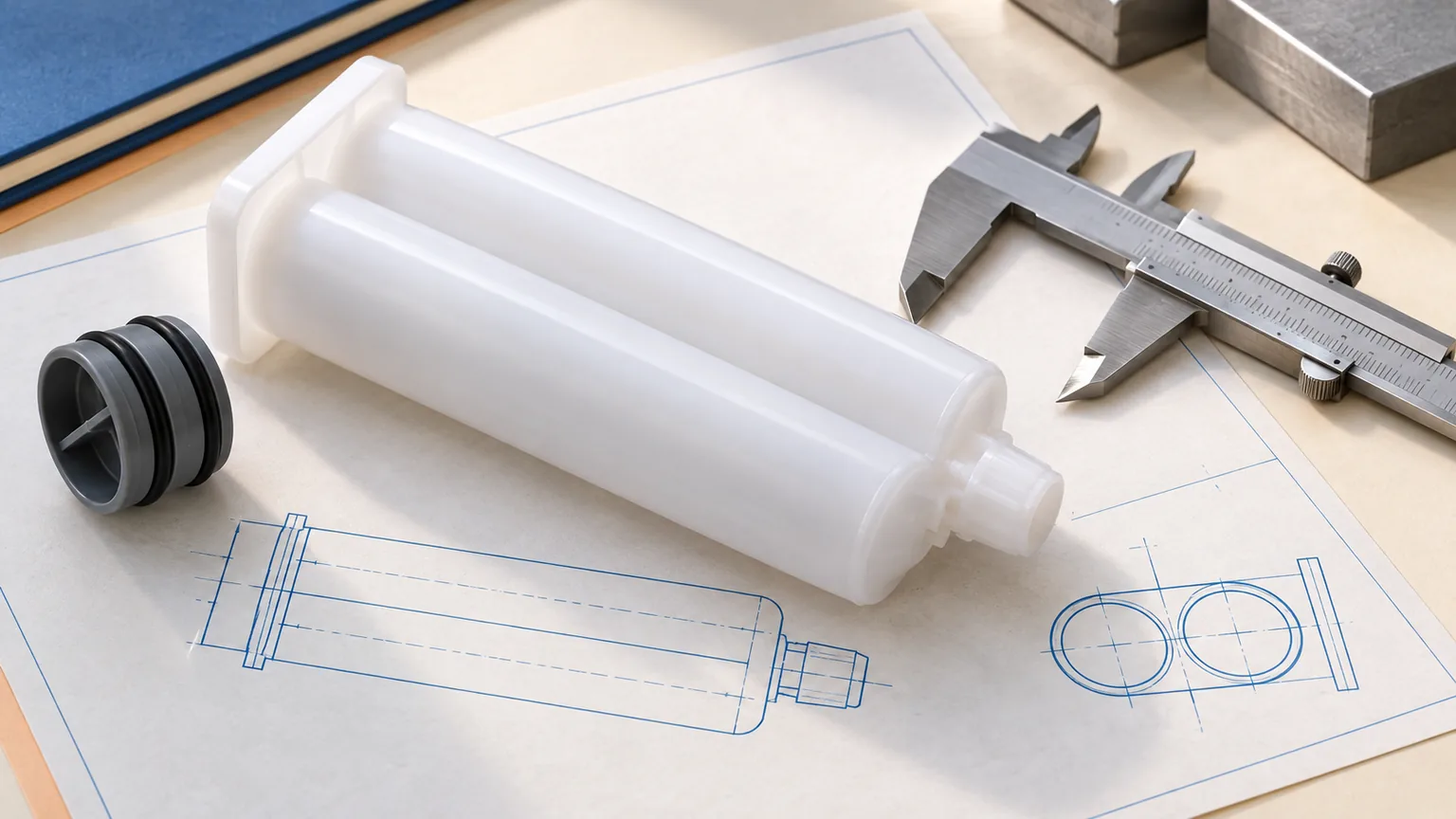
The cartridge system is an important part of two-component adhesive dispensing.
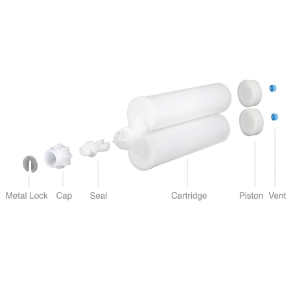
A dual component cartridge stores two adhesive components separately and delivers them for mixing during application. If the cartridge configuration does not match the adhesive requirements, mixing consistency may be affected.
Problems Caused by Incorrect Cartridge Selection
Potential issues include:
- Incorrect component proportion
- Uneven dispensing
- Inconsistent adhesive output
- Difficult process control
What Engineers Should Confirm
Before selecting a cartridge system, confirm:
| Selection Factor | Why It Matters |
|---|---|
| Adhesive component ratio | Ensures correct resin and hardener proportion |
| Adhesive viscosity | Influences dispensing behavior |
| Application method | Determines suitable dispensing setup |
A suitable dual component cartridge should match the adhesive system and production requirements.
Related solution:
Dual component cartridges
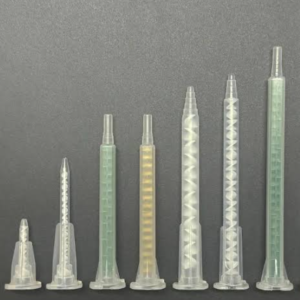
5. Incorrect Static Mixer Selection Reduces Mixing Performance
The static mixer is the final mixing stage before adhesive application.
Choosing an unsuitable mixing tip may affect how evenly the two components combine.
Factors to Consider
Engineers should evaluate:
- Adhesive viscosity
- Required mixing quality
- Dispensing equipment
- Application requirements
Selection Considerations
| Requirement | Evaluation Factor |
|---|---|
| High-viscosity adhesive | Mixer compatibility |
| Continuous production | Stable dispensing process |
| Consistent application | Proper mixing component selection |
The correct adhesive dispense tip depends on the adhesive material and process configuration.
Related solution:
Adhesive dispense tips for epoxy applications
6. Contamination or Improper Handling Prevents Proper Curing
Sometimes epoxy curing problems are caused by handling conditions rather than mixing equipment.
Foreign materials or incorrect handling may affect adhesive behavior.
Common Areas to Check
Production teams should review:
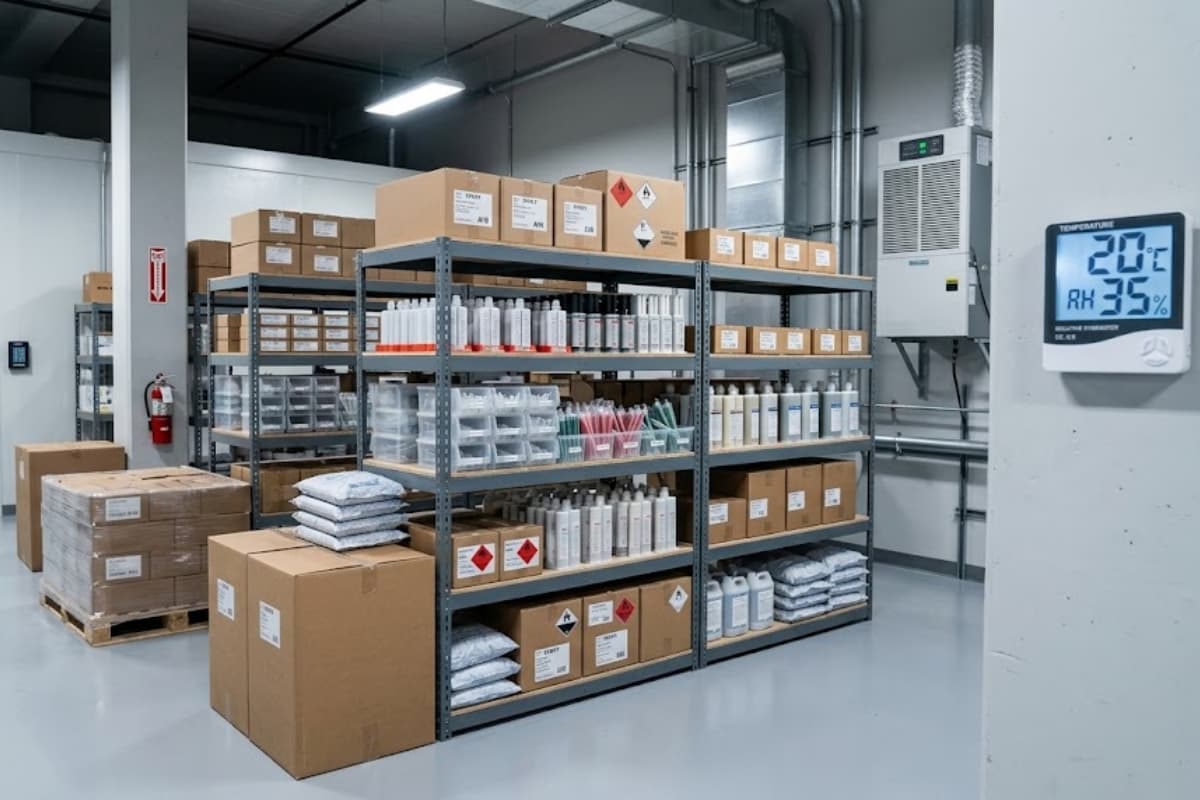
- Adhesive storage and handling practices
- Cleanliness of dispensing components
- Material contact surfaces
- Process environment
Production Quality Checklist
Before troubleshooting equipment, confirm:
☐ Components are handled correctly
☐ Dispensing path is clean
☐ Materials are not contaminated
☐ Process conditions are stable
A systematic inspection helps separate adhesive issues from dispensing-related problems.
7. Dispensing Process Settings Create Curing Problems
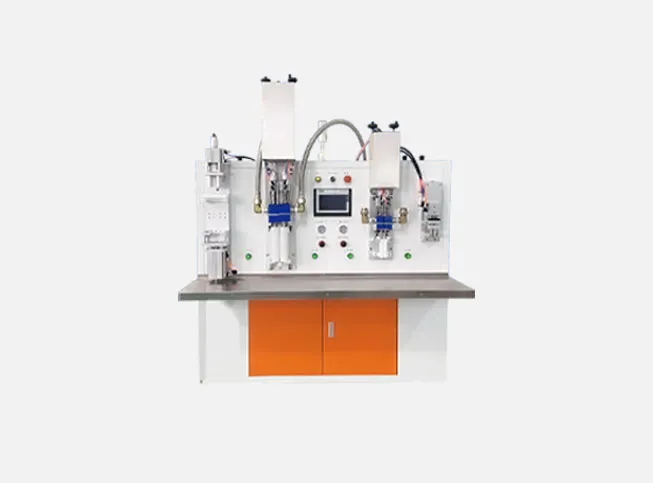
The dispensing process can influence the final adhesive result.
Even with correct materials and equipment, inconsistent dispensing conditions may create curing variation.
Process Factors to Review
Engineers should check:
- Adhesive material condition
- Cartridge compatibility
- Mixing component selection
- Dispensing stability
- Final curing results
Epoxy Troubleshooting Decision Framework
| Problem Observed | First Check |
|---|---|
| Epoxy remains sticky | Mixing ratio and material combination |
| Uneven curing | Mixing quality |
| Visible bubbles | Dispensing process |
| Different results between batches | Process consistency |
A complete review of the adhesive dispensing system is usually more effective than replacing the adhesive immediately.
Epoxy Not Curing Troubleshooting Checklist for Production Engineers
When epoxy does not cure properly, follow this order:
Step 1: Check the Mixing Ratio
Confirm:
- Are resin and hardener combined correctly?
- Is the dispensing ratio stable?
Step 2: Check the Mixing Process
Confirm:
- Are both components fully blended?
- Is the mixer suitable?
Step 3: Check the Dispensing Components
Confirm:
- Is the cartridge appropriate?
- Is the dispensing tip compatible?
Step 4: Check the Production Process
Confirm:
- Are operating conditions consistent?
- Are handling procedures controlled?
This approach helps identify whether the issue comes from the adhesive material, packaging system, or dispensing process.
How to Prevent Two-Part Epoxy Curing Problems in Production
Preventing curing failures requires controlling the complete dispensing workflow.
Recommended practices include:
1. Select Compatible Dispensing Components
The cartridge and mixing tip should match:
- Adhesive ratio
- Material characteristics
- Application requirements
2. Standardize the Dispensing Process
Reduce variation by controlling:
- Material handling
- Component selection
- Dispensing procedures
3. Review the Complete Adhesive System
Instead of checking only the epoxy material, evaluate:
- Packaging system
- Mixing method
- Dispensing components
- Production conditions
A complete process review often provides a clearer path to solving recurring curing issues.
Choosing the Right Cartridge and Mixing Tip for Two-Part Epoxy Applications
For manufacturers using two-component epoxy, selecting suitable dispensing components is an important engineering decision.
Key evaluation factors include:
| Factor | Questions to Ask |
|---|---|
| Cartridge system | Does it match the adhesive ratio? |
| Mixing tip | Is it suitable for the adhesive type? |
| Application process | Does it support the production method? |
| Custom requirements | Is a customized solution needed? |
HaiJing provides customized production and supply of adhesive packaging, mixing, and dispensing consumables to support different adhesive application requirements.
For specific applications, engineers should confirm the required configuration based on adhesive type, dispensing equipment, and production conditions.
Related solutions:
- Dual component cartridges
- Adhesive dispense tips
- Custom adhesive packaging solutions
FAQ: Common Questions About Epoxy Not Curing
Why is my epoxy sticky after curing?
Sticky epoxy is often caused by incomplete curing. Possible reasons include incorrect mixing ratio, insufficient mixing, or unsuitable processing conditions.
Can incorrect mixing ratio stop epoxy from curing?
Yes. Off ratio mixing can prevent resin and hardener from reacting properly, leaving parts of the adhesive soft or uncured.
Do air bubbles affect epoxy curing?
Air bubbles may affect dispensing consistency and adhesive application quality. Excessive trapped air should be investigated as part of the dispensing process.
Can a dispensing tip affect epoxy performance?
Yes. The mixing component affects how well two adhesive components combine before application. The correct dispensing tip should match the adhesive system.
Key Takeaways
- Epoxy not curing is often caused by process issues rather than only adhesive problems.
- The most common causes include off ratio mixing, poor mixing, air bubbles, cartridge mismatch, and dispensing problems.
- A stable two-component adhesive process requires coordination between the epoxy material, cartridge system, mixing components, and dispensing method.
- Production engineers should troubleshoot the complete adhesive workflow before changing materials.
- Selecting suitable dual component cartridges and adhesive dispense tips can help create a more controlled dispensing process.
Contact Hingjing Professional Team
Need help selecting the right cartridge and mixing components for your two-part epoxy application?
Share your adhesive type, dispensing process, and current curing issue with HaiJing. Our team can help evaluate suitable adhesive packaging and dispensing component options for your production requirements.