1K vs 2K Adhesive Cartridges: Which Packaging Solution Fits Your Application?

Table of Contents

1K vs 2K Adhesive Cartridges: Which Packaging Solution Fits Your Application?

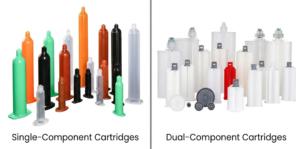
1K single component cartridge compared to 2K dual component cartridge system

Selecting the correct adhesive packaging system is a pivotal technical decision in industrial manufacturing and assembly. The choice between 1K vs 2K adhesive cartridges directly dictates dispensing accuracy, production line speed, material shelf life, and overall equipment investment.
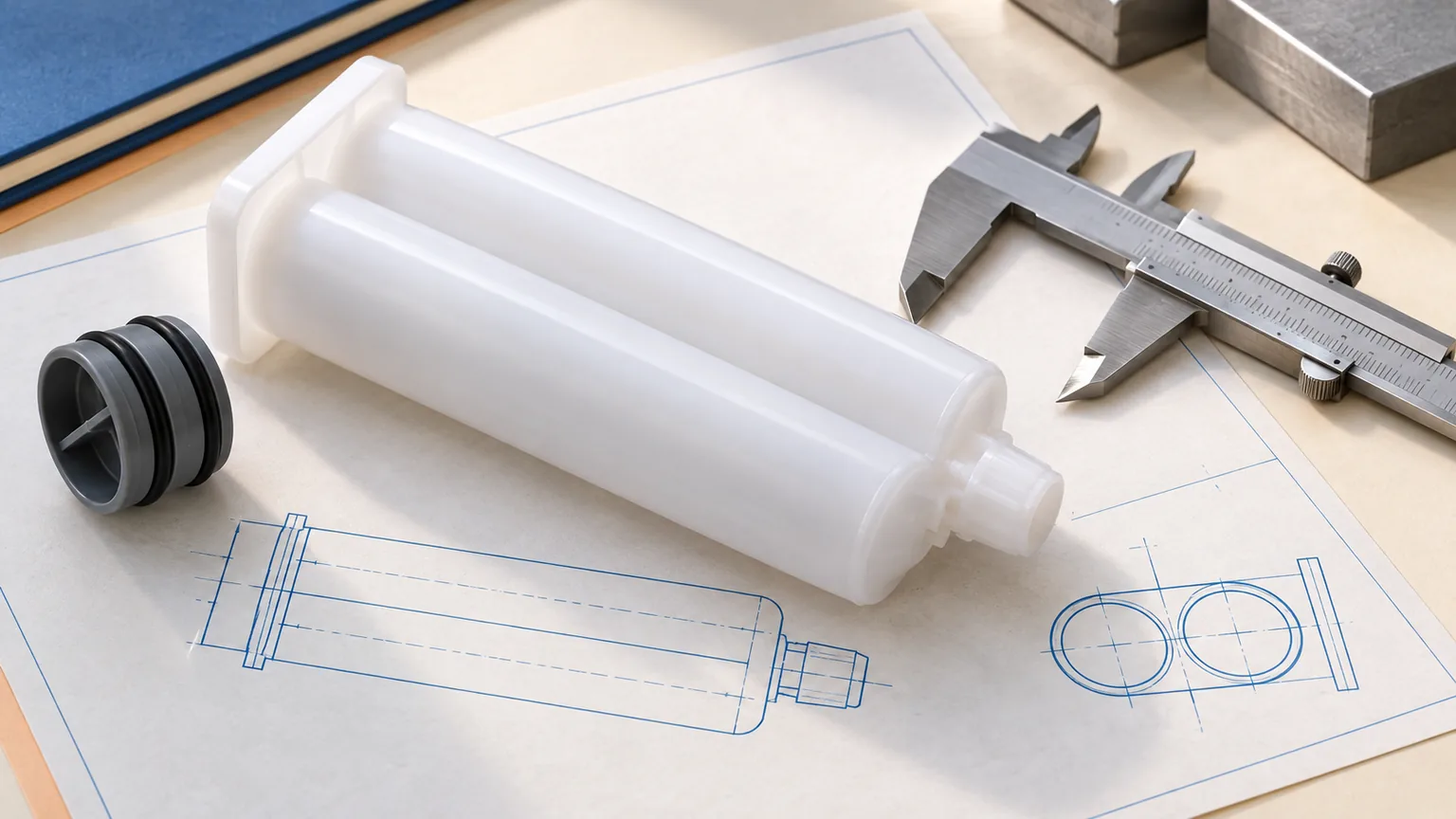
A 1K (one-part) adhesive cartridge stores a single, pre-mixed chemical formulation that relies on external factors—such as ambient moisture, atmospheric oxygen, or elevated heat—to initiate curing. In contrast, a 2K (two-part or dual-component) cartridge system stores resin and hardener in isolated parallel or coaxial chambers. The two components remain separated until extruded through a specialized nozzle, triggering a self-contained chemical reaction.
For thin bond lines, portable field repairs, and standard sealing where curing speed is secondary, 1K packaging offers operational simplicity. For deep-section bonding, rapid structural assembly, and applications requiring precise open times regardless of ambient climate, a dual-component cartridge system provides superior process control.

1K vs 2K Cartridge Systems: Feature Comparison

Structures of single-element and dual-element packers

The comparison table below outlines the primary structural, operational, and performance parameters distinguishing 1K single-component cartridges from 2K dual-component cartridge systems.
Parameter / Feature 1K Single-Component Cartridges 2K Dual-Component Cartridges Engineering & Operational Impact
Packaging Architecture Single cylinder (e.g.,10ml,50ml, 300ml ) Parallel/coaxial twin cylinders (e.g., 50ml, 200ml, 400ml) 2K requires dual-barrel drives to displace both chambers simultaneously.
Curing Trigger External (ambient humidity, UV, heat) Internal chemical reaction upon mixing 2K curing is independent of atmospheric moisture or joint depth.
Dispensing Accessories Standard single-piston caulking gun & orifice nozzle Dual-drive dispensing gun & static mixer nozzle 2K systems rely on precise internal element geometry to mix Part A and B.
Volumetric Ratios Fixed 100% single formulation (1:1 equivalent) Variable: 1:1, 2:1, 4:1, 10:1 ratios 2K packaging must maintain strict volumetric tolerances across both barrels.
Depth of Cure Limit Typically limited (e.g., 3mm to 6mm per 24h) Unlimited (cures uniformly throughout the bond line) 1K can trap uncured material in deep or non-porous structural joints.
Operator Skill Requirement Low (direct extrusion, minimal setup) Moderate (requires cartridge balancing & purge routines) 2K operators must verify proper static mixer attachment to prevent off-ratio dispensing.
Dispensing Equipment Cost Lower initial outlay for manual/pneumatic guns Higher tooling investment for specialized 2K guns Packaging choice directly impacts production line equipment budgets.

Understanding 1K Adhesive Cartridges: Simplicity and Efficiency
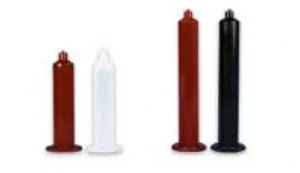
Single-component packaging systems are widely utilized across commercial construction, automotive sealing, and industrial assembly due to their user-friendly design and low capital equipment requirements.

Advantages of 1K Cartridge Systems

1K packaging eliminates operator mixing errors entirely. Because the formulation is fully compounded and degassed during factory filling, end-users do not need to monitor volumetric mixing ratios or install static mixing elements.
  • Lower Tooling Overhead: Standard single-component cartridges fit conventional manual, pneumatic, or battery-powered caulking guns, making them highly economical for field operations.
  • Simplified Production Setup: Workers can instantly apply adhesive without preliminary purge cycles or cartridge balancing routines, reducing operator training time.
  • Minimal Material Waste: Unused material inside a 1K cartridge can often be preserved by tightly re-sealing the threaded tip, whereas mixed 2K material in a mixing nozzle cures and must be discarded.

Limitations and Curing Boundaries

Despite their convenience, 1K adhesive packaging systems are bounded by ambient physics and environmental conditions:
  • Moisture-Dependent Curing Rates: Single-part polyurethane or MS polymer adhesives absorb ambient moisture to cure. In dry climates or temperature-controlled cleanrooms with low relative humidity, curing slows drastically.
  • Depth-of-Cure Restrictions: As the outer perimeter of a 1K bead cures, it forms a skin that retards moisture penetration into the deeper layers. Joint depths exceeding 6mm may require days to cure completely or remain soft indefinitely in fully enclosed metal-to-metal joints.

Understanding 2K Dual-Component Cartridge Systems: Precision and Performance
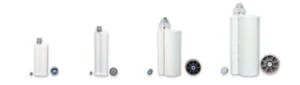
Two-component packaging systems are engineered for high-performance structural bonding, where rapid strength build-up, precise cure timing, and high mechanical shear strength are mandatory.

Mixing Ratios and Structural Versatility

Dual-component adhesives—such as epoxies, methacrylates (MMAs), and two-part polyurethanes—depend on exact stoichiometry between Part A (resin) and Part B (hardener). Modern empty cartridges for two part adhesives are manufactured to accommodate various volumetric mixing ratios:
  • 1:1 and 2:1 Ratios: Common for standard structural epoxies and flexible polyurethanes.
  • 4:1 and 10:1 Ratios: Frequently used for specialized acrylics and MMAs, where a small volume of catalyst initiates a large volume of base resin.
The rigid wall construction of a engineered empty plastic sealant cartridge system ensures that under hydraulic pressure from the dispensing gun, both pistons advance in perfect synchronization, maintaining exact volumetric delivery.

The Role of Static Mixer Nozzles in 2K Packaging

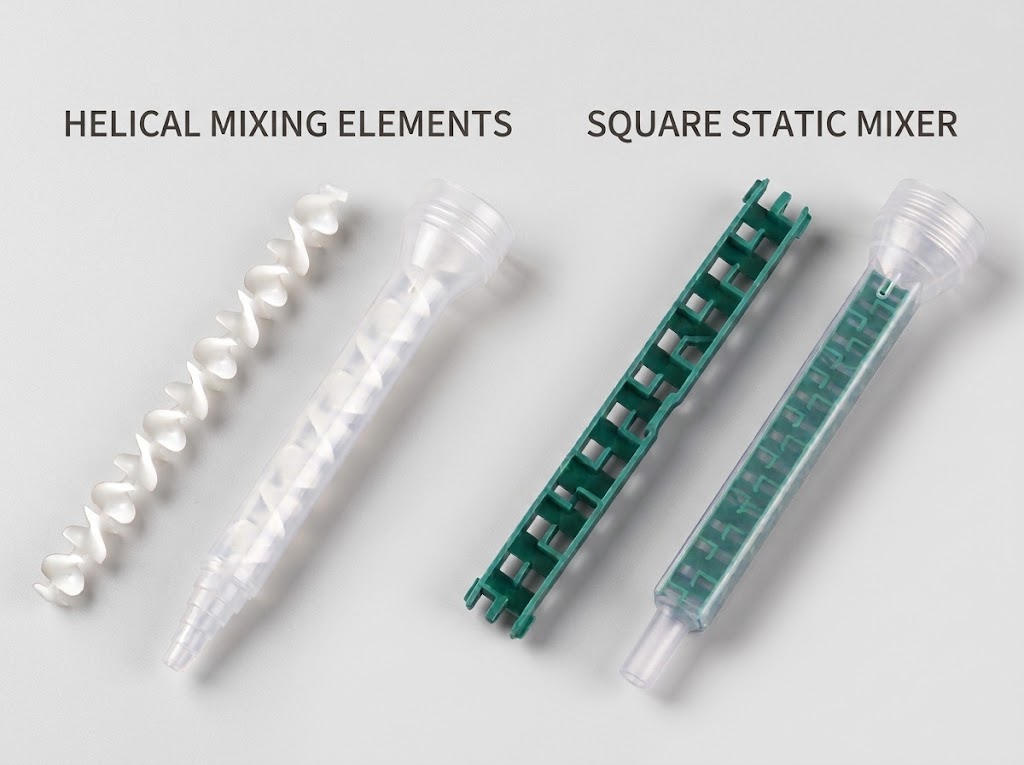
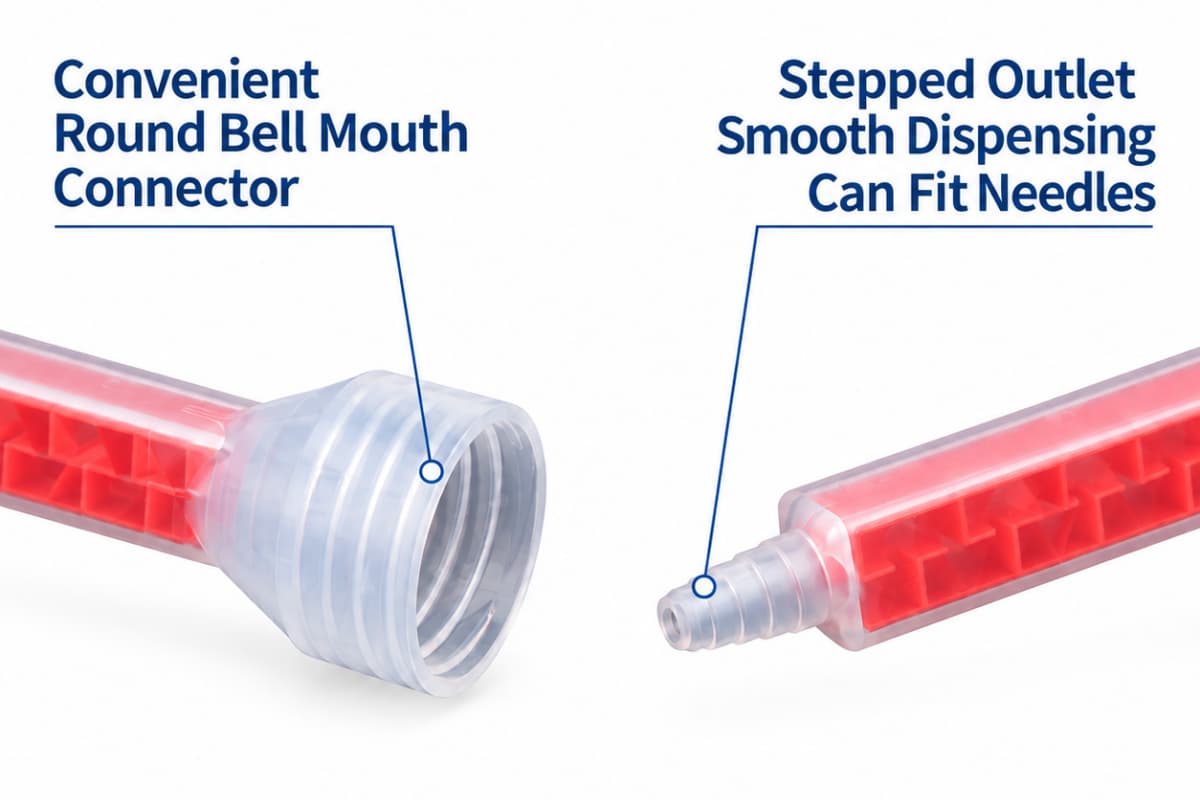
A 2K cartridge cannot function effectively without a correctly matched static mixer nozzle. Attached to the cartridge outlet via a bayonet or threaded interface, the static mixer contains a series of internal helical elements that divide, rotate, and recombine the two material streams as they flow through the tube.
Using an epoxy bayonet static mixer nozzles setup or a specialized dual inlet mixing nozzle ensures homogeneous blending without introducing air bubbles into the adhesive matrix.

Operational Challenges: Cartridge Balancing and Pressure Resistance

To achieve reliable performance with 2K packaging systems, operators must adhere to specific handling protocols:
  • Cartridge Balancing: Prior to attaching the mixing nozzle, the operator should dispense a small amount of material directly from the cartridge outlets to ensure both Part A and Part B are flowing freely and simultaneously.
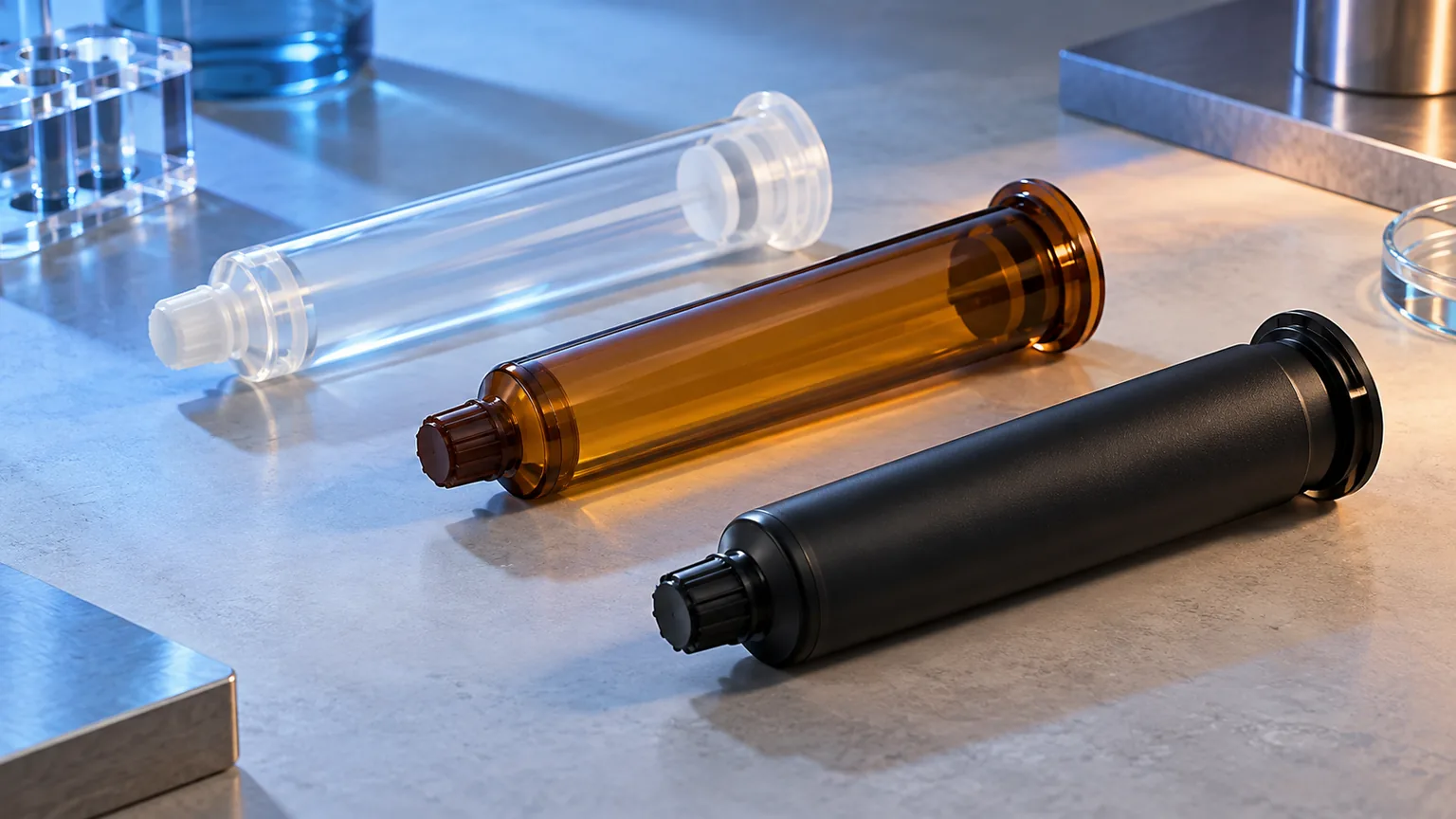
  • Burst Pressure & Piston Sealing: High-viscosity materials require significant extrusion force. Quality 2K empty cartridges are molded from high-grade polymers to resist sidewall expansion and prevent fluid blow-back past the rear rubber or plastic pistons.

Dispensing Hardware Compatibility: Guns, Nozzles, and Accessories
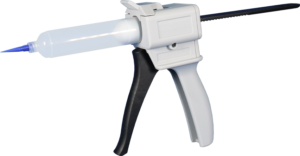
Achieving a clean, repeatable adhesive bead requires complete system compatibility between the empty cartridge, the dispensing drive, and the outlet nozzle.
System Type Cartridge Format Compatible Dispensing Gun Mixer / Nozzle Type Primary Accessories
1K Standard 300ml Plastic / Aluminum Standard 1K Manual or Pneumatic Gun Threaded Plastic Nozzle / Cut Tip Nozzle Caps, Thread Adapters
1K Foil Sausage 400ml / 600ml Flexible Film Enclosed Barrel Sausage Gun Barrel Ring & Concentric Nozzle Piston Drive Plates
2K Small Volume 50ml/75ml/100ml Dual Cartridge (1:1, 2:1, 4:1, 10:1) 50ml Manual / Battery Plunger Gun Bayonet Mount Static Mixer Nozzle Retaining Nuts, Plungers
2K Industrial 200ml / 400ml Parallel Cartridge Pneumatic 2K Dual-Drive Gun Threaded (A or B System) or Twist-Lock Static Mixer(C or F System)
High-Pressure Metal Retaining Collars

4-Step Framework: Which Cartridge Packaging Solution Fits Your Application?

To select the ideal packaging configuration for your production line or product distribution, evaluate your project requirements against this four-step decision framework.

Step 1: Joint Geometry & Depth

  • Condition A – Joint Depth > 6mm or Sealed Substrates?
    ➞ Choose 2K Cartridge System

  • Condition B – Thin Bead / Surface Sealing (< 6mm)?
    ➞ Proceed to Step 2

Step 2: Production Speed & Handling Time

  • Condition A – Rapid Handling Required (< 15 mins)?
    ➞ Choose 2K Cartridge System

  • Condition B – Extended Open Time / Slow Cure OK?
    ➞ Proceed to Step 3

Step 3: Environmental Control & Climate

  • Condition A – Uncontrolled Humidity / Cleanroom?
    ➞ Choose 2K Cartridge System

  • Condition B – Standard Ambient Environment?
    Choose 1K Cartridge System

Step 1: Assess Joint Geometry and Bond Line Depth

If your application involves bonding large, non-porous sheets (such as glass, metal, or composite panels) where atmospheric moisture cannot reach the center of the joint, or if the adhesive bead depth exceeds 6mm, select a 2K dual-component system to ensure complete, uniform cure across the entire surface.

Step 2: Evaluate Production Line Cycle Times

When assembly processes require parts to be handled, moved, or stress-tested within minutes of application, 2K systems are essential. They offer tunable working windows followed by rapid snap-curing, whereas 1K systems require extended standing times to gain structural strength.

Step 3: Analyze Environmental Conditions

In dry manufacturing environments, cold climates, or hermetically sealed cleanrooms, moisture-curing 1K adhesives may exhibit inconsistent cure profiles. A 2K system relies strictly on internal chemical stoichiometry, rendering its curing speed predictable regardless of ambient relative humidity.

Step 4: Review Capital Equipment and Tooling Budgets

For field installation kits, aftermarket repair packages, or low-volume maintenance work where minimizing equipment weight and cost is critical, 1K single-component cartridges provide a cost-effective, ready-to-use solution.

Procurement Considerations: Material Quality and OEM Customization

For adhesive manufacturers, chemical formulators, and industrial distributors, sourcing reliable empty adhesive dispensing cartridges is critical to protecting product integrity during transport, storage, and application.
When evaluating suppliers for empty 1K and 2K cartridge systems, technical buyers should verify:
  1. Dimensional Tolerances: Inner diameter consistency ensures smooth piston travel without fluid bypass or air entrapment.
  2. Barrier Properties: High-grade polymer resins (such as specialized PP,PA,or PBT) prevent moisture ingress into 1K cartridges and prevent volatile solvent evaporation in 2K systems.
  3. Burst Pressure Resistance: Cartridge walls must maintain structural integrity under high extrusion pressures, especially when dispensing high-viscosity pastes through fine static mixers.
  4. Customization & OEM Capabilities: Evaluating options for custom colors, direct silk-screen printing, private labeling, and specialized volumetric ratios helps align packaging aesthetics with corporate branding.
When requesting project quotes or engineering samples, buyers should provide their supplier with expected dispensing pressures, chemical compatibility requirements, fill volumes, and preferred static mixer connection types.

Key Takeaways

  • 1K Cartridges store a single pre-mixed formulation that relies on external environmental factors (like moisture or heat) to cure, making them ideal for simple sealing and thin bond lines.
  • 2K Cartridges store resin and hardener in separate chambers, utilizing a static mixer nozzle to induce a uniform chemical cure independent of ambient humidity or joint depth.
  • Depth Limitation: 1K adhesives face depth-of-cure limits (typically under 6mm per 24 hours), whereas 2K systems cure uniformly throughout deep structural joints.
  • Hardware Matching: 2K systems require precise component pairing between volumetric cartridge ratios (1:1 to 10:1), dual-drive guns, and static mixer element geometries.
  • Quality Impact: Sourcing dimensionally stable, high-barrier empty cartridges prevents piston bypass, wall ballooning, and premature shelf-life degradation.

Frequently Asked Questions (FAQ)

Can 2K adhesive cartridges be used without a static mixer nozzle?

No. Extruding material directly from a 2K cartridge without a static mixer results in two unmixed parallel streams of resin and hardener. Without the division and recombination provided by a static mixer nozzle, the adhesive will not undergo proper chemical cross-linking and will fail to cure.

Why do 1K adhesive cartridges have a depth-of-cure limitation?

1K moisture-curing adhesives rely on atmospheric water vapor diffusing into the polymer matrix. As the exposed outer surface cures into a solid elastomer skin, it slows down further moisture penetration into the center of the bead, drastically extending cure times for thick applications.

What does “balancing the cartridge” mean for 2K dual-component systems?

Cartridge balancing is a preliminary setup step where the operator dispenses a tiny amount of material from an unsealed 2K cartridge before attaching the mixing nozzle. This ensures that trapped air is purged and that both Part A and Part B fluids are at the nozzle interface, preventing an off-ratio mix at the start of the adhesive bead.

What are the most common volumetric ratios for 2K empty cartridges?

The most standard volumetric ratios for 2K cartridges are 1:1, 2:1, 4:1, and 10:1. The required ratio depends on the chemical formulation developed by the adhesive manufacturer, with 1:1 commonly used for epoxies and 10:1 frequently used for structural acrylics.

Partnering with Haijing for High-Performance Cartridge Packaging Solutions

Selecting between 1K single-component and 2K dual-component formats depends entirely on your adhesive formulation, joint geometry, and dispensing workflow. Haijing manufactures a comprehensive line of industrial-grade empty cartridges, static mixers, and dispensing accessories designed to maintain chemical stability and deliver precise fluid control.
Whether you require standard 1K aluminum/plastic cartridges or specialized 2K dual-barrel systems, our engineering team can support your packaging requirements. Explore our complete selection of cartridges and cartridge systems, review customization options for adhesive packaging, or contact our technical packaging team today to request evaluation samples or technical specifications.

Contact the Haijing technical team for the most suitable support

Ready to optimize your adhesive packaging line? Explore our complete range of cartridges and cartridge systems, discover customization options for adhesive packaging, or contact our technical packaging team today to receive technical data sheets and request free product samples for your facility.
Related Blog For You

Let's Build Your Next Dispensing Solution Together

Send us your requirements, drawings, or questions. Our engineering team is ready to provide a professional solution and a competitive quote, typically within one business day.

Get a Free Quote